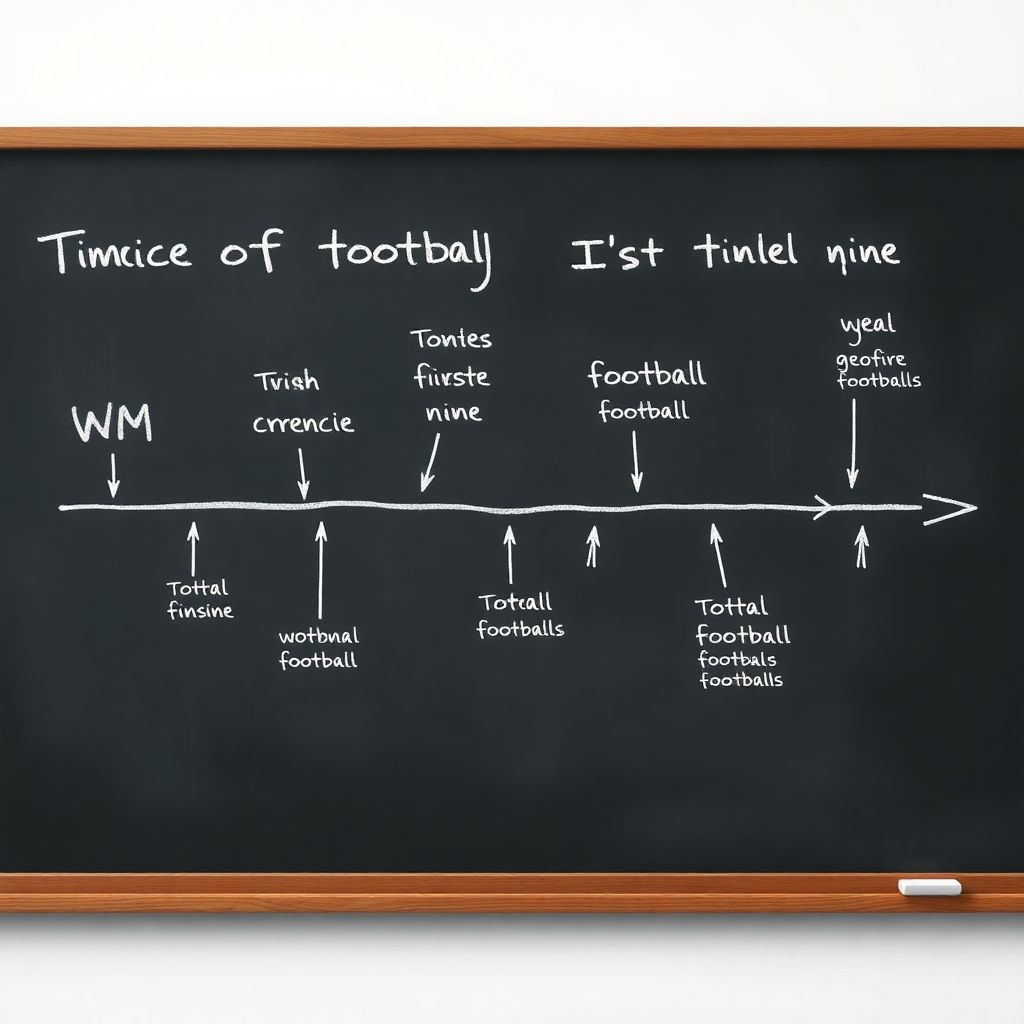
The history of tactical revolutions from the WM to the false nine is a continuous shift in how teams occupy space, press, and create superiority between the lines. Understanding WM, Total Football, catenaccio, zonal pressing and the false nine clarifies why modern systems look as they do in La Liga and Europe.
Essential Tactical Milestones
- The WM reorganised early 2-3-5 football into clear lines and roles, balancing attack and defence.
- Post-WM systems like 4-2-4 and 4-3-3 redefined midfield control and transitional play.
- Total Football introduced systematic positional interchange and collective pressing.
- Catenaccio perfected compact, man-oriented defending and counter-attacking.
- Zonal defending and structured pressing reshaped the evolución táctica del fútbol moderno.
- The false nine blurred the line between midfielder and striker, opening central spaces.
Origins of the WM: Tactical response to 1920s football
WM is a historic formation (3-2-2-3) that emerged as a response to offside rule changes and the need for better defensive balance. It gets its name from the letters «W» and «M» formed by the attacking and defensive lines. It is a crucial chapter in the historia de las formaciones de fútbol.
Before WM, the common 2-3-5 placed many players high and left defenders exposed. Offside changes reduced the number of opponents needed between attacker and goal, so teams needed an extra defender. WM pulled one inside forward back into midfield and one half-back into defence, creating a back three, double pivot, and two inside forwards behind three attackers.
In practice, WM introduced clear vertical channels: central stopper, two marking defenders, two screening midfielders, two playmakers, and three forwards. It separated roles (markers, stoppers, creators, finishers) and became the reference point for later systems like 4-2-4 and 4-3-3, which simply redistributed players across similar lines.
Coaches today can still learn from WM: it forces thinking in lines and zones rather than just player numbers. When analysing a match or designing a training session, mapping your shape as a simple WM diagram helps clarify who protects depth, who screens, and who occupies the final line.
From WM to Metamorphosis: transitional formations and evolving player roles
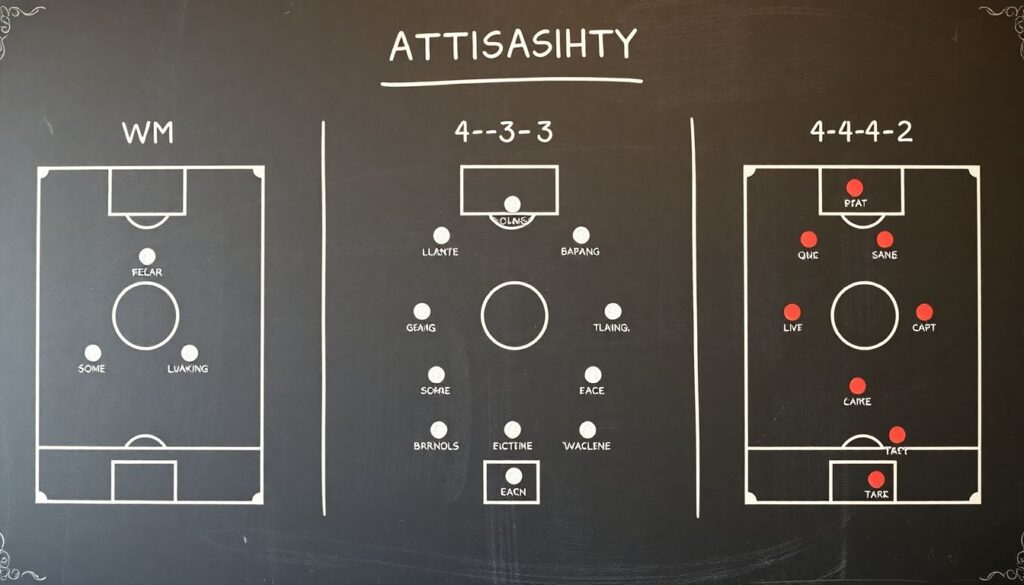
After WM, coaches progressively lowered one of the three forwards and one of the two attacking midfielders, generating structures like 4-2-4, 4-3-3 and later 4-4-2. The basic idea was to increase midfield presence without completely sacrificing width or goal threat. Player roles became more hybrid and mobile.
The evolution can be understood as a series of simple positional shifts:
- Back line reorganisation: One of the WM half-backs drops into the defensive line, turning the back three into a back four and creating the base of modern full-backs.
- Midfield densification: An inside forward steps back, so the team gains a third midfielder instead of a second support striker, enabling better control of central space.
- Wide role hybridisation: Wingers alternate between classic touchline roles and deeper wide midfield roles, depending on whether the team defends in a 4-4-2 or attacks in a 4-3-3 shape.
- Striker role specialisation: One striker becomes a true penalty-box reference, while the second striker or advanced midfielder starts connecting lines and pressing from the front.
- Defensive behaviour shift: From pure man-marking in WM, teams gradually add zonal principles, where each line moves side-to-side instead of each defender following an opponent everywhere.
These changes created the base tactical vocabulary for modern coaches and for many cursos online de táctica y estrategia de fútbol, where concepts like double pivot, false winger, and number six are explained as variations on those post-WM shapes.
| Structure | Lines | Main Strength | Main Weakness |
|---|---|---|---|
| WM (3-2-2-3) | 3 defenders, 2 midfielders, 2 inside forwards, 3 attackers | Clear marking; strong central spine | Limited midfield coverage against modern 3-man midfields |
| 4-2-4 | 4 defenders, 2 midfielders, 4 forwards | Massive attacking presence; width and depth | Midfield often outnumbered; big gaps between lines |
| 4-3-3 | 4 defenders, 3 midfielders, 3 forwards | Balanced control of width and central areas | Requires intelligent wide forwards for defensive work |
Mini-scenarios for application in training or match analysis:
- Protecting a lead: Convert a 4-3-3 into a 4-4-2 by dropping a winger deeper, recreating a WM-like double inside line to close central space.
- Chasing a goal: From 4-4-2, push full-backs high and let one midfielder arrive late in the box, effectively morphing into a 2-3-5 shape late in attacks.
- Balancing academy development: Rotate young players between full-back and wide midfielder to help them understand both early WM roles (half-back and winger) in a modern framework.
Total Football and positional interchange: the Dutch blueprint
Total Football describes a game model, not just a formation: any player can occupy another’s position as long as team structure remains balanced. It reached global visibility with Ajax and the Netherlands in the 1970s, with 4-3-3 or 3-4-3 as its basic reference shapes.
The core principles are coordinated pressing, high defensive line, and constant positional rotations. When a full-back moves inside, a midfielder or winger compensates; when the striker drops, wingers attack central channels. Space, rather than fixed positions, becomes the main object of control, which is a key theme in many libros sobre tácticas de fútbol en español.
Typical application scenarios of Total Football ideas in today’s game:
- Overloading one side to isolate the opposite winger: Four or five players combine on the left, dragging the block over; a quick switch finds the right winger 1v1.
- Striker as first midfielder: The centre-forward drops to create a temporary 4-4-2 diamond, allowing an interior to run beyond and attack the box.
- Full-back inversion: A full-back steps into midfield during build-up, forming a 3-2 base that secures transitions while wingers keep width.
- Press from the front: Wingers and striker close central passing lanes, guiding the ball wide where full-backs and midfielders trap the opponent.
- Flexible rest defence: When attacking with many players, the team still keeps at least three plus one in cover behind the ball, adjusting their exact spots as possession circulates.
For an intermediate coach in Spain, integrating light Total Football principles means starting with simple rules: when one player leaves a zone, someone else immediately refills it, and when pressing, the nearest three support each other’s angles instead of acting alone.
Catenaccio and the architecture of organized defense
Catenaccio is a defensive system built on tight organisation, heavy use of man-marking and a spare defender (libero) behind the line. Popularised in Italy, it offers a clear contrast to Total Football: its priority is closing central spaces and punishing mistakes with fast counters.
The structure usually involves a back line of man-markers plus a free central defender sweeping behind. Midfielders track runners, the block sits compact and narrow, and attacking play focuses on quick vertical passes to a target man and runners from deep. It is historically significant when studying the evolución táctica del fútbol moderno because it pushed others to refine pressing and positional play.
Advantages for certain contexts (especially underdogs or knockout ties):
- High defensive stability through numerical superiority near the box.
- Clear individual responsibilities simplify decision-making under pressure.
- Effective platform for direct counter-attacks after regaining possession.
- Good fit for teams lacking creative midfielders but having fast forwards.
Limitations and risks in modern competition:
- Invites sustained pressure, which increases probability of errors or deflections.
- Can leave forwards isolated, reducing attacking variety and possession phases.
- Pure man-marking is vulnerable to rotations, overloads and false movements.
- In leagues like La Liga, passive defending can be punished by technical teams that shoot from distance or break lines with combinations.
Pressing, space management and the shift to zonal systems
The move from strict man-marking to zonal defending reshaped collective behaviour. Instead of following an opponent everywhere, players defend a space and pass markers on. This shift enabled structured pressing, higher lines, and coordinated traps, integral to most contemporary elite teams.
However, there are recurring misconceptions about pressing and zonal play that affect both coaching courses and everyday match talk.
- Myth: Pressing means running non-stop. Reality: effective pressing is about timing and distances; sprinting without compactness just opens gaps.
- Myth: Zonal marking ignores opponents. Reality: in good zonal systems, players constantly adjust to opponents entering their zone while keeping line integrity.
- Error: Pressing without cover. Teams jump to press the centre-backs but leave no protection behind the midfield, allowing one pass to break the line.
- Error: Horizontal distance too big. When wingers stay too wide in defence, central channels open and pressing becomes disjointed.
- Myth: Low block and pressing are opposites. Reality: you can press aggressively in a medium or low block by pushing together on triggers, not only by defending on the halfway line.
When studying cursos online de táctica y estrategia de fútbol, it is useful to see pressing and zonal defending as tools for shaping where the opponent plays, not just as efforts to recover the ball immediately. The priority is controlling central spaces and forcing predictable passes.
The false nine: concept, evolution and contemporary practice

The false nine is a forward who frequently drops into midfield zones instead of staying on the last defensive line. This movement pulls central defenders out or leaves them with a dilemma: follow and open space behind, or hold the line and allow the false nine to receive freely.
Historically, this idea has roots in deep-lying forwards long before it became famous through recent Spanish and European teams. What changed is the level of structure around it: wingers attack inside channels, interiors arrive late in the box, and full-backs provide width. Modern análisis del falso nueve en el fútbol actual often focuses on synchronisation more than on the individual talent.
Mini-case: a simple false nine pattern in a 4-3-3 could look like this in pseudo-sequence:
- False nine drops between lines: CF → zone between opposition midfield and defence.
- Nearest interior pushes into the last line to pin a centre-back.
- Far-side winger makes a diagonal run into the channel vacated by the moving defender.
- Ball progression: CB → pivot → false nine (receive on the half-turn).
- Decision: if centre-back jumps, through ball to diagonal runner; if not, combine short with interior and full-back advancing wide.
In training, coaches can start with restricted games (for example, goal only counts if the «nine» receives between lines before finishing) to internalise the pattern. This links positional play, timing, and finishing, and makes the concept more concrete than just a label in libros sobre tácticas de fútbol en español.
Practical Tactical Clarifications
Why is the WM considered a tactical revolution rather than just another formation?
WM reorganised teams into clear defensive and attacking lines, responding directly to offside changes. It systematised roles like stopper, half-back and inside forward, becoming the base reference from which 4-2-4, 4-3-3 and many later systems evolved.
How did Total Football differ from earlier attacking styles?
Total Football prioritised positional interchange and collective pressing, not just attacking numbers. Players could swap roles fluidly as long as space occupation remained balanced, which contrasted with the more fixed assignments of WM and early 4-2-4 systems.
Can elements of catenaccio still work in modern leagues?
Yes, especially for underdogs or in knockout matches. Compact blocks, clear man-marking principles and fast counters remain effective, but they must be combined with modern zonal concepts to avoid being exposed by rotations and overloads.
Is pressing always done with a high defensive line?
No. Teams can press aggressively in mid or low blocks by jumping together on triggers, such as backward passes or poor touches. The key is compactness and coordination, not the absolute height of the back line.
What is the main risk when using a false nine?
The biggest risk is losing penalty-box presence if wide players and interiors do not attack depth. Without synchronised runs beyond the ball, the team may dominate between lines but rarely threaten behind the defence.
How should an intermediate coach start applying these historical concepts?
Begin with clear shapes (4-3-3 or 4-4-2), then add one or two specific ideas: a dropping forward, an inverting full-back, or a compact medium block. Link each idea to simple rules so players understand not just where to stand, but when and why to move.
Where can I deepen my understanding of these tactical revolutions?
Combine quality match analysis, specialised blogs, and libros sobre tácticas de fútbol en español with structured cursos online de táctica y estrategia de fútbol. Alternate theory with practical observation: choose one concept per game and focus on how teams use or counter it.