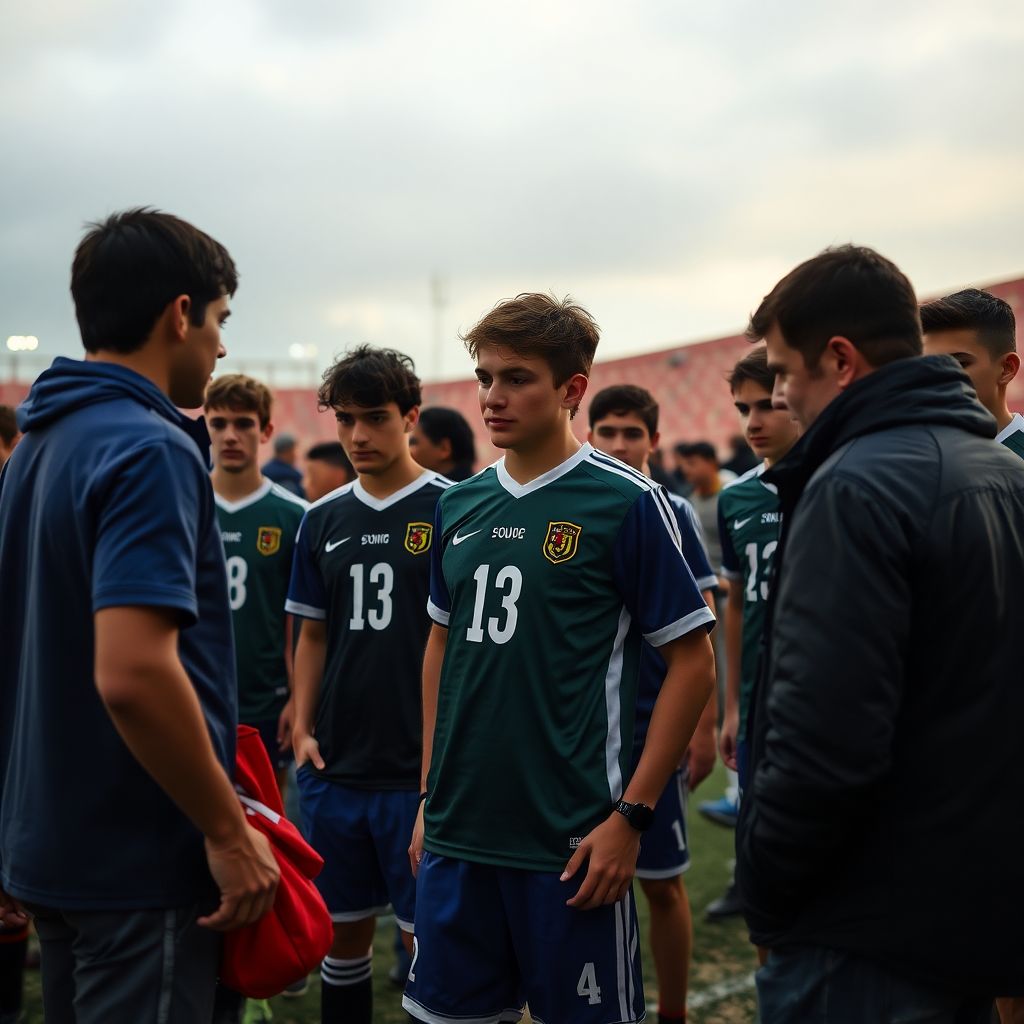
Talent mercantilization is the systematic conversion of children’s abilities into marketable assets, via academies, scouts, representation agencies and commercial deals. It creates opportunities (elite training, contacts, income) but also risks (pressure, early specialization, conflicts of interest). Understanding actors, incentives and contracts is essential for making responsible decisions in Spain and beyond.
Core Concepts and Stakes in Talent Mercantilization
- Talent mercantilization treats a child’s potential as an investment with expected returns for clubs, academies, brands and intermediaries.
- Key actors include academies, scouts, representation agencies, sponsors, platforms and increasingly data companies.
- Revenue streams arise from fees, scholarships tied to rights, transfer or placement fees, sponsorships and content monetization.
- Benefits (better coaching, visibility, discipline) are inseparable from risks (burnout, exploitation, identity tied only to performance).
- Contracts, selection criteria and evaluation metrics shape who advances and who is excluded, often reproducing inequality.
- Parents and practitioners can reduce harm by demanding transparency, independent advice and gradual, reversible commitments.
How Talent Economies Operate: Actors, Incentives and Revenue Streams
Talent economies in youth sport, music and arts are ecosystems where institutions invest in promising children in exchange for access to future value. The core logic is simple: early access to talent is cheaper, so organizations compete to detect, sign and «develop» children before others do.
In Spain this is visible in academias de fútbol para niños talento en españa, escuelas de música, dance conservatories and the mejores academias de arte para niños con talento. Around them, a parallel market appears: private coaches, psychologists, content creators, and agencias de representación de jóvenes talentos deportivos that package a child’s story for clubs and brands.
Main actors and their incentives include:
- Clubs and academies: want a steady pipeline of cheap, homegrown talent or reputation for placing students in elite institutions. Their risk is investing in many who will not reach the top.
- Scouts and intermediaries: earn from being first to discover and «own» relationships with future stars. Their incentive is to sign many children early, hoping a few succeed.
- Families: seek opportunity, identity and sometimes social mobility. Their risk is sunk time and money, plus emotional cost if expectations are inflated.
- Brands and sponsors: use prodigies as symbols of dedication and success. They value authenticity and reach but can drop children quickly when performance dips.
- Digital platforms and content producers: monetize attention around young talents through ads, subscriptions and merchandising.
Revenue can flow through tuition fees, commissions, sell-on clauses, image rights, streaming income and event tickets. The boundary between «development project» and «commercial product» is crossed once decisions about training and exposure are significantly shaped by potential profit rather than wellbeing and learning.
Talent Academies: Business Models, Selection Biases and Opportunity Costs
Talent academies formalize this economy. Football schools, pre-conservatories and intensive art programs package access to elite coaching, competition and networks. Their business model, however, strongly influences who gets admitted, how they are trained and what trade-offs families must accept.
- Fee-based academies: Income comes from tuition, camps and «elite» groups. Examples include many private academias de fútbol para niños talento en españa and escuelas de música para niños prodigio precios with different tiers of service. Bias: favour families who can pay and travel regularly.
- Scholarship-heavy academies: Rely on sponsors or professional clubs. They may offer free training and boarding but often request priority over a child’s competition schedule, image or future transfer rights.
- Hybrid models: Combine base-level fees with «selection» into higher-performance squads or masterclasses, creating internal hierarchies and pressure to move up.
- Upsell ecosystems: Academies partner with psychologists, nutritionists and private tutors, turning each child into a cluster of services (sometimes useful, sometimes redundant).
- Showcase-driven programs: Focus on tournaments, talent shows and social media exposure to attract scouts and sponsors, sometimes at the expense of long-term skill development.
Selection biases often appear: children from urban, better-off families with flexible school arrangements; physically early-maturing athletes; extroverted performers who «read well» on stage or camera. Opportunity costs are high: less time for unstructured play, academics, friendships, and diversified activities that actually support broader development.
Scouting Networks and Data-Driven Valuation of Young Talent
Scouting systems connect academies, clubs and agents. Parents asking «cómo encontrar un scout deportivo para mi hijo» usually see only the visible tip of a deeper network of formal and informal observers and increasingly, data analysts.
Typical application scenarios include:
- Local and regional scouting: Part-time scouts watching grassroots leagues, school concerts or art contests. They write brief reports and recommend children to larger academies or clubs.
- Centralized club networks: Professional clubs maintain connected teams of scouts and collaborate with agencias de representación de jóvenes talentos deportivos for information sharing, trial invites and pre-contracts.
- Trial events and showcases: Paid «try-out» days, talent festivals and masterclasses where dozens of scouts observe many children in condensed time. The risk is overemphasizing one-off performance.
- Video and highlight platforms: Parents or intermediaries upload clips; clubs scan them with filters (age, position, style) to narrow down candidates, especially in football and music.
- Data-based pre-selection: Use of metrics such as growth curves, physical tests, competition stats, audition scores and even social media engagement to estimate «upside» and marketability.
- Cross-border pipelines: International academies and online schools in music or art identify Spanish children and offer hybrid or remote programs, sometimes as a first step to relocation.
Valuation is rarely purely technical. Scouts and algorithms implicitly value market narratives: «left-footed winger», «child prodigy violin soloist», «young painter with a viral following». This influences where resources flow and how aggressively different actors try to secure signatures.
Child Prodigies as Commodities: Ethical Risks and Legal Vulnerabilities
Once prodigies are treated as commercial assets, families and practitioners must navigate a complex landscape of potential harms and regulatory gaps. Understanding the main risk clusters is the first step toward designing safeguards.
- Potential benefits when managed well
- Access to higher-quality coaching, tutors, instruments or facilities that would otherwise be unavailable.
- Structured training that can foster discipline, focus and teamwork when workloads are adapted to age.
- Early exposure to professional environments and expectations, easing transitions to adult careers.
- Financial support (scholarships, sponsorships) that reduces direct costs for families, especially in music and art.
- Networking opportunities with mentors, peers and institutions at international level.
- Main ethical and legal risks
- Contracts signed by parents that bind image, transfer or royalty rights long after the child reaches majority.
- Performance pressure leading to anxiety, identity issues or early dropout from both sport/art and school.
- Conflicts of interest when the same person or entity is both coach and commercial representative.
- Under-regulated use of children’s image on social media for monetized content without clear benefit sharing.
- Opaque clauses for termination, exclusivity and jurisdiction, especially in cross-border online programs.
- Inequalities reproduced when only families with legal advice can negotiate or reject harmful terms.
Pathways to Monetization: Contracts, Sponsorships and Transfer Markets
Monetization pathways transform promise into money: via pre-contracts, scholarships tied to rights, sponsorships, streaming income, transfer fees or gallery representation. Misunderstandings and myths are frequent, particularly in youth football, music academies and art schools.
- Myth: «A contract guarantees a professional future» – In reality, most signed children will not reach top level; the contract mainly protects the organization’s optionality, not the child’s destiny.
- Myth: «Scholarships are always free money» – Some music or art scholarships in elite programs, as well as in escuelas de música para niños prodigio precios muy altos, may involve obligations related to performances, image use or future income-sharing.
- Myth: «Representation is mandatory from very young ages» – Many families sign with agents too early. For most children, basic administrative support and occasional legal advice are enough until real offers appear.
- Error: Ignoring jurisdiction and language – Families sign English or other-language contracts without independent translation, especially with foreign scouts and online platforms.
- Error: Confusing academy loyalties with legal duties – A loving coach may still push for terms that benefit the academy more than the child; their legal duty can be to the institution, not to the family.
- Error: Overexposure on social media – Parents chase sponsorships by turning children into influencers, monetizing content without considering digital footprints and long-term consent.
Mitigations and Governance: Best Practices for Responsible Talent Development
Responsible practice does not mean avoiding academies, scouts or agencies altogether. It means introducing brakes, checks and shared rules so that the child’s holistic development remains central while still engaging with the talent economy realistically.
Practical principles:
- Set clear family priorities
- Decide what is non-negotiable (school attendance, rest days, no long-term contracts before certain age).
- Revisit these priorities each season as opportunities and pressures change.
- Demand transparency from institutions
- Ask academies and the mejores academias de arte para niños con talento to explain selection criteria, progression paths and exit routes.
- Request written policies on workload, injuries, burnout and use of images and personal data.
- Separate roles and reduce conflicts of interest
- Avoid situations where coaches are also agents; if unavoidable, seek an independent second opinion for any contract.
- Use specialized lawyers or advisors, especially when dealing with agencias de representación de jóvenes talentos deportivos.
- Protect reversibility
- Prefer short, renewable agreements over long, exclusive ones for children.
- Keep academic options open; avoid systems that make returning to regular school almost impossible.
- Guide responsible exposure
- Agree limits on social media: no live location, no humiliating content, clear rules on monetization.
- In music and art, prioritize quality auditions over constant posting from escuelas de música para niños prodigio precios shows or competitions.
Mini-scenario of responsible practice in Spain:
A 10-year-old with strong football potential is invited to two academias de fútbol para niños talento en españa. The family first writes down priorities (local school, no full boarding, no exclusivity). They meet both academies, ask for training volume, contract drafts and policies on image use. Before signing anything, they consult a lawyer recommended by their municipality’s sports office. They choose the academy that offers a one-year non-exclusive agreement with clear exit options and insists on regular school attendance, while postponing any representation deal until at least age 14.
Practical Questions Practitioners and Parents Raise
At what age does talent mercantilization typically start in practice?

In organised systems, commercial interest can appear around 8-12 years in sport and 6-10 in music and arts, mainly through academy selection and branded events. Serious contractual commitments, however, should ideally be postponed until adolescence, when motivations and capacities are clearer.
How can I assess if an academy is more developmental than commercial?
Look at training-to-competition ratio, coach qualifications, school coordination and how they talk about non-selected children. If marketing emphasises «exposure» and «being discovered» more than learning, and if everything is pay-to-play with constant upsells, the model is likely heavily commercial.
What should I check before signing with a youth talent agency?
Identify contract length, exclusivity, commissions, scope of representation (sport, image, digital content), termination clauses and applicable law. Ask who pays expenses, who owns data and footage, and whether the agency represents any organisation that might conflict with your child’s interests.
Is it necessary to hire a scout to get my child noticed?
In most European contexts, including Spain, clubs and institutions scout widely without families paying scouts. Instead of paying intermediaries, focus on quality training, appropriate competition level and occasional participation in reputable tournaments or auditions where genuine decision-makers are present.
How do we balance school with intensive training schedules?
Agree on a weekly ceiling of hours for structured activity and monitor fatigue and grades. Negotiate with schools for flexible arrangements only if the academy offers academic support in return. Red flags include chronic exhaustion, declining performance at school or loss of enjoyment in the activity.
What indicators suggest that pressure is becoming harmful?
Warning signs include frequent stomach aches before competitions, sleep problems, perfectionism turning into paralysis, or the child expressing fear of disappointing adults. When these appear, reduce load, reframe goals around learning, and consider consulting a psychologist familiar with youth performance contexts.
Can social media help, or does it mainly increase risk?

Used carefully, social media can document progress and make it easier to share material with schools, scouts or galleries. The risks grow when posting becomes daily, monetised, or when parents chase virality. Prioritise controlled sharing over public performance and always respect the child’s comfort and privacy.