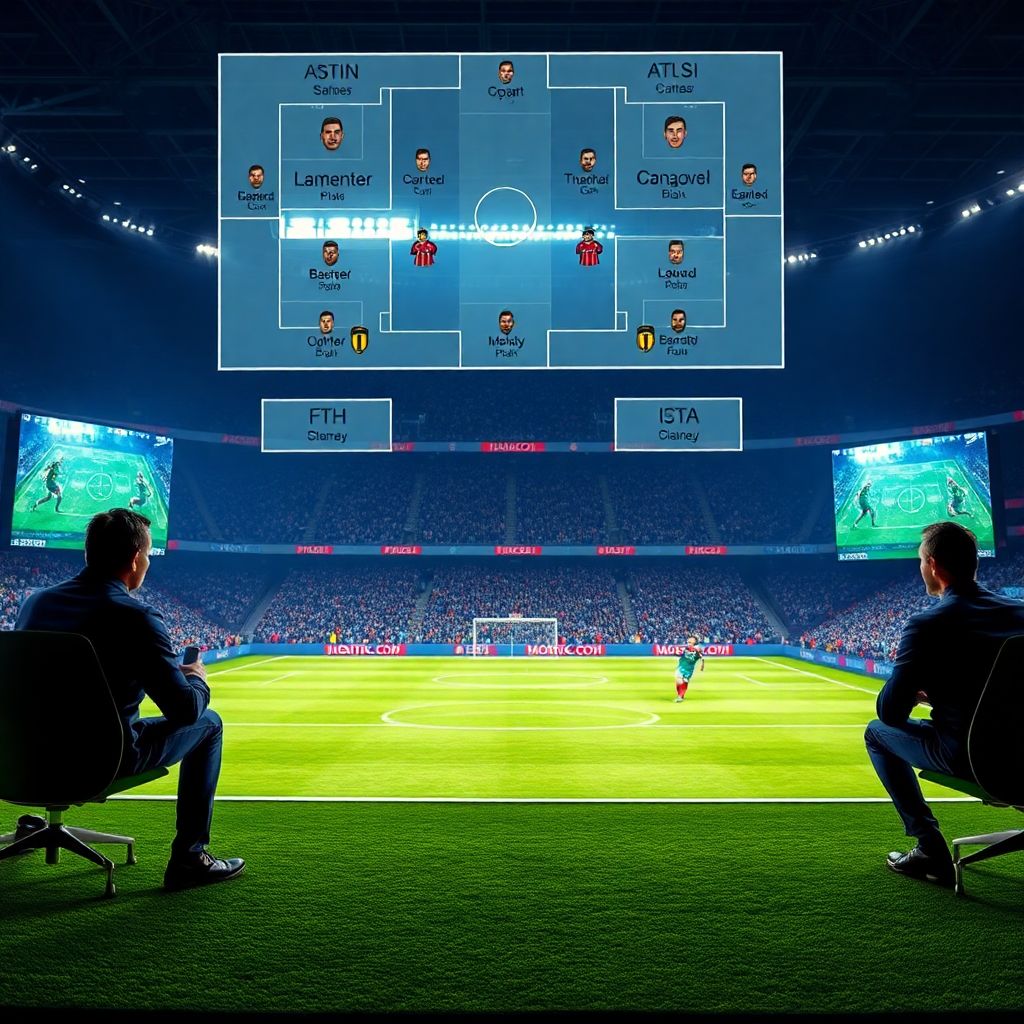
Tactical labels like «enganche» and «interior mixto» are shortcuts that bundle positioning, responsibilities and typical behaviors into one word. Used well, they help coaches design training, analysts interpret data and scouts profile players. Used lazily, they create bias, nostalgia and confusion about what a player actually does on the pitch.
Tactical Labels That Reframe How We See Players
- Labels compress information: «Enganche» or «interior mixto» instantly evoke zones, tasks and rhythms without a long explanation.
- Roles are contextual, not universal: the same label means slightly different behaviors in different formaciones y sistemas de juego fútbol moderno.
- Language shapes training: what we call a player influences the exercises and feedback we give them.
- Words affect recruitment: scouts may overlook players who fit the role behaviorally but lack the «right» tag on their CV.
- Data can clarify roles: heatmaps and metrics help verify whether a player really behaves like the label suggests.
- Education matters: good libros de táctica fútbol en español and any solid curso análisis táctico fútbol online insist on describing behaviors, not only names.
Origins and Nuance of ‘Enganche’ in Latin Football Culture
«Enganche» literally means the «hook» that connects midfield and attack. In Latin American football culture it refers to a creative playmaker, usually central, who receives between lines, dictates tempo and supplies final passes. It is as much an identity and myth as it is a tactical description.
Traditionally, the enganche operated in a 4‑3‑1‑2 or 4‑2‑3‑1 as the free player behind the strikers, excused from many defensive duties. In that context, tactics were often built to protect and feed this specialist, which explains why older fans insist on the «10» as the soul of the team.
Modern pressing, compact blocks and intense transitions have reduced the space for a pure enganche in top‑level European football, including LaLiga in Spain. However, the behaviors survive in more dynamic forms: attacking midfielders who press, inverted wingers who drift inside, or advanced «interiores» who receive on the half‑turn.
Practical example: If you want to recreate an enganche role in a youth team in Spain, you might ask your central attacking midfielder to:
- Start between opposition midfield and defence.
- Offer diagonal passing lanes to both pivots.
- Limit defensive work to guiding pressure, not deep tracking.
Then, in video analysis or in clases de análisis de partidos de fútbol para entrenadores, review clips where this player successfully «hooks» build‑up to final third.
What ‘Interior Mixto’ Means: Spatial Duties and Hybrid Functions
«Interior mixto» is a modern Iberian/Latin term for an inside midfielder who combines box‑to‑box running with creative contribution. «Interior» refers to his lane (inside channel in a three‑man midfield), «mixto» to his mixed duties: support build‑up, arrive in the box, and contribute defensively.
- Starting positions: Occupies the half‑space (between central corridor and wing) in a 4‑3‑3 or 4‑1‑4‑1, offering passing lines between full‑back, pivot and winger.
- Build‑up support: Drops closer to the pivot when pressed, forming temporary double pivot or rotating with the full‑back to advance the ball safely.
- Progression and combination: Carries the ball forward or plays third‑man combinations, often receiving on the run behind rival midfielders.
- Final‑third presence: Arrives late in the box, attacks cut‑backs, and occupies the edge of the area for second balls and shots.
- Defensive transitions: Sprints back inside the block, protects central lanes and presses the ball carrier from the blind side.
- Pressing triggers: Jumps to press opposition pivot or centre‑back when the ball goes wide, coordinating with winger and striker.
Term → behaviors → measurable indicators for an interior mixto:
- «Mixed» presence → appears in own half and rival box → number of touches in both defensive and attacking thirds.
- Supports and arrives → offers for short passes then attacks space → receptions in half‑space plus penalty‑area entries.
- Two‑way midfielder → contributes with and without ball → combined pressures, interceptions, key passes and xThreat/xA.
Training idea: 3v3+3 neutral players positional game in two corridors and a central zone. Interiores mixtos play as neutrals in half‑spaces, scoring points for:
- Receiving between lines and turning forward.
- Switching play to the opposite wing.
- Arriving into the box area for a finish after combination.
How Terminology Shapes Player Evaluation and Tactical Identity
Calling a player «enganche» or «interior mixto» is not innocent; it frames how coaches, fans and directors expect them to behave. This framing affects decisions on development, contract renewals and even tactical reputation inside the club.
- Youth development: Label a talented U‑15 as «enganche» and many coaches will unconsciously tolerate defensive passivity. Call the same player «attacking interior» and they are more likely to coach pressing and counter‑press behaviors.
- Tactical discussions: In tácticas de fútbol explicación posiciones modernas, staff may talk past each other if one imagines a classic No.10 while another imagines a modern box‑to‑box. Clear definitions avoid wasted meetings.
- Media narratives: Pundits using nostalgic language can push public opinion against a coach who «kills the enganche», even when the player’s data shows very low defensive output in a high‑pressing model.
- Player self‑image: If a midfielder is told he is an «enganche», he might resist learning deeper build‑up or pressing tasks. As «interior mixto», he may be more open to physical and tactical demands.
- Course design and learning: A good curso análisis táctico fútbol online now tends to present role names always linked to zones, tasks and metrics, precisely to avoid vague, romantic labels dominating the conversation.
Applied match scenarios for modern creative interiors
Scenario 1: You face a mid‑block 4‑4‑2. The «interior mixto» starts high between lines, then drops outside the rival striker to receive from the centre‑back, turning inside to attack the space vacated by the rival midfielder jumping to press.
Scenario 2: Versus a low block, both interiores alternate high positions. When the ball goes wide to the full‑back, the far‑side interior sprints into the box, while the ball‑near interior stays at the edge for cut‑backs. Video analysis afterwards checks whether those runs match the intended pattern.
Converting Descriptions into Data: Metrics, Heatmaps and Role Indicators
Describing roles in words is necessary but insufficient at higher levels. To verify whether a player really behaves like an enganche or interior mixto, staff in Spain increasingly rely on event data, tracking data and visual tools such as heatmaps and pass networks.
When data is aligned with clear verbal definitions, it becomes easier to compare players across leagues and ages. However, data can also oversimplify, especially when analysts chase a single number to decide whether someone «is» an enganche or not.
Benefits of translating roles into data

- Objective role confirmation: Heatmaps and touch maps show if a supposed enganche actually receives between lines or just drops next to pivots.
- Comparable profiles: You can benchmark interior mixtos from LaLiga, Premier League or Segunda using the same role indicators.
- Better dialogue with players: Short clips plus one or two metrics (e.g., pressures in final third, entries into the box) make role expectations concrete.
- Support for recruitment: Clubs can search databases by behavior patterns rather than only by position labels given by previous coaches.
Limitations and common traps of role metrics
- Context blindness: A midfielder in a low‑block team will naturally press less; that does not mean he cannot play as an interior mixto in a different system.
- Over‑fitting numbers: Forcing every «enganche» into the same benchmarks ignores stylistic differences (more dribbling vs more passing creativity).
- Misleading heatmaps: High volume in one zone could mean the player is stuck there, not that he understands timing and movement.
- Ignoring off‑ball value: Some movements that clear space for others do not show up in basic event data and need video‑based tagging.
Practical Coaching: Designing Exercises to Reinforce a Named Role

Once you adopt labels like enganche or interior mixto in your vocabulary, you must reflect them in your session design. Otherwise, you are just applying fashionable words on top of generic training that does not develop the role‑specific behaviors you expect on match day.
- Confusing «role» with «freedom»: Giving the enganche unlimited freedom in games but highly constrained, generic tasks in training. Remedy: design positional games where the enganche is the only player allowed to change zones to connect units.
- Over‑loading young interiors: Demanding your interior mixto to press, create and score without periodising physical load. Remedy: split the week into sessions focused on build‑up, pressing, and final‑third arrivals, with clear coaching points.
- Neglecting decision‑making: Running isolated technique drills without the time‑space stress these roles face in formaciones y sistemas de juego fútbol moderno. Remedy: use small‑sided games with directional goals and overload the interior’s side.
- Static position thinking: Treating labels as fixed spots instead of dynamic zones. Remedy: use exercises where the interior mixto must rotate with full‑back and winger, while an analyst tracks their average position over time.
- Poor feedback language: Saying «you must be the enganche» without specifying which action was right or wrong. Remedy: link each correction to a concrete behavior: «Good, you received between lines facing forward» or «You arrived too early in the box».
Example drill for coaches in Spain: In many clases de análisis de partidos de fútbol para entrenadores, instructors propose 8v8+2 neutrals where the neutrals act as interiores mixtos. Score only counts if the move includes a pass through them between lines and a late run into the box.
Scouting Implications: How Language Creates Bias in Recruitment
Tactical labels strongly influence how scouts filter and judge players. A database search for «No.10» or «enganche» may exclude many hybrid interiors who could fit a coach’s game model better, simply because they were registered as «central midfielder» in their previous club.
Mini‑case: A Spanish club wants an enganche to play behind the striker. The head scout filters only players tagged as «AMC» who produce many key passes. Another analyst, thinking in role behaviors rather than labels, searches instead for:
- High receptions between lines in central corridor.
- Above‑average passes into the box per 90.
- At least moderate defensive pressures in middle and final third.
The second search returns several «interiores» from South America who, on video, behave exactly like aggressive modern enganches.
When you read scouting reports or work through libros de táctica fútbol en español, pay attention to whether the author describes what the player does or hides behind nostalgic tags. Aligning language with measurable behaviors is the best protection against bias in recruitment.
Clarifying Persistent Misconceptions About Tactical Terms
Is an ‘enganche’ the same as a classic No.10 in every system?
No. Many classic No.10s played like enganches, but the term is rooted in Latin contexts with specific formations and responsibilities. In some modern systems, the player wearing 10 might be more of an interior mixto, winger or even a false nine.
Can a team using a 4-3-3 have a true ‘enganche’?
Yes, but usually by adjusting one interior or the centre forward to drop between lines. The key is not the nominal formation but whether you create a free player who consistently connects midfield and attack in central spaces.
Is ‘interior mixto’ just a fancy word for box-to-box midfielder?
Not exactly. A box‑to‑box description emphasises running volume. «Interior mixto» adds specific spatial references (half‑spaces) and mixed technical responsibilities: build‑up support, progression and final‑third arrivals, all within a clear positional structure.
Do youth players need to learn these role names early?
They need to understand the underlying behaviors more than the labels. Introducing names like enganche or interior mixto can help, but only if coaches constantly link them to clear tasks, positions and decision‑making examples in training.
Can data alone tell me if someone is an ‘enganche’ or ‘interior mixto’?
Data can strongly suggest role tendencies, but it must be interpreted with video and tactical context. Similar heatmaps or metrics may come from very different game models, so you should always cross‑check with match footage.
How should I use tactical language in amateur or youth coaching?
Use simple, consistent terms tied to zones and tasks, then introduce richer labels gradually. Focus on «where you start», «where you arrive» and «what you do when we lose or win the ball», rather than impressing players with complex jargon.
Are tactical labels the same across all countries and languages?
No. The same word can mean different things in different cultures, and some roles have no perfect translation. When working in multinational environments, always define what you mean by a term before building training or recruitment around it.