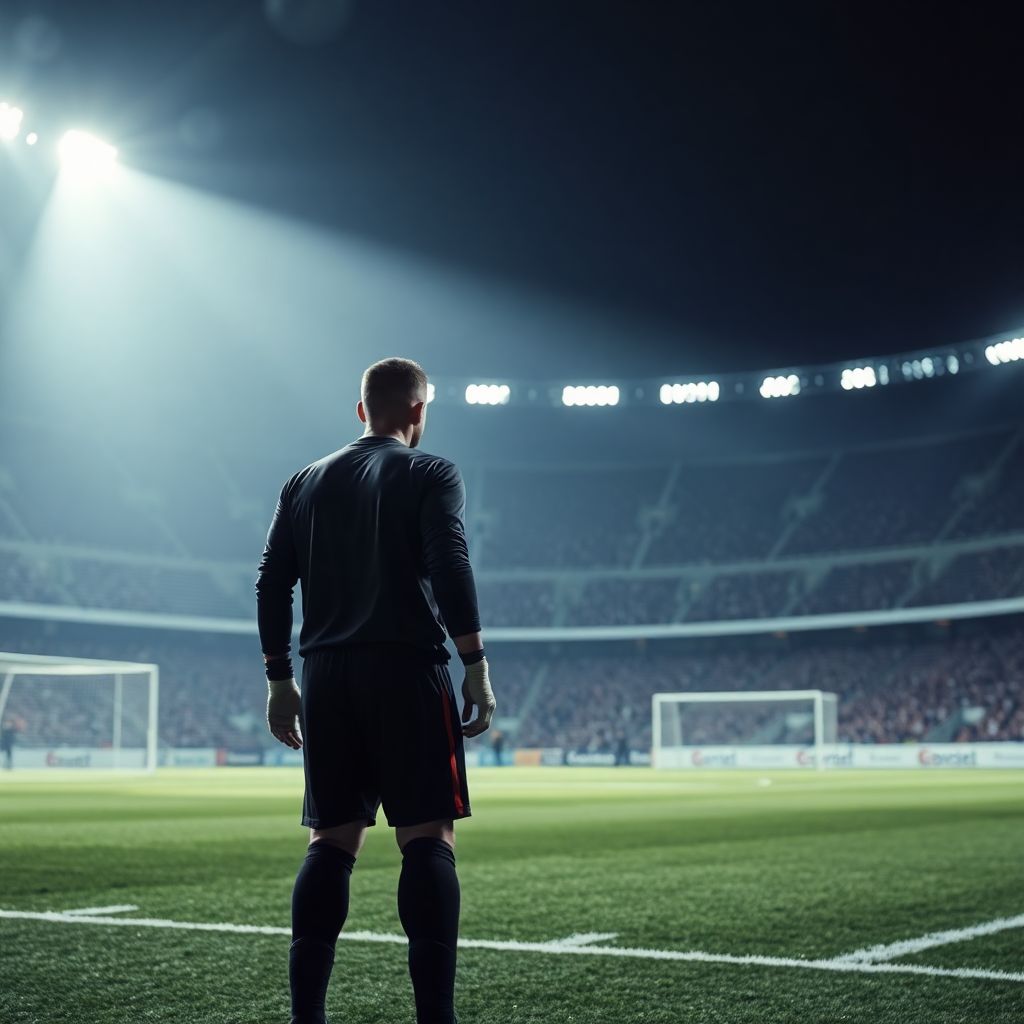
The solitude of the goalkeeper is a mix of physical isolation, extreme responsibility and symbolic exposure. Psychologically, it amplifies pressure, self-criticism and fear of error; symbolically, the keeper becomes a lone guardian and scapegoat. Managing this solitude requires specific mental training, communication routines and role clarity beyond standard team coaching.
Essential psychological and symbolic insights
- The goalkeeper experiences a structurally solitary role, even inside a cohesive team.
- Errors are hyper-visible, which increases perfectionism and fear of failure.
- Decision-making happens in short, intense bursts after long periods of apparent inactivity.
- Identity often merges with being either the hero or the culprit of the match.
- Symbolically, the keeper embodies both protection and vulnerability for the whole club.
- Targeted mental training reduces the toxic side of solitude and reinforces leadership.
The goalkeeper’s role: solitary demands and responsibilities
The goalkeeper occupies a physically separate space, further from most teammates and closest to the risk zone: the goal. This spatial isolation reinforces a psychological feeling of «being alone against everyone», especially in decisive moments or during defensive breakdowns.
Responsibility is asymmetrical. A striker can miss several chances; a keeper may make only one visible mistake, yet that error can decide the result. This asymmetry shapes a unique mental ecology: vigilance, anticipation, and self-control must stay high even when the ball is far away.
Solitude is not only physical. Tactical conversations, media narratives and fan reactions often personalise blame and praise around the goalkeeper. In many academies and clínicas y campus para porteros de fútbol, keepers train apart from the team, which reinforces the sense of being a specialist, but also an outsider if not handled carefully.
Understanding this role as a leadership position rather than a passive, reactive one is crucial. The keeper is a defensive coordinator, emotional thermostat and communicator. When this proactive vision is missing, solitude becomes heavier, leading to passivity and chronic tension.
Cognitive load and decision-making under isolation
- Continuous scanning with low physical involvement
For long periods, the goalkeeper mainly observes: reading defensive lines, opponents’ positions and potential passing lanes. The brain is active while the body seems still, which can create mental fatigue and lapses in attention if not trained deliberately. - Sudden shifts from calm to chaos
In a few seconds, the keeper must move from relative calm to explosive action: rushing out, claiming a cross, adjusting position or holding the line. These shifts demand fast switching between global vision (overall play) and micro-detail (ball trajectory, body cues). - Decision-making under irreversibility
Many decisions (coming out, staying, playing short vs long) are almost irreversible once initiated. Unlike outfield players, the goalkeeper often has fewer recovery options if the first choice is wrong, which increases anticipatory anxiety. - Self-monitoring and internal commentary
Solitude encourages a strong internal monologue. Without conscious training, this inner voice tends to become hyper-critical, especially after small technical imperfections, adding extra cognitive load during the match. - Information asymmetry and trust
From the goal, the keeper sees spaces and dangers teammates cannot see. They must decide when to shout, when to hold information, and how to keep authority without overloading defenders with constant instructions. - Memory of errors over memory of successes
The brain prioritises remembering goals conceded over saves made. If not balanced by guided reflection, this bias reinforces fear, rigid decision-making and overcautious play.
Applied scenarios of solitude in goalkeeping
This section shows how the previous mechanisms appear in real situations and how to counter typical mistakes quickly.
Scenario 1: After conceding an early goal
Typical mistake: replaying the error mentally for several minutes, disconnecting from the game and becoming scared of leaving the line again.
Quick prevention: use a three-step reset routine practised in sesiones de psicología deportiva para porteros profesionales:
1) one deep breath while stepping out of the goal,
2) verbal cue («Next action»),
3) small technical focus (e.g., ready stance) for the next phase of play.
Scenario 2: Long periods without interventions
Typical mistake: drifting into passive watching, losing optimal position and being surprised by a sudden long ball or counterattack.
Quick prevention: between actions, set micro-tasks: scan three reference points (ball, back line, deepest opponent), then adjust two or three steps. Many entrenamiento psicológico para porteros de fútbol programmes pair this with cue words like «line-depth-threat».
Scenario 3: Facing a penalty in a hostile stadium
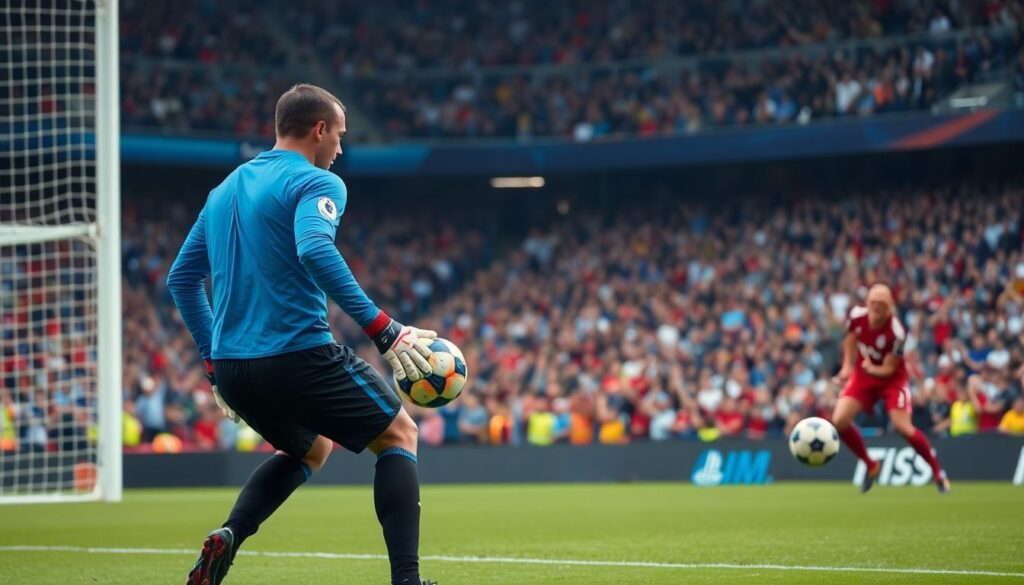
Typical mistake: focusing on reputation («I always concede penalties») or the crowd, instead of the kicker’s run-up and body language.
Quick prevention: pre-match decide a simple strategy (wait, half-guess, or study patterns). During the penalty: fix gaze on the ball and hips, repeat one short phrase («read and react»), and accept in advance that even a goal does not define your match.
Emotional landscape: stress, confidence and identity
The emotional life of a goalkeeper oscillates between extreme exposure and long invisibility. Below are typical scenarios where solitude amplifies emotional reactions and what they usually look like on the pitch.
1. Chronic fear of making a decisive mistake
Many keepers, especially young ones in Spain, play «not to fail» instead of «to help the team win». They avoid risky but correct actions (high line, sweeper-keeper interventions). Emotionally, this appears as muscle tension, hesitation, and late decisions.
2. Over-identification with the role
The phrase «I am a goalkeeper» becomes an identity cage. A bad game feels like a bad self. This is common in players who grow up in specialised clínicas y campus para porteros de fútbol where goalkeeping is central to their social world. Any criticism is experienced as a personal attack, not as feedback.
3. Hero-villain emotional swings
From «saviour of the team» after a great save to «culprit of the defeat» after a late goal. These swings destabilise self-confidence and make mood depend excessively on results or headlines, which is particularly intense in professional environments.
4. Lonely processing of emotions after matches
While outfield players often share responsibility, keepers tend to internalise and ruminate alone, on the bus or at home. Without tools learned in curso online de coaching mental para porteros or with a psychologist, this can turn into sleep problems, avoidance of match videos and growing anxiety.
5. Leadership pressure without emotional preparation
Coaches ask keepers to «command the box» and «organise the defence», but few clubs provide real emotional training. The result is a player who shouts mechanically or stays silent, feeling like an impostor, rather than acting from grounded confidence.
Symbolism of the lone guardian in sport and culture
The goalkeeper is loaded with symbolic meaning, in football culture and beyond. This symbolism offers motivational resources but also psychological traps if misunderstood.
Symbolic strengths of the goalkeeper role
- Guardian of the community: represents protection of fans, city and club history, especially in derbies and finals.
- Figure of courage: stands alone in front of shots, accepting physical risk and emotional exposure.
- Last hope and unexpected hero: one save can change an entire tournament narrative.
- Strategic thinker: sees the whole game, embodying calm intelligence and anticipation.
- Symbol of resilience: must stand up after visible mistakes, modelling persistence for younger teammates.
Symbolic limitations and psychological traps
- Scapegoat function: supporters, media and even teammates may unconsciously use the keeper to channel collective frustration.
- Myth of permanent invulnerability: the image of the «cold, unbreakable keeper» makes it harder to ask for help or admit fear.
- Isolation as destiny: believing that being misunderstood and alone is «part of the job» prevents building supportive relationships.
- Hero addiction: chasing spectacular saves to confirm identity, instead of prioritising correct positioning and simple interventions.
- Romanticising suffering: young players may interpret constant internal struggle as proof of commitment, rather than a signal to adjust training.
Training strategies to mitigate the effects of solitude
This section focuses on frequent errors in managing goalkeeper solitude and how to prevent them quickly in daily work.
1. Treating psychological work as a last resort
Mistake: calling a sport psychologist only during a crisis (big error, loss of starting spot).
Prevention: integrate short, regular mental drills into weekly training, or include structured entrenamiento psicológico para porteros de fútbol modules in the club plan from pre-season.
2. Separating technical and mental training completely
Mistake: doing concentration or confidence exercises in a classroom, with no link to real dives, crosses or build-up situations.
Prevention: combine both. For example, during crossing drills, the keeper must say a clear command word before each action, then use a pre-defined reset routine if they drop the ball. Many modern curso online de coaching mental para porteros already blend these aspects.
3. Ignoring communication as a psychological skill
Mistake: assuming the keeper will «naturally» know how to lead the back line.
Prevention: train scripts and tone: short, specific phrases for different situations (line up, drop, man on). Record training, review voice use, and adjust. Good libros de psicología del portero de fútbol often include practical communication frameworks.
4. Overloading the keeper with blame in video analysis
Mistake: pausing every conceded goal to ask, «What should you have done here?», reinforcing hyper-responsibility.
Prevention: analyse defensive errors as a chain, not as isolated goalkeeper mistakes. Alternate clips of good interventions with problematic ones to keep self-image balanced.
5. Neglecting recovery of self-esteem after big errors
Mistake: «letting time heal it» without structured support after a decisive mistake in a derby or playoff.
Prevention: schedule one or two sesiones de psicología deportiva para porteros profesionales (even online) in the following days. Focus on: objective reconstruction of the action, identification of controllable factors, and a clear learning point.
6. Underusing specialised environments
Mistake: sending keepers to generic football camps where their specific mental needs are barely addressed.
Prevention: prioritise clínicas y campus para porteros de fútbol that explicitly include mental routines, decision-making games and pressure-management workshops, not just shot-stopping drills.
Case studies: applying psychological concepts on the pitch
Case 1: Young keeper paralysed after a televised error
Context: 18-year-old goalkeeper in a Spanish youth league concedes a soft goal in a TV match. In the next games, he stays glued to the line, avoids catching crosses and asks the coach not to play.
Intervention (3 weeks):
- Week 1 – Emotional decompression: one individual session to separate self-worth from performance; review the error objectively and identify at least one technical and one contextual factor (e.g., late call from defender).
- Week 2 – Technical plus mental micro-wins: specific training on similar shots with clear success criteria. After each correct action he repeats a phrase («I correct and continue»). Include one structured video review of good saves from previous months.
- Week 3 – Gradual exposure to pressure: simulate «TV match» with teammates filming the session, crowd noise audio, and a simple focus cue («ball-position-decision»). He plays 30 minutes in a friendly, with pre- and post-match debrief.
Result: the keeper returns to starting role, with a new reset routine and a more realistic narrative about mistakes.
Case 2: Experienced professional struggling with leadership
Context: 30-year-old goalkeeper in Segunda División feels distant from younger defenders and avoids giving instructions in matches, despite good technical level.
Intervention (6 sessions):
- Map his beliefs about leadership («I must be perfect before I can talk»).
- Design three simple command phrases for each defensive phase (set pieces, open play, counterattacks).
- Use video to mark situations where a short command would have helped.
- Practice voice projection in training, with coach giving feedback only on clarity, not on tactical content.
- Agree with the captain on a signal where he supports the keeper’s instructions publicly in the next two matches.
Result: communication becomes more natural, solitude feels less heavy, and the back line shows better coordination under pressure.
Case 3: Amateur keeper balancing work, family and football
Context: 35-year-old goalkeeper in a regional league in Spain feels mentally exhausted, arrives late to training and starts dreading matches.
Intervention (self-managed plan):
- Limit football-related rumination to two short slots per week (15-20 minutes of video or reflection).
- Create a pre-match mini-ritual: 5 minutes of breathing, visualising first three interventions, and reviewing one positive memory from past games.
- Talk with coach to adjust expectations: reduce extra sessions, focus on quality, not quantity.
Result: subjective pressure decreases, enjoyment returns, and mistakes stop feeling like personal failures.
Practical clarifications and common misconceptions
Is solitude inevitable for all goalkeepers?
The positional solitude is inevitable; feeling emotionally alone is not. Good communication habits, supportive coaching and peer relationships can make the role feel connected, even if the keeper stands physically apart.
Do only weak goalkeepers need psychological training?
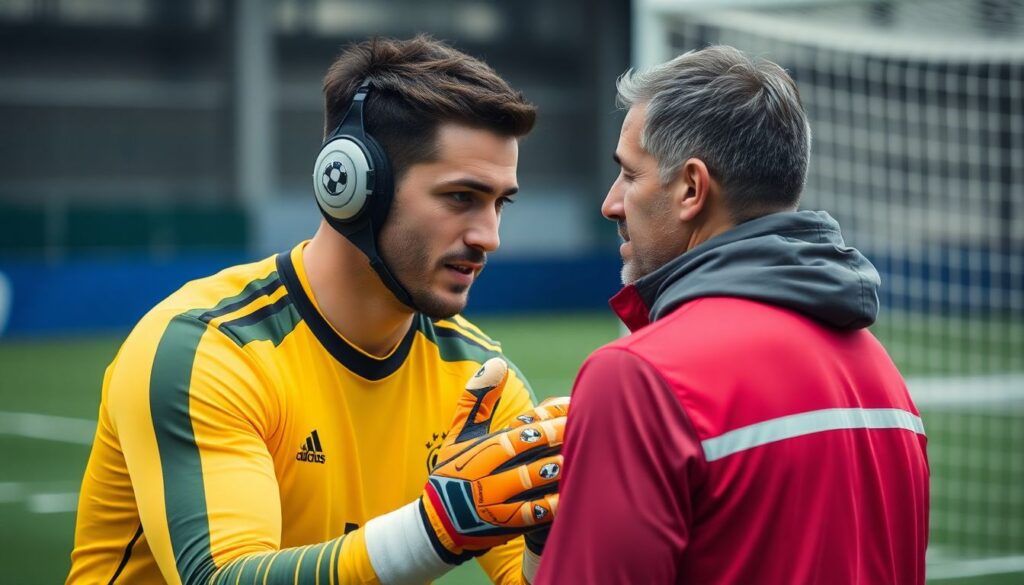
No. Mental work for keepers is like strength training: it is for performance and injury prevention, not just for «problems». Many elite keepers use ongoing entrenamiento psicológico para porteros de fútbol to stay at the top level.
Are specialised books and online courses really useful?
They can be, if they offer concrete exercises, not just motivation. Quality libros de psicología del portero de fútbol and a well-designed curso online de coaching mental para porteros should include routines you can test in training and matches.
How often should a goalkeeper work with a sport psychologist?
There is no universal frequency. Some pros use weekly sesiones de psicología deportiva para porteros profesionales, others only in specific periods (pre-season, slumps, important tournaments). What matters is continuity over time, not intensity for a few days.
Can group goalkeeper camps replace individual mental work?
Specialised clínicas y campus para porteros de fútbol are excellent to learn tools, share experiences and normalise fears. Individual sessions remain valuable to address personal patterns, family context and club-specific pressures.
Is it better to «forget» big mistakes as fast as possible?
Trying to erase them usually backfires. It is healthier to review them once or twice with a structured method, extract clear lessons, then deliberately shift focus to future actions and previous successes.
Does playing out from the back increase psychological pressure?
It changes the type of pressure: more involvement with the ball, more visible decisions. With good tactical clarity and mental routines, this style can actually reduce anxiety, because the keeper feels more active and influential.