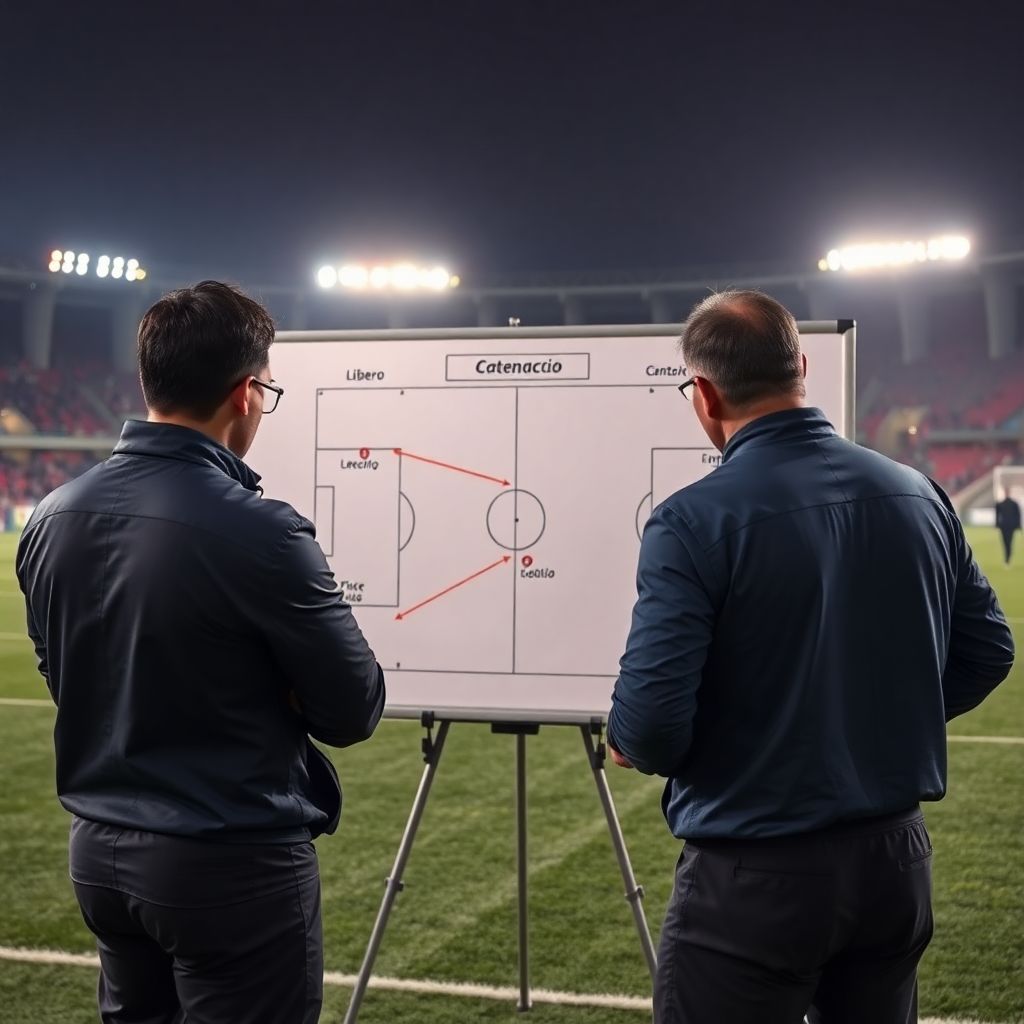
Football tactics mirror each era’s fears, freedoms and technologies: the spare man of the líbero, the defensive walls of catenaccio, the collective risk of total football, and today’s data-shaped false nine. Understanding this evolution sharpens modern match preparation, scouting, and training design for Spanish coaches and analysts working at intermediate level.
Core Tactical Insights and Takeaway Concepts
- Tactical systems are social products: economic pressure, politics, media and training methods all leave fingerprints on how teams play.
- The líbero expressed a need for security and control; the false nine reflects flexibility, pressing and space manipulation.
- Catenaccio is not just «parking the bus» but a structured response to postwar uncertainty and result obsession.
- Total football matched a culture of emancipation: interchangeable roles, positional freedom and high collective responsibility.
- Data, video and software de análisis táctico de fútbol profesional now accelerate tactical cycles and blur strict formations.
- To study «del líbero al falso nueve» efficiently, mix tácticas de fútbol modernas análisis with historical context and concrete match clips.
Myths That Distort Tactical History
Tactical history is often reduced to slogans, when in reality each system answered concrete problems of its time. A myth-free view starts by asking: what social anxieties, training methods and rules made this idea logical, not just fashionable?
Common myths oversimplify. One is that catenaccio «killed football» while total football «saved it». Another is that the líbero and the false nine are poetic opposites, when both emerged to create a spare man in key spaces. Tactics change less by genius inventions and more by gradual adjustments accelerated by rule changes, fitness trends and scouting.
There is also the «straight line myth»: the idea that tactics evolve linearly from primitive to sophisticated. In practice, many «new» ideas are recycled. Pressing, back-three builds and rotation-heavy attacks appeared in different guises decades ago. What changed was context: pitch quality in Spain, sports science, video, and the accessibility of any curso online de táctica de fútbol para entrenadores.
For modern coaches, especially in es_ES environments, the key is to read each era’s logic instead of mocking it. When you study libros sobre táctica de fútbol del líbero al falso nueve, look not only at shapes (1-3-3-3, 4-3-3, 4-6-0) but at what society rewarded: safety, spectacle, work rate, or data-backed efficiency.
The Libero: Defensive Liberation and Its Social Roots
The líbero is a free central defender playing behind the line, responsible for covering depth, sweeping danger and launching clean build-up. It is «liberated» from strict marking to protect the team from chaos.
Historically, the líbero grew in contexts where defensive stability was a priority: postwar Europe, risk-averse club boards, and leagues where pitches and refereeing made mistakes more likely. The spare man behind the line was a rational insurance policy. Socially, this reflected a desire for order and hierarchy: one player seeing everything, correcting others and deciding when to step in.
In training and match play, the líbero typically worked like this:
- Depth cover: starts 2-5 metres behind the other centre-backs, reading through balls and long passes.
- Sweeping clearances: attacks loose balls and second balls early, turning chaos into controlled possession.
- Initiating build-up: once in possession, drives forward into midfield or plays long diagonals, acting as an early playmaker.
- Communication hub: constantly instructs the line on stepping up or dropping, functioning as an on-field organiser.
- Psychological anchor: team-mates accept more front-foot aggression knowing someone is behind them as security.
Icons of this role, from Beckenbauer to later hybrid sweepers, show a pattern: technically good, tactically calm, strong authority. The coaching takeaway is clear: if you recreate a líbero in a modern back three, you must design the whole structure – pressing height, wing-back behaviour, and rest defence – around that free defender.
Catenaccio and Counter-Attack: Postwar Pragmatism in Action
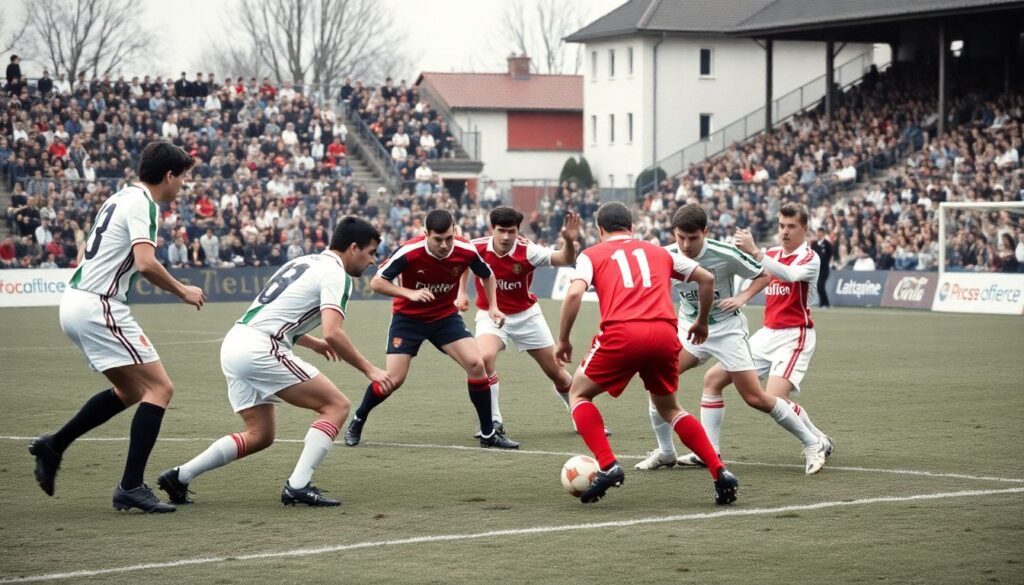
Catenaccio is a compact, deep defensive scheme using strict roles, a sweeper and fast counter-attacks. Its core is refusal to open central spaces cheaply.
Its rise followed a Europe marked by scarcity and caution. Clubs and national teams valued guaranteed results over entertainment; fans accepted tight wins after years of instability. Coaches saw that deep blocks reduced variance: fewer transitions, fewer chaotic moments, more control of risk. Catenaccio mirrored a defensive social posture.
Typical application scenarios:
- Inferior squad quality: when technical level is lower than the opponent, sitting deep, compressing the box and countering down the flanks keeps you competitive across two legs.
- Hostile away matches: small, intense Spanish grounds or European away ties, where emotional waves favour the home side, are ideal for structured deep blocks.
- Two-leg knockout ties: a clean sheet in the first leg was often prioritised; catenaccio offered a way to «keep the tie alive» regardless of venue.
- Bad pitches and heavy balls: when ball circulation is slow and bounces are unpredictable, defending deep reduces spacing problems and capitalises on opponent errors.
- Result-obsessed club cultures: boards under pressure may push coaches toward low-risk defending, making catenaccio-like shapes socially rewarded.
- Late-game management: even modern sides sometimes finish with catenaccio principles – five at the back, narrow midfield, direct clearances – to close games.
For analysts and those doing a máster en análisis táctico y scouting fútbol, the nuance is crucial: catenaccio is not anti-football, it is context-optimised football. Its methods – horizontal compactness, clear trigger rules, defined counter channels – remain useful, especially for underdogs.
Total Football: Collective Identity, Roles and Risk
Total football is a model where players interchange positions within a high-intensity, pressing and possession framework, while maintaining team structure. Roles are fluid; principles are fixed.
It emerged in an era of social change: more individual freedom, growing middle classes and a culture that valued creativity and collective participation. The football mirrored this: no rigid hierarchies, constant rotation, defenders joining attacks and forwards pressing as first defenders. This demanded higher fitness, more tactical education and more training time with the ball.
Advantages that appealed to that era and still matter today:
- Unpredictability: constant rotations make marking schemes difficult; opponents struggle to assign fixed match-ups.
- Superior occupation of space: players move to optimal zones instead of staying in nominal positions, improving passing angles.
- Collective pressing: immediate ball recovery embodies a proactive mindset, matching modern fan expectations.
- Player development: individuals learn multiple roles (full-back/winger, interior/false nine), useful for squads with limited budgets.
- Cultural alignment: for clubs seeing themselves as innovative or «community-first», this style communicates identity on the pitch.
Constraints and risks that coaches must manage:
- High physical demands: requires top conditioning and rotation; without it, pressing collapses and spaces appear everywhere.
- Cognitive overload: players must read pressing cues, rotations and rest-defence structure; not all squads are ready.
- Exposure to counters: if one line steps up and another does not, the gaps become bigger than in simple low blocks.
- Time-intensive coaching: implementing total football principles takes longer pre-season and more video work.
- Selection bias: it works best with intelligent, technically secure players; clubs without such profiles may force the model and suffer.
The False Nine: Positional Fluidity and Modern Attacking Logic
The false nine is a nominal striker who drops into midfield to overload central zones, creating uncertainty in opposing lines. It is less a number and more a behaviour pattern.
Its rise matches a data and pressing era: compact blocks, zonal marking and emphasis on central control. Strikers no longer wait in the box; they help create superiorities between lines. The false nine uses intelligence and timing rather than purely size or speed, aligning with a football culture obsessed with patterns and half-spaces.
Common mistakes and myths:
- Myth: «It is just playing without a striker» – In reality, the false nine must still threaten depth with third-man runs or by releasing wide forwards behind the line; otherwise, defences stay comfortable.
- Mistake: Dropping too deep, too early – If the false nine receives alongside pivots, you lose verticality and compress your own midfield, simplifying the opponent’s task.
- Myth: «Any creative midfielder can do it» – The role demands timing in runs, pressing intensity and back-to-goal skills, not just passing range.
- Mistake: No coordinated wide threats – A false nine without aggressive wingers attacking inside channels results in sterile possession around the block.
- Myth: «It belongs only to big clubs» – Lower-budget teams in Spain can use a lighter, mobile forward as a false nine to exploit slow centre-backs in transitional leagues.
- Mistake: Ignoring rest defence – Pulling the striker away from the last line changes your counter-pressing structure; full-backs and holding midfielders must adjust positioning.
Data, Training Methods and the Shaping of Contemporary Systems
Modern systems are hybrids shaped by analytics, pitch conditions, officiating and calendar intensity. Formations (4-3-3, 3-4-2-1, 4-2-3-1) are just starting points; the real identity comes from principles visible in data and video.
Professional clubs use software de análisis táctico de fútbol profesional to check pressing intensity, pass networks and space occupation. Pre-season and microcycles then translate these findings into drills: rondos linked to pressing triggers, pattern play linked to rest-defence structures, and finishing exercises guided by shot-location data. Even grassroots coaches increasingly follow similar logic thanks to affordable tools and a growing offer of tácticas de fútbol modernas análisis resources.
| Tactical Idea | Main Era Mood | Key Aim on the Pitch |
|---|---|---|
| Líbero | Search for stability and hierarchy | Security via a spare man behind the line |
| Catenaccio | Pragmatism and risk aversion | Minimise chaos, maximise result control |
| Total football | Collective freedom and creativity | Fluid roles, proactive pressing and rotation |
| False nine | Flexibility and data-driven central control | Overload between lines, open space for runners |
A simple mini-case: imagine a Spanish Segunda club evolving from 4-4-2 to a 4-3-3 with a false nine. Data shows they struggle defending central channels and create little between lines. The staff, many trained via a máster en análisis táctico y scouting fútbol, designs a three-week block where:
- Morning: video of historical líbero and false nine examples to discuss space control in different eras.
- Afternoon: positional games 6v4 in central corridors, encouraging the false nine to receive between lines and connect wide runs.
- Weekend: controlled friendlies with specific KPIs: central entries, counter-press recoveries, and quality of rest defence.
The club’s systems now blend lessons from «del líbero al falso nueve»: stability from older models, fluid attacks from newer ones. Coaches using a curso online de táctica de fútbol para entrenadores or studying libros sobre táctica de fútbol del líbero al falso nueve can replicate this logic at smaller scales, aligning tactical choices with the competitive and cultural demands of their own era.
Fast Practical Tips for Training and Match Analysis
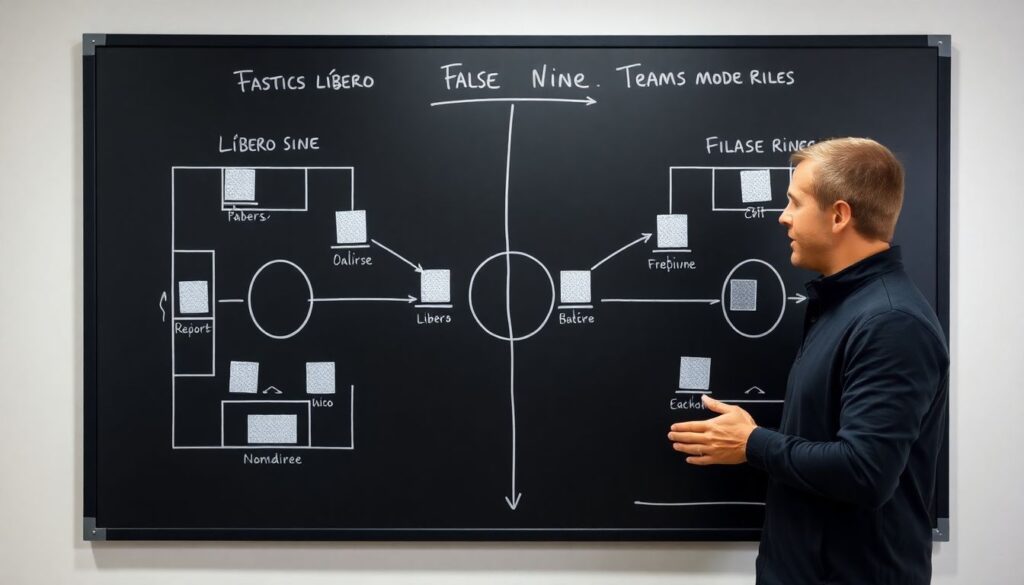
- When analysing opponents, always ask: what «spirit of the age» does their style reflect – safety, intensity, creativity, data? This sharpens your game plan.
- Design one session per week linking a historic role (líbero, false nine) to your current system, so players see tactical ideas as evolutions, not isolated tricks.
- Use modern video tools or simple tagging instead of only intuition; even without full software de análisis táctico de fútbol profesional, basic metrics (where you lose the ball, where you recover it) reveal your real identity.
- In Spain’s lower tiers, adapt elite concepts minimally: half-spaces, rest defence and pressing triggers matter more than copying full positional play.
- When studying with a curso online de táctica de fútbol para entrenadores or similar, take one principle per week and build a microcycle theme around it.
- Keep a short «era diary»: after each match, note whether your plan looked more like catenaccio, total football or false nine logic, and if that fit the opponent and competition context.
Practical Clarifications for Coaches and Analysts
Is the líbero role obsolete in modern football?
The pure líbero behind two man-marking stoppers is rare, but its principles live on in modern sweepers in a back three and in proactive goalkeepers. You can still use a free defender concept, adjusted to pressing and offside-line behaviour.
How can I teach a false nine role in a semi-professional Spanish team?
Start with clear constraints: limit the false nine to dropping only when a midfielder is blocked, and design finishing drills where wide players attack inside channels. Use video clips and small-sided games to internalise timing rather than long theoretical explanations.
Can small clubs realistically play a form of total football?
They can apply selected principles – collective pressing, rotations between two or three players – without full positional interchange. Focus on 2-3 repeatable patterns that suit your squad, instead of copying entire elite blueprints.
Where do modern tactics fit between catenaccio and total football?
Most teams are hybrids: compact and risk-aware without giving up pressing or structured build-up. The balance depends on club culture, squad profile and competition demands rather than ideological purity.
What resources best connect tactical history with current practice?
Look for libros sobre táctica de fútbol del líbero al falso nueve that combine diagrams with match case studies, then complement them with video platforms and an occasional máster en análisis táctico y scouting fútbol or shorter specialised course.
How can I avoid being trapped by tactical fashion?
Analyse why a trend emerged: rule changes, fitness, data or squad types. Then test small versions in training before adopting them fully. Context-fitting beats trend-following every time.
Is advanced analysis software necessary at amateur level?
Full professional suites are helpful but not essential. At amateur level, simple tagging, manual data collection and free tools already provide enough feedback to align your tactical choices with the reality of your team and league.