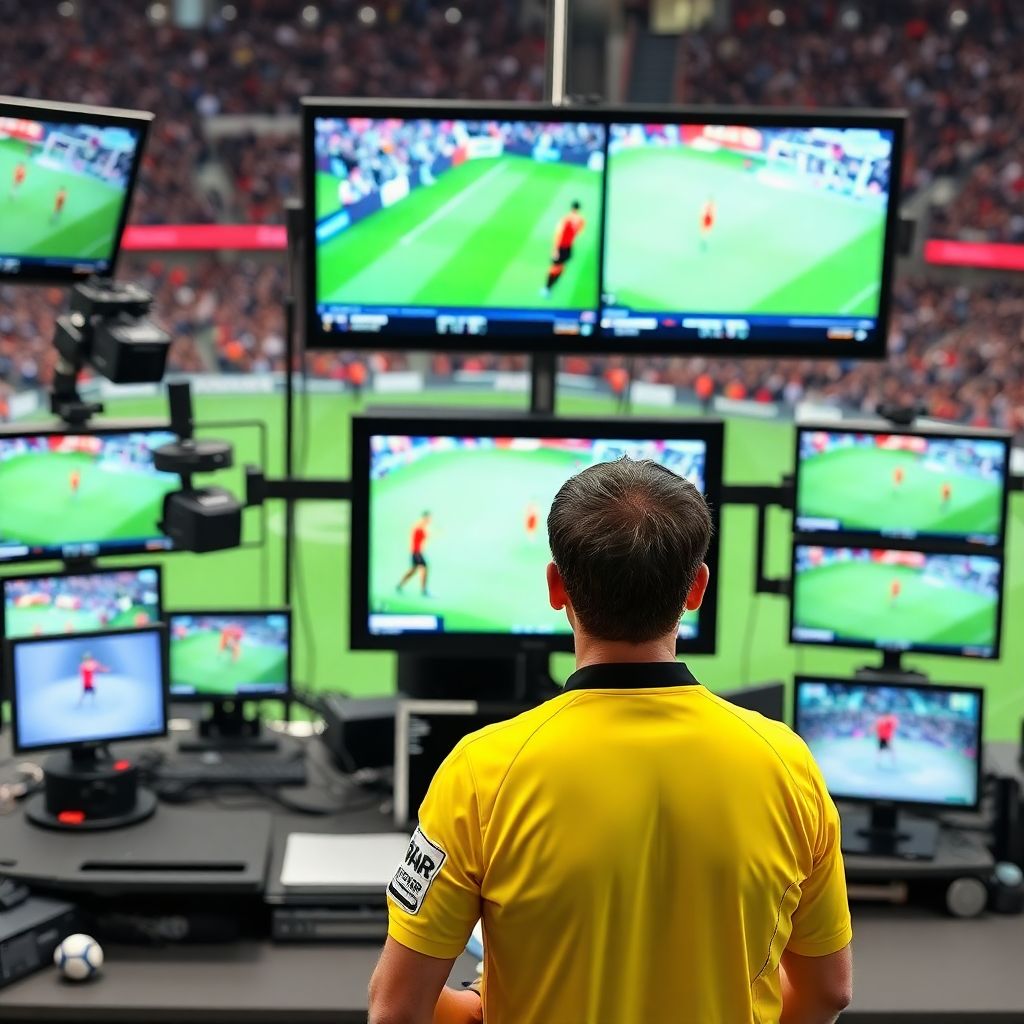
VAR is a support system, not a truth machine: multiple cameras, replay operators and a video team help the referee re‑check specific «clear and obvious» errors. It reduces certain injustices but cannot eliminate subjectivity, especially with offsides, handballs and fouls where interpretation and technical limits still shape the final decision.
Core premises of VAR decision-making
- VAR only intervenes in a narrow set of match‑changing incidents: goals, penalties, direct red cards and mistaken identity.
- The on‑field referee keeps the final word; VAR is advisory, not superior authority.
- The threshold is «clear and obvious» error, not microscopic perfection on every duel.
- Technology adds tools (angles, slow‑motion) but also new grey zones (frame selection, calibration).
- Consistency depends as much on protocol and training as on hardware and software.
- Justice gains must be weighed against delays, fan experience and loss of spontaneity.
How VAR processes incidents: from cameras to calls
To understand cómo funciona el VAR en el fútbol, it helps to separate the technology from the protocol. Technically, VAR combines a control room with operators, a set of broadcast and dedicated cameras, and replay software that allows fast switching between angles and speeds. Procedurally, it follows a strict step‑by‑step flow.
The logical role of VAR is not to re‑referee the match, but to filter only potential game‑changing mistakes. In Spain and other top competitions, this is why many controversial fouls in midfield are never checked, while any goal, penalty or red‑card tackle is quickly reviewed in the background.
The core incident workflow can be broken into a compact algorithm:
- Incident occurs (goal, penalty shout, red card, or possible mistaken identity).
- VAR team automatically reviews using all relevant angles in real time.
- If they see a potential «clear and obvious» error, they inform the referee via headset.
- Referee decides either «check complete» (original decision stands) or goes to the pitch‑side monitor (OFR).
- After OFR, referee confirms, changes, or upgrades/downgrades sanction and signals final decision.
In practice, this means many checks stay «silent»: fans and players see no stoppage, but the VAR room has quickly validated the on‑field call. Only when the threshold for intervention is crossed do we see the referee’s rectangle signal and the match paused for a visible review.
Types of decisions VAR can and cannot resolve
Understanding the official scope clarifies many polémicas del VAR en la liga española and in other leagues. VAR is limited by design; it is not a hotline for every perceived injustice. The main categories are:
- Goals and attacking offences
Offside in the build‑up, handball by the scorer or assister, fouls in the attacking phase, ball being out of play before the goal. - Penalty decisions
Whether a foul or handball inside/outside the area, simulation, or missed offences that should result in a penalty or cancellation of a wrongly awarded one. - Direct red cards
Serious foul play, violent conduct, spitting, denying an obvious goal‑scoring opportunity; second yellow cards are deliberately excluded in most protocols. - Mistaken identity
Correcting which player should receive a yellow or red card, without changing the type of sanction. - Objective boundary questions
Ball out of play over goal line or touchline when directly related to a goal or penalty incident. - Non‑reviewable decisions
Corner versus goal‑kick, throw‑ins, most yellow cards, routine fouls in midfield, and overall assessment of physical contact below the «clear and obvious» threshold.
The narrow scope explains part of the frustration: many fans expect «total justice», but the protocol is intentionally minimalist to avoid constant interruptions and to respect the referee’s primary authority on judgment calls.
Technical limits: calibration, frame rate and human interpretation
Even with modern systems, tecnología VAR en el fútbol costo e implementación do not buy absolute precision. Hardware and software introduce their own uncertainties that interact with human judgment.
Typical technical and interpretative limits include:
- Frame rate versus reality
Offside lines rely on choosing the «kick point» frame; at standard frame rates, the ball is in contact with the foot across multiple frames, so a one‑frame difference can change an offside decision by several centimetres. - Camera perspective
Not all stadiums or leagues have the same camera positions or number of angles. Deep corners, crowded penalty areas, or occluded views can leave crucial contacts partially hidden. - Line‑drawing calibration
Calibrated offside lines depend on accurate mapping between 2D footage and 3D pitch coordinates. Marginal distortions or mis‑marked structural points can skew the final line, especially on tight calls. - Slow‑motion bias
Replays in super slow‑motion can make ordinary contact look more violent and intentional. Protocols usually ask referees to view incidents both at normal speed and slow‑motion to balance perception. - Audio and crowd noise
Sometimes, for handballs or minor pushes, the lack of a clear sound or the masking effect of crowd noise affects how an incident is perceived even in the booth. - Operational pressure
VAR officials must make fast decisions; rechecking one angle too many risks longer delays, but too few angles risk missing decisive details.
These limits show why estadíticas y análisis del VAR en el fútbol profesional must consider error margins and process variability, not only the final label «correct» or «incorrect».
Bias, consistency and the role of referee discretion
Debates about ventajas y desventajas del VAR en el fútbol moderno often focus on bias: does technology reduce it, or simply change where it appears? VAR reduces some cognitive biases (distance, blocked view) but introduces others (over‑reliance on replay, fear of overturn statistics, social pressure).
Systemic advantages of the VAR layer
- Offers a second look from a calmer environment, away from crowd pressure and player protests.
- Creates a documented process: every review is logged and can be assessed in referee debriefings.
- Enables standardised training clips, helping align referees’ interpretations across a competition.
- Reduces «ghost goals», missed red‑card tackles and blatant offside errors that previously decided titles.
Persistent limitations and new vulnerabilities
- Final decisions still depend on human interpretation of contact, intensity and intent.
- Different referee crews apply the «clear and obvious» threshold with varying strictness.
- Home‑crowd and media narratives may indirectly condition how bold VAR officials are in overturning calls.
- Transparency of communication is limited; fans rarely hear the detailed reasoning behind a given review.
- Statistical evaluation can be selective, focusing on showcased corrections and ignoring unreviewed errors.
Referee discretion is therefore central. VAR is a logic filter, not an override; justice improves where protocols are explicit and crews are consistently trained to a shared line of interpretation.
Impact of VAR on match flow, tactics and stakeholder trust
The presence of VAR modifies behaviour on and off the pitch. Players, coaches, fans and broadcasters quickly adapt to the new incentives created by reviewable incidents and by the time cost of each check.
- Rhythm and emotional momentum
Long reviews break the emotional arc of a match and can cool or inflame tempers depending on the outcome. Teams leading the score may welcome delays; chasing teams often experience them as disruption. - Tactical simulation of reviews
Some players exaggerate contact in reviewable zones (penalty area, near red‑card tackles), gambling that slow‑motion replays will favour them. Others appeal less in midfield, knowing VAR will not intervene. - Celebration and fan experience
Goals are now celebrated with an implicit «buffer period» until the kick‑off confirms that the VAR check is complete. This «limbo phase» can reduce spontaneity, especially in stadiums. - Media narratives and trust
High‑profile polémicas del VAR en la liga española and in other top leagues shape public trust: the same technology praised one week can be accused of systemic bias the next, depending on club and context. - Economic implications
Because tecnología VAR en el fútbol costo e implementación are substantial, smaller competitions may adopt simplified systems or fewer cameras, which can widen the gap in perceived fairness between elite and lower tiers.
Trust grows when the logic behind reviews is visible and predictable: clear communication of protocols, post‑match explanations of borderline incidents, and long‑term statistics showing how error rates evolve.
Evaluating outcomes: metrics for accuracy and fairness

To judge whether VAR is closer to «justice technology» or an illusion of objectivity, one must go beyond individual anecdotes and look at how it shapes patterns across a season. This is where estadíticas y análisis del VAR en el fútbol profesional become essential.
A simple conceptual algorithm for assessing a competition’s VAR performance could be structured like this:
for each match:
    record all reviewable incidents (goals, pens, reds, identity)
    for each incident:
        log on-field decision
        log VAR intervention (yes/no, type, duration)
        log final decision after review
        classify later via expert panel:
            - clearly correct
            - clearly incorrect
            - debatable / grey zone

aggregate per season:
    compute correction rate on clear errors
    compute new errors introduced by VAR changes
    track average review time and distribution
    compare club-level net impact (favourable vs unfavourable calls)
    evaluate consistency of similar incidents across matchdays
This logical loop shows that «objectivity» is always layered: technology helps detect and correct, expert panels define what counts as right or wrong, and fans interpret numbers through club loyalty and narrative. Pure neutrality is unreachable, but procedural fairness can be monitored and improved.
Quick self‑check: understanding VAR’s logical limits
- Can you clearly list which four categories VAR is allowed to review in your league?
- Do you distinguish between factual questions (offside position, ball out of play) and interpretative ones (intensity of a foul)?
- When judging a controversy, do you consider camera angles, frame choice and «clear and obvious» threshold?
- Are you aware that silent checks happen often, even when TV does not show a replay?
- Do your opinions on VAR include both corrected injustices and delays/ambiguities it introduces?
Practical queries about VAR implementation
Does VAR guarantee objectively correct decisions in football?
No. VAR reduces certain types of clear errors but does not remove interpretation. Camera limits, frame selection and varying referee thresholds mean that some incidents will always stay in a grey zone, even after multiple replays.
Why are some obvious fouls not reviewed by VAR?
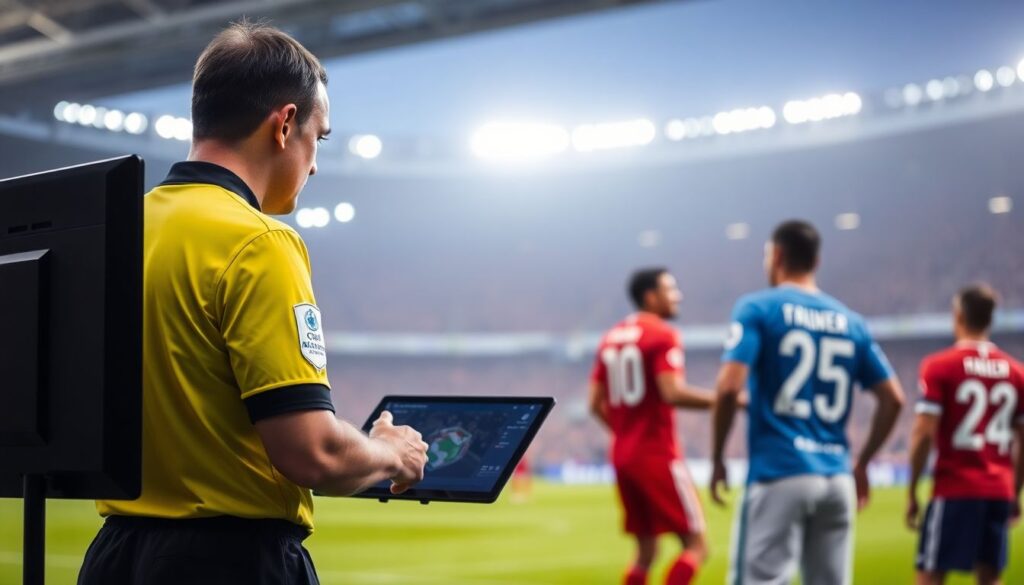
VAR can only intervene in specific incident types and in the attacking phase for goals or penalties. A hard foul in midfield, a wrong throw‑in or a debatable second yellow card usually falls outside protocol, so the on‑field call stands unless it directly links to a reviewable event.
Why do offside reviews sometimes take so long?
Operators must pick the exact frame of the pass, calibrate the 3D model of the pitch and place reference points on attacker and defender. When angles are crowded or lines are tight, this process becomes slower and more delicate, especially in stadiums with fewer cameras.
Is every goal automatically checked by VAR?
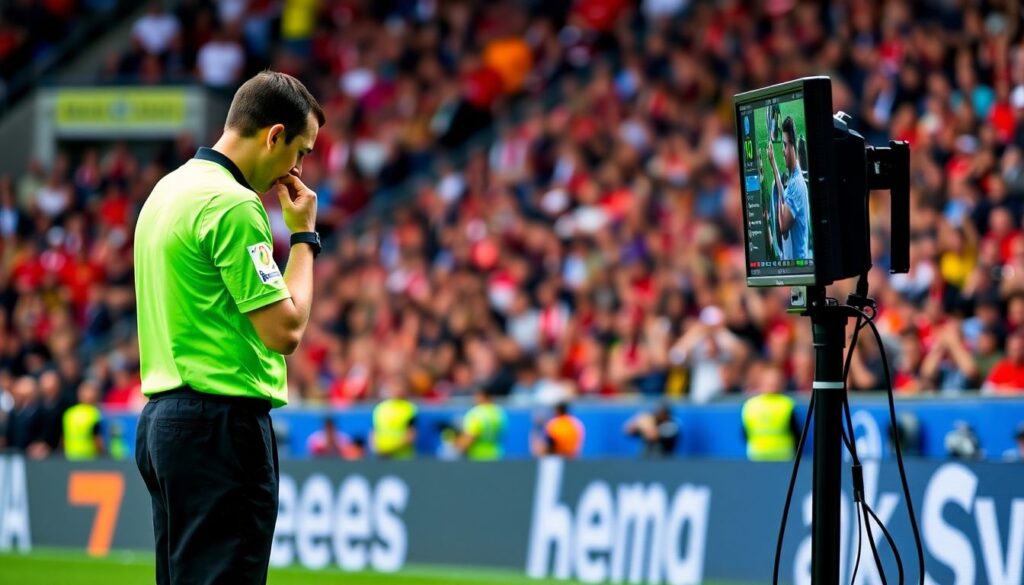
Yes in most top competitions: every goal triggers a silent check of offside, fouls, handball and ball in/out of play in the attacking phase. The referee only signals a formal review if the VAR team detects a potential clear and obvious error.
Why does VAR not intervene on yellow cards that seem clearly wrong?
Protocols deliberately exclude most yellow‑card situations to avoid excessive interference and delays. VAR only steps in for direct reds; upgrading or cancelling a yellow is typically considered part of the referee’s on‑field discretion.
Can smaller leagues use VAR with fewer cameras without losing fairness?
They can, but the system’s reliability decreases. Fewer angles mean more blind spots and more incidents where VAR cannot add much information beyond what the referee already saw, so expectations and protocols must be adjusted realistically.
How should fans interpret statistics about VAR helping or hurting specific clubs?
Club‑level balance figures can be informative but are easy to misuse. They should be read along with methodological notes: which incidents are counted, how grey areas are classified, and whether silent checks and non‑interventions are included.