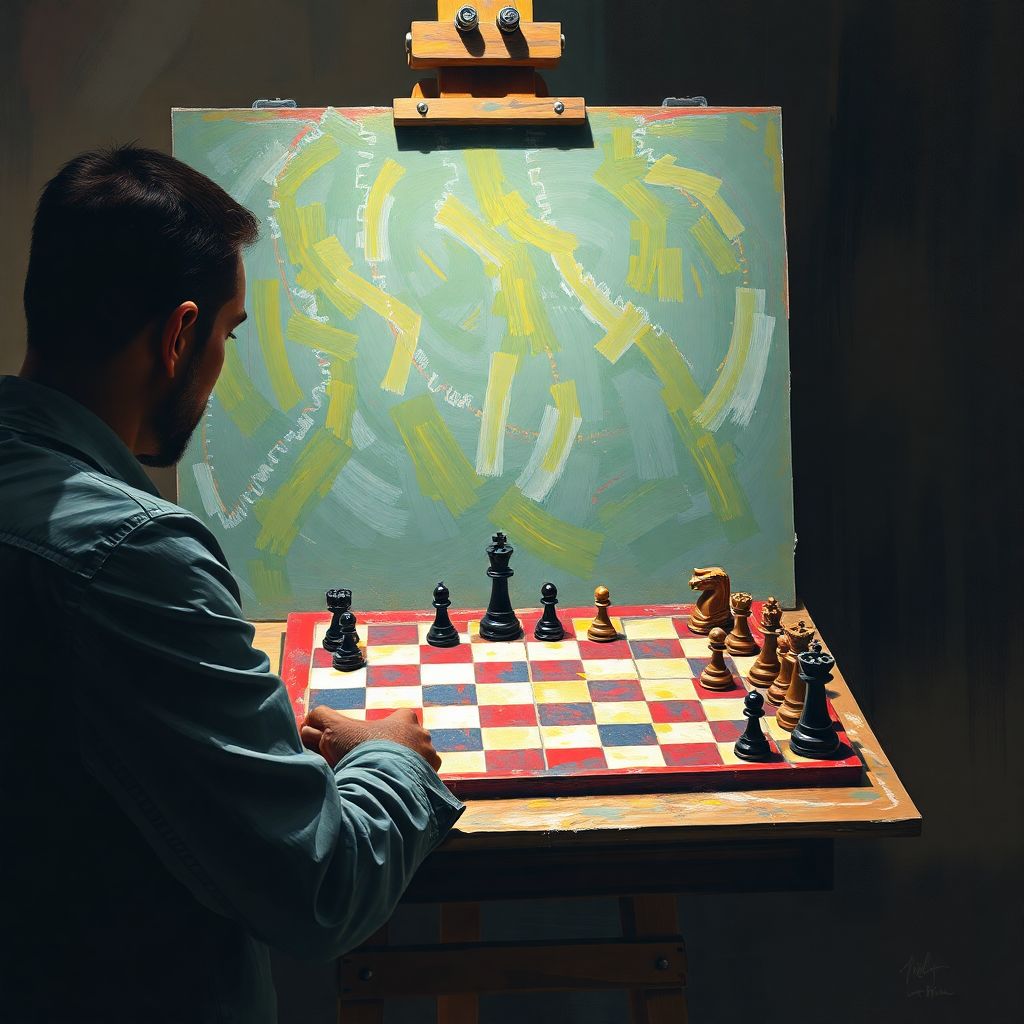
Treating tactics as art means seeing each combination as emerging from positional foundations, like a bold brushstroke on a well-prepared canvas. For choosing your best training style, balance tactical sharpness, long-term strategic understanding, and your taste for creativity, then select methods that connect chess motifs with artistic ideas you intuitively understand.
Core parallels between positional strategy and artistic movement
- Both chess and art transform initial chaos into ordered structures using clear underlying principles.
- Positional play resembles composition: you place pieces as a painter arranges shapes, light, and focus.
- Tactical blows mirror expressive brushstrokes that become possible only after patient preparation.
- Prophylaxis in chess is like negative space in art: you control what must not appear.
- Tempo and rhythm organise moves and gestures into a readable, coherent narrative.
- Piece coordination parallels colour harmony: small imbalances radically change the global impression.
- Transitions in the position work like scene changes, guiding the viewer’s or opponent’s attention.
Foundations: spatial control in chess and canvas
To compare positional play with artistic movement and select the best approach for you, focus on these criteria of spatial control:
- Central dominance vs. focal point: In chess, occupying central squares; in art, defining where the eye lands first. Choose methods that teach you to create and recognise strong focal points.
- Lines and diagonals vs. visual lines: Chess pieces follow files, ranks, diagonals; artists use perspective lines. Prefer training that makes you constantly trace lines of force and alignment.
- Space advantage vs. breathing room: A side with more space is like a painting with open areas to move in. Learn to sense cramped positions as overcrowded compositions that need simplification.
- Light-square/dark-square complexes vs. colour temperature: Controlling one colour complex is similar to controlling warm or cool zones in a canvas. Good material on mejores libros sobre juego posicional en ajedrez para avanzados stresses these long-term colour-like structures.
- Piece activity vs. dynamic brushwork: Active pieces equal vigorous strokes; passive pieces equal muddy, static areas. Your training should punish you every time a piece stays in the background too long.
- Weaknesses vs. flawed proportions: Backward pawns, weak squares, and bad bishops are like figures with wrong proportions. The eye always returns to these defects, so choose material that trains you to spot them immediately.
- Coordination vs. balance of masses: Coordinated pieces resemble well-balanced shapes and tones. Look for libros de táctica de ajedrez y juego posicional that constantly ask, «Which piece is not participating in the picture?»
- Flexibility vs. open composition: A flexible position keeps options; an open composition allows reinterpretation. Favour methods that delay commitments until your pieces (or visual elements) are ideally placed.
Tempo, rhythm and pacing: timing in strategy and performance
Different training «styles» mirror artistic approaches to rhythm. This table compares common options so you can choose the mix that fits your goals, budget, and temperament.
| Variant | Best suited for | Pros | Cons | When to choose |
|---|---|---|---|---|
| Tactics-first, fast rhythm | Players who love sharp positions and quick decisions | Improves calculation speed; feels like improvisational sketching; ideal for entrenamiento de ajedrez en línea táctica vs juego posicional platforms. | Positional understanding may lag; you can become dependent on immediate tactics. | If you blunder often under time pressure and need to boost pattern recognition quickly. |
| Positional structure, slow rhythm | Strategic thinkers who enjoy planning and endgames | Deepens sense of harmony and control; matches the content of mejores libros sobre juego posicional en ajedrez para avanzados. | Can feel dry; creative tactical flair may remain underdeveloped. | If you reach good positions but struggle to convert advantages or misplace pieces slowly. |
| Artistic-combinational focus | Players attracted to beauty, sacrifices, and visual motifs | Connects chess to art; a curso online de ajedrez artístico y combinaciones espectaculares makes learning emotionally engaging. | Risk of over-sacrificing; you may ignore simple, strong moves chasing «beauty». | If aesthetics motivate you more than results and you already have basic tactical safety. |
| Balanced rhythm: tactic + position blocks | Most club players seeking stable improvement | Combines calculation drills with strategic study and annotated games. | Requires discipline to keep both components; progress may feel less dramatic. | If you want reliable rating growth with limited daily time. |
| Coach-led creative training | Players ready to invest in guided study | clases particulares de ajedrez táctico y ataque creativo tailor rhythm to your strengths; feedback accelerates correction of habits. | More expensive than self-study; depends on coach quality and availability. | If you feel stuck with self-training and can allocate a stable chess budget. |
Piece harmony vs. compositional balance: arranging elements for effect
Use these scenario-based guidelines to connect positional choices with artistic composition, including budget and premium options.
- If your positions often look chaotic, focus on «composition» drills: study master games without engine help and pause every 3-5 moves to ask where the main focal point is. Prefer low-cost resources such as classic game collections and budget-friendly libros de táctica de ajedrez y juego posicional over scattered tactics apps.
- If your pieces are well placed but you miss winning blows, choose an artistic-combinational training line. Mix daily tactical puzzles with curated sacrificial games (a good curso online de ajedrez artístico y combinaciones espectaculares is ideal). You keep strong composition but learn when to add a dramatic brushstroke.
- If defenders always neutralise your attacks, study balance and overextension, like checking that a painting is not overloaded on one side. Use positional texts and mejores libros sobre juego posicional en ajedrez para avanzados to learn when to pause the attack, improve the worst piece, and only then restart operations.
- If you play safely but never seize the initiative, train boldness with limited, controlled risks. Analyse model attacking games with a coach or in small study groups; premium clases particulares de ajedrez táctico y ataque creativo can be efficient if you want someone to push you out of your comfort zone.
- If your budget is tight, prioritise: (1) one solid positional book; (2) free online tactics trainers for daily rhythm; (3) occasional group sessions or affordable entrenamiento de ajedrez en línea táctica vs juego posicional rather than one-to-one coaching. Think of it as building a strong monochrome sketch before adding expensive colours.
- If you can invest more, combine a positional core (books and databases) with personalised feedback. Premium coaching and specialised online courses let you refine your «style palette» and connect specific artistic analogies to your real games faster.
Prophylaxis and anticipation: preventing threats in games and art
Use this quick checklist to choose moves with an artistic sense of anticipation.
- Identify the viewer’s path: Before moving, ask what your opponent will look at next, as a curator predicts how viewers will scan a painting.
- List their strongest candidate moves: Imagine at least two realistic replies; do not calculate your move in isolation from the rest of the «composition».
- Spot emerging motifs, not just moves: Look for patterns like back-rank weakness, overloaded defenders, or colour-complex domination, similar to noticing light patterns about to become too strong.
- Block or reroute danger elegantly: Prefer moves that both reduce the opponent’s idea and improve your harmony, like adding a unifying tone that solves several visual problems at once.
- Check long-term scars: Reject moves that fix weak squares or bad pieces just to win a tempo; avoid creating permanent «ugly spots» in your position.
- Re-evaluate the story after each move: After playing, quickly scan the whole board to ensure the new «scene» still makes sense and your king is safe.
- Practise with annotated examples: Regularly replay games where strong players explain prophylactic moves using verbal images; this trains the same anticipatory instinct artists build with preliminary sketches.
Transitions and transformation: evolving positions and narratives
Common mistakes when choosing plans or training paths often mirror errors in managing transitions in art.
- Jumping from quiet positions into attacks without preparation, like inserting a bright colour patch into a subtle gradient with no bridge tones.
- Changing the pawn structure impulsively, creating irreparable weaknesses to gain short-term activity.
- Switching training methods too often, never giving either tactical or positional work enough time to mature.
- Studying only spectacular combinations without learning the quiet buildup that made them possible.
- Over-focusing on your favourite style (romantic sacrifices, ultra-solid defense) instead of what the position «asks for».
- Ignoring endgame transitions, treating exchanges like random cuts rather than structural changes in the composition.
- Copying grandmaster plans without adapting them to your level, time control, and psychological profile.
- Investing heavily in premium material or coaching but skipping consistent daily habits, which is like buying expensive paints and never practising drawing.
Practical drills and exercises: training positional insight through artistic methods
For players in es_ES conditions, the best «budget-first» core is a balanced rhythm: one solid positional book, daily online tactics, and regular review of your own games, treating each as a developing artwork. Artistic-combinational courses and coach-led creative training are best as premium add-ons once this foundation feels stable.
Practical clarifications on applying artistic concepts to positional play
How can I use artistic analogies without over-romanticising my games?
Use analogies strictly as working tools: focal point, balance, rhythm, and contrast. Before every critical decision, ask one simple artistic question (for example, «Where is the focus?») and then verify the move with concrete calculation.
Are tactical puzzles still useful if I focus on positional «composition»?
Yes. Tactics are the finishing strokes of a good composition. Keep daily puzzles, but after solving each one, step back and identify which positional features made the tactic possible.
How do I choose between a cheap book and a more expensive online course?
If your budget is limited, start with a well-reviewed positional book plus free puzzle platforms. Choose a course only when you know your main weaknesses and need structure, feedback, or motivation that books alone do not provide.
Can a tactical coach really improve my understanding of artistic-style chess?
A good coach can. Ask explicitly for guidance that links tactical themes to build-up phases, not just puzzle solving. In trial clases particulares de ajedrez táctico y ataque creativo, check whether the coach explains why the position became ripe for a combination.
What is the simplest daily routine to connect tactics and positional play?
Example: 15 minutes of tactics, 15 minutes replaying one annotated game, and 5 minutes reviewing one of your games. Always write down one positional lesson and one tactical motif from the session.
Should I specialise in an «artistic» attacking style or stay flexible?
At intermediate level, build flexibility first. Develop one reliable attacking pattern you love, but also learn to convert small advantages quietly so you are not forced into speculative sacrifices every game.
How do I know if an artistic-combinational course is right for my level?
Check sample lessons: you should understand at least 70% of the explanations without a board. If the course spends time on build-up, not only shocking sacrifices, it is more likely to support long-term growth.