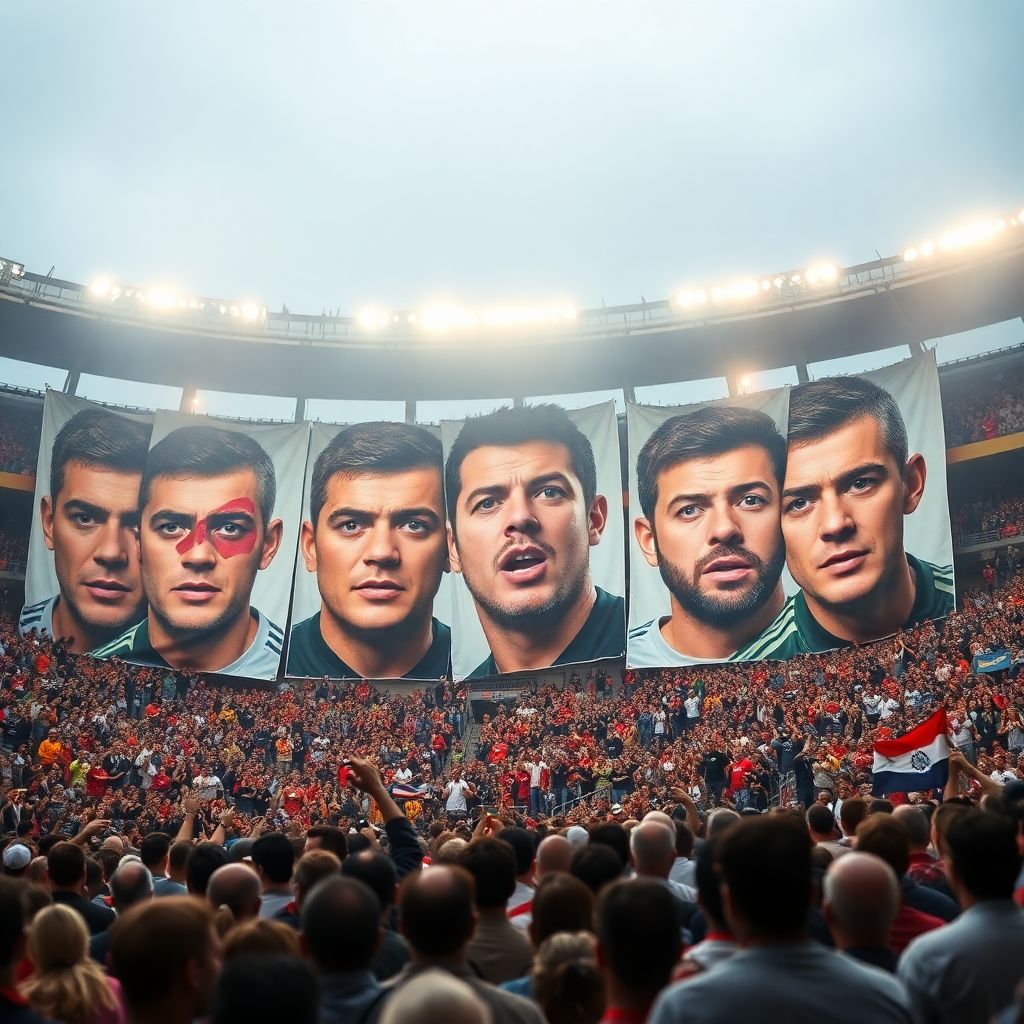
Football «fallen idols» are players first elevated as flawless heroes, then dramatically rejected when scandals, decline or contradictions appear. Society needs these footballers as emotional anchors, moral symbols and commercial brands, yet also enjoys destroying them because public downfall restores a sense of control, moral superiority and equality before shared norms.
Central premises summarized
- Modern footballers function as cultural mirrors, concentrating collective dreams, fears and conflicts in one visible body.
- Hero worship is driven by deep psychological needs: belonging, meaning, projection and controlled transgression.
- Media, brands and clubs deliberately manufacture myths that are easy to sell but structurally fragile.
- Public downfall is not accidental; it follows predictable triggers and narrative patterns across different leagues and eras.
- Digital platforms increase speed, intensity and irreversibility of both idealisation and destruction.
- Institutions can reduce damage by shifting from person-centred cults to value-centred storytelling and ethical governance.
- Comparing approaches by ease and risk helps clubs, federations and media design safer ways of handling football idols.
Why footballers become modern cultural icons
In contemporary societies, elite footballers occupy a symbolic space once reserved for religious figures and epic heroes. They are visible every week, their stories are simple to follow, and their successes or failures are shared in synchrony by millions, especially in football cultures like Spain’s.
An idol in football is more than a star player. It is a person wrapped in a narrative of exceptionality: chosen, pure, loyal, almost superhuman. This «halo» hides ambiguity and conflict. It encourages fans to read every gesture as a sign of destiny, not just athletic performance.
These idols serve several social functions. They stabilise identities (club, city, nation), offer models of aspiration for children, and allow adults to negotiate tensions around class mobility, masculinity, migration or regional rivalries. When a young fan buys camisetas retro de ídolos del fútbol mundial comprar, they are purchasing not only fabric, but a piece of an identity narrative.
The fallen idol appears when the gap between idealised narrative and complex reality can no longer be ignored. A scandal, a transfer to a rival, a drop in performance or a political statement may expose contradictions. The same mechanisms that once amplified virtues now magnify flaws and accelerate symbolic destruction.
Psychological drivers of collective hero worship
- Need for belonging and cohesion
Fans project group identity onto an idol who embodies «us». Loving or defending the player becomes a shortcut to belonging in the community of supporters. - Projection of ideal self
Supporters attach to players the traits they wish they had: courage, talent, resilience, loyalty. Success of the idol becomes borrowed success for the fan’s own fragile self-image. - Controlled transgression
Some idols personify rebellion or excess within socially acceptable limits. They allow fans to flirt psychologically with breaking rules while still remaining «on the right side» of norms. - Simple moral narratives
Heroes and villains organise a complex world into intuitive stories: sacrifice, betrayal, redemption. This is why libros sobre héroes y villanos del fútbol recomendados have stable demand in the Spanish market. - Scapegoating and emotional discharge
When frustrations accumulate (economic crises, club mismanagement, national tensions), idols can become containers for anger. Worship can quickly flip into blame to restore a sense of control. - Social comparison and envy regulation
Admiring a rich, talented player also activates envy. A later downfall helps spectators neutralise that envy: «in the end, they are not better than us». - Narrative closure
People dislike open-ended, ambiguous stories. A clear rise-and-fall arc gives closure; the «idol destroyed» is easier to process than a morally grey, partially compromised figure.
Media and market forces that manufacture sporting myths
Beyond psychology, the idol is an industrial product. Clubs, media and sponsors cooperate-sometimes unconsciously-to shape and sell exaggerated narratives around a few chosen players.
- Club marketing and branding
Teams package certain footballers as symbols of «the club’s DNA»: cantera, humility, passion, global glamour. This simplifies communication and boosts shirt sales, but makes the institution dependent on the player’s behaviour and form. - Broadcast and documentary storytelling
TV and streaming platforms favour strong characters and dramatic arcs because they hold attention. A documental ídolos del fútbol caídos análisis psicológico succeeds not only by informing, but by activating viewers’ emotions around rise, fall and possible redemption. - Advertising and sponsorship
Brands prefer faces over logos. They associate an idol’s charisma with their products, compressing complex corporate identities into a single smile. The practical gain is marketing efficiency; the risk is reputational contagion if the idol collapses. - Sports journalism incentives
Headlines focusing on individual heroes or villains attract more clicks than systemic, tactical or economic analysis. A revista deportiva suscripción historias de leyendas del fútbol survives by promising «strong characters» more than nuanced institutional critique. - Fan economy and merchandising
From posters to video games, personalisation makes money. When people customise kits and games around a single figure, they deepen emotional investment in that idol’s fate. - Education and training products
Even pedagogical formats, like a curso online psicología del deporte ídolos futbolísticos, often use famous cases as hooks. Names of idols become gateways to teach general principles of performance and mental health.
Across these scenarios, idol-centric strategies are convenient because they are clear, marketable and emotionally powerful. Yet they systematically underplay structural factors (club models, youth development, governance), planting the seeds for dramatic falls when reality breaks the myth.
Triggers and dynamics of public downfall
Once the idol is established, certain events tend to initiate the fall. Some are behavioural (crime, doping, repeated disrespect), others purely symbolic (switching to a hated rival, political comments, visible disinterest on the pitch). The same system that simplified reality around the hero now simplifies it around the villain.
Typical catalysts that switch adoration into rejection
- Moral dissonance events: actions strongly contradicting the values previously attached to the player (loyalty, humility, effort).
- Visible privilege without accountability: ostentatious lifestyle framed against fans’ economic or emotional struggles.
- Perceived betrayal of group identity: transfers, declarations or celebrations interpreted as disrespect to the club, city or nation.
- Sudden performance collapse: when decline is read not as ageing, but as lack of effort or professionalism.
- Accumulation of minor controversies: a series of small incidents that create a new «story» about the player.
Step-by-step pattern of symbolic destruction
- Shock and polarisation
Initial revelations provoke disbelief, denial or instant condemnation. Fans split into defenders and attackers. - Frame consolidation
Media select salient details and metaphors. Headlines crystallise a new identity: from saviour to traitor, from genius to fraud. - Retrospective rewriting of history
Past events are reinterpreted as early «signs» of the current fall, eroding the positive legacy. - Public humiliation or exclusion
Boos, chants, online insults, sponsor withdrawals and institutional distancing formalise the loss of idol status. - Normalization or exile
Over time, the former idol becomes either a cautionary tale integrated into collective memory, or a ghost largely erased from official narratives.
Digital amplification: scandals, virality and spectacle
Social networks accelerate and distort every phase of idealisation and destruction. Speed, emotional contagion and algorithmic amplification reward extreme reactions over nuanced reflection.
- Myth: «The crowd discovers the truth independently»
In practice, narratives usually follow influential accounts, media framing and platform incentives. «Organic outrage» is often guided outrage. - Myth: «Only facts matter online»
On digital platforms, emotional resonance often beats factual accuracy. A compelling meme can reframe a complex case in a few seconds, for or against the player. - Myth: «Time heals all reputations»
In the digital era, old clips and headlines are permanently searchable. Mistakes resurface whenever convenient for rivals or algorithms, complicating genuine rehabilitation. - Myth: «Silence is always the safest response»
Sometimes silence allows toxic narratives to dominate. Timely, honest, well-designed communication-by both player and club-can limit escalation, while reactive, defensive posts can worsen perception. - Myth: «Falling idols are individual failures only»
Online discourse tends to personalise blame. Structural factors (club culture, enabling staff, media complicity) rarely trend, though they are crucial to prevention.
Restoration, regulation and lessons for institutions
Institutions around football-clubs, federations, media, schools-cannot eliminate the idol-fall dynamic, but they can choose how strongly to lean into it and how to mitigate its damage. Comparing alternative approaches clarifies convenience of implementation and associated risks.
Three strategic approaches to football idols
| Approach | Core idea | Ease of implementation | Main risks |
|---|---|---|---|
| Idol‑centric model | Build club and marketing narrative around 1-2 superstars. | Very convenient: simple stories, faster commercial impact, easy for media and sponsors. | High exposure: reputational contagion, dependence on individual form/behaviour, violent backlash if scandals appear. |
| Team‑centric model | Highlight collective identity, coach, academy, historical continuity. | Moderately convenient: requires consistent communication and patience to create recognisable «style» or ethos. | Lower emotional spikes; may feel less glamorous to global casual fans; media may still overfocus on individuals. |
| Values‑centric model | Use players as temporary ambassadors of stable values (respect, effort, anti‑racism), not as untouchable heroes. | Requires internal alignment and training, but once integrated, supports sustainable messaging and CSR projects. | If values are not lived internally, accusations of hypocrisy will intensify when conflicts or scandals appear. |
Mini-case: managing a local idol in decline
Imagine a captain of a La Liga club, adored for years as a symbol of sacrifice. Performance drops, nightlife rumours appear and social media criticism explodes. The institution faces three implementation options, each with different convenience and risk profiles:
- Defensive idol‑centrism
Publicly deny problems, frame criticism as «ungrateful fans», keep using the player as main marketing face. This is operationally easy and emotionally satisfying for loyal supporters, but extremely risky: if serious evidence emerges later, the club appears complicit. - Gradual team‑centric transition
Quietly reduce idol exposure in campaigns, promote other players and the coach, and emphasise tactics, youth development and club history. This is slower and demands coordination, but spreads emotional investment and softens the future fall, if it comes. - Values‑first reframing
Communicate transparently about performance, set clear behavioural expectations and position the captain as a «human, fallible leader» subject to the same rules as others. Implementation is more complex, requiring internal discipline and media skills, yet it reduces hypocrisy and teaches fans a more mature way of loving their idols.
For Spanish clubs and media, the pragmatic recommendation is a hybrid: allow charismatic figures to shine, but anchor communication in team and values, maintain internal accountability mechanisms, and prepare protocols for scandal management long before any fall occurs.
Practical questions practitioners ask
How can a club enjoy the benefits of idols without becoming hostage to them?
Limit structural dependence on one or two stars. Build campaigns where idols share narrative space with team history, academy players and community projects, and design contingency plans for injuries, transfers or scandals.
What early signs suggest an idol is at risk of a public fall?
Look for growing discrepancies between public myth and observable behaviour: repeated minor breaches of rules, arrogance in interviews, entourage conflicts or lifestyle changes. When colleagues start «justifying» actions that clearly clash with declared values, risk is rising.
Should media outlets tone down hero stories even if they sell well?

Yes, if they seek long-term credibility. Balancing emotional storytelling with structural analysis prevents later overcorrection when idols fall and avoids turning journalism into pure spectacle that damages both players and publics.
What can coaches and psychologists do inside the dressing room?
Work on role clarity, peer feedback and shared leadership so that the star is important but not sacred. Encourage players to separate personal worth from public image, and to anticipate pressure and possible backlash as part of the job.
Is it useful to address fallen idols in fan education programmes?
Very useful. Youth academies, schools and fan groups can analyse historical cases and quality documentaries to discuss responsibility, forgiveness and systemic factors, rather than only gossiping about scandals.
Can a fallen idol ever truly rebuild their image?

Yes, but only with time, consistent behaviour and partial redefinition of their role. Trying to restore the exact same myth usually fails; a more modest, reflective identity-coach, mentor, activist-can be more credible.
How should sponsors react when an idol they use in campaigns is under investigation?
Activate pre-agreed ethical clauses, gather reliable information and communicate quickly but calmly. Temporary suspension of campaigns, combined with clear criteria for future decisions, protects both brand integrity and procedural fairness.