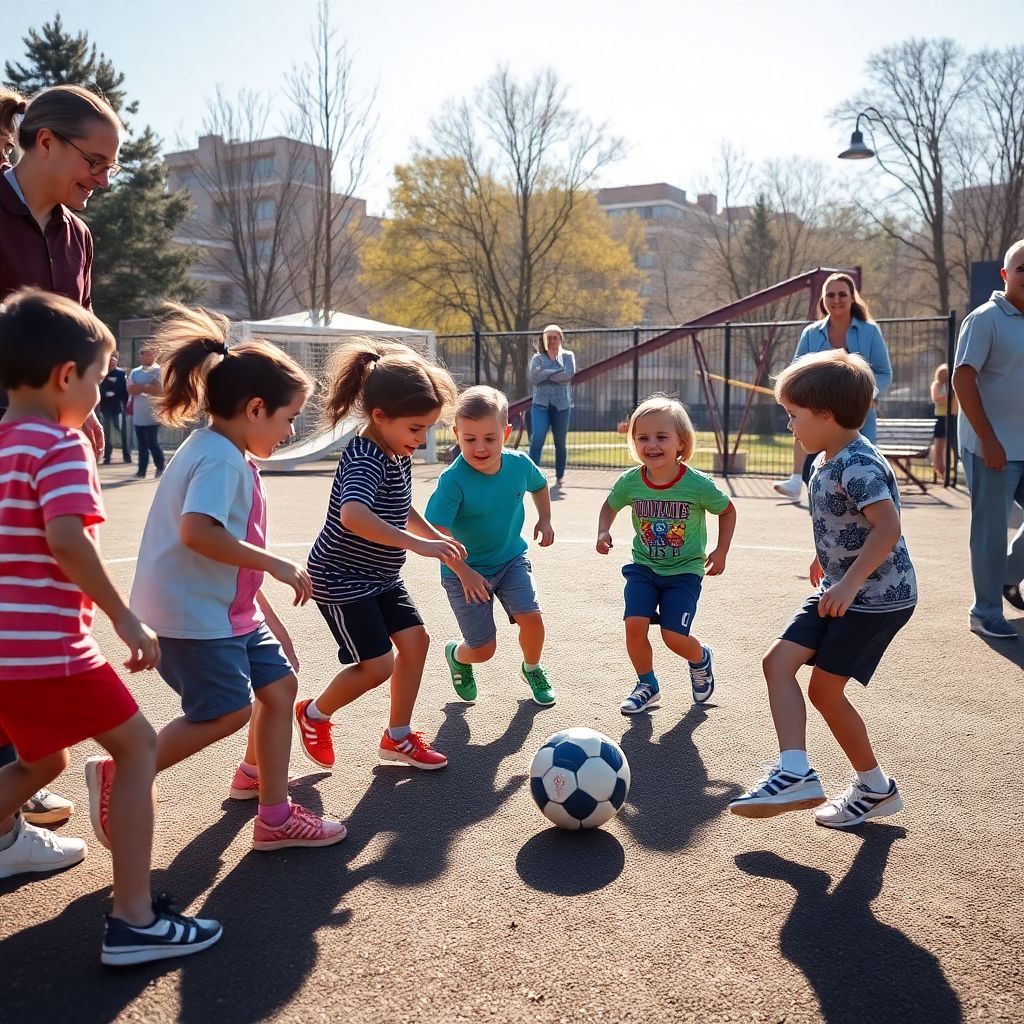
Football in childhood builds imagination, friendship and a sense of justice when adults protect free play, listen to kids’ rules and model fair behaviour. In playground matches, escuelas de fútbol para niños and campamentos de fútbol infantil verano, children rehearse cooperation, rivalry and conflict resolution in a low‑risk setting that shapes how they see others and themselves.
Core concepts: imagination, camaraderie and fairness in childhood football
- Informal football gives children a safe space to experiment with fantasy, strategies and symbolic roles.
- Self-made rules are a laboratory for fairness, negotiation and basic legal thinking.
- Friendship grows through shared victories, managed conflicts and recurring play rituals.
- Narrative play (heroes, nicknames, favourite teams) supports identity and values.
- Adult behaviour in clases de fútbol para niños cerca de mí strongly shapes how kids understand justice and respect.
- Simple training design choices can nurture inclusion as much as technical skill.
How informal football ignites imaginative play and symbolic thinking
Informal football is every match that children organise or re-interpret themselves: break-time games, street football, backyard penalties or small tournaments improvised after school. It differs from formal training because kids decide who plays, what counts as a goal and how they react to mistakes, often without adult intervention.
In these games, imagination appears everywhere. A dusty courtyard becomes a packed stadium, a jumper is a goalpost, and a child can be both goalkeeper and favourite striker in the same match. They imitate professional players, invent celebrations and adapt rules so that mixed ages and abilities can still enjoy the game.
This is symbolic thinking in action: objects and actions stand for something else (lines, posts, referees, VAR). When you observe a group arguing passionately about whether the imaginary line was crossed, you are seeing early abstract reasoning. They are not only kicking a ball; they are managing meanings, roles and invisible boundaries.
A practical observational indicator is the richness of children’s invented rules and narratives: more spontaneous nicknames, imagined leagues and creative use of space usually signal strong imaginative engagement with football.
- Reserve unsupervised time in each session where children can choose teams, field size and rules.
- Provide simple materials (cones, bibs, balones de fútbol para niños comprar) and let kids decide how to use them creatively.
- Ask children to explain their made-up game; listen without correcting unless there is risk.
Rule-making on the pitch: how children create and learn fairness
Children constantly negotiate rules on the pitch. This negotiation, not the specific rule, is what trains their sense of fairness. They test what feels acceptable, who is heard, how to repair injustice and when to adjust a rule to protect weaker players.
- Who decides the rules. Often the owner of the ball or the strongest player starts defining rules. When others object, you see power, fairness and leadership clash in real time.
- Adjusting rules for balance. Children frequently suggest handicaps (stronger player plays with weak foot, younger kids shoot from closer). This «balancing» is an intuitive attempt at equity, not just equality.
- Handling fouls and handballs. Whether a foul leads to a free kick, replay of the action or argument shows how kids use procedure to restore justice.
- Replays and «do-overs». The classic «we repeat the play» is a compromise solution when nobody can agree on what happened. It models restorative approaches instead of punishment.
- Inclusion and exclusion. Phrases like «you can’t play, we are full» reveal implicit rules about belonging. How children justify these decisions matters as much as the decision itself.
- Appeals and protests. Shouting, stopping the game or walking off are primitive forms of protest. With guidance, they can evolve into constructive discussion and voting.
As an observational indicator, pay attention to how often rules get renegotiated without adult help and whether the group can resume play quickly after a conflict; this shows growing internal capacity for fair decision-making.
- Invite children to co-create 2-3 basic rules before play and write or state them clearly.
- When conflict appears, pause the game and ask kids to propose at least two solutions.
- Rotate the «rule speaker» role so different children explain or adjust agreements.
Friendship dynamics: cooperation, rivalry and conflict resolution
Football compresses key friendship experiences into short, intense moments: passing instead of shooting, accepting a substitution, celebrating a team-mate’s goal or dealing with a painful defeat. This is why so many childhood friendships form or break around the pitch.
Below are typical scenarios where imaginative and moral learning are visible in friendship dynamics:
- Choosing teams. Always picking the same friends first strengthens loyalty but can marginalise quieter kids. When children propose random selection or mixed teams, they experiment with more inclusive friendship patterns.
- «You never pass to me». A common complaint that mixes tactical and emotional needs. How the passer responds («next one is yours») teaches about recognition and trust more than about tactics.
- Blaming the goalkeeper. After conceding a goal, some players blame one child; others say «we defend together». That small phrase reveals whether the group values collective or individual responsibility.
- Revenge fouls. Getting fouled can trigger a «payback» mentality or a search for mediated justice. When kids learn to call a foul, accept an apology and restart calmly, their conflict repertoire expands.
- Switching sides mid-game. In street games or campamentos de fútbol infantil verano, kids may change teams to support a friend. This tests loyalty: to the friend, the team or the original agreement.
- Post-game rituals. Handshakes, invented chants or shared snacks turn opponents back into friends, lowering emotional temperature and closing conflict cycles.
You can use emotional tone as an observational indicator: if children argue intensely but keep returning to the game and sharing jokes afterwards, the group usually manages rivalry and friendship in a healthy balance.
- Introduce regular mixed-team games so children collaborate with different classmates.
- After matches, ask each child to name one positive action from a team-mate.
- Normalise simple repair phrases: «sorry», «next one is yours», «we lose and win together».
Narrative play: identity formation through goals, roles and legends
Children rarely play football as anonymous players; they play as their favourite stars, as the local club, or as a new heroic version of themselves. Narrative play appears in nicknames, invented competitions and long stories about «the final we played yesterday». These stories organise identity, aspirations and moral codes.
Through repeated roles (captain, goalkeeper, creative playmaker), children test who they can be. A shy child who becomes a decisive striker in a game may start to see themselves as capable of leading in other contexts. On the other hand, rigid narratives («I am always the bad player») can limit exploration.
You will see narrative play in how children use ropa de fútbol para niños online (jerseys, boots, socks) to embody idols and in how they remember and retell certain goals for days. Which actions they celebrate – fair play, spectacular shots, brave defending – shows what values the group is building around football.
Observationally, listen to post-game conversations: the parts they exaggerate or repeat are usually the events that feed identity and value formation.
- Ask children to choose a role model and explain what they admire beyond skills (attitude, respect, effort).
- Encourage role rotation so every child can try being captain, defender, attacker and goalkeeper.
- Invite short storytelling moments: «describe the goal you will never forget from this week’s play».
Influence of adults: coaching styles, refereeing and moral modeling
In escuelas de fútbol para niños and organised leagues, adults strongly shape what children learn about justice, respect and imagination. The way a coach reacts to mistakes, how a referee talks to kids and how parents behave on the touchline can either support or suffocate the social and moral learning that informal football produces naturally.
Typical mistakes and myths include:
- Myth: «Children need strict control or chaos will explode». Over-controlling every decision kills self-organisation. In reality, short, clear safety limits plus generous freedom usually produce stable, creative games.
- Error: focusing only on winning. Turning each match into an exam reduces experimentation and increases fear. When adults praise courage, effort and fair play as much as goals, kids keep learning through risk-taking.
- Error: solving all conflicts for them. Jumping into every foul or dispute prevents children from practising negotiation. Better to mediate only when they get stuck or when there is aggression.
- Myth: «Fairness means treating everyone exactly the same». Justice with children often means adapting: extra support for a newcomer, lower physical demands for a younger player, more responsibility for a mature one.
- Error: humiliating comments after mistakes. Sarcasm or shouting in public reshapes identity around shame. Quiet, specific feedback protects dignity while still addressing performance.
- Myth: «Referees teach justice by being harsh». Calm, clearly explained decisions teach more about justice than authoritarian gestures without explanation.
As an observational indicator, compare children’s behaviour in sessions with and without adults; if creativity and spontaneous problem-solving drop sharply when adults are present, your style may be too controlling.
- State 2-3 non-negotiable rules (safety, respect) and leave the rest for children to manage.
- Model fair behaviour explicitly: admit your own mistakes, explain decisions, praise honest play.
- After conflicts, debrief briefly with questions («What else could you have done?») instead of long lectures.
Concrete exercises to nurture creativity, inclusion and a sense of justice
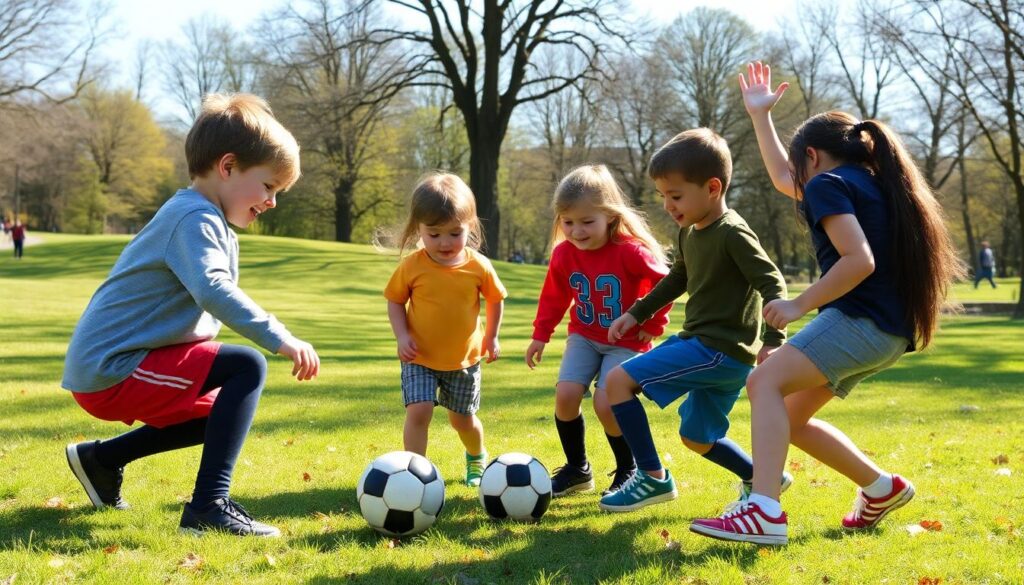
You can design simple, flexible drills that train both football skills and social-moral competences. Below are practical ideas you can adapt in parks, school yards or structured programmes such as clases de fútbol para niños cerca de mí or weekend clubs.
1. «Invent your own mini-game» session
Give each small group cones and a ball. Ask them to create a 3-5 minute game with their own rules, then teach it to others. You only intervene for safety. Children practice symbolic thinking, communication and rule negotiation.
Mini-pseudocode:
set theme (fun / passing / teamwork) → form groups of 4-6 → give 5 minutes for design → each group explains rules → all groups play each game once → short reflection: «what rule did you like and why?».
2. Rotating roles match
Play a small-sided game where every 5 minutes players must change roles: defender to forward, captain to goalkeeper, quiet kid to referee. This expands empathy: children feel how each role sees fairness and pressure.
3. «Fair play points» tournament
In a short tournament, keep parallel scores: goals and fair play points. Teams earn points for honest calls, helping injured players, including weaker team-mates. At the end, celebrate both winners, underlining that justice and camaraderie are part of success.
4. Conflict time-out ritual
Agree on a clear script when conflict escalates: stop the ball, count to ten, each side explains in one sentence, neutral child or coach proposes two options, group chooses, game restarts. Repetition turns this into an automatic, respectful habit.
As an observational indicator, note whether children start using these rituals spontaneously (for example, proposing rotations or «fair play points» themselves); this shows transfer from structured exercise to informal games.
- Plan at least one exercise per week with a clear social-moral goal (inclusion, creativity, justice).
- Explain the purpose in child-friendly language: «today we train how to solve problems together».
- After the drill, ask 2-3 children to share what felt fair or unfair and how they changed it.
- Check that every child gets regular chances to decide rules, not only the most skilled.
- Observe post-game atmosphere: can kids argue and still leave as friends?
- Balance free play with light structure so imagination and safety coexist.
- Review your own touchline behaviour: do you model calm, fairness and curiosity?
- Adapt equipment and games (space, teams, rules) to include all ability levels.
Clarifications on applying play-based insights to practice
How much unstructured play should I allow in a children’s football session?
Include at least one block where children choose teams, space and rules. Even in technical training, finish with 10-15 minutes of free play so they can apply skills creatively and practise negotiation and friendship dynamics.
What if children’s self-made rules seem unfair to some players?
Use it as a learning moment. Ask excluded or unhappy children to explain how they feel, then invite the group to adjust the rule so everyone can accept it. Guide lightly, but let kids propose the concrete changes.
How can I integrate social learning into competitive matches?
Define simple behaviour goals before the match (support a team-mate after a mistake, help an opponent who falls). After the game, review these goals briefly, not just the score or tactics.
Are commercial elements like jerseys and boots a problem for children’s identity?
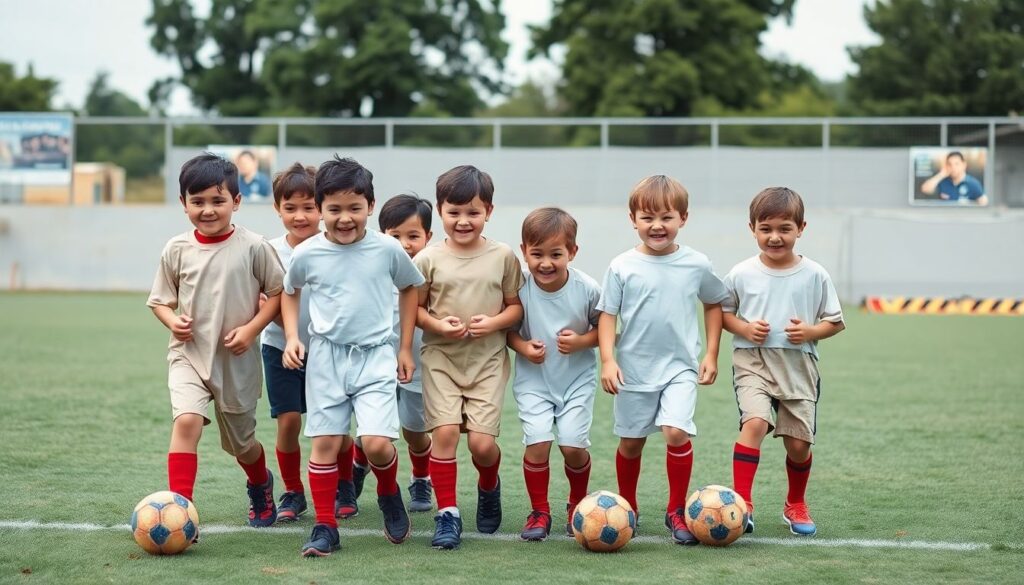
Ropa de fútbol para niños online can support role play and identification, but avoid linking value to expensive gear. Highlight stories of players who started with simple equipment and emphasise effort, respect and teamwork over brands.
How do I explain «fair play points» to young children?
Use concrete examples: telling the truth about a throw-in, helping someone get up, or including a new player. Keep the system simple and visible, and celebrate fair actions publicly, not just goals.
What can parents do at home to support these processes?
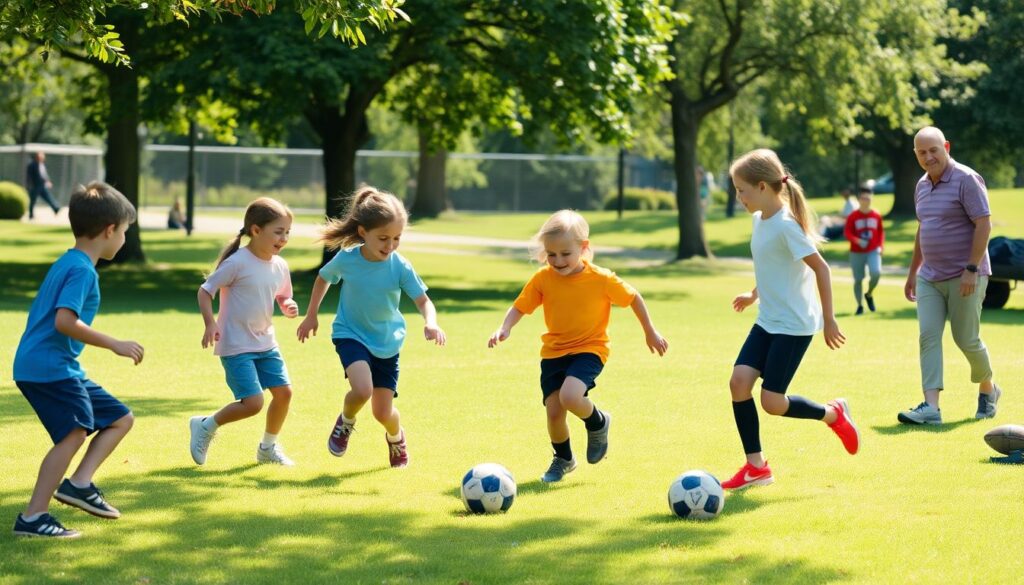
Encourage street or park games with minimal adult interference, provide basic balones de fútbol para niños comprar and space, and talk about fairness and friendship when you watch matches together on TV.
Are football camps a good context for social and moral learning?
Yes, if campamentos de fútbol infantil verano combine varied games, mixed groups and coaches trained to value inclusion and fair play, not only performance. Ask organisers how they handle conflicts and team selection.