
The traditional «10 clásico» is the central creative playmaker positioned between midfield and attack, historically responsible for inventing chances more than following strict tactical tasks. Its decline in modern football comes from pressing, athletic demands, and data‑driven systems, yet its legacy survives in hybrid roles, cultural symbolism, and how teams still structure creativity safely and efficiently.
Why the ’10 clásico’ Mattered: Core Insights
- The «10 clásico» concentrated creativity, decision-making, and risk in one player operating between the lines.
- Its rise is central to the historia del número 10 en el fútbol, defining how teams attacked for decades.
- Playmakers shaped tactical systems, obliging coaches to adapt structures around their genius and limitations.
- Pressing and physical intensity exposed defensive weaknesses when carrying a free creative specialist.
- The role evolved into false nines, aggressive interiors, and hybrid mediapuntas to balance creativity with work-rate.
- Culturally, the number 10 shirt became a symbol, influencing media narratives and even camisetas número 10 de fútbol a la venta.
Origins and Evolution of the ’10 clásico’ Role
Historically, the «10 clásico» emerged as a specialist bridge between midfield and attack. In early WM and 2-3-5 systems, creativity was often distributed, but as formations compacted, teams began to dedicate one player to organizing the final third, usually positioned as an enganche behind the striker.
In South America, the role crystallised around the idea of the mediapunta: a player free from major defensive tasks, allowed to «float» and receive between the opposition midfield and defence. This is where the mejores mediapuntas y enganches de la historia left their mark, dictating tempo, inventing passes, and controlling rhythm.
In Europe, the playmaker migrated from deeper positions (regista) to the «hole» in 4‑3‑1‑2, 4‑4‑1‑1 or 3‑4‑1‑2. The historia del número 10 en el fútbol is essentially a story of this positional negotiation: how much freedom can you grant one attacking genius without unbalancing the team?
Over time, the evolución táctica del 10 clásico en el fútbol moderno pushed the role both wider and deeper. The traditional enganche was gradually replaced by player-profiles able to press, attack space, and interpret multiple zones, which safely protected teams against transitions but diluted the pure, free «10».
Technical and Creative Traits That Defined the Number 10

The mechanics of the «10 clásico» can be broken down into a set of recurring technical and cognitive traits.
- First touch oriented to pressure escape: The 10 receives on the half-turn, using the body to shield and open passing lanes before opposition pressure arrives.
- Scanning and anticipation: Constant head checks before receiving allow the playmaker to play one-touch solutions or split passes without needing space for multiple touches.
- Vertical passing creativity: Their signature action is the through ball between centre-back and full-back, or a disguised pass into a blindside run from a winger or number 9.
- Tempo control: By slowing play at the right moment, the 10 lets teammates reorganise, then accelerates with a switch of play, wall pass, or dribble when a gap appears.
- Risk-tolerant decision-making: Losing the ball occasionally is accepted because their high-risk passes create high-value chances; the team structure must be prepared to cover these turnovers.
- Dribbling to destabilise blocks: Short, explosive carries in central zones attract multiple defenders, freeing teammates and forcing the block to collapse.
- Set-piece subtlety: Many 10s direct corners and free-kicks, using rehearsed routines rather than only shooting, another safe way to generate chances without exposing rest defence.
Tactical Revolutions Triggered by the Playmaker
The prominence of the «10 clásico» forced tactical innovations that still define how coaches think about structure, safety, and balance.
-
Creating the «double pivot» to protect the 10
When a team carried a defensively light playmaker, coaches added a second holding midfielder. This 2+1 triangle (two pivots behind one 10) allowed the genius to remain higher while the double pivot secured rest defence and second balls. -
Asymmetrical full-backs to cover the half-space
To avoid leaving the 10’s zone empty in defensive transition, one full-back often stayed deeper and narrower, forming a back three in possession. This compensated for the 10’s lack of track-back and added security behind risky central combinations. -
Man-marking and destroyer roles against the 10
Opponents responded with a dedicated marker whose sole task was to cut passing lanes into the creative star. This duel defined many big games and pushed coaches to design rotations that liberated their playmaker from that pressure. -
Pressing triggers based on the 10
In modern systems, the 10’s first movement often triggers coordinated pressing or counterpressing. When the ball enters the «zone 14» area, teams either collapse aggressively or drop into compact low blocks to deny the through ball. -
Overloading the central channel
Some coaches placed two creative players between the lines (dual mediapuntas), using them as decoys for each other. This magnified attacking potential but made safe defensive organisation after ball loss more complicated. -
Transition from 10 to false nine
By moving the 10 into the nominal striker position, coaches blurred reference points in the back line. Centre-backs had to decide whether to follow him into midfield, opening space for wide runners, or hold the line and concede a free player between the lines.
Reasons Behind the Decline of the Traditional Number 10
The disappearance of the pure enganche is not just romantic nostalgia; it is a response to clear structural demands and limitations.
| Aspect | Classic free 10 | Modern hybrid creator |
|---|---|---|
| Defensive work-rate | Minimal, often excused | High pressing and tracking required |
| Positioning | Fixed in central pocket | Rotates wide, deep, and between lines |
| Risk management | Team absorbs many lost balls | Risk shared across multiple creators |
| Physical demands | Less running, more pauses | Constant sprints and pressing |
Structural strengths of carrying a «10 clásico»
- Clear creative reference: teammates know exactly where to find the main playmaker.
- Higher quality of final pass and decision in the last third.
- Ability to unlock low blocks when other patterns fail.
- Strong identity and style, often associated with club culture.
Inherent limitations and risks of the old model
- Defensive vulnerability in central areas if the 10 does not press or track.
- Predictability when all creativity flows through a single player.
- Dependence on individual form; injuries or bad days collapse the attacking plan.
- Difficulty sustaining high-intensity pressing over 90 minutes with one non-running piece.
- Recruitment constraints: the system must be rebuilt whenever the star 10 ages or leaves.
Contemporary Reinterpretations: False Nine, Trequartista, and Hybrid Roles
Today’s elite game reinterprets the genius of the 10 within more demanding physical and tactical frameworks. This generates common misunderstandings that can hurt development if coaches ignore safe limitations.
Frequent misunderstandings and how to avoid them
-
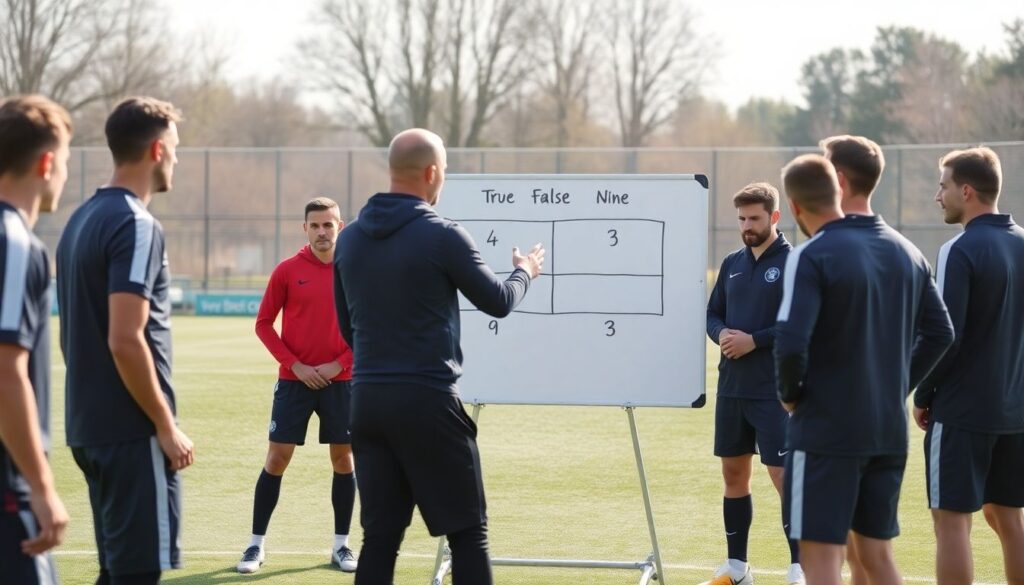
Myth: «The false nine is just a striker who drops like a 10.»
In reality, a false nine must also pin centre-backs, press from the front, and time drops carefully. Allowing them to roam freely like an old enganche leaves the box empty and breaks pressing structure. -
Myth: «Modern interiors can replace a 10 without structural change.»
Advanced interiors who create like classic 10s need compensations behind them (cover shadows, rest defence, full-back height). Treating them as normal box-to-box players overloads them physically and tactically. -
Myth: «Trequartistas do not need to defend.»
Even in systems that protect a central creator, basic pressing angles and screen movements are non-negotiable. The safe approach is to define minimum defensive behaviours instead of promising total freedom. -
Myth: «Data proves the 10 is obsolete.»
Data shows which spaces are most valuable, not that creativity should disappear. Modern analytics help distribute 10-like tasks across several players while tracking the cost of turnovers and transitions. -
Myth: «Youth players should be pure 10s or pure runners.»
Over-specialising young talents as free playmakers or pure workhorses is risky. Better to develop mixed profiles able to carry, combine, and press, then refine their role later according to team context. -
Myth: «Only superstars can act as team brain.»
Many second-tier talents can operate as shared brains if structure protects them. Safe design spreads responsibility: one player seldom carries all creative and transitional burdens anymore.
Cultural Symbolism and Media Representation of the Creative Genius
Beyond tactics, the «10 clásico» is a cultural archetype. The shirt itself communicates a promise: genius, responsibility, and aesthetic superiority. Media narratives around the mejores mediapuntas y enganches de la historia build this myth, making the role bigger than the actual position on the pitch.
Clubs use iconography, storytelling, and even merchandising to strengthen this image: limited-edition camisetas número 10 de fútbol a la venta, documentaries, and social campaigns that celebrate the «artist» over the system. Fans absorb this narrative and expect the 10 to be the hero who solves everything alone.
Coaches and analysts must navigate this tension carefully. For safe, modern performance, they need to explain to players and supporters how creativity is now shared across the structure. Here, good communication, video analysis, and even recommending libros sobre táctica y creatividad del diez clásico can realign expectations with current tactical realities.
Quick Checklist for Coaches and Analysts
- Define clearly which zones your creative players can vacate and which they must occupy at all times.
- Specify minimum defensive tasks for any 10-like role to protect central spaces in transition.
- Distribute creative responsibilities so the team can function when the main playmaker is absent.
- Use data and video to show players the cost of risky passes and how to choose safer moments.
- Communicate to fans and media that the «genius» operates within a collective structure, not above it.
Common Practical Questions About the Number 10’s Decline and Use
Is the traditional number 10 really extinct in modern football?
The pure, defensively exempt enganche is rare at elite level, but its functions live on in hybrid roles: advanced interiors, false nines, wide playmakers, and flexible trequartistas. The role evolved rather than vanished.
Can a team still succeed if it builds everything around one creative 10?
Yes, but it requires strong compensations: double pivot, disciplined full-backs, and rehearsed counterpressing after each risky pass. Without these safeguards, the team becomes fragile in transition and too dependent on one player.
How should youth coaches handle talented «10-style» players safely?
Give them creative responsibility in the final third but insist on basic pressing and recovery habits. Exposing them to wide and deeper roles helps them adapt to the evolución táctica del 10 clásico en el fútbol moderno.
What is the main tactical risk of using a free playmaker today?
The main risk is leaving central spaces open when possession is lost. If the 10 does not react immediately, opponents can run directly at the back line, forcing emergency defending and cheap fouls.
How do commercial and cultural factors affect the number 10 role?
The aura of the shirt, media mythology, and the market for camisetas número 10 de fútbol a la venta create pressure to field a symbolic «10» even when the system does not need one. Clear internal criteria help clubs avoid such distortions.
What resources can help analysts study the creative 10 in depth?
Match footage, event and tracking data, and specialised libros sobre táctica y creatividad del diez clásico offer complementary views. Combining them helps you separate romantic myths from what actually happens in high-intensity matches.
How do you measure the impact of a 10 who does not score many goals?
Look at progressive passes, key passes, expected threat, pre-assists, and contributions to pressing chains. These metrics capture influence on team behaviour beyond goals and assists alone.