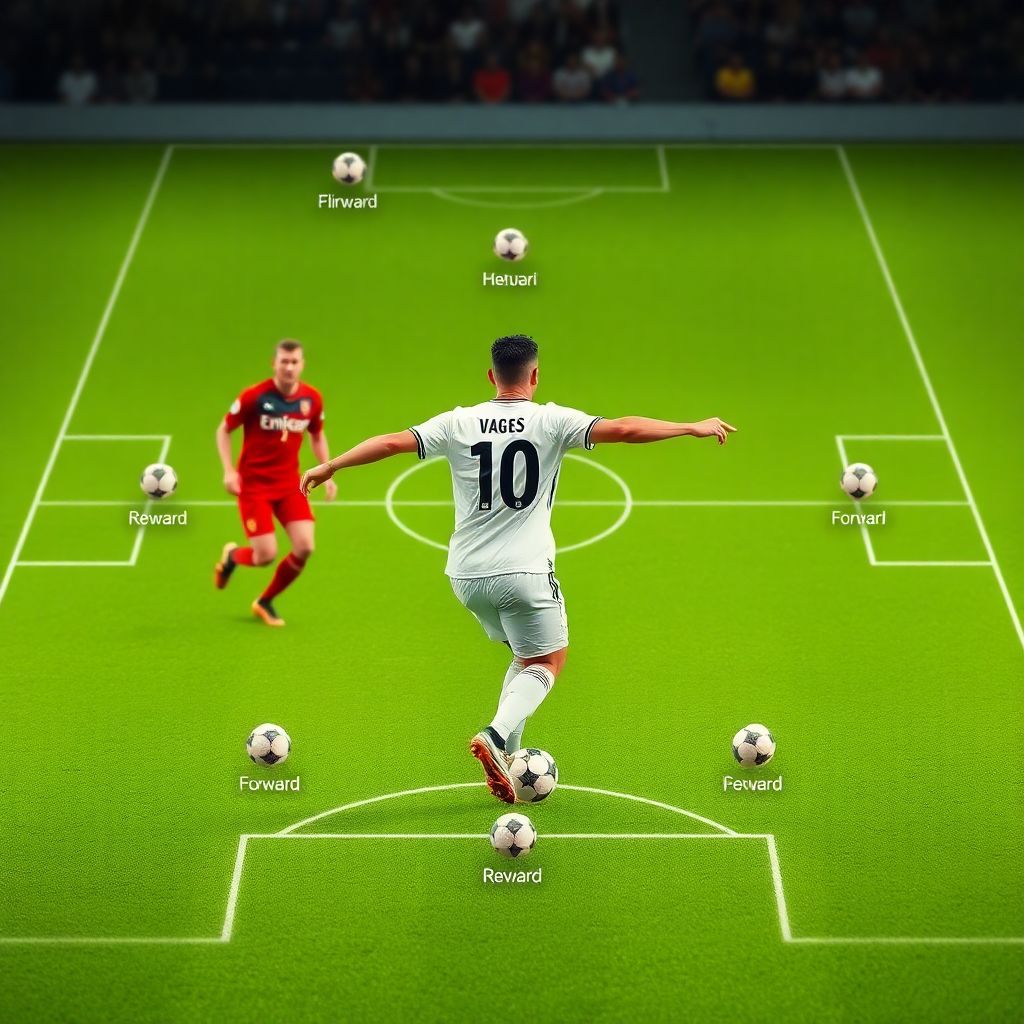
The football «10» is the creative playmaker positioned between midfield and attack, historically free from defensive duties but responsible for invention in the final third. In modern football, the pure 10 has declined, yet its archetype survives in hybrid roles: inverted wingers, attacking interiors, false 9s and multi-phase creators.
Core propositions on the ’10’ archetype
- The «10» is more a creative responsibility than a fixed position or shirt number.
- Classic playmakers lost influence because of pressing, data-driven tactics and physical demands.
- The archetype has migrated into hybrid roles rather than disappearing completely.
- Training must link creativity with pressing, counter-pressing and structured positioning.
- Iconic «10» idols shape how kids play, train and even which gear and camiseta número 10 fútbol comprar they look for.
- Coaches can still build around a creator, but must protect and integrate them with collective mechanisms.
Myths surrounding the ’10’: origin stories and exaggerations
The first myth: the 10 is a born genius who does not need structure. In reality, even the mejores jugadores número 10 de la historia del fútbol operated inside clear positional frameworks, with pre-trained movements and specific zones of influence. Genius was amplified by collective organisation, not opposed to it.
The second myth is that any player wearing the 10 shirt automatically becomes the team’s brain. A number on the back is a symbol, but the archetype is about behaviours: receiving between lines, scanning, tempo control, and risk management. A winger, an interior or a false 9 can «be the 10» without the shirt.
Another persistent exaggeration is that modern football has killed the 10. What has actually died is the slow, untouchable, non-defending creator. The space and freedom that old 10s enjoyed no longer exist, but the creative tasks have been redistributed into different roles that still require high-level vision and decision-making.
Historical emergence: how the ’10’ became the cultural playmaker
- Numbering and centrality: Traditional numbering in 2-3-5 and early 4-2-4 systems placed the most gifted attacker centrally, often with the number 10, linking midfield and forwards.
- Specialisation in creativity: As tactics evolved, one player was given licence to avoid defensive work and focus on last passes, dribbles and rhythm – the embryo of the «enganche».
- Television and hero narrative: Broadcasts focused on the most spectacular player, turning the 10 into a protagonist. Goals and assists from the central creator became visual narratives that sold the game.
- Idolisation and merchandise: Kids copied the stars they saw on screen. Markets grew around camisetas retro 10 Maradona Messi Pelé, deepening the association between genius and the number.
- Coaching cultures: Some countries built youth pathways around the 10: small-sided games, street football, and tolerance of risk in the final third nurtured individual creators.
- Resistance to change: Even as pressing and zonal defending appeared, cultural prestige around the 10 made coaches reluctant to fully abandon the role, prolonging its golden era.
Tactical anatomy of the creator: space, tasks and measurable traits
The modern study of the 10 needs clear tactical language. Instead of romantic labels, think in zones, roles and actions. The creator’s influence can be measured: frequency of receptions between lines, progressive passes, key passes, third-man combinations and contribution to pressing triggers.
Below is a practical comparison between two common implementations of the archetype.
| Aspect | Classic central 10 | Modern hybrid creator |
|---|---|---|
| Main zone | Central pocket between opposition midfield and defence | Half-spaces, inside channels, sometimes wide-to-inside runs |
| Defensive load | Minimal, selective pressing only | High; presses, counter-presses, tracks runners |
| Typical role label | Enganche, trequartista | Attacking interior, inverted winger, false 9 or 8/10 hybrid |
| Key metric emphasis | Assists, dribbles, through balls | Progressions, high-intensity runs, expected threat plus pressing actions |
| Support required | Double pivot behind, runners ahead | Rotations with full-back and pivot, coordinated pressing structures |
Scenario 1: classic pocket playmaker
A central 10 in a 4‑2‑3‑1 receives behind the opposition pivot. Their tasks:
- Constantly scan for centre-back spacing and full-back positions.
- Drop slightly to overload midfield when your team builds, then jump into space as the ball crosses the halfway line.
- Play one-touch lay-offs when marked tight; turn and drive when isolated versus one defender.
- Defensively, screen the pivot and press centre-backs on the cue of a backward pass.
Scenario 2: inverted winger as functional «10»
An inverted left winger (right-footed) in a 4‑3‑3 can function as the 10:
- Start wide to stretch the full-back, then move inside to receive between lines when the ball is on the opposite side.
- Combine with the advanced 8 for wall passes and third-man runs into the box.
- Press diagonally towards the opposition centre-back, using the touchline as your extra defender.
Scenario 3: attacking interior 8/10 hybrid
In possession, the advanced interior becomes the team’s creator:
- Arrive in the box late, rather than staying high all the time.
- Connect with the pivot in build-up, then sprint into pockets behind the opposition midfield once the ball goes wide.
- Lead the counter-press after loss, attacking the ball carrier’s front foot to force play outside.
Scenario 4: false 9 as central connector
The false 9 vacates the traditional striker zone to overload midfield:
- Drop between opposition centre-backs and midfielders, forcing a defender to follow and opening depth for wingers.
- Receive on the half-turn, then play early through balls or switches to the far winger.
- On defensive transition, immediately block central passes and delay counter-attacks.
Iconography and myth-making: media narratives, idols and symbolism
Culture has frozen the 10 as an almost mythical genius. Media highlight reels, documentaries and even the simplest libro sobre el número 10 en el fútbol moderno often recycle the same images: the lone hero dancing through defenders, winning games «by himself». This shapes expectations at every level, from youth academies to marketing departments.
Benefits of the ’10’ symbol for players and clubs
- Identity and aspiration: Wearing 10 can give a young player a clear role model and sense of responsibility.
- Commercial value: Shirt sales, especially camisetas retro 10 Maradona Messi Pelé, generate emotional and economic value for clubs.
- Creative licence: The role can psychologically empower a player to attempt riskier, line-breaking actions.
- Narrative clarity: Fans and media understand who leads the attack, making tactical roles easier to communicate.
Limitations and traps of the romantic ’10’ image
- Defensive disengagement: Players may believe the 10 does not have to press or track, weakening the team block.
- Over-reliance: Teams can become predictable if all creativity flows through one individual.
- Selection bias: Coaches might indulge a talented 10 who does not fit the required physical or tactical intensity.
- Player frustration: Teammates wearing other numbers may feel undervalued despite sharing creative responsibilities.
Drivers of decline: pressing tactics, analytics and physical paradigms
- Rise of high pressing: Aggressive pressing structures compress time and space in central areas, exactly where the classic 10 used to live. A slow-paced creator with no defensive output is now a liability.
- Zonal compactness and rest defence: Teams defend compactly between lines, with holding midfielders protecting the pocket. The free corridor for the 10 is far narrower and shorter in duration.
- Physical evolution: Modern training emphasises repeated high-intensity efforts. Coaches prefer multi-functional players who can sprint, press and defend transitions as well as create.
- Data-driven decision-making: Analytics highlight the value of pressing, counter-pressing and shot-quality control. A player who only adds creativity but weakens defensive metrics becomes harder to justify.
- Role fragmentation: Creative duties are split among interiors, wingers and full-backs. Instead of one pure 10, teams use several partial creators that together reproduce – and often exceed – the old influence.
- Cultural adaptation lag: While tactics evolved fast, popular narratives around the 10 changed slowly, leaving a mismatch between what fans expect and what coaches are willing to tolerate.
Reincarnations and practice: hybrid roles, coaching fixes and prospects
The spirit of the 10 survives wherever teams allow one or more players to connect phases and add imagination. To harness this archetype today, creativity must be integrated with pressing, transition work and clear positional play. From grassroots to professional levels, the question is not «10 or no 10», but «how do we distribute creative responsibilities without losing balance?».
Mini-case: turning a classic 10 into a modern interior creator
Imagine a talented youth player in Spain, technically gifted but used to walking without the ball. They wear the club’s 10 shirt, dream about the mejores jugadores número 10 de la historia del fútbol and always ask for the latest botas de fútbol para número 10 creador. The coach wants to keep their creativity but adapt it to a high-pressing 4‑3‑3.
A practical three-step process could look like this:
- Role reframe in training: Move the player from free 10 to right interior. In rondos and positional games, set specific goals: minimum number of line-breaking passes, plus a target of immediate counter-pressing after loss.
- Simple positional rules: Give them three clear rules: (1) in build-up, drop close to the pivot to create a triangle; (2) as the ball goes wide, sprint into the half-space pocket; (3) after losing the ball, sprint towards the nearest opponent, forcing play outside.
- Match feedback linked to metrics: After games, review clips and basic data: number of receptions between lines, progressive passes, pressures in the attacking third. Praise both creative and defensive contributions so the player associates being a «10» with complete influence, not just beautiful passes.
Within a few months, the player keeps their identity as a creator, still proudly wearing the 10 and even selling a few camiseta número 10 fútbol comprar items in the club shop, but now fits the physical and tactical demands of modern structures. The archetype lives on, embedded in a role that serves the collective instead of sitting outside it.
Targeted clarifications and concise definitions
What is a «10» in modern football tactical language?
A modern «10» is any player who consistently receives between lines, connects midfield with attack and makes final-third decisions, regardless of shirt number. They can play as an attacking midfielder, interior, inverted winger or false 9, as long as they combine creation with defensive work.
Why has the traditional static playmaker almost disappeared?
Static playmakers struggle against high pressing, zonal compactness and transition-focused tactics. Coaches now demand that creators also press, cover space and run at high intensity, which limits the use of players who only offer offensive magic without defensive contribution.
Can a team built around a 10 still win at the highest level?
Yes, if the team’s structure protects the 10 defensively and provides enough runners around them. The creator must also accept modern tasks: counter-pressing, basic tracking and clear positioning. Without that, the team risks being outnumbered in key zones.
How should young players who love the 10 role train today?
They should work on scanning, first touch and decision-making under pressure, but also on pressing intensity, defensive body orientation and transition reactions. Small-sided games with clear pressing rules are ideal to blend creativity and work rate from an early age.
Does wearing the 10 shirt change how a player is perceived?
Yes, culturally the 10 shirt signals leadership and creative responsibility. Fans, teammates and media often expect that player to influence games in the final third. This can motivate some players but also create pressure or unrealistic expectations if the role is not clearly defined by the coach.
Is it better to spread creativity across several players instead of one 10?
Distributing creativity reduces dependence on a single player and makes pressing and defensive balance easier. However, some teams still benefit from having one main reference point, as long as supporting roles are well-structured and the main creator accepts shared tasks.
How do merchandising and culture keep the 10 archetype alive?

Retro shirts, books and documentaries celebrate legendary 10s, keeping the mythology strong. Products like camisetas retro 10 Maradona Messi Pelé or any new libro sobre el número 10 en el fútbol moderno reinforce the idea that the creative genius is central to the game’s identity.
Комментарии