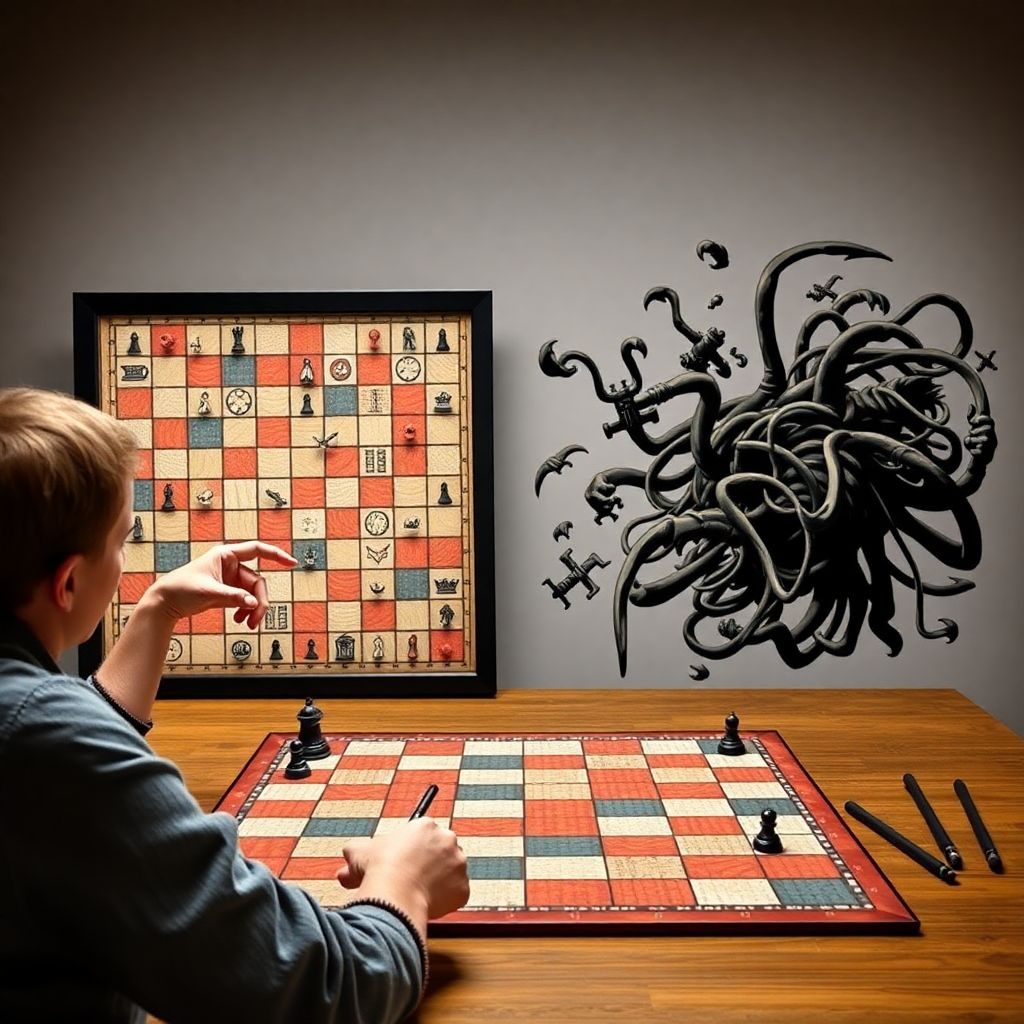
Treat tactics as a language by asking what each rule, cost and reward says about order or chaos. Highly constrained systems preach planning and stability; swingy, opaque systems celebrate improvisation. Use this lens to tune difficulty curves, randomness and information so your game’s tactics consistently express the philosophy you want.
Conceptual précis: how tactics encode philosophy
- Every rule and numeric value is a tiny statement about what the game considers smart, fair or meaningful.
- «Order» games emphasise predictability, long-term planning and visible structure; «chaos» games emphasise surprise, volatility and short tactical bursts.
- Player-facing friction (complexity, hidden information, randomness) determines whether play feels like reading a clear text or decoding a noisy signal.
- Systemic incentives often say more than narrative: what wins is what the game truly values.
- Designers can deliberately shift dials (time pressure, randomness, comeback tools) to reposition a game on the order-chaos spectrum.
- Analysing tactics as language helps you select and critique juegos de mesa estratégicos para adultos, videojuegos de estrategia en tiempo real para PC and hybrid designs.
Debunking myths about tactics as language
The first myth is that tactics are «just mechanics» and philosophy lives only in story or lore. In practice, the systems you design or choose for the mejores juegos de mesa de estrategia y táctica express values more forcefully than any cutscene or flavour text.
The second myth: order equals balance and chaos equals bad design. Many successful juegos de mesa estratégicos para adultos in Spain intentionally include chaotic elements (high-impact cards, random events, bluffing) because they want to celebrate risk-taking, social reading or humour. Chaos is a tool, not automatically a flaw.
The third myth says players simply optimise for victory and ignore philosophical nuance. Players may not use academic terms, but they feel the difference between a game that rewards slow, methodical planning and one that rewards opportunistic gambles. Their stories after a session are evidence of how they «read» your tactical language.
Finally, treating tactics as language does not mean forcing deep symbolism into every rule. It means using a practical lens: check whether your systems unintentionally encourage behaviours that contradict your intended message about order and chaos. The goal is alignment, not forced depth.
Mechanics as grammar: translating rules into philosophical claims
-
Information structure (who knows what, and when)
Open information (chess-like) tells players that order, analysis and foresight are central virtues. Hidden hands, fog of war or simultaneous reveals suggest that uncertainty and intuition matter as much as calculation. -
Randomness and variance
Low randomness says the world is legible and mostly under control; high-impact randomness says reality is swingy and fragile. Use controlled randomness (rerolls, mitigation, drafting) when you want tension without surrendering entirely to chaos. -
Action economy and time pressure
Generous planning time, multi-step turns and engine-building mechanics encourage constructing orderly long-term plans. Strict timers, real-time phases or interrupt-heavy turns shift the game towards chaos, rewarding fast reactions and improvisation. -
Feedback loops and comeback tools
Strong snowballing tells players that early order and discipline are paramount; mistakes are punished heavily. Soft catch-up tools and rubber-banding convey that the system is more forgiving and that late swings are part of the intended drama. -
Conflict resolution model
Deterministic resolution (no dice, fixed outcomes) frames conflict as a puzzle of positioning and calculation. Swingy dice, card flips or simultaneous orders frame conflict as a negotiation with uncertainty, where accepting risk is a valid tactic. -
Victory conditions and scoring rhythm
Steady, incremental scoring (area control, euro-style tracks) supports an ordered, managerial worldview. Big, sudden scoring spikes or hidden objectives express a philosophy where surprises and secret plans are expected and endorsed. -
Interface and pace in digital games
In videojuegos de estrategia en tiempo real para PC, interface friction, input limits and APM ceilings act as grammar too: they either allow precise orchestration (order) or force messy, imperfect execution (chaos), regardless of underlying rules.
Case studies: systems that privilege order or celebrate chaos
Below are typical patterns you can recognise or deliberately reproduce in your own projects, whether you design tabletop systems or work through a curso de diseño de juegos de mesa y mecánicas de juego.
-
Highly ordered Euro-style strategy
Traits: open information, low randomness, engine-building, point-salad scoring. Philosophy: the world rewards long-term optimisation, resource efficiency and careful planning. Misplay costs you, but rarely because of luck; failures feel like personal responsibility. -
Tactical skirmish with deterministic combat
Traits: grid movement, clear lines of fire, fixed damage or odds known in advance. Philosophy: mastery is reading the board and calculating sequences. The system claims that perfect information and analysis can, in theory, tame the battlefield. -
Party and negotiation games driven by social chaos
Traits: hidden roles, bluffing, unstable alliances, kingmaking. Philosophy: outcomes are shaped more by human unpredictability than by rules. The game argues that chaos lives in people, and the system simply gives it a stage. -
Swingy card battlers and drafting games
Traits: powerful, occasionally broken-feeling cards, draft or loot randomness, explosive combos. Philosophy: the universe deals wild hands; skill lies in adaptation and timing. The system states that you must ride chaos rather than resisting it. -
Real-time macro-micro strategy on PC
Traits: continuous time, multi-front management, limited attention, imperfect execution. Philosophy: even when rules are orderly, lived experience feels chaotic because you can’t optimise everything. Many videojuegos de estrategia en tiempo real para PC intentionally live here. -
Hybrid «controlled chaos» designs
Traits: clear long-term goals with unpredictable short-term events (e.g. stable scoring plus random crises). Philosophy: planning is valuable but the world will test your plan. Good for designers who want to embody resilience rather than rigid control.
Player agency and emergent meaning: reading tactical discourse
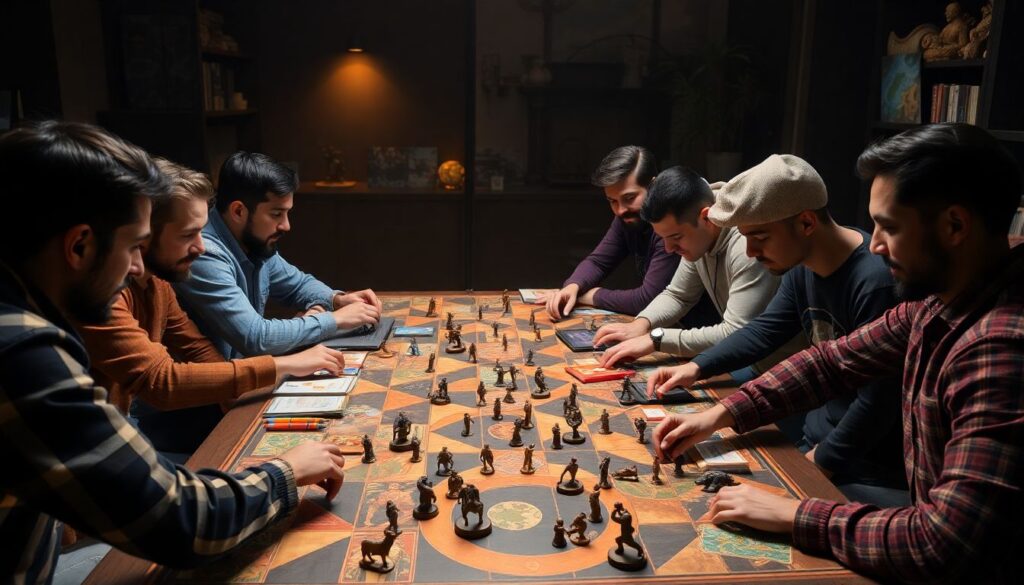
To use tactics as a readable language, you need enough agency for players to «write» with your systems, and enough structure for their choices to feel interpretable afterward.
Benefits of framing tactics as philosophical expression
- Improves coherence between theme, story and mechanics: what players do matches what the game claims.
- Helps you critique prototypes beyond «fun or not» by asking what behaviours your incentives promote.
- Makes it easier to discuss design in teams, especially if some members have read libros sobre filosofía de los videojuegos and others have not.
- Supports richer player stories: debrief conversations connect individual moves to overarching ideas about control, risk and uncertainty.
- Guides expansion or patch decisions: you can add content that reinforces, rather than dilutes, your chosen stance on order vs chaos.
Constraints and risks when over-theorising
- Players are diverse; not everyone will interpret your system the same way, especially across cultures like es_ES versus global markets.
- Overloading mechanics with symbolism can produce fragile, overcomplicated rules that hurt usability.
- Production constraints (budget, time, available components) may force compromises that soften your philosophical message.
- Live-service balancing in digital titles may gradually shift the game’s effective philosophy away from your original intent.
Design patterns that signal order versus chaos
Use these patterns as quick diagnostics while tuning your game or choosing reference titles for a curso de diseño de juegos de mesa y mecánicas de juego.
-
Turn structure
Strict, alternating, phase-based turns with little interruption shout order. Simultaneous planning, real-time phases or frequent reaction windows invite chaos and ambiguity about who truly controls the flow. -
Randomness mitigation tools
Re-roll tokens, card cycling, scrying, drafting and mulligans say: randomness exists but rational tools can tame it. Absence of mitigation implies a harsher, more chaotic universe where you simply endure or exploit swings. -
Information revelation tempo
Early revelation (open scoring, visible tech trees) makes the future legible and supports orderly macro-plans. Late or partial revelation (hidden objectives, surprise scoring at the end) favours tactical pivots and emotional climaxes. -
Spatial vs statistical emphasis
Spatial puzzles with clear geometry (routes, areas, patterns) tend to feel ordered. Statistical emphasis (probability pushes, big decks, noisy economies) leans toward chaotic, especially if players cannot easily track distributions. -
Punishment and forgiveness curves
Games where early mistakes are unrecoverable present a harsh, ordered world where discipline is everything. Games with elastic recovery (comebacks, catch-up mechanisms) communicate that chaos can rescue the underdog or punish the overconfident. -
Social rules and table culture
Strict etiquette, low negotiation and limited table talk produce an «official», ordered reading of tactics. Free negotiation, meta-deals and humour open the door to social chaos layered on top of the written rules.
Assessing clarity: heuristics for measuring philosophical expression
Use the following practical heuristic loop when designing or evaluating juegos de mesa estratégicos para adultos or digital strategy titles.
- Write one sentence: «This game argues that the world is mostly [ordered/chaotic] because [core reason].» If you cannot fill this in, your target philosophy is fuzzy.
- List three biggest incentives: Identify which behaviours most reliably win (rush, turtle, negotiate, gamble). These are the verbs your tactical language privileges.
- Trace each incentive to a specific rule: For each winning behaviour, mark the rules that enable it (scoring, tempo, costs). Check whether they lean toward predictability or volatility.
- Run a «story debrief» test: After a session, ask players in plain language: «Did this feel more like careful planning or riding chaos?» Their answers reveal how your tactics are being read.
- Adjust one dial at a time: Change a single aspect-e.g. randomness mitigation or information visibility-and replay. Note how player stories and strategies shift along the order-chaos axis.
Mini-application example: suppose you are evaluating candidate titles for a Spanish group who like mejores juegos de mesa de estrategia y táctica but dislike feeling powerless. You might reject extremely swingy dice-fest games, favour hybrids with strong mitigation, and use your heuristic loop to ensure that «moments of chaos» never fully override long-term planning satisfaction.
Practical clarifications practitioners often ask
Do I need explicit narrative to express a philosophy of order or chaos?
No. Narrative can help, but your victory conditions, randomness, and information structure already imply a worldview. Players will sense whether the game rewards control or embraces volatility, even if you never mention those ideas in the story or rulebook.
How can I shift an existing design from too chaotic to more orderly?
Add mitigation (rerolls, redraws, scrying), increase open information, and weaken extreme swing effects. Make scoring more incremental and predictable. In digital games, improve feedback clarity and reduce inputs that depend on split-second reflexes rather than planning.
Is it a problem if players interpret my game differently than I intended?
Differences are normal; a system is a conversation, not a lecture. It is only a problem if emergent dominant strategies push behaviour directly against your core goals (for example, turtling in a game intended to reward risk and dynamism).
How does this apply to real-time PC strategy versus turn-based tabletop games?
In real time, execution pressure itself introduces chaos, even with orderly rules. In turn-based tabletop formats, chaos tends to come from randomness or social negotiation instead. Analyse where your primary uncertainty comes from, and design around that.
Can I mix ordered and chaotic elements without confusing players?
Yes, if you are consistent about where each lives. For example, keep long-term scoring stable and predictable, but let short-term events or combat be volatile. Communicate this clearly in rules and UI so players can form accurate expectations.
What are good learning resources to deepen this perspective?
Look for libros sobre filosofía de los videojuegos that discuss systems and ethics, and pair them with practical texts from any solid curso de diseño de juegos de mesa y mecánicas de juego. Reading design postmortems of well-known strategy titles is also very useful.
How can I quickly evaluate a prototype’s stance on order versus chaos?
Run short test sessions and then ask players two questions: what behaviour seemed to win, and did they feel mostly in control or at the mercy of luck and others? Compare their answers with your intended philosophy and adjust the most influential rules.
Комментарии