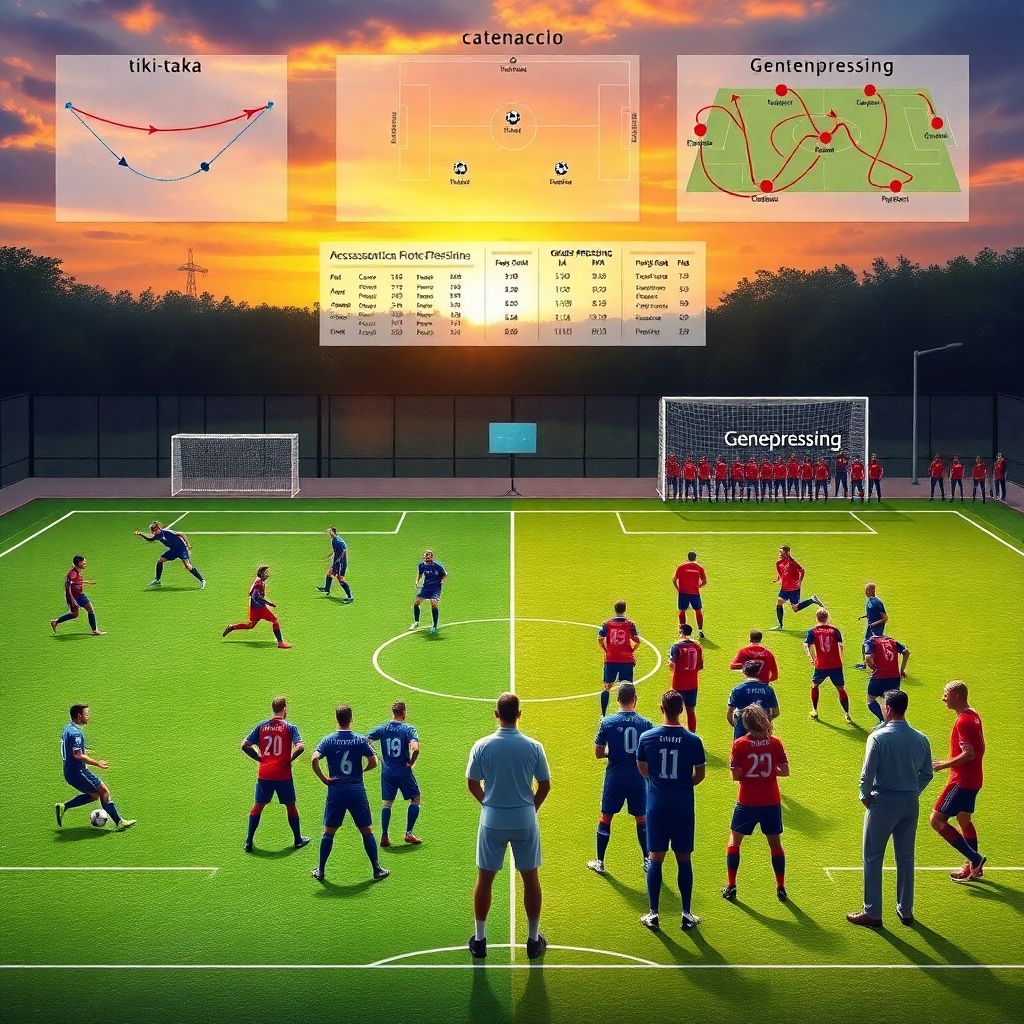
Tiki-taka, catenaccio y gegenpressing: three mindsets, not just systems
When coaches talk about tiki-taka, catenaccio and gegenpressing, they’re really talking about worldviews. Tactics are not just arrows on a board; they’re answers to simple questions: who controls the game, space or the ball? Do we defend by retreating or by attacking? Do we trust structure or improvisation? A good análisis táctico profesional tiki taka catenaccio gegenpressing always starts from these philosophical choices, and only then moves to formations, pressing triggers and training drills.
Necessary tools: what you really need before choosing a system
Before dreaming of a perfect style, a coach needs tools that are more mental than material. First, a basic library: a couple of libros sobre táctica futbolística tiki taka catenaccio gegenpressing to understand how ideas evolved from Herrera to Guardiola and Klopp. Second, video: full matches, not just highlights, so you see how a team suffers as well as shines. Third, objective data: simple metrics like PPDA, field tilt or entry passes to know whether your pressing or block actually works instead of trusting vibes.
Human tools: players, context and ego control
No system survives contact with reality if you ignore your dressing room. A slow squad will not press like Liverpool; a technically limited team will struggle to live on midfield rondos. The mejores entrenadores de fútbol especialistas en tiki taka y gegenpressing adapt the big ideas to the players’ physical and cognitive profiles: who reads pressing cues well, who can play under pressure, who panics when forced to defend close to their box. Another tool is ego control: not forcing a fashionable style just because it looks good on social media.
Tiki-taka: domination through the ball
Tiki-taka is often reduced to “pass for the sake of passing”, but philosophically it’s about control and risk distribution. The ball becomes a shield: if I have it in good zones, you can’t hurt me. Think of peak Barcelona 2008–2012 or Spain 2008–2012. They compressed the pitch around the ball, using short passes to constantly create triangles. The hidden rule was aggressive counterpressing: whenever they lost it, three or four players suffocated the carrier, turning defense into a brief extension of their positional attack.
Case study: adapting tiki-taka in grassroots football
A youth coach I worked with tried to copy Guardiola with U13s: 2–3–5 in possession, keeper as playmaker, constant build-up from the back. The first month, they conceded a flood of goals from high turnovers. The fix wasn’t abandoning the idea, but simplifying it. Centre-backs were allowed to clear long if central lanes were blocked; midfielders were given two predefined passing options per phase. Within two months, the same kids played a stripped-down tiki-taka, with fewer passes but much better spacing and security.
Catenaccio: control through space and suffering
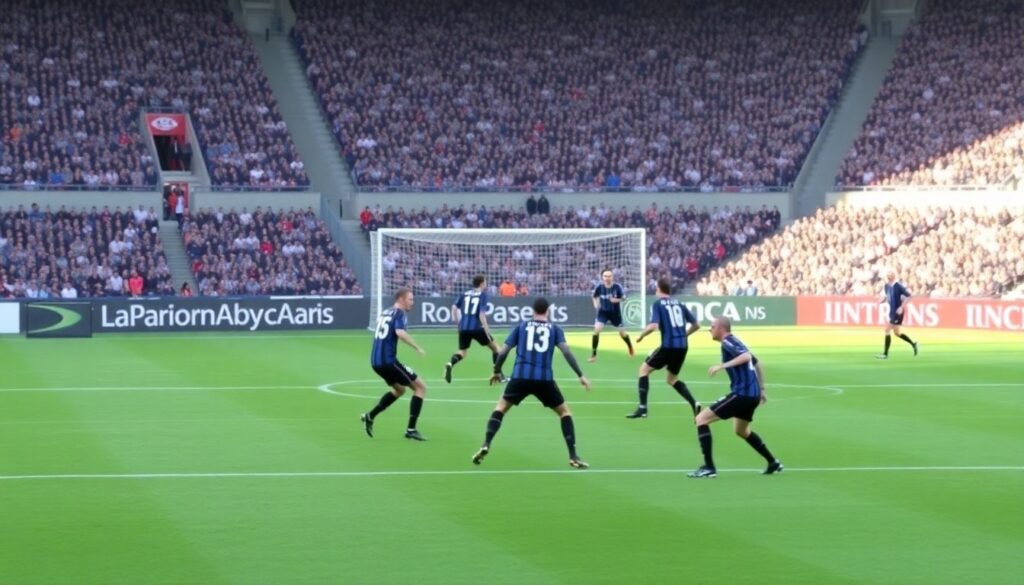
Catenaccio’s philosophy is almost the mirror image. Instead of saying “we rule the game with the ball”, it claims “we rule it by denying you useful space”. Classic Inter under Helenio Herrera used a sweeper behind the defensive line to clean up any leaks, while wing-backs and midfielders formed sliding walls. In modern versions, like some of Simeone’s Atlético de Madrid phases, the idea survives without a pure libero: compact lines, ruthless protection of the box, fast and direct counters that punish overcommitted opponents.
Case study: a modern catenaccio in an amateur team
An amateur side facing three promotion contenders asked for a survival plan. Technical level was low, but the defenders loved duels. We built a low 5–4–1 block with clear rules: force play outside, never jump from the line unless someone covers, and launch two runners the moment the ball is recovered. Training focused on sliding as a unit and on three-pass counters. They averaged 35% possession yet took seven points from nine. That experience taught the players that “defensive” doesn’t mean passive; it means controlled suffering.
Gegenpressing: chaos as a weapon
Gegenpressing treats loss of possession not as a crisis but as a tactical trap. The philosophy: the rival is most vulnerable just after recovering the ball, when their shape is broken and decisions are rushed. Klopp’s Dortmund and early Liverpool lived by this: lose it, swarm the zone, recover, attack the box in seconds. It’s high-risk, high-demand football: players must sprint, read pressing cues and accept living at a heart rate of 180. The ball is almost a trigger for waves of coordinated aggression.
Case study: from passive pressing to true gegenpressing
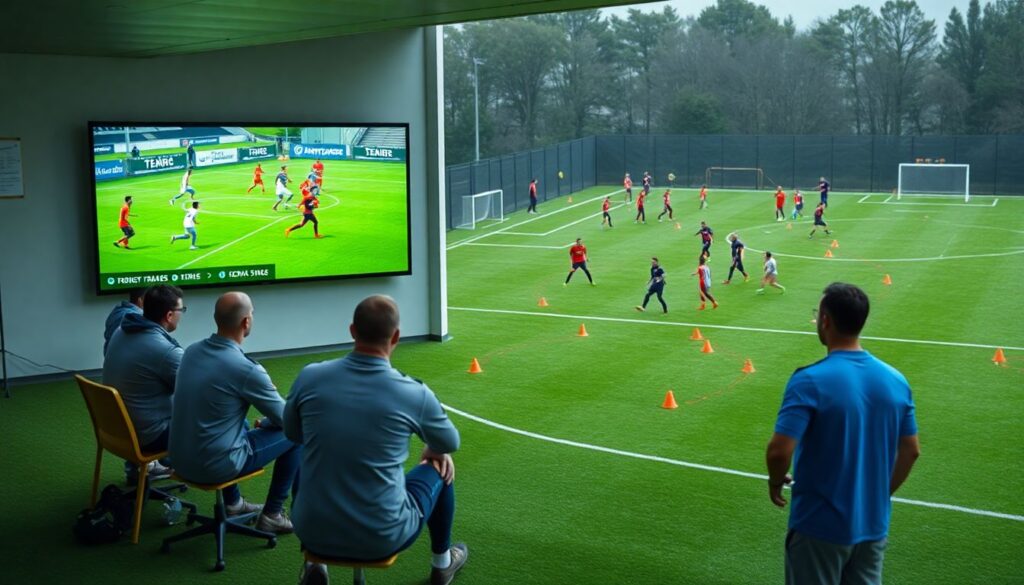
A semi-pro club believed they were a pressing team, but video showed sleepy jogs and late reactions. We introduced a four-week micro “curso online de táctica de fútbol tiki taka y gegenpressing” style program for staff and senior players: theory sessions on pressing traps, then small-sided games where you only scored after regaining the ball in the attacking third. The turning point came when forwards stopped chasing blindly and started curving runs to close passing lines. Turnovers rose, counters got shorter, and the team finally looked like it enjoyed the chaos.
Step-by-step process: choosing and implementing your vision
1. Diagnose your reality
1) Analyse your squad: speed, stamina, technical level, decision-making.
2) Watch at least three full games and write down where you lose control: transitions, crosses, build-up.
3) Compare this with your environment: pitch size, climate, league style. On heavy fields, constant gegenpressing might be suicidal; in narrow artificial pitches, extreme tiki-taka width loses impact. This basic scan is the foundation for any formación para entrenadores de fútbol en sistemas de juego modernos that wants to be practical, not dogmatic.
2. Pick a dominant principle, not a religion
Once you know your context, choose a main principle: ball possession (tiki-taka), space control (catenaccio), or transition dominance (gegenpressing). That doesn’t mean purity. Many successful coaches blend ideas: a team may defend deep like a catenaccio side but attack with quick, vertical gegenpressing transitions; or use tiki-taka structure to prepare aggressive pressing traps. Write your idea in one sentence you could explain to a player in ten seconds; if it doesn’t fit, it’s probably too abstract to work on the pitch.
3. Translate philosophy into daily drills
The step most coaches skip is turning big words into concrete exercises. For tiki-taka, this means rondos with directional goals, positional games with overloads and strict touch limits. For catenaccio, it’s shifting lines, 10v8 block-defense drills and rehearsed counterattacks. For gegenpressing, repeat small-sided games where a lost ball triggers immediate constraints, like extra goals for regaining in five seconds. Solid formación para entrenadores de fútbol en sistemas de juego modernos insists on this conversion of theory to habit until reactions become automatic.
Troubleshooting: when your philosophy fails on the pitch
Common problems often overlap between systems: players confused, distances wrong, intensity fading after 20 minutes. With tiki-taka, a classic symptom is sterile possession: lots of sideways passing, very little penetration. Then you shorten passing options, encourage third-man runs and maybe accept more direct switches. With catenaccio, if the block keeps sinking onto the goalkeeper, you work on mid-block starting positions and aggressive stepping out. For gegenpressing, when the press becomes disjointed, you reset pressing triggers so only certain cues unleash the collective jump.
Practical fixes from real benches
One regional coach tried a hybrid: building like tiki-taka, defending like gegenpressing. The result was chaos; players didn’t know when to hold shape or hunt. We solved it by time-zoning: first 15 minutes of each half, high press and direct football; then, if leading, a more patient, positional approach. Another case: a defensive side that never countered with numbers. Their fix was numerical: they set a non-negotiable rule that at least three players had to cross the halfway line on every counter, regardless of fatigue.
From systems to identity
In the end, tiki-taka, catenaccio and gegenpressing are tools for building identity. They give players a shared language about what “good football” looks like for them. Some clubs will always feel more comfortable fighting for every meter of grass; others thrive on the ball’s rhythm or the adrenaline of permanent pressing. Good coaches don’t cosplay as their idols; they borrow ideas, test them, and keep what fits. If there’s a secret behind any análisis táctico profesional tiki taka catenaccio gegenpressing, it’s this: philosophy only lives if your players believe in it.