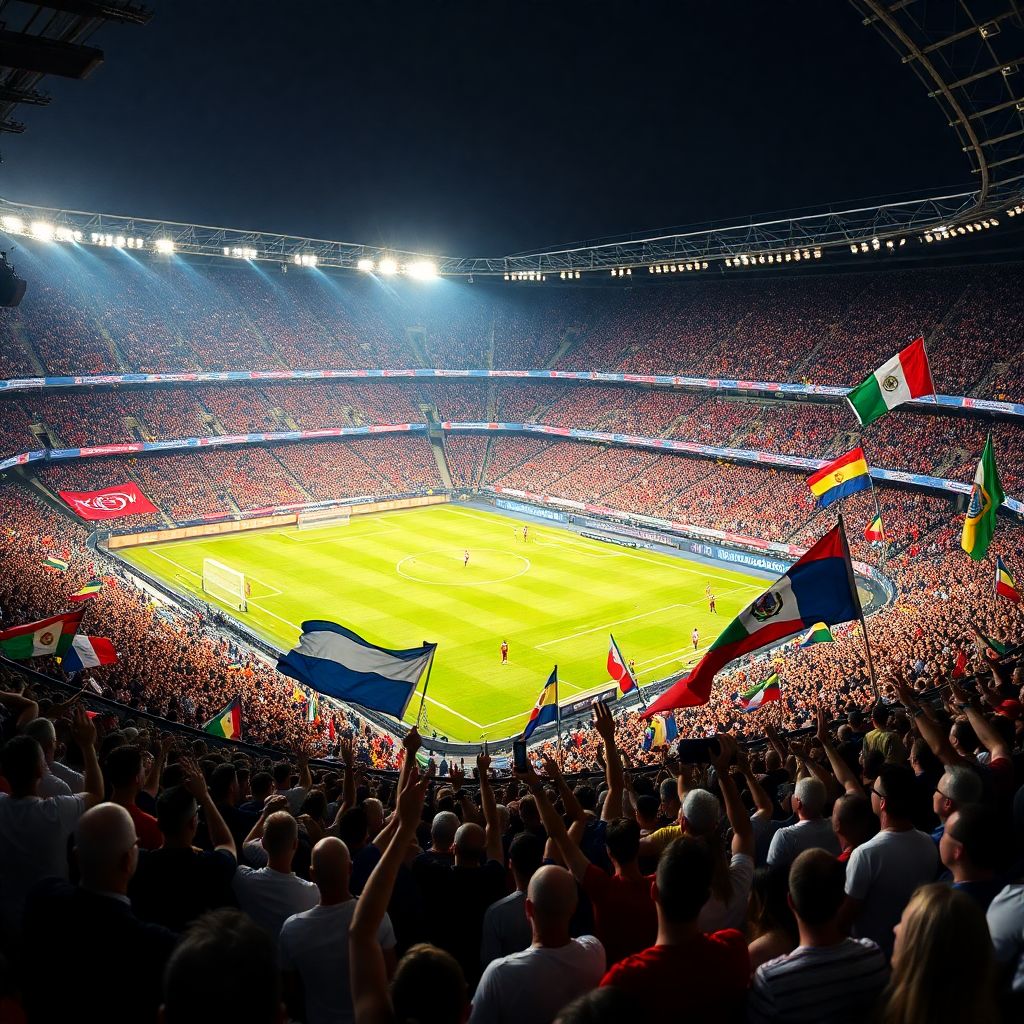
Patriotism in football expresses attachment to a country through its team, while nationalism turns that attachment into a political boundary that can include or exclude. In modern international competitions, the difference lies in how symbols, chants and narratives are framed: either as open civic pride or as zero-sum struggles over identity and territory.
Central propositions linking patriotism, nationalism and national teams
- Patriotism in football is emotional support for a national team without necessarily opposing other nations or groups.
- Nationalism adds a political layer, turning football identity into a tool for defining insiders and outsiders.
- The same flag, anthem or chant can function as inclusive patriotism or exclusionary nationalism, depending on context and leadership.
- National selections are key stages where states, media and fans negotiate the border between civic pride and political conflict.
- Managing stadium rituals, media narratives and player behaviour can reduce the impact of radical nationalism while preserving positive attachment.
- For clubs, federations and public institutions, the safest approach is to promote values-based, civic patriotism and to react quickly to symbolic escalations.
Defining patriotism and nationalism in the context of international sport
In international football, patriotism is an emotional bond with a country expressed through support for its national team. It is about shared joy, recognition and a sense of belonging that emerges when the anthem plays or when the team scores, without necessarily implying hostility or superiority toward others.
Nationalism, by contrast, politicises that bond. It links support for the team to political projects, historical grievances or territorial claims. In extreme forms, it turns a match into a symbolic battlefield where defeat is experienced as national humiliation and victory as proof of ethnic or cultural superiority.
The phrase patriotismo y nacionalismo en el fútbol moderno captures this spectrum: from benign civic pride to radical projects that turn stadiums into spaces of confrontation. The line between the two is not fixed; it shifts with political tensions, media narratives and decisions by federations and governments.
For practical analysis, especially in a European context such as Spain (es_ES), it helps to see patriotism as identity for something (a shared team, shirt, story) and nationalism as identity against someone (another group, internal minority, neighbouring state). The same gesture can move from one side to the other depending on who frames it and with what message.
How national football teams construct and transmit political identities
- Selection and eligibility rules
Who can represent the nation defines political membership in practice. Debates about dual nationals, naturalised players or regional identities reveal deeper tensions over who is considered fully part of the country. - Symbols: flags, anthems and kits
The choice of flag variants, language of the anthem or design of the kit communicates which version of the nation is official. Small design decisions can either include minority stories or erase them. - Narratives in official communication
Federations, governments and sponsors construct storylines: the team as symbol of unity, revenge, resistance or renaissance. These narratives decide whether victory is presented as shared celebration or proof of national destiny. - Media framing and commentary
Television, radio and social media transform matches into political dramas. The same game can be narrated as respectful rivalry or as a continuation of historical conflict, strongly conditioning fan behaviour. - Stadium choreography and fan culture
Banners, tifos and chants turn stands into visual and acoustic declarations. Coordinated displays can promote inclusivity, but they can also normalise hate speech or irredentist claims if not regulated. - Player gestures and statements
Kneeling, refusing to sing the anthem, wearing specific armbands or making territorial gestures are instantly politicised. Players become high-visibility carriers of identity conflicts, voluntarily or not. - Institutional reactions to conflict
How federations, leagues and governments respond to incidents (sanctions, statements, silence) sends a powerful signal about acceptable boundaries of political expression around the national team.
Application mini-scenarios: from theory to concrete dilemmas
Before looking at historical turning points, it is useful to visualise how these mechanisms appear in everyday practice. Below are condensed scenarios that mirror common dilemmas for federations and policy-makers.
- Dual-national striker in a tense rivalry
A player eligible for two neighbouring states chooses one national team. Media in both countries turn the decision into a story about loyalty, migration and cultural purity. The federation must decide whether to frame the choice purely as sporting or as a symbol of successful integration. - Regional anthem vs state anthem
In a state with strong regional identities, a final is played in a region where many fans want to sing a regional anthem instead of or alongside the state anthem. Authorities must decide whether to allow, regulate or prohibit regional symbols, knowing each option sends a different political signal. - Conflict-zone qualifier
A qualifying match is scheduled shortly after a border incident between two countries. There is pressure to cancel, to play behind closed doors or to use the game for a peace message. Every decision changes the balance between civic patriotism and militarised nationalism on both sides.
Historical turning points: when sports became instruments of state power
The relationship between football and politics has many layers, but certain moments mark clear shifts where states learned the value of sport as soft power and as a tool for controlling national narratives.
- Interwar stadiums as national theatres
In the early twentieth century, international matches became rituals where new states displayed unity and power. Stadiums turned into modern arenas for flags, mass choreography and collective singing, giving governments an emotionally charged space to rehearse national myths. - Dictatorships using national teams for legitimacy
Authoritarian regimes across Europe and Latin America discovered that success in football international competitions generated legitimacy at home and prestige abroad. Teams were framed as proof of the regime’s vitality, often silencing internal repression during tournaments. - Cold War symbolic battles
Matches between socialist and capitalist states were narrated as clashes of systems. A simple qualifier could be framed as evidence that one ideological model produced stronger, more disciplined citizens, amplifying the impacto del nacionalismo en las competiciones internacionales de fútbol. - Post-colonial and independence moments
For newly independent states, beating the former colonial power or appearing under a new flag became milestones in building separate national identities. National teams travelled as moving borders, redrawing maps of belonging in front of global audiences. - Globalised mega-events and image management
World Cups and continental tournaments now serve as platforms to rebrand countries to investors and tourists. Governments invest heavily in stadiums and ceremonies, but also try to control protests and dissent, blending spectacle with discipline in a highly mediated environment.
Mechanisms: symbols, rituals and media that politicize sporting allegiance

The same tools that create communal joy can turn into vectors of polarisation. Understanding their dynamics helps federations choose which practices to encourage and which to regulate more strictly.
Potential advantages of carefully managed patriotic symbolism
- Shared emotional vocabulary
Flags, anthems and kits provide simple, powerful cues for collective emotion. Choreographed displays can unite different social groups around a common, time-limited objective: supporting the team. - Low-cost nation-building
Compared to large political campaigns, national team matches offer relatively inexpensive opportunities to project inclusive stories of the nation, especially if communication emphasises diversity, fair play and respect. - Positive international visibility
Civic, respectful fan behaviour builds a favourable image of the country abroad. This soft power effect can support tourism, diplomacy and even economic relations without explicit propaganda. - Space for controlled political expression
Allowing certain symbolic gestures (for example, against discrimination) can channel tensions into non-violent forms, reducing the risk that frustrations explode elsewhere. - Educational opportunities
Campaigns around national team matches can promote messages about anti-racism, gender equality or respect for minorities, linking patriotism to shared democratic values rather than ethnic criteria.
Risks and structural limits when nationalism dominates the frame
- Normalisation of exclusion
When fan chants and banners target internal minorities or neighbouring nations, what starts as harmless rivalry can legitimate discrimination outside the stadium, especially if authorities stay silent. - Escalation into physical violence
Highly polarised narratives can encourage some groups to treat opposing fans or players as enemies rather than rivals, increasing the risk of clashes before and after games. - Instrumentalisation by extremist actors
Radical groups can use matches to recruit, coordinate and display strength. National colours become wrappers for messages that attack migrants, religious minorities or political opponents. - Reputational damage and sanctions
Repeated incidents of racist or nationalist aggression may lead to international sanctions, stadium closures and reputational costs that affect federations, cities and even sponsors. - Pressure on players from minority backgrounds
When national identity is defined in narrow ethnic or cultural terms, players perceived as outsiders face abuse for perceived lack of loyalty, even after minor mistakes on the pitch. - Overload of expectations
Nationalism turns every match into a referendum on the nation’s worth. This can create unbearable pressure on players and coaching staff and can turn normal sporting failure into political crisis.
Comparative case studies: from civic pride to exclusionary nationalisms
Case studies help compare approaches by ease of implementation and level of political risk. Below, different patterns show how the same sport can stabilise or destabilise democratic coexistence.
| Approach | Main characteristics | Ease of implementation | Key risks |
|---|---|---|---|
| Civic patriotism strategy | Inclusive symbols, celebration of diversity in the squad, clear stance against discrimination, focus on shared values rather than historical enemies. | Medium-high: requires consistent communication but few structural changes; fits well with existing fair play campaigns. | Low-medium: backlash from radical groups who accuse the team of being insufficiently national or too politically correct. |
| Ethno-nationalist mobilisation | Strong emphasis on historic grievances, ethnic homogeneity, language purity; media frame wins and losses as proof of superiority or humiliation. | Medium: emotionally powerful and popular short term, but costly long term as it fuels conflict and invites sanctions. | High: violence, discrimination, international isolation, internal fragmentation, especially in multi-ethnic states. |
| Depoliticisation and neutrality | Federation insists that the team is strictly sporting; avoids statements on almost all political issues and symbolic controversies. | High in the short term: easier to communicate; fewer confrontations with political actors. | Medium: silence can be read as complicity in the face of abuse; missed chance to promote democratic values. |
| Value-based activism | Team supports universal principles (anti-racism, anti-war, human rights) through gestures and campaigns, framed above domestic partisan lines. | Medium: needs coordination with players, staff and sponsors; requires careful framing to avoid partisan capture. | Medium-high: some fans and political actors may feel attacked; possible boycotts or politicised media campaigns. |
Typical missteps and persistent myths around politics and national teams
- Myth: football can be kept completely apolitical
Ignoring the political dimension does not neutralise it; it only leaves the field open to those who want to use it for exclusionary projects. - Myth: patriotism always leads to dangerous nationalism
Well-managed civic patriotism can act as a buffer, giving people a non-violent outlet for identity needs and decreasing the appeal of radical nationalism. - Misstep: reacting only after scandals
Federations often act once international bodies investigate or media scandals explode. Preventive codes of conduct and educational campaigns are easier to implement and carry less political cost. - Misstep: assuming symbols mean the same for everyone
In multi-national or plurinational states, flags and anthems can express conflict as much as unity. Policy must be grounded in política y selecciones nacionales de fútbol análisis, not in intuition alone. - Myth: players should never take political stances
Players are already read politically by media and fans, especially around issues of race, migration or regional identity. Providing guidance is safer than hoping controversies will not appear. - Misstep: ignoring transnational learning
There is a growing ecosystem of libros sobre política fútbol patriotismo y fronteras and cursos online de geopolítica y fútbol global. Not using this knowledge leaves federations repeating avoidable mistakes.
From analysis to practice: managing political tensions around national selections
This final section turns abstract concepts into a practical management sequence. It outlines how a federation or league could move from reactive crisis control to a proactive model that accepts that national teams are political, but works to keep them within democratic, inclusive boundaries.
Mini-case: designing a low-risk patriotic campaign for a major tournament
Imagine a national team from a country with internal regional tensions and a history of politicised fan incidents. Ahead of a continental tournament, the federation wants to promote unity without feeding exclusionary nationalism or provoking new conflicts around flags and anthems.
- Map the sensitive fault lines
Identify contested symbols (flags, regional banners, historic chants), vulnerable groups (minority players, migrant communities) and upcoming high-tension matches. Use previous incidents and expert input from political scientists and sociologists. - Define a clear value frame
Choose three to five core values (respect, diversity, fair play, shared pride) and make them the backbone of all official communication. Explicitly separate those values from partisan agendas, while recognising that they are political in a broad sense. - Co-create guidelines with players and fan groups
Develop a short code of conduct on symbols and chants in consultation with captains, coaches and major supporter associations. When possible, include representatives from regions or identities that often feel excluded. - Prepare standard responses to predictable controversies
Draft pre-approved statements for scenarios such as racist chanting, booing of the anthem or territorial banners in the stands. This avoids improvisation under pressure and ensures consistent messages. - Train stewards, commentators and social media teams
Brief stadium staff on what behaviours require intervention. Coordinate with broadcasters and official social channels to avoid amplifying extremist displays and to highlight inclusive, creative fan expressions instead. - Monitor and adjust during the tournament
After each match, review incidents and media narratives. Adapt guidelines if new risks appear, and publicly celebrate examples of civic patriotism to reinforce positive norms.
This process does not eliminate nationalism from football, but it makes it more likely that patriotic energy flows into inclusive, rule-based forms rather than into open confrontation. By accepting that national teams sit at the intersection of sport and politics, institutions can better balance emotion, identity and democratic responsibility.
Practical clarifications and concise answers on contested concepts
How is patriotism in football different from nationalism in practice?
Patriotism focuses on supporting your team and sharing pride with fellow citizens, without needing an enemy. Nationalism frames support as proof of national superiority or as part of a broader conflict, often turning rivals and internal minorities into threats rather than participants in the game.
Can federations realistically keep politics out of national teams?
They cannot remove politics, because national symbols are inherently political. They can, however, influence direction: promoting civic values, regulating hate speech and refusing to endorse partisan or exclusionary messages, which reduces the most dangerous forms of nationalism.
Do bans on flags, banners or chants actually reduce tensions?
Blanket bans often displace conflicts rather than solve them. Targeted regulation against clearly discriminatory or violent expressions, combined with campaigns that promote positive symbolism, usually works better and is easier to justify legally and ethically.
Are player political gestures always harmful for team cohesion?
Not necessarily. Gestures aligned with broad human rights norms and discussed internally in advance can strengthen cohesion and credibility. Problems arise when actions surprise teammates or are framed by media as partisan attacks or ethnic-national claims.
How should media cover politically charged matches responsibly?
Commentators should avoid militarised language, refrain from repeating extremist slogans and give context to historical tensions without turning the game into a war narrative. Highlighting gestures of respect between teams can help de-escalate nationalist framing.
What can fans do to support civic patriotism instead of toxic nationalism?
Fans can choose chants and banners that celebrate their own identity without insulting others, challenge discriminatory behaviour in their groups and use social media to amplify inclusive narratives around the team, especially during high-tension matches.
Is studying the politics of football only for academics?
No. Coaches, federation officials, journalists and organised fans can all benefit from structured study, including specialised books and dedicated online courses that link geopolitics and football. Better understanding of these dynamics leads to better everyday decisions.