
Football both reproduces and challenges social class inequalities through who plays, who gets paid, and who decides. To work with these dynamics, you need to read the field historically, audit access and labour conditions, and design equity-focused interventions that are realistic for your club, school, city or federation in Spain.
Core Insights: How Class Shapes and Is Shaped by Football
- Modern football emerged from class compromise: elite codification plus working-class mass participation, leaving a legacy of power imbalance.
- Costs of training, travel and equipment silently exclude low-income players, even when formal rules look meritocratic.
- Labour precarity in youth academies and lower leagues turns many football dreams into high-risk class mobility projects.
- Stadium geographies, ticket prices and fan identities mirror and reinforce wider urban and class segregation.
- Media, sponsorship and policy choices often deepen inequalities, but they can be redirected toward equity with clear conditions.
- Effective interventions combine structural measures (scholarships, governance, contracts) with cultural work (anti-stigma, fan education).
- For practitioners, continuous monitoring and community participation are essential to avoid reproducing the same inequalities you want to change.
Historical Roots: Class Dynamics in the Formation of Modern Football
Understanding how class works in football today requires starting from its historical formation. This perspective is useful if you design policies, educational programs or club strategies and need to see patterns over time, not only isolated incidents in your competition or city.
In Europe, including Spain, modern football emerged in elite schools and universities, then spread to industrial working-class communities via factories, ports and neighbourhood clubs. Rules were codified by elites, while mass participation and fan culture were largely working-class. This division of symbolic and economic power remains visible in today’s boards, federations and media ownership.
Professionalization created new opportunities for mobility, but also clear boundaries: some clubs and leagues cultivated a respectable, middle-class image; others became symbols of local working-class pride. Ticket pricing, stadium locations and membership rules encoded these divisions. Even now, when you analyse fan demographics, directors’ backgrounds or sponsor portfolios, you often see traces of these early splits.
For educators or activists, this history is fertile ground for designing a curso online de sociología del deporte y desigualdad social or for curating libros sobre fútbol y clase social that help staff and players recognise inherited patterns. However, you should not rely only on history when:
- You need to solve urgent safeguarding or discrimination cases where immediate legal and ethical frameworks are more relevant than long-term origins.
- Your organisation lacks basic governance or financial transparency; in such cases, start by fixing procedures before launching historical or symbolic debates.
- Stakeholders are in acute conflict; introducing historical blame can escalate tensions if you do not have facilitation experience.
Use the historical lens to contextualise, not to excuse present inequalities. When you run workshops or a máster en sociología del deporte y gestión deportiva module, pair historical narratives with concrete, contemporary case studies from different Spanish regions and leagues so participants always connect past patterns to current decisions.
Access and Opportunity: Socioeconomic Barriers to Participation and Talent ID
Class inequalities in football often start long before professional contracts. For practitioners in clubs, municipalities or schools, mapping barriers to access and talent identification is one of the most practical, low-cost levers to improve equity and widen the talent pool.
Before designing actions, identify what you need:
- Basic data on participation and drop-out. Track who joins and who leaves by neighbourhood, age, gender and, where ethically possible, school type or scholarship status. Even simple spreadsheets can reveal patterns of exclusion.
- Cost structure overview. List all direct and indirect costs: membership fees, insurance, kit, boots, travel, extra training and hidden contributions (raffle tickets, volunteering, mandatory social events). Compare these to average incomes in your catchment area.
- Facility and timetable mapping. Note where pitches are located, how reachable they are by public transport, and at what times training occurs. Evening schedules or distant facilities usually disadvantage working-class and care-burdened families.
- Selection and scouting criteria. Document how talent is identified at each age: who decides, using which criteria, and in which contexts (elite tournaments, school leagues, informal spaces). This is crucial to spot class-coded biases linked to behaviour, language or body styles.
- Partnerships and learning resources. Build relationships with schools, community organisations and local researchers. Curate a small internal library of libros sobre fútbol y clase social and documentales sobre fútbol y desigualdad social to train coaches and coordinators.
With these inputs, you can design safer, more equitable access policies. Common tools include sliding-scale fees, kit-sharing schemes, transport support, and community-based scouting that actively visits under-resourced neighbourhoods. Always combine financial measures with cultural work: coaches must avoid stigmatising «poor kids» and learn to value different communication and playing styles.
If your organisation lacks capacity for a full equity audit, start small: pilot one or two changes (e.g., fee waivers and a new partnership with a local school) and evaluate outcomes with families. Consulting professionals with experience in consultoría en responsabilidad social deportiva y equidad can help you prioritise while keeping interventions realistic for your budget.
Labor, Mobility and Career Risks: Young Players, Agents and Class Trajectories
Working with youth players’ careers and mobility paths involves significant ethical and social risks. Many low-income families see football as a primary escape route, which can make them vulnerable to exploitation by agents, academies or unregulated intermediaries. Practitioners must manage expectations and design safe pathways.
Before implementing career support programs, keep in mind these cross-cutting risks and limitations:
- Over-focusing on elite careers can neglect the majority who will not turn professional, reinforcing frustration and stigma.
- International mobility for minors can create isolation, cultural shock and legal vulnerabilities if guardianship and education are weakly protected.
- Conflicts of interest may arise when staff or informal agents profit from player transfers.
- Educational sacrifices made for football may lock players into precarious futures if injury or deselection occurs.
- Families in poverty can be pressured into signing unfair agreements due to short-term financial needs.
Use the following step-by-step framework to build safer, more equitable career structures:
- Map existing career pathways and exit points. Describe your current system: youth categories, promotion rules, links to professional clubs, and typical exit ages. Identify where players from working-class backgrounds usually drop out or become concentrated in precarious positions.
- Collect anonymised stories from former players to understand informal practices.
- Include both men’s and women’s pathways, as gender and class intersect strongly.
- Standardise transparent information for families. Create clear, written explanations of probabilities, conditions and rights: training loads, schooling expectations, contract basics and common risks.
- Offer group sessions at times accessible for shift workers.
- Translate materials into relevant community languages where needed.
- Develop safe criteria for engaging with agents and scouts. Define which intermediaries your organisation recognises, what documentation is required, and how meetings must be conducted with minors.
- Require parents or guardians to be present and allow time for independent advice.
- Discourage exclusive, long-term commitments for young players without external legal review.
- Guarantee dual-career structures. Ensure access to formal education or vocational training for all academy players, not only those considered «elite prospects». Education should be treated as a right, not as a reward for performance.
- Coordinate with schools to avoid schedule overlaps and punitive attitudes toward training commitments.
- Provide basic financial literacy and career planning workshops.
- Monitor long-term outcomes and adjust policies. Track what happens to players after they leave: employment, further study, health. Use this information to change selection practices, contract lengths and welfare provisions.
- Invite former players from varied backgrounds to advisory roles.
- Collaborate with universities or a máster en sociología del deporte y gestión deportiva to conduct independent evaluations.
These steps can be integrated into coach education modules, club regulations and community presentations. If your organisation lacks legal or pedagogical expertise, partner with professionals, including those working in consultoría en responsabilidad social deportiva y equidad, to strengthen safeguards and reduce harm.
Stadiums, Support and Identity: How Fan Cultures Reflect Social Divisions
Fan cultures in Spain and elsewhere mirror broader class structures: who can afford tickets, who feels welcome at the stadium, and how clubs symbolise neighbourhood or regional identities. For practitioners, this is an area where small, targeted changes can reduce exclusion and conflict.
After implementing fan engagement or pricing policies, use the following checklist to evaluate whether you are moderating or reinforcing class inequalities:
- Ticket options include at least one genuinely affordable category for low-income fans, not only occasional promotions.
- Season-ticket allocation does not systematically prioritise corporate or high-income buyers over long-standing, local supporters.
- Stadium access by public transport is feasible for people living in working-class or peripheral neighbourhoods, including late-evening returns.
- Security and stewarding protocols focus on behaviour, not on profiling by clothing, race or perceived class.
- Club communication channels (web, social media, in-stadium messages) avoid mocking or stereotyping working-class speech, humour or banners.
- Supporters’ groups from different backgrounds have recognised, structured spaces for dialogue with club management.
- Family areas and disability-accessible sections are priced and located so as not to segregate fans by income or status.
- Anti-discrimination campaigns in the stadium explicitly mention class-related insults and stigma, not only racism or sexism.
- Cultural collaborations (murals, chants, pre-match events) include artists and organisations from less visible, lower-income communities.
- Regular surveys or focus groups capture feedback from fans who have stopped attending due to price or atmosphere, not only from current season-ticket holders.
Using the checklist periodically, for example once per season, allows you to adjust policies and experiment with inclusive initiatives. Complement this with internal learning resources, such as documentales sobre fútbol y desigualdad social, to help staff understand how stadium practices can either bridge or deepen class divides.
Commercialization, Media and Policy: Market Forces That Entrench Inequality
Commercial growth in football has multiplied revenues but also intensified inequalities between and within clubs, leagues and communities. Market logics often favour already powerful actors, while working-class players, fans and local clubs bear the costs through price rises, unstable employment and loss of control over traditions.
When navigating sponsorships, broadcasting deals or policy frameworks, avoid these frequent mistakes that reinforce class-based exclusion:
- Designing sponsorships that only target premium experiences, leaving grassroots and community programs underfunded and symbolically marginal.
- Accepting broadcast schedules that make live attendance or TV viewing impossible for shift workers and families with care duties.
- Outsourcing community work entirely to marketing departments, turning serious inequality issues into superficial branding exercises.
- Failing to include representation from lower leagues, women’s football and supporters’ associations in policy consultations.
- Using short-term financial pressures to justify ticket price hikes without analysing long-term impacts on working-class fan bases.
- Ignoring data on participation drop-out when negotiating facility use or redevelopments, which can displace community clubs from central locations.
- Over-relying on big-name partners or broadcasters and neglecting local sponsors who may be more aligned with equity goals.
- Communicating new commercial deals using only business language, without explaining social commitments, reinvestment plans or safeguards.
- Not providing clear evaluation criteria for sponsors’ social responsibility claims, making it easy to greenwash or «equity-wash» projects.
- Overlooking educational opportunities: for instance, failing to leverage a curso online de sociología del deporte y desigualdad social to train staff who manage CSR and media relations.
A structured approach to commercial decisions should always ask: who gains, who loses, and over what time horizon? If the main burdens consistently fall on low-income fans, local youth or precarious workers, redesign contracts and public communication to include enforceable equity conditions.
Interventions That Work (and Risks): Designing Programs to Increase Equity
Interventions to reduce class inequalities in football range from small club-level programs to city-wide strategies. No single model fits all contexts, so it is useful to think in terms of families of alternatives and the situations where each is most suitable.
- Club-based equity programs. Local clubs can implement scholarship funds, sliding-scale fees, community scouting and dual-career support.
- When suitable: small to medium-sized clubs with strong community ties and some budget flexibility.
- Risks: dependence on a few donors, stigma for beneficiaries, burnout of volunteers.
- Mitigation: anonymised selection processes, explicit equity narratives in club culture, simple monitoring tools.
- Municipal or regional policy frameworks. Public authorities can link facility access, grants and competition licences to equity criteria (e.g., inclusion plans, educational partnerships, transparent governance).
- When suitable: cities or regions with multiple clubs and existing sports policy structures.
- Risks: bureaucratic overload for small entities, box-ticking compliance without real change.
- Mitigation: scaled requirements by club size, support desks, and regular joint reviews with community organisations.
- Education and research-centered initiatives. Universities, NGOs and federations can develop a máster en sociología del deporte y gestión deportiva, short courses, or research projects that feed directly into practice.
- When suitable: contexts with academic institutions interested in sport and social inequality.
- Risks: knowledge staying in classrooms, limited impact on day-to-day club operations.
- Mitigation: co-design with practitioners, mandatory practice components, and accessible outputs (guides, workshops).
- Specialised social responsibility consultancies. External experts in consultoría en responsabilidad social deportiva y equidad can help design, implement and audit strategies across multiple organisations.
- When suitable: larger clubs, federations or city councils that need technical support and comparative perspectives.
- Risks: over-reliance on external actors, misalignment between consultant recommendations and local realities.
- Mitigation: clear terms of reference, participatory processes with local stakeholders, and capacity building for internal staff.
Whichever path you choose, anchor interventions in continuous dialogue with affected communities, use simple indicators to track change, and remain open to revising strategies when unintended consequences emerge. Combining practical reforms with reflective tools like documentales sobre fútbol y desigualdad social or guided reading can strengthen long-term cultural shifts within your organisation.
Practical Clarifications for Practitioners
How can a small amateur club start addressing class inequality with very limited resources?
Begin by mapping costs and barriers, then introduce one or two low-cost measures such as shared kit banks and flexible fees. Engage local schools and community organisations for support, and document what works so you can seek micro-grants or municipal backing later.
What role can coaches realistically play beyond training sessions?
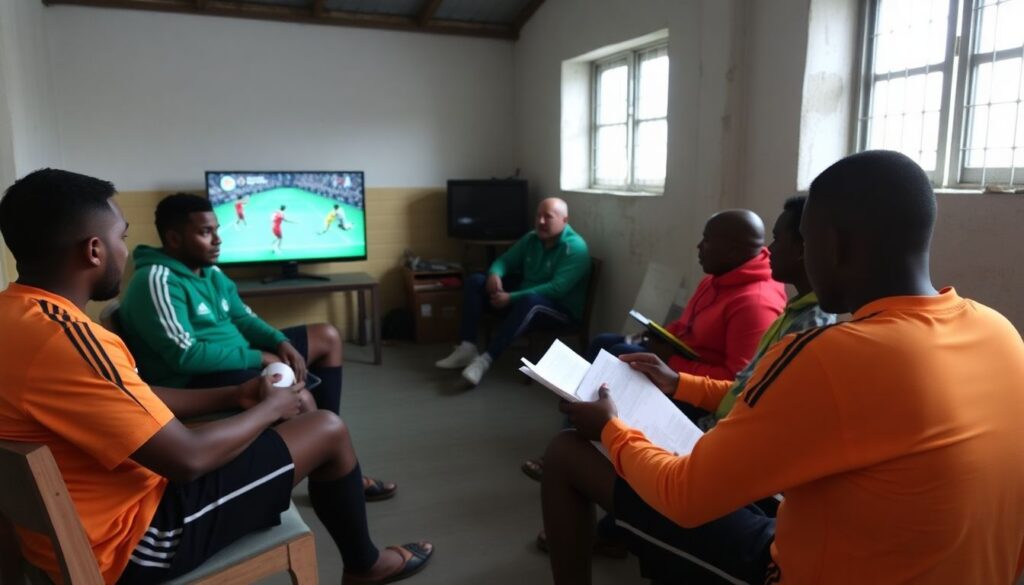
Coaches can notice early signs of exclusion, adjust expectations around equipment and attendance, and advocate internally for scholarships or timetable changes. Providing them with short training modules and curated libros sobre fútbol y clase social or documentaries increases their ability to act without overwhelming them.
Are equity measures compatible with competitive performance goals?
Yes, widening access usually expands your talent pool and improves long-term performance. The key is to integrate equity into scouting, training and dual-career structures so that competitive standards remain high while class-based barriers are reduced, not ignored.
How can we avoid tokenistic social responsibility projects?
Define clear objectives, timelines and indicators, and involve affected communities in design and evaluation. Use external expertise in consultoría en responsabilidad social deportiva y equidad where needed, but ensure internal staff take responsibility for implementation and follow-up.
Do we need formal research partnerships to take action?

Not necessarily. Simple internal data collection and reflection can already guide better decisions. However, partnering with a university or enrolling staff in a curso online de sociología del deporte y desigualdad social can deepen understanding and help you evaluate long-term impacts.
What is the value of films and books for changing club culture?
Carefully chosen documentales sobre fútbol y desigualdad social and accessible readings can make abstract issues concrete and open dialogue. Use them in workshops with players, staff and sometimes fans, ensuring time for discussion and local examples.
When should we seek external consultancy support?
Consider external help when you face complex conflicts, need to redesign multiple policies at once, or must report to public or private funders. Make sure consultants bring both technical knowledge and sensitivity to local class dynamics in your region.