Football TV rights define who can legally show matches, on which platforms, in which territories, and at what times. For Spanish fans, this explains why you need multiple services to follow La Liga and the Champions League. Understanding these rights helps you choose platforms smartly and manage fragmented match access.
Core implications for football broadcasting
- TV and streaming rights are time-limited licences that slice football into packages by competition, territory and format.
- Streaming has multiplied the number of services with rights, increasing choice but also subscription fatigue.
- Clubs and leagues gain revenue and data, but risk alienating fans if access becomes too complex or costly.
- Broadcasters must balance exclusivity (to sell subscriptions) with reach (to keep audiences and sponsors).
- Regulators watch for anti-competitive deals and for illegal streams that flourish when offers are confusing or overpriced.
How TV rights are structured and monetized
TV rights in football are the legal permissions sold by leagues and federations to show matches on specific channels or platforms. In practice, they are split into detailed packages by competition, match slot, territory, language, and format (live, delayed, highlights, clips).
In Spain, for instance, La Liga, the RFEF (for Copa del Rey) and UEFA each run their own tenders. Broadcasters bid for multi‑year contracts, paying for bundles that might cover all live domestic matches, only certain kick‑off times, or just European competitions. This is the foundation of all derechos de transmisión del fútbol en streaming and on traditional TV.
Monetization then flows through several layers:
- Leagues and federations: sell centralised rights, often with minimum guarantees and variable elements (performance, audience).
- Broadcasters and streaming platforms: recover costs via subscriptions, advertising, or hybrid models.
- Distributors (telcos, aggregators): repackage channels and apps into bundles sold to end consumers.
For fans in Spain, this structure explains why there is no single place dónde ver la liga y la champions por streaming legal. Different competitions and packages land on different services, each with its own subscription conditions.
Practical implications:
- If you manage a club or league, design rights packages with clear tiers (premium, secondary, digital clips) to reach different buyer types.
- If you are a broadcaster, negotiate not only exclusivity but also flexible distribution (apps, smart TVs, telco bundles) to maximise reach.
- If you are a fan, review which rights each platform actually holds before subscribing; focus on your top two or three competitions.
Streaming platforms: business models and licensing strategies
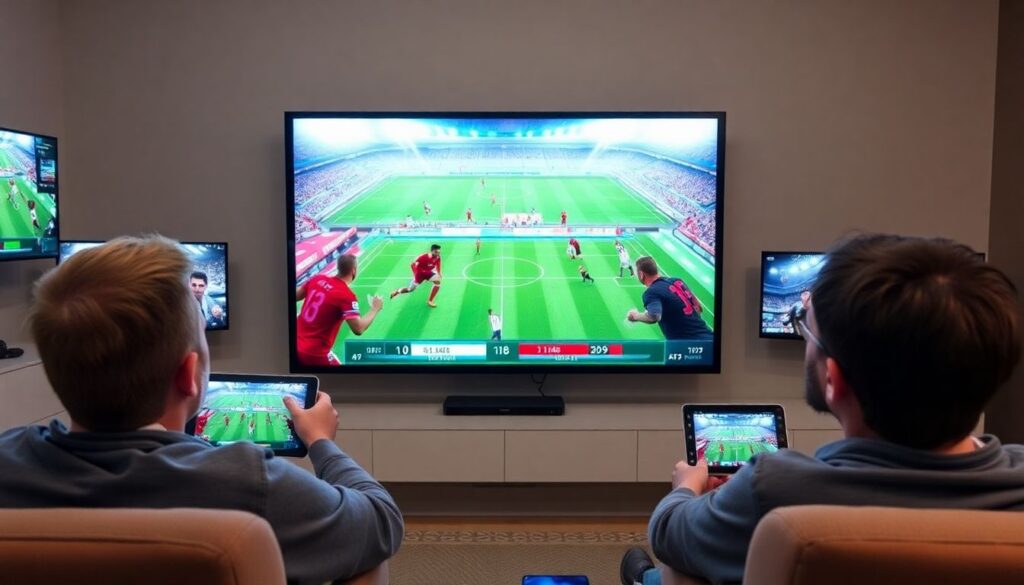
Football streaming platforms turn licensed rights into subscription products or ad‑supported services accessible on connected devices. Their business models determine price levels, match availability, and how fragmented your viewing experience becomes.
- Pure subscription (SVOD): Users pay a monthly or seasonal fee for access to live and on‑demand football. Many servicios de streaming con derechos exclusivos de fútbol use this model to justify higher ARPU, especially for premium competitions.
- Advertising-supported (AVOD / FAST): Matches are free or cheaper, funded by advertising. Typically used for lower‑tier leagues, highlights, or selected fixtures, it can broaden reach but is less common for top La Liga or Champions League matches in Spain.
- Hybrid models: A lower subscription price plus ads, or ad‑free tiers at a premium. This lets platforms segment heavy and casual users, and is increasingly common among mejores plataformas para ver fútbol online en vivo.
- Event-based and pay‑per‑view: Users pay only for specific matches or short passes (weekend, month). This format suits decisive matches, derbies, or international tournaments when fans resist long contracts.
- Wholesale and bundling with telcos: Platforms license their football channels to telecom operators, who bundle them with fibre and mobile. This expands distribution but can dilute the direct customer relationship.
- Licensing strategies: Platforms choose between buying long‑term exclusive blocks (high risk, high reward) or sharing rights in sub‑licensing deals to reduce costs and widen coverage.
Practical implications:
- Rights owners should match package size and duration to the risk appetite of bidders: shorter deals increase flexibility but reduce long‑term security.
- Platforms should pilot hybrid monetization (ads plus subscriptions) for secondary competitions to test demand without overpaying for rights.
- Fans should compare not only prices but also contract terms (minimum months, cancellation rules, device limits) before committing.
Fragmentation: how audience access has changed
Fragmentation means that watching your favourite club or competition now often requires multiple subscriptions, devices, and apps. The same fan may need to juggle two or three services just to follow one season across competitions.
Typical access scenarios in the Spanish and European context:
- Domestic league on one platform, Europe on another: A La Liga fan might use one service for all league fixtures and another for Champions League matches, often from different providers, with separate logins and bills.
- Big‑five league mix: Fans of multiple leagues (La Liga, Premier League, Serie A) often combine national rights holders with international services, each with its own app and user interface.
- Free‑to‑air plus streaming combo: Some matches (national team, finals) may be free on terrestrial TV, while most weekly content is behind streaming paywalls, splitting audiences across generations and devices.
- Short‑term passes for key periods: Many users buy monthly passes for the business end of the season or for big tournaments, adding temporary services to an already crowded roster.
- Parallel legal and illegal viewing: Over‑fragmentation and confusing offers push some users toward piracy, especially when a clear comparativa precios plataformas fútbol online is missing or too complex to understand.
Practical implications:
- Leagues should coordinate schedules and communication with rights holders to help fans understand where each match is available.
- Platforms can reduce churn by offering clear football‑focused bundles, not just generic entertainment packages.
- Fans should map their must‑see matches before the season and select the minimum combination of services that covers them.
Economic impact on clubs, leagues and broadcasters
TV and streaming rights have become the main financial engine of top‑level football, but revenue growth comes with dependency risks. Clubs, leagues, and broadcasters all gain income while facing volatility and competitive pressure.
Upsides for the ecosystem:
- Stronger and more predictable income streams for leagues and clubs, enabling investment in infrastructure, academies, and women’s football.
- Broader international exposure through streaming, helping Spanish competitions reach global fans without traditional satellite barriers.
- New data and targeting capabilities for broadcasters, improving advertising value and sponsorship deals tied to precise audience segments.
Constraints and risks:
- Revenue dependency on a limited number of broadcasters or servicios de streaming con derechos exclusivos de fútbol, which can create vulnerability if a major partner underperforms or exits.
- Escalating rights fees that squeeze broadcaster margins, leading to higher retail prices and more fragmentation for viewers.
- Competitive imbalance if domestic and international rights money flows disproportionately to a few top clubs, weakening the league as a whole.
Practical implications:
- Clubs and leagues should diversify income (matchday, commercial, digital) to avoid over‑reliance on one rights cycle.
- Broadcasters should budget with realistic subscriber scenarios rather than assuming constant growth in football demand.
- Stakeholders must monitor fan sentiment and churn closely; short‑term rights gains are pointless if long‑term engagement drops.
Regulatory and antitrust considerations across markets
Regulation in football broadcasting aims to keep competition fair, avoid consumer harm, and protect certain events as free‑to‑air. Antitrust rules limit how much leagues and broadcasters can coordinate on prices, packaging, and exclusivity.
Common misunderstandings and pitfalls:
- Myth: «Total exclusivity is always allowed if both sides agree.» In reality, regulators may object when a single player controls too many key rights, especially if that creates foreclosure risks for rivals.
- Myth: «Long contracts are safer for everyone.» Excessively long deals can draw scrutiny because they may lock out competitors and freeze innovation in derechosh de transmisión del fútbol en streaming environments.
- Mistake: Ignoring listed events rules. Some national teams’ matches or finals must remain available on free‑to‑air TV; selling them exclusively behind a paywall can breach national rules.
- Mistake: Over‑restrictive digital clips. Banning clubs or players from sharing any video on social networks can backfire, both legally and in terms of fan engagement.
- Myth: «Anti‑piracy is only a technical problem.» Courts increasingly see excessive fragmentation and opaque pricing as drivers of piracy, pressuring rights owners to simplify access.
Practical implications:
- Leagues should involve legal and compliance teams early when designing rights packages, especially cross‑border or long‑term deals.
- Broadcasters must ensure that marketing claims («exclusive», «all matches») match the actual rights scope to avoid consumer protection issues.
- Fans and consumer groups can use regulatory channels when offers become misleading or when access to key national events is unfairly limited.
Practical tactics to reduce access friction for fans and partners
Reducing friction means making it simpler, clearer, and more affordable for fans and partners to access matches legally. It is not only a UX issue but a strategic choice that affects churn, piracy, and long‑term loyalty.
A simplified mini‑case for the Spanish market:
Imagine a league where domestic rights are split across two major streaming platforms plus one telco. Instead of each player building isolated offers, they coordinate on a football‑centric layer:
- Create a common «match locator» website and in‑app widget showing, in real time, dónde ver la liga y la champions por streaming legal for each fixture.
- Standardise basic technical requirements (HD, devices, simultaneous streams) so user experience is comparable across mejores plataformas para ver fútbol online en vivo.
- Offer a simple combined season pass via telcos, which transparently bundles both platforms and distributes revenue between them.
- Publish a clear comparativa precios plataformas fútbol online focused specifically on football packages, updated each season.
Practical implications:
- Rights owners should require discoverability tools (match locators, unified calendars) as part of licensing contracts.
- Platforms can reduce support costs by agreeing on minimum UX standards and co‑promoting legal access over piracy.
- Fans should look for official league tools and aggregator offers before resorting to grey‑area sites or illegal streams.
Quick self‑check for stakeholders
- Can an average fan, in under two minutes, find where to watch each of their club’s matches legally?
- Is there a simple, public comparison of football packages and prices across main services?
- Do existing bundles minimise duplicate payments for the same rights?
- Are piracy trends monitored and linked back to specific pricing or UX pain points?
- Do contracts include obligations around transparency, discoverability, and minimum technical quality?
Practical answers on accessing and managing match coverage
How can I know which platform shows my team’s matches this season?
Start with the official league and club websites, which usually list broadcasting partners by territory. Then check each platform’s football section or match calendar; many now include a search function by club or competition.
Is it cheaper to subscribe directly to streaming platforms or via a telco bundle?
It depends on your overall services. Bundles often offer discounts when you combine fibre, mobile, and football, but can have longer commitments. Direct subscriptions may be more flexible if you only want short seasons or specific competitions.
What should I look at beyond price when choosing where to watch football online?
Check device support (smart TV, mobile, console), maximum number of simultaneous streams, video quality, and replay options. Also review cancellation terms, as some offers auto‑renew with minimum commitment periods.
How can smaller clubs benefit from fragmented rights without losing visibility?
They can push for digital highlight rights, social media clips, and international streaming windows, even if live rights are centralised. Coordinated storytelling and accessible recap content can offset fewer live TV appearances.
What can platforms do to reduce piracy of football matches?
Beyond technical blocking, they should simplify pricing, offer short‑term passes for key fixtures, and communicate clear legal viewing options. Fast, stable streams on common devices are essential to compete with illegal alternatives.
Are there legal risks for fans using unofficial streams to watch football?
Yes. While enforcement varies by country, using pirated streams can expose you to malware, data theft, and, in some jurisdictions, fines. Supporting legal services also helps clubs and leagues sustain the competitions you care about.
How can rights owners measure if fragmentation is going too far?
Track churn, average number of subscriptions per fan, piracy indicators, and sentiment on social networks. When fans regularly complain they cannot follow a season without three or more services, it is a clear signal to rethink packaging.