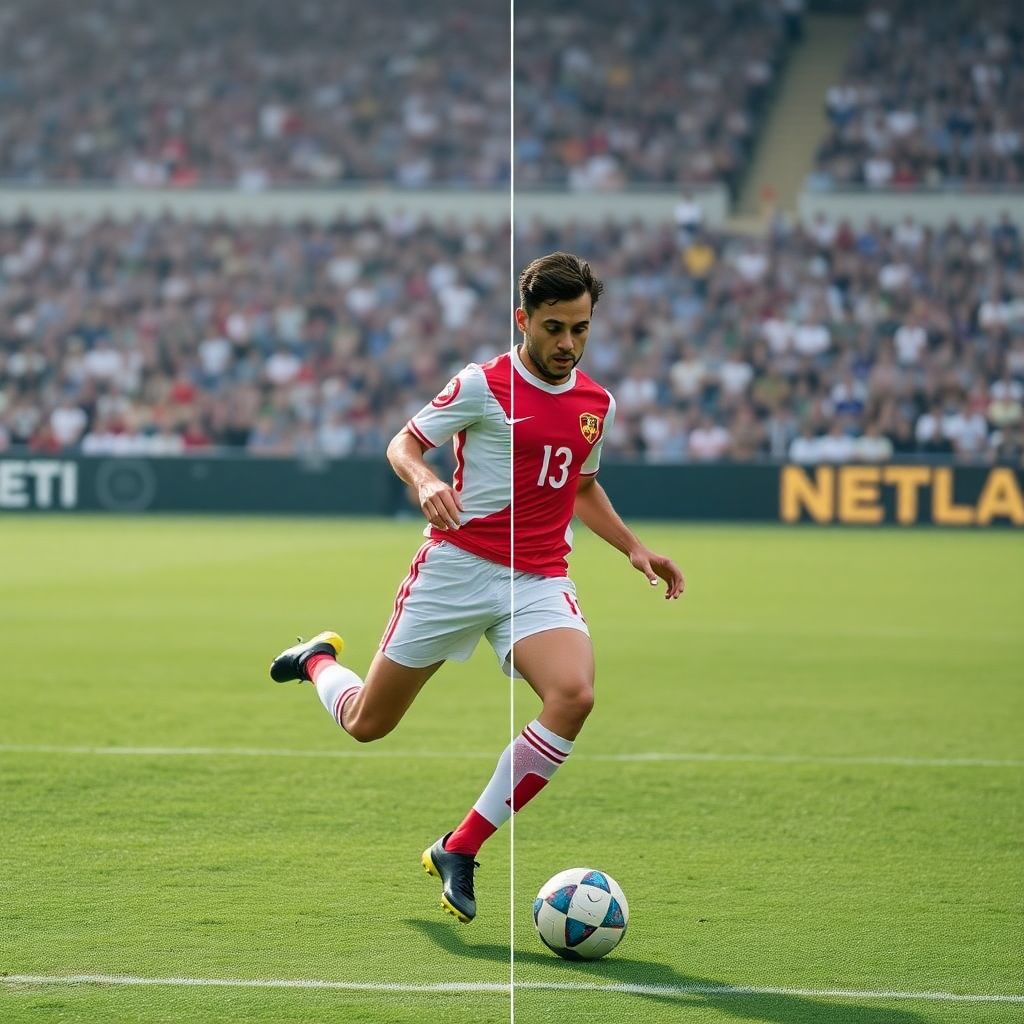
The evolution of the number 10 in football is the story of a free creative star becoming a tightly integrated system piece. If you coach or analyse modern 10s, you must balance freedom and structure: protect their creativity, but anchor it in pressing, spacing, and clear tactical if‑then rules.
Core shifts in the 10’s tactical identity
- If the classic 10 lived between the lines with few defensive duties, the modern 10 must press, screen and track while still creating.
- If previously the team adapted to the 10, now the 10 adapts to pre-defined structures and automatisms.
- If decision-making used to be mostly intuitive, now it is guided by video, data and clear if‑then tactical scripts.
- If the 10 used to be a fixed position, today it is a family of roles: false 10, inverted playmaker, hybrid interior and more.
- If you want to develop a modern 10, you must train them as a complete phase-to-phase player, not only as an attacking specialist.
Origins: the archetypal number 10 and its creative remit
The archetypal number 10 was the attacking playmaker who linked midfield and forwards from the central pocket behind the striker. Their job was to receive between the lines, turn, and choose the final action: killer pass, dribble, shot or tempo change.
Culturally, the 10 embodied fantasy and responsibility at once. In many teams, the 10 wore the symbolic shirt of leadership, something fans still celebrate when they go online to search a camiseta número 10 fútbol comprar to emulate their idols. The entire attacking structure was often built to give this player maximum touches and time.
Functionally, classic 10s defended little, often staying high to be a constant passing option for counter-attacks. The double pivot or box-to-box midfielders protected them. This asymmetry worked in less intense pressing eras, where individual creativity could decide matches without strict collective mechanisms.
If you want to understand this archetype deeply, resources such as the mejores libros sobre la historia del número 10 en el fútbol or documentales sobre la evolución del 10 en el fútbol are useful, but on the pitch the core is simple: give a gifted player space, support and the licence to improvise.
From liberty to structure: how formations constrained the free creator
The shift from free 10 to structured 10 came as pressing intensity, physical demands and collective organisation increased. Compact blocks, zonal pressing and carefully coordinated rest-defence left less room for a player who contributed little without the ball.
- 4‑4‑2 flat lines: The central pocket disappeared, forcing the 10 to drop as a second striker or widen out to the flank. If your team defends in a rigid 4‑4‑2, your 10 must either become a striker in pressing or a tucked-in winger.
- 4‑3‑3 with a single pivot: The classic 10 role moved back into the interior positions. If you insist on a free 10 ahead of a lone pivot, you often expose the six in transition, especially against counter-attacking sides.
- 4‑2‑3‑1 compromise: This system tried to preserve the 10 while protecting them with a double pivot. If your 10 does not press as part of the first line, the block effectively becomes a 4‑4‑1‑1 and you lose vertical compactness.
- High-pressing models: Coaches demanded that every player participate in pressing triggers. If your 10 does not jump with the striker or screen the pivot, the press leaks and opponents escape through the centre.
- Build-up from the back: Playmakers moved deeper to influence the first phase. If your centre-backs and pivot handle progression, a high, static 10 may simply not receive enough clean balls to justify their defensive cost.
In this environment, top-level football forced a redefinition: the 10 could no longer be a protected artist; they had to become a system actor with clear on- and off-ball tasks.
Mini-application scenarios for coaches
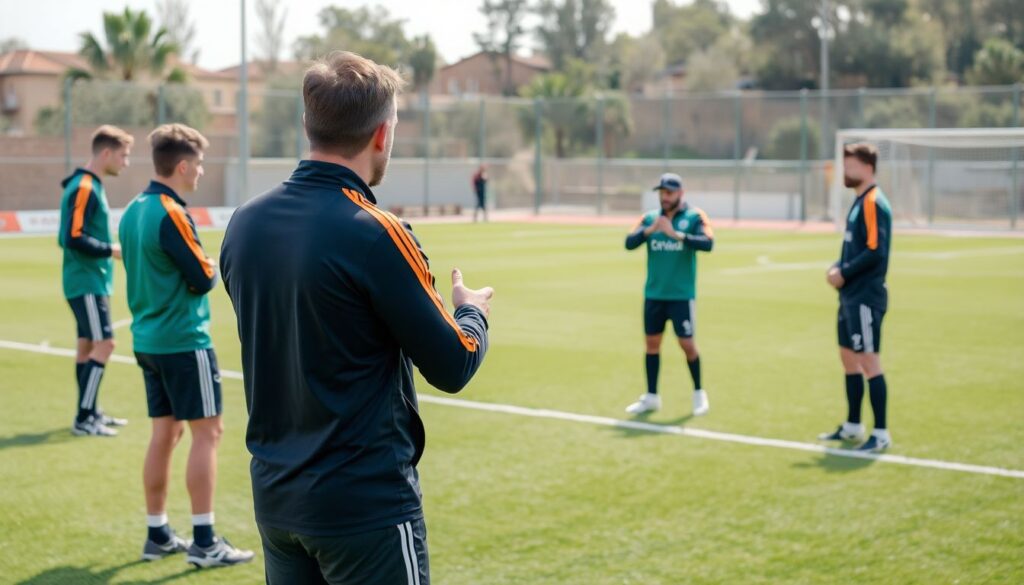
If you coach an intermediate senior team in Spain and still want a 10:
- If you play 4‑2‑3‑1, then tie the 10 to two clear if‑then rules: if the ball goes wide, press full-back; if the pivot receives, jump to press on their first touch.
- If you use 4‑3‑3, then convert the 10 into the advanced interior: if the pivot is pressured, drop next to him; if the winger drives inside, run beyond to pin the back line.
- If your players are young or tactically raw, then simplify: if you receive between the lines facing forward, attack goal; if you receive with back to goal and a teammate is free behind, set and spin.
Role morphologies: false 10s, inverted playmakers and hybrid profiles
Instead of disappearing, the 10 fragmented into different modern profiles that express creativity from new zones and task mixes. Understanding these morphologies helps you decide which type fits your squad and game model.
-
False 10 dropping into midfield
If you have advanced interiors who attack the box, you can use a nominal 10 who constantly drops next to the pivot in build-up. This false 10 behaves like a second regista, helping to overload the first line and then arriving late in the final third. -
Inverted flank playmaker
If your structure is 4‑3‑3 or 4‑2‑3‑1, the traditional 10 duties can move to an inverted winger. They start wide, receive inside, and link play. Here the shirt number is less important than the function; your most creative player may not wear 10, but think and act like one. -
Box-to-box 10 (attacking interior)
If your 10 has high stamina, you can convert them into a shuttling interior who presses, covers half-spaces and still arrives in the box. The creative freedom is balanced with long runs and constant involvement in the team’s rest-defence structure. -
Second striker / shadow striker
If your 10 is more finisher than passer, use them close to the striker, attacking spaces created by wide players. Off the ball they press as part of the first line; on the ball they combine in tight spaces and finish cutbacks. -
Deep-lying 10 (quarterback pivot)
If your league is less intense physically or you dominate possession, move the 10 deeper as a six or double pivot. They control rhythm, spread play and break lines with passing instead of constant dribbles around the box.
Equipping these players properly also changed. Where classic 10s focused on touch and lightness, modern mediapuntas often look for zapatillas de fútbol para mediapuntas creativos that combine agility with enough grip and protection to handle repeat pressing duels and transitional sprints.
System integration: defensive duties, pressing triggers and transitional tasks
To integrate a 10 into a modern system, you must define their behaviour without the ball as clearly as their creative freedom with it. This is where a good curso táctica fútbol rol del 10 moderno or similar education can reshape how you coach the role.
Advantages of a well-integrated 10
- If the 10 understands pressing triggers, then your first line of pressure becomes more coordinated and you can win the ball closer to goal.
- If the 10 contributes to rest-defence positioning, then your team suffers fewer counter-attacks after losing the ball in the attacking third.
- If the 10 helps in build-up, then your centre-backs and pivot face less pressure and can progress with shorter, safer passes.
- If the 10 offers constant between-the-lines options, then opponents must collapse centrally, opening lanes for overlapping full-backs and wingers.
Limitations and risks to manage
- If the 10 is exempted from defensive work, then your block often breaks into two teams: defenders/midfielders and attackers, with large gaps in between.
- If the 10 drops too deep to get on the ball, then the space between them and the striker grows, slowing attacks and reducing threat in the box.
- If all creativity runs through the 10, then your attack becomes predictable and easier to contain with dedicated marking.
- If the 10 receives only static, back-to-goal passes, then they become easier to press, and their decision-making quality inevitably drops.
Measurable competencies: metrics, training methods and modern KPIs for the 10
The modern 10 is evaluated not only on assists and dribbles, but also on pressing, counter-pressing, and contribution to chance creation patterns. Metrics and session design must reflect this broader role, while avoiding persistent myths about what a 10 should or should not do.
- If you only count goals and assists, then you miss half the picture. Track progressive passes, key passes, deep completions and expected threat created from the half-spaces to understand how the 10 moves the block forward.
- If you assume the 10 cannot defend, then you will never train them to do it. Include pressing intensity, high regains and counter-pressing actions as core KPIs and show players clips where creative 10s lead the press.
- If you design isolated technical drills, then your 10 will struggle with game-speed decisions. Prioritise small-sided games, positional rondos and conditioned games that force them to scan, turn and play in realistic pressure and spacing.
- If you confuse comfort with the ball for game intelligence, then you overrate some players. Test perception-action skills: number of scans before receiving, ability to identify the third-man option, timing of release in combination play.
- If you never measure off-ball movements, then you undervalue modern 10s who create space for others. Analyse runs that open passing lanes, decoy movements and contributions to overloads even when they do not touch the ball.
Coaching practice: designing exercises and match models that reconcile creativity with system demands
Translating the evolution of the 10 into training requires clear, conditional rules. The aim is not to cage the creative player, but to give them a framework: if these conditions appear, then you move here, receive here, or trigger this press.
Case sketch: transforming a free 10 in a Spanish amateur side
Context: A regional-level team in Spain plays 4‑2‑3‑1. The number 10 is brilliant with the ball but walks in transition, leaving the double pivot exposed and the coach frustrated.
- Define three simple defensive if‑then rules
If the rival centre-back carries the ball, then the 10 jumps to press on their inside shoulder. If the pivot receives facing their own goal, then screen them and force play wide. If the full-back controls near touchline, then cut the pass inside and show them down the line. - Build a 6v6+3 positional game around those rules
Set up a central zone (double pivot + 10 vs pivot + 2 eights) and wide lanes (full-backs and wingers). If the ball enters the pivot zone, then the 10 must decide: press or screen, according to the rule. Score with mini-goals when regaining in the central corridor. - Link creative freedom to specific zones
If the 10 regains or receives the ball between the lines in the half-space, then they have full freedom for three actions: dribble, combine, or switch play. Outside that zone, their task is to circulate quickly and move again to re-enter the pocket. - Review with video and clear feedback
Clip six to eight actions per game: three with ball, three without. If the 10 obeyed the if‑then rules and the team still suffered, then adjust the rules. If the 10 ignored the rules, then re-train with more constrained games. - Integrate equipment and role demands
If your 10 plays many short, sharp changes of direction, then recommend light, responsive boots suited to mediapuntas, similar to the zapatillas de fútbol para mediapuntas creativos commonly marketed for agile creators, to support the high-intensity role.
Over time, this type of work changes the 10’s identity inside the group: from tolerated luxury to reliable creative engine that respects collective effort while still deciding matches with talent.
Practical queries coaches and analysts raise
Can a classic, defensively weak 10 still work in modern football?
It is possible, but only in specific contexts: teams that dominate the ball, play in lower-intensity leagues, or compensate with very disciplined midfielders. If the rest of your structure presses aggressively, a free 10 becomes a tactical liability.
How do I choose where my 10 should operate: central pocket, half-space or wing?
Start from your best players and main attacking patterns. If your wingers are finishers, keep the 10 central to feed them. If your full-backs dominate wide zones, move the 10 into half-spaces to combine and release overlaps.
What physical profile is ideal for the modern 10?
They no longer need sprint records, but must repeat medium-intensity runs and short accelerations all match long. Agility, balance and robustness under contact matter more than pure top speed, especially for receiving under pressure between lines.
How can data analysis help me evaluate my 10 more fairly?
Combine event data (progressive passes, key passes, xThreat) with off-ball metrics (pressures, high regains, defensive duels). Video-tag sequences where the 10 influences an attack without the final pass to appreciate their role in creating advantages.
Should youth coaches still assign the number 10 shirt and mythos?
You can, but clarify that the number represents responsibility, not exemption from effort. Use the symbolic appeal of the 10 to demand leadership in pressing, communication and work-rate, alongside creativity.
How many tactical rules can a young 10 realistically manage?
Keep it minimal. For intermediate youth or amateur players, three to five clear if‑then rules per phase (pressing, build-up, final third) are usually enough. Add complexity only when they consistently execute the basics under match stress.
What resources can deepen my understanding of the 10’s evolution?
Look for well-reviewed mejores libros sobre la historia del número 10 en el fútbol and documentales sobre la evolución del 10 en el fútbol that blend historical context with tactical analysis. Combine them with a practical curso táctica fútbol rol del 10 moderno to translate ideas into your training.