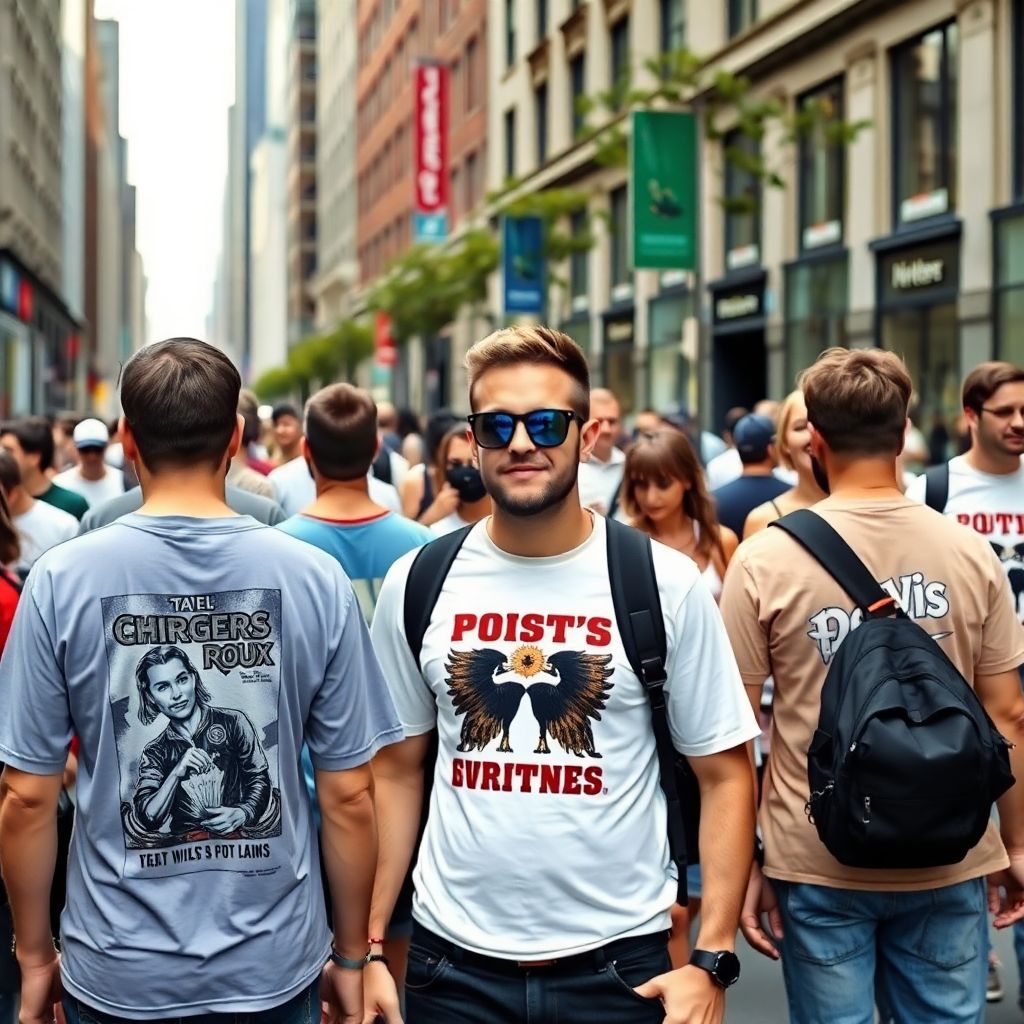
The commodification of the t‑shirt is the process by which a simple garment, once tied to work and personal identity, becomes a mobile advertising surface and standardized product. Identity, fandom or political messages are packaged, priced and sold, turning the tee into both a personal statement and a commercial billboard.
Short primer: what the commodification of the tee entails
- A basic, everyday garment becomes a carrier for logos, slogans and brand narratives.
- Personal identity is mixed with commercial messages: what you wear also sells something.
- Cheap mass production and global supply chains make printed tees almost disposable.
- Brands, clubs and institutions use t‑shirts as low‑cost, high‑visibility advertising space.
- Consumers move from choosing fabrics and fits to choosing ready‑made identities on cotton.
- Ethical, activist and independent projects try to reclaim the t‑shirt as a more honest medium.
Debunking myths: what people get wrong about t‑shirts and identity
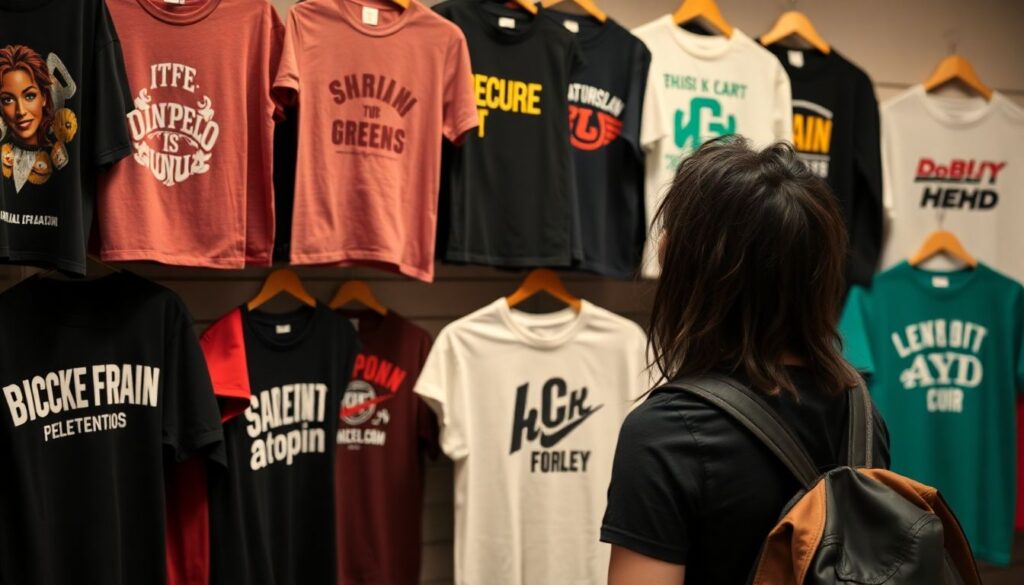
Many people assume a t‑shirt is a transparent window into someone’s authentic self. In reality, once the garment is heavily branded or sponsored, it also reflects marketing budgets, licensing deals and retail trends. The printed message is rarely neutral and often optimized to sell, not to represent complexity.
Another common myth is that a tee is either pure fashion or pure utility. Camisetas publicitarias personalizadas show the opposite: they are practical, comfortable clothing and, at the same time, strategic tools to spread brand awareness. The wearer’s body becomes a moving display, especially visible in sports, concerts and urban spaces.
There is also the idea that only «big brands» commodify t‑shirts. Grassroots movements, local festivals and amateur clubs engage in similar dynamics when they order merchandising to finance activities. The key difference is how transparent they are about aims and how the revenue circulates back into the community or project.
Finally, people often think the print alone defines identity. In practice, context matters: a political logo on a protest march speaks differently than the same logo on a fast‑fashion rack during sales. Identity emerges from the interaction between message, occasion, body and commercial channel.
Historical trajectory: from labor garment to cultural emblem
- Workwear and underwear origins. Early t‑shirts were simple undergarments for soldiers and workers, valued for comfort and ease of washing. Identity was tied to class and function, not to visible graphics.
- Post‑war casual uniform. After mid‑20th century conflicts, returning soldiers and cinema popularized the t‑shirt as outerwear. Stars wearing plain tees helped transform it into a symbol of relaxed, informal masculinity.
- Subcultural canvas. From rock bands to football ultras, groups started using tees to signal affiliation. Cheap screen‑printing made small runs possible, paving the way for early diseño de camisetas para publicidad de marca in music, sport and youth scenes.
- Corporate and sports sponsorship. Companies realized that imprimir logos en camisetas deportivas delivered constant visibility on TV and in stadiums. Team shirts merged fan identity with sponsor identity, normalizing the body as premium ad space.
- Fast fashion explosion. Globalized manufacturing slashed costs, turning graphic tees into impulse buys. Messages, memes and brand marks rotated rapidly, pushing the garment further into the domain of quick, commodified expression.
- Platform and drop culture. Today, online stores, influencers and limited drops convert t‑shirts into hype objects and speculative items, while print‑on‑demand allows almost anyone to commercialize designs with minimal upfront investment.
Mechanisms of commodification: brands, licensing and mass production
In practice, the transformation of the tee into a billboard happens through a chain of economic and symbolic mechanisms. Each step adds value not so much through fabric quality, but through meaning, visibility and scarcity.
-
Branding and logo dominance.
Brands invest in making their logo desirable, then place it centrally on chest or back. A plain cotton tee can multiply in price when the logo is treated as luxury or lifestyle. Consumers pay for association more than material. -
Licensing of cultural properties.
Bands, football clubs and entertainment franchises license images and names to manufacturers. Fabricación de camisetas merchandising para empresas de entretenimiento turns fan passion into steady royalty streams, while fans effectively pay to promote the property publicly. -
Event‑based distribution.
Races, festivals and corporate conferences give away or sell tees as tickets you can wear. The garment extends the event in time and space, reminding participants of the experience while advertising to everyone they meet later. -
Wholesale and resale structures.
Proveedores de camisetas personalizadas al por mayor offer blank or semi‑custom tees at low prices to clubs, small brands and agencies. Margins are created when these actors print their own graphics and resell the garments as limited, identity‑laden items. -
Online print‑on‑demand platforms.
Designers or even casual users upload art; platforms handle printing and shipping. This reduces risk and accelerates trends, but it also floods the market with designs optimized for clicks, not necessarily for depth or durability of meaning. -
Sponsored uniforms.
In many workplaces and sports teams, employees «must» wear branded tees. This merges labour and advertising: the worker or player becomes a medium whose visibility is partially monetized by the brand, often without direct compensation for the wearer.
Design language as advertising: how graphics shift meaning
Once we see the tee as a surface loaded with messages, every design choice acts like micro‑advertising: typography, colour, placement and even fabric weight send signals about status, tribe and intent.
Advantages of treating the t‑shirt as a communication tool
- High frequency exposure. People wear favourite tees repeatedly, generating more impressions than many static posters at relatively low cost.
- Contextual relevance. A well‑planned diseño de camisetas para publicidad de marca can match setting and audience, such as eco‑messages on organic cotton at sustainability events.
- Humanizing effect. Messages on fabric feel more personal than on screens or billboards; a slogan on a friend’s tee can be more persuasive than an ad banner.
- Segmented storytelling. Different models and graphics can address specific niches: urban cyclists, gamers, local fans, youth teams, each with its own visual code.
- Scalable mini‑campaigns. Small organizations can produce limited runs instead of massive media buys, testing which messages resonate before scaling up.
Limitations and risks of over‑commercialized designs
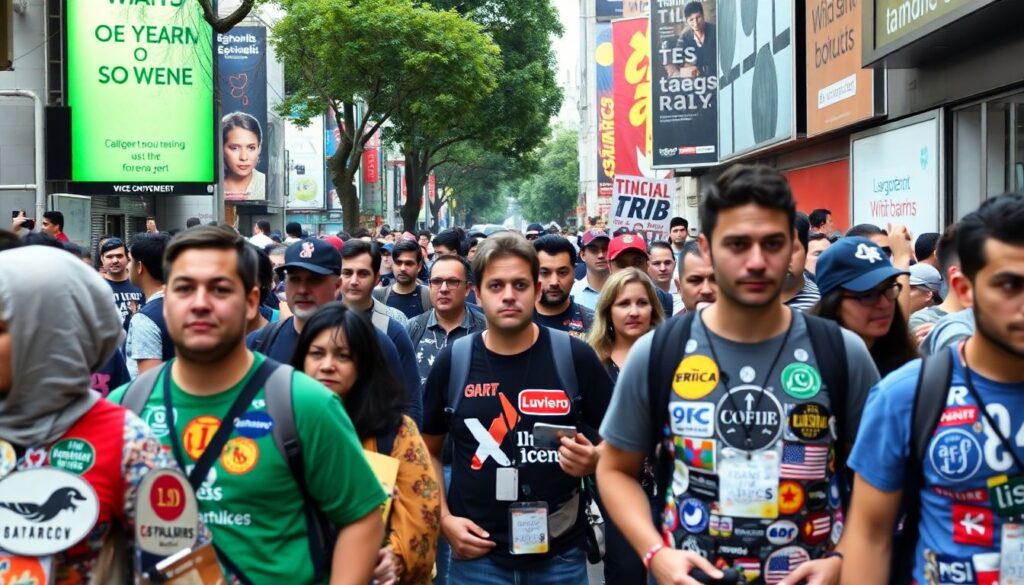
- Message fatigue. Overly busy or repetitive graphics dilute attention. When every tee screams, none of them truly speaks.
- Loss of authenticity. If a person feels reduced to a walking logo, they may resist wearing even well‑designed prendas, hurting long‑term brand affinity.
- Ethical blind spots. Using cheap labour or polluting processes to spread «ethical» slogans creates visible contradictions that certain consumers quickly detect.
- Contextual misfires. A joke tee acceptable at a festival may be inappropriate in a workplace, causing friction between personal taste and social norms.
- Design over legibility. Ultra‑trendy type or micro‑text may look good on screen but be unreadable in real life, wasting the communicative potential of the garment.
Consumer behavior: identity, signaling and purchase drivers
Wearing a t‑shirt is rarely just about comfort. It is also a way to signal who we are, where we belong and what we support, even when we are not fully conscious of these layers of meaning.
- Overestimating individuality. Many buyers believe they choose unique designs, yet they pick mass‑produced graphics promoted by algorithms and influencers. The sense of originality can mask how standardized identity has become.
- Ignoring labour and environmental costs. Cheap camisetas publicitarias personalizadas can seem like a bargain, but the real price may be paid by workers and ecosystems. When considering a tee as just «free swag», consumers often skip questions about sourcing and durability.
- Confusing fandom with ownership. Buying official club shirts or merch does not give fans control over the brand, but it does finance its strategies. Imprimir logos en camisetas deportivas strengthens sponsor visibility more than fan agency.
- Impulse over reflection. Fast‑fashion and online promos push people to purchase tees because of a funny line or trending meme, not because they truly align with long‑term values.
- Signaling without commitment. Activist or cause‑related tees allow people to show support publicly, but can foster «slacktivism» if they replace rather than complement concrete action.
Consequences and responses: designers, activists and alternative models
As the t‑shirt becomes an omnipresent mini‑billboard, designers, activists and small brands in Spain and beyond are experimenting with ways to re‑balance meaning, ethics and commerce.
Scenario 1: small local brand in Barcelona. A young studio wants to launch a sustainable line. They collaborate with proveedores de camisetas personalizadas al por mayor that offer certified organic cotton, then focus on subtle graphics linked to neighbourhood stories instead of giant logos. The commodification is acknowledged but softened by local narrative and transparent pricing.
Scenario 2: football supporters’ collective. A peña designs camisetas publicitarias personalizadas for away trips. Instead of adding sponsor logos, they highlight supporter culture and anti‑violence messages. Sales fund banners and community projects, shifting the tee’s role from pure advertising to shared identity and financing of collective goals.
Scenario 3: corporate event in Madrid. An HR team plans tees for a company run. Rather than a huge corporate logo front and center, they choose a small chest mark and a larger, inclusive slogan about health and teamwork on the back. Fabricación de camisetas merchandising para empresas is approached as internal culture‑building first, branding second, so employees feel less like walking ads and more like part of a community.
Scenario 4: independent illustrator online. An artist opens a print‑on‑demand shop with diseño de camisetas para publicidad de marca personal, but limits each design to short runs and explains the story behind the graphic on the product page. Imprimir logos en camisetas deportivas is not her field, yet she borrows clarity from sports design: bold, visible marks, but with narrative depth.
These small shifts do not end commodification, but they show that creators and buyers can negotiate how much commercial, ethical and identity weight a simple cotton tee is asked to carry.
Concise answers on common practical questions
Is a branded t‑shirt always just advertising?
No. It is both clothing and advertising at once. The balance depends on how dominant the logo is, who profits from the sale and whether the message reflects the wearer’s own values or mainly the sponsor’s interests.
How can a small business use t‑shirts without feeling exploitative?
Use high‑quality blanks, keep logos modest and prioritize designs that offer real value to the wearer, such as local references or useful messages. Explain where the tee is made and how revenue supports fair practices.
What is the difference between merch and ordinary graphic tees?
Merch is tied to a specific project, event or creator and often functions as financial support for them. Ordinary graphic tees may have generic art or slogans with no direct link to a particular artist, club or cause.
Do ethical or activist t‑shirts really make a difference?
They can, if production is responsible and the wearer also engages in action beyond the garment. At minimum, they keep certain issues visible in everyday spaces and can spark conversations that lead to deeper involvement.
How many logos are too many on one t‑shirt?
Once the surface feels crowded and readability drops, communicative value declines. In practice, one main mark and at most a few small supporting elements are usually enough for clarity and impact.
Are free corporate tees worth accepting?
It depends on your comfort with being a mobile ad. If the fabric is poor or the logo is huge, you may not wear it, which wastes resources. Accept them selectively, considering quality, message and how often you will realistically use them.
Can t‑shirt commodification be reversed?
Not fully, but it can be redirected. Choosing fewer, better garments, supporting transparent producers and favouring designs with personal or local meaning reduces the dominance of purely commercial signals.