
Burnout in professional football is a state of emotional exhaustion, loss of enjoyment and reduced performance caused by chronic stress from competition, media exposure and internal club demands. It is closely tied to salud mental futbolistas profesionales, and requires coordinated work: early detection, individual support, structural changes and clear return-to-play criteria.
Core concepts: burnout, media pressure and player mental health
- Burnout is not just being tired; it is a sustained collapse of motivation, emotional energy and perceived control in the football context.
- Media and social networks amplify stress by turning every action into reputational risk for players.
- Youth pathways, contracts and positional demands create specific patterns of vulnerability across careers.
- Continuous monitoring beats one-off screening; mood and behaviour trends matter more than single datapoints.
- Effective burnout en el fútbol profesional tratamiento combines rest, psychotherapy, training adaptations and changes in communication and expectations.
- Structured programas de bienestar y salud mental para clubes de fútbol protect both performance and long-term health.
Defining burnout in professional football: symptoms and thresholds
Burnout in professional football is a sport-specific syndrome of emotional exhaustion, depersonalisation (cynicism towards the sport, teammates or fans) and a reduced sense of accomplishment. It develops over time when chronic demands outweigh the player’s psychological and physical resources, without adequate recovery or support.
Key symptoms in players include persistent loss of joy in training and matches, irritability, sleep problems, difficulty focussing on tactics, and a growing sense of detachment: «I’m here physically, but I don’t feel the game». Somatic complaints (headaches, stomach issues, minor injuries that do not heal) are also frequent.
A practical threshold for concern is when these signs persist for weeks, start to generalise (affecting life outside football) and lead to measurable changes in performance, relationships or self-care. At this point we move from «normal» ups and downs to a clinically relevant risk to salud mental futbolistas profesionales.
Burnout is distinct from depression or simple overtraining. Fatigue from a congested fixture list improves with rest; burnout typically does not resolve with a short holiday alone, because the underlying meaning of football for the player has been eroded. Clinical assessment by a specialist is essential to clarify the diagnosis.
Psychophysiological mechanisms: how chronic stress degrades performance
- Stress-response overactivation
Constant competitive and media pressure keeps cortisol and adrenaline elevated. This «always on» state disrupts sleep, muscle recovery and decision-making, increasing injury risk and tactical errors. - Cognitive overload and attentional narrowing
Worry about selection, contracts or manejo de la presión mediática en jugadores de fútbol consumes working memory. Players struggle to process tactical cues, switch attention and anticipate play, so they react later and more rigidly. - Reward-system blunting
When football becomes mainly a source of pressure and criticism, the brain’s reward circuits stop associating it with pleasure. Training feels meaningless; intrinsic motivation drops, and players rely only on external rewards or fear of punishment. - Autonomic dysregulation
The balance between sympathetic (activation) and parasympathetic (recovery) systems is disturbed. Resting heart rate variability decreases, and players feel «tired but wired»: exhausted yet unable to relax or sleep deeply. - Inflammatory pathways and pain perception
Chronic psychological stress is linked to higher systemic inflammation, which can worsen pain perception and delay healing of micro-injuries, reinforcing the feeling that the body is «failing» the player. - Identity and self-concept erosion
When performance is the only source of self-worth, dips in form become existential threats. This magnifies stress responses and makes each mistake feel catastrophic, accelerating burnout.
Applied micro-scenarios: connecting mechanisms to daily football reality
Consider a 24-year-old winger fighting for a contract renewal while under intense online abuse. He starts checking social media late at night, sleeps poorly and loses sharpness in 1v1 situations. Coaching staff interpret this as «lack of focus», but it is a classic stress and cognitive overload pattern.
Another example: a veteran goalkeeper is constantly questioned by pundits after a high-profile error. Training loads remain high, but his parasympathetic recovery is impaired. He reports feeling «always tense», misjudges crosses and hesitates when coming off the line, illustrating autonomic dysregulation and identity threat in action.
Media dynamics: narratives, social platforms and reputational load
Media and public scrutiny transform football from a game into a continuous evaluation environment. For many players, manejo de la presión mediática en jugadores de fútbol is now as critical as tactical understanding. Several recurring scenarios can drive burnout.
- Permanent judgement cycles
Every match, training clip or off-field gesture is instantly analysed by television, radio and social media. There is no psychological «off-season», and players feel that a single mistake could define their image. - Distorted narratives and labels
Media narratives simplify players into roles: «flop», «diva», «weak mentally», «overrated». These labels stick and are repeated by fans, peers and sometimes club staff, undermining self-confidence and increasing self-surveillance. - Direct fan access through networks
Social platforms give fans a direct channel to celebrate or attack players. Nightly waves of insults, threats or mockery can be more harmful than critical articles, especially for younger or recently transferred players. - Family and entourage pressure
Family members following every comment and result may unconsciously add pressure: «You must prove them wrong», «This game will change everything». The player ends up managing not only their own anxiety but that of their close circle. - Visibility of private struggles
Injuries, relationship issues or contract disputes quickly become public content. The player loses control of their story and may avoid seeking help for fear of leaks or stigma. - Comparative exposure
Constant comparisons with teammates or idols on highlight clips exaggerate small differences and keep players in a state of chronic upward comparison: «I’m never enough». This corrodes satisfaction and amplifies perfectionism.
Contextual risk factors: youth academies, transfers and positional demands
Risk for burnout is not evenly distributed. Context, career stage and playing position create very different stress profiles. Understanding these patterns helps clubs to tailor programas de bienestar y salud mental para clubes de fútbol instead of applying generic workshops.
Context-specific vulnerabilities and stressors
- Youth academies: early professionalisation, schooling compromises, constant selection threat, family sacrifices and the belief that «there is no plan B» if football fails.
- Early first-team promotion: sudden income, exposure and expectations without parallel emotional skills training; fear of making mistakes in front of idols and large crowds.
- Transfers abroad: language barriers, cultural shock, isolation of partner/family, and role changes (from star to rotation player) that threaten identity.
- Unstable contracts: repeated short-term deals, loans and bench roles, keeping players in permanent survival mode and undermining long-term planning.
- Position-related demands: goalkeepers and strikers carry highly visible error/goal pressure; midfielders face constant cognitive load managing space and tempo.
- Injury history: repeated or long-term injuries increase fear of replacement, doubts about the body and dependency on staff decisions.
Protective aspects and structural buffers
- Long-term development focus in academies: emphasising education, multiple futures and psychosocial skills, not only results at youth level.
- Stable internal hierarchies: clear roles and communication from staff reduce uncertainty and perceived threat from normal competition.
- Cohesive dressing rooms: peer support, open conversations about mental health and shared leadership act as buffers against external criticism.
- Family and community grounding: interests and relationships outside football protect identity from being completely fused with performance.
- Integrated sports psychology: a visible, trusted specialist who works proactively with the squad reduces stigma and supports early intervention.
- Thoughtful media strategy: training in interview skills and social media limits the psychological impact of public exposure.
Screening and monitoring: practical tools for clubs and medical teams
Detection of burnout is often delayed not because tools are lacking, but because of cultural barriers and misconceptions. Staff may interpret emotional or behavioural changes as «attitude issues», and players fear that admitting struggles will be used against them in selection or negotiations.
- Myth: performance data alone is enough
GPS metrics, sprint counts and technical stats cannot detect emotional exhaustion or loss of meaning. A player can still run at high intensity while mentally collapsing. - Myth: one-off questionnaires give a definitive answer
Standard mood or burnout scales are useful only if repeated over time and combined with clinical interviews. Single measurements are easy to manipulate or misinterpret. - Error: asking about «motivation» only
Players often say they are «motivated» because they fear consequences. Questions must explore sleep, appetite, enjoyment, irritability, concentration, and feelings about the future. - Error: keeping mental health outside the MDT
When the sports psychologist (if present) works in isolation from medical, fitness and coaching staff, signals are fragmented and no one sees the full picture. - Myth: only «weak» or young players are at risk
Captains, veterans and stars can be highly vulnerable because of leadership load and narrative pressure. Sometimes they are the last ones to be screened. - Error: ignoring family and life events
Births, bereavements, legal problems or relocations strongly interact with competitive stress. Monitoring that excludes off-field context misses early warning signs.
Practical monitoring can be light but consistent: short mood and sleep check-ins, periodic confidential talks with a psychologist, and integrated review of subjective well-being alongside physical and tactical reports.
Evidence-based responses: prevention, acute interventions and return-to-play
Responding to burnout requires alignment between player, staff and club leadership. It is not enough to recommend a holiday. Interventions must address workload, meaning, relationships and media context, often including a psicólogo deportivo para futbolistas precio negotiated within the club’s overall medical and performance budget.
Core components of effective prevention and treatment
- Primary prevention in the environment
Design training and competition schedules with planned psychological deloads, realistic communication of expectations, and education on mental health for all staff. - Early-stage individual support
Offer confidential access to a qualified sports psychologist to work on coping strategies, perfectionism, identity and media use before full burnout has developed. - Acute phase management
When burnout is advanced, reduce competitive load, adjust training tasks to rebuild confidence, and coordinate with medical professionals to rule out comorbid conditions. - Media and narrative management
Protect the player from unnecessary exposure, agree key messages, and avoid public framing that suggests fragility or lack of professionalism. - Structured return-to-play
Similar to injury protocols, define progressive steps: symptom reduction, enjoyment recovery in training, stable sleep and mood, then controlled match exposure with follow-up check-ins. - Long-term cultural change
Embed programas de bienestar y salud mental para clubes de fútbol into club identity: mentoring structures, mental skills training in academies, and leadership that publicly normalises help-seeking.
Mini case example: from crisis to monitored comeback
A 27-year-old central midfielder shows a three-month decline in form, irritability and insomnia. The club’s monitoring flags consistent low mood scores. A sports psychologist conducts an assessment and confirms burnout risk: emotional exhaustion, guilt about performances and thoughts of quitting.
The multidisciplinary team temporarily reduces his match minutes, adjusts training to more ball-based, low-pressure drills and starts weekly psychotherapy. Media duties are shifted to teammates. After several weeks, the player reports improved sleep and begins to enjoy training again. Only when these improvements are stable do coaches gradually increase competitive exposure, with clear criteria agreed by all.
Quick impact-check algorithm for staff and players
- Scan symptoms (weekly)
Ask: Has enjoyment, sleep or concentration clearly worsened over the past weeks? Are there persistent physical complaints without clear medical explanation? - Link to context
Identify main stressors: selection, contract, media, family, injuries. Note which ones are modifiable in the short term. - Adjust and support
Introduce one concrete load or exposure change (e.g., training intensity, media duties) and one support measure (psychologist session, mentor talk, family meeting). - Re-evaluate after 2-3 weeks
Compare mood, sleep and enjoyment trends. If no improvement or further deterioration, escalate: full clinical assessment and stronger structural changes. - Document and share within the MDT
Keep brief records so coaches, medical and psychology staff align. Confidentiality about sensitive details must be respected.
Practical questions coaches, players and staff commonly face
How can a coach distinguish between laziness and early burnout signs?
Look at patterns, not isolated behaviours. Early burnout shows as persistent loss of joy, emotional flatness, sleep or appetite changes and withdrawal from teammates, often in otherwise disciplined players. «Laziness» usually disappears when stakes rise; burnout does not.
When should a player consider seeing a sports psychologist?
When worries about football occupy most of the day, sleep or relationships suffer, or performance drops despite working as hard as before, it is time to consult a specialist. Waiting «until the summer» often allows burnout to consolidate and become harder to treat.
How can players manage social media without disconnecting completely?
Set clear rules: limited daily time windows, no reading comments after matches, and delegating account management to trusted people when under heavy pressure. Curating who you follow and muting certain keywords reduces exposure to hostility without losing all connection to fans.
What role do teammates play in preventing burnout?
Teammates are often the first to notice changes in behaviour. Normalising conversations about mental health, checking in privately when someone seems different, and supporting decisions to seek help create a protective culture that reduces stigma and isolation.
How can medical and fitness staff integrate mental health into routine work?
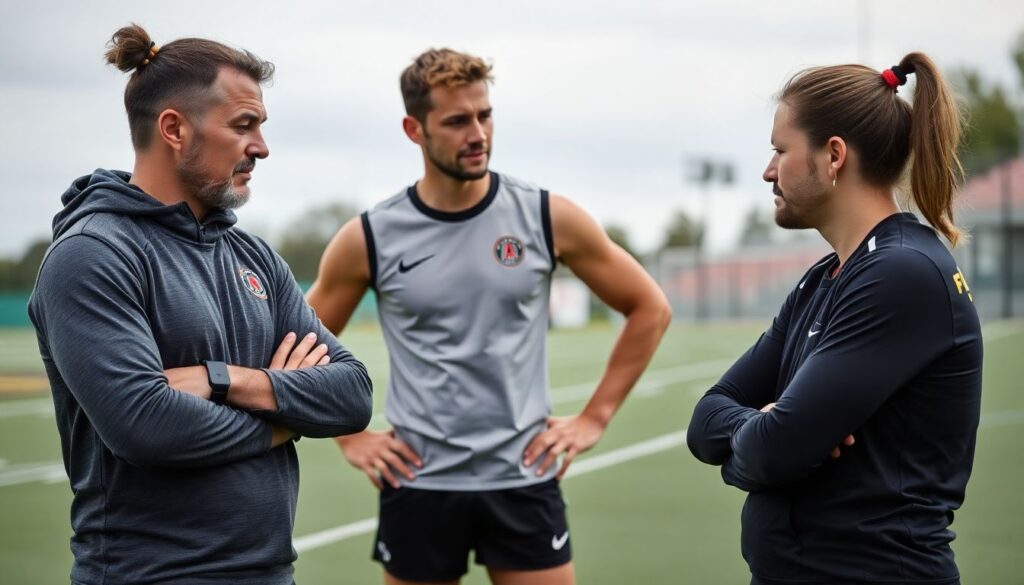
Include two or three short well-being questions in regular screenings, encourage informal conversations about stress and sleep, and coordinate closely with the club psychologist. Treat mental load as another aspect of load management, just like muscular fatigue.
Are mental health programmes only realistic for big-budget clubs?
No. Even clubs with limited resources can establish simple, effective routines: a part-time psychologist, basic education sessions, clear referral pathways and structured peer support. Cost grows mainly with sophistication, not with the decision to take mental health seriously.
Can a short break from competition solve burnout on its own?
A brief rest can relieve acute stress but rarely addresses the underlying causes of burnout. Without changes in expectations, media dynamics, coping strategies and identity, symptoms usually return once competition pressure resumes.
Комментарии