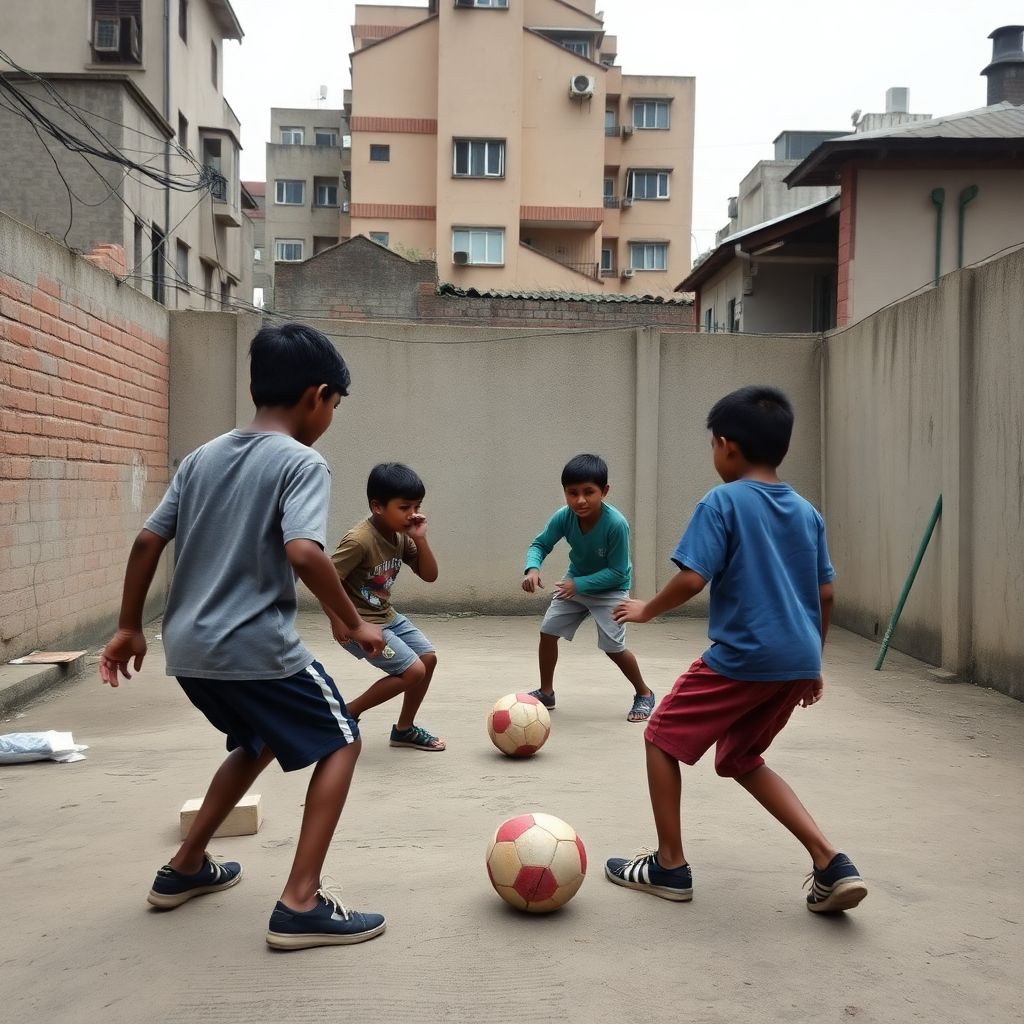
Potrero football is informal, self-organised street play in small, irregular spaces where children invent rules, solve problems, and learn to compete without adult control. This environment accelerates creativity, deception, and game intelligence that many professional academies unintentionally repress with over‑structured drills, early positional roles, and fear‑based error correction.
Core insights on how potrero play shapes footballing creativity
- Potrero is not just a place; it is a learning culture based on autonomy, constant play, and social negotiation.
- Technical creativity grows from repetition under chaos, not from rigid cones and scripted patterns.
- Decisions in tight, uneven spaces sharpen perception, deception, and timing under pressure.
- Physical and social constraints act as implicit coaches, shaping inventive solutions without verbal instruction.
- Many academies unintentionally erase street-born strengths through early specialisation and risk-averse coaching.
- Blending potrero principles with structured work is more effective than trying to copy street football inside the academy.
- A simple review algorithm helps coaches in Spain audit whether their sessions protect or suffocate creativity.
Origins and context: the potrero as a learning ecosystem
In Latin America, the word potrero originally named open plots, wastelands, or rough fields where kids gathered to play informally. Over time it came to mean a whole culture of self-organised football: mixed ages, improvised goals, variable team sizes, and games that start and end without adult intervention.
As a learning ecosystem, the potrero is defined less by geography and more by dynamics: scarce resources, abundance of time, and strong peer regulation. Arguments, negotiations, and micro-leadership moments teach children to manage conflict, read social cues, and build resilience-skills that transfer directly onto the pitch when the match becomes tense.
In the Spanish context (es_ES), you can approximate this ecosystem through escuelas de fútbol infantil estilo potrero, neighbourhood cages, and unsupervised park games. The key is not romanticising poverty or disorganisation, but understanding which ingredients of street play you can ethically recreate in safer, more structured environments.
Technical freedom: improvisation, ball mastery, and informal drills
Potrero football trains technique through free experimentation rather than pre-planned exercises. The same move is tried dozens of times across different micro-situations, opponents, and surfaces. This constantly shifting context refines ball mastery more profoundly than isolated repetition.
- Self-chosen repetition: Children repeat the moves they enjoy-dribbles, chips, nutmegs-until they own them, without time limits or coach-imposed quotas.
- Multi-surface control: Bumpy ground, walls, kerbs, and concrete force adaptations in first touch, balance, and weight of pass.
- Contact variability: Tackles are less controlled; players learn to protect the ball, absorb contact, and use the body creatively.
- 360º awareness: Without marked positions, players constantly receive under pressure from all angles, improving orientation.
- Informal challenges: Nutmeg contests, «first to three goals», or «loser goes in goal» gamify execution under consequence.
- Self-invented moves: Flicks off the wall, toe-pokes in tight spaces, outside-of-the-foot passes emerge from necessity, not from a drill folder.
For coaches in academias de fútbol base con metodología lúdica or any campus de fútbol creativo para niños in Spain, the lesson is clear: design activities where players can choose their own solutions, repeat them naturally, and feel socially rewarded for inventiveness.
Decision-making: risk, variability, and rapid problem-solving
Potrero play is a live laboratory for decision-making. Every action-when to dribble, when to pass, how much risk to take-has immediate social and competitive feedback. There is no adult to «freeze» the game and explain; players learn by suffering the consequences of their own choices.
- 1v1 and 1v2 survival: In small-sided games with no fixed positions, kids constantly face outnumbered situations, learning when to protect, escape, or combine.
- Space hunting: Uneven pitches and obstacles mean useful spaces appear and disappear quickly, forcing fast scanning and movement off the ball.
- Status versus efficiency: A flashy dribble that loses the ball may earn ridicule; a clever simple pass in a tight moment builds respect-players weigh ego against outcome.
- Score and time pressure: «Next goal wins» endings teach risk calibration better than any theoretical chat about game states.
- Rule hacking: Kids constantly tweak rules («only one touch», «goals only from headers»), then adapt strategies to win inside those constraints.
- Multi-role learning: Everyone attacks and defends; the same child reads transitions from both sides of the ball, enriching tactical understanding.
Coaches running clínicas de fútbol callejero para jóvenes talentos can build sessions around these scenarios: overload games, sudden rule changes, or score conditions that oblige players to think fast and accept calculated risk instead of defaulting to the safest option.
Physical and social constraints that foster inventiveness
Constraints are the hidden coaches of the potrero. They shape behaviour without a single word, steering players toward efficient, creative solutions because the environment leaves them no alternative.
Environmental constraints that act as silent coaches
- Irregular pitches that punish poor first touches and reward soft, intelligent ball control.
- Limited space that forces constant scanning, wall passes, and quick changes of direction.
- Improvised goals that change shooting angles, favouring finesse and deception over power.
- No bibs or fixed positions, requiring permanent role switching and communication.
- Variable team sizes, from 2v2 to 7v7, teaching adaptation of tactics and positioning.
Social dynamics that boost or block creativity
- Peer selection of teams and rules, which rewards not only skill but also fairness and leadership.
- Immediate feedback from friends: applause for brave attempts, teasing for selfish or lazy play.
- Organic mentoring, where older kids model tricks, feints, and «street» solutions for younger ones.
- Embedded conflict resolution, teaching kids to manage fouls, handballs, and «was it in?» disputes.
- Subtle exclusion mechanisms that can suppress timid players if adults never protect their space.
When you import potrero principles into programas de formación futbolística no convencional para niños, you replicate the positive constraints (tight space, variable rules, mixed roles) while actively managing the negative ones (bullying, unsafe contact, exclusion).
Institutional friction: what professional academies suppress
Professional academies often see themselves as «correcting» street habits. In doing so, they may unintentionally erase the very qualities that made a child stand out on the potrero.
- Over-control of decisions: Constant instructions about when to pass or dribble stop players from exploring their own game model.
- Early positional boxes: Fixing a 9-year-old as a full-back narrows their toolkit and decision range prematurely.
- Drill over game bias: Long lines and cone patterns reduce touches, perception demands, and emotional engagement.
- Error punishment: Visible frustration from coaches turns mistakes into threats instead of information for learning.
- Result obsession: Chasing weekend wins with rigid game plans discourages risk-taking and experimental play.
- Homogenised profiles: Selection biases favour «obedient, tidy» players over chaotic inventors, flattening the talent pool.
The tension between potrero and academy can be clarified by contrasting their typical learning conditions:
| Dimension | Potrero / Street play | Standard academy session |
|---|---|---|
| Control | Player-led, self-organised | Coach-led, pre-planned |
| Rules | Flexible, negotiated on the spot | Fixed, defined by coach/club |
| Feedback | Social, immediate peer reaction | Verbal, from coach during breaks |
| Role variety | Everyone plays everywhere | Positions often fixed per player |
| Risk climate | High, mistakes normalised | Often low, errors criticised |
Practical strategies to blend street creativity with academy rigor
The goal for Spanish coaches is not to reject structure, but to integrate potrero logic into escuelas de fútbol infantil estilo potrero, mainstream clubs, and seasonal camps. Below is a practical mini-case and a short algorithm you can apply after any session to check if you are preserving creativity.
Mini-case: redesigning a U11 session in Spain
Context: A U11 team in Madrid attends a traditional club plus a weekend campus de fútbol creativo para niños. Players show flair on the street but play safe during official training.
- Warm-up (10 minutes): 3v3 in tight rectangles, free rules. Coach only intervenes to ensure safety, not to give tactical cues.
- Main game (20 minutes): 4v4, «goals only count after a 1v1 or wall pass». Teams can modify one rule every five minutes if both captains agree.
- Applied constraint game (15 minutes): 5v5, «next goal wins». Coach observes who wants the ball, who hides, and which risks players take.
- Cool-down reflection (10 minutes): In a circle, each child shares one brave action they attempted, not just successful ones.
This blend keeps tactical aims (creating superiority, recognising triggers) but keeps potrero values alive: self-negotiated rules, high emotional stakes, and praise for courageous attempts.
Simple post-session algorithm to audit creativity
Use this short checklist after any training to see if your academy behaves more like a potrero or like a creativity filter:
- Count ownership: Did players have at least 2-3 moments to change rules, propose a game, or decide how to restart? If not, add one player-led block next time.
- Measure freedom: Were there game segments where players chose when to dribble, pass, or shoot without coach correction? If not, include an uncoached game at the end.
- Track risk: Did you visibly praise at least three brave but failed attempts (dribbles, risky passes, shots)? If not, adjust your feedback balance.
- Scan variety: Did every child experience at least two roles (defending, building, finishing)? If not, rotate positions more aggressively in the next session.
- Review emotion: Did the session feel like a chore or like a game? If the energy was flat, insert more competitive, street-style mini-challenges.
If you can honestly answer «yes» to most of these questions, your structured environment is echoing the best parts of the potrero while still delivering the tactical and physical rigor expected in modern academies.
Coaches’ pressing queries on preserving street-born creativity
How can I bring potrero principles into a very structured Spanish club?
Protect at least one player-led game each session, reduce in-play instructions, and reward brave attempts publicly. Use simple rule tweaks-like extra points for successful 1v1s-to signal that creativity matters as much as tactical discipline.
Do small-sided games automatically reproduce street football benefits?
Not necessarily. If the coach constantly freezes play, dictates decisions, or punishes mistakes, small-sided formats lose their potrero flavour. Autonomy, flexible rules, and meaningful consequences are as important as pitch size.
Will encouraging dribbling harm our team results in competition?
If you praise only dribbles and ignore decision quality, yes. If you frame dribbling as one valid option among others and coach players to read when it is appropriate, team performance usually improves in the medium term.
How do I protect less confident kids in street-style games?
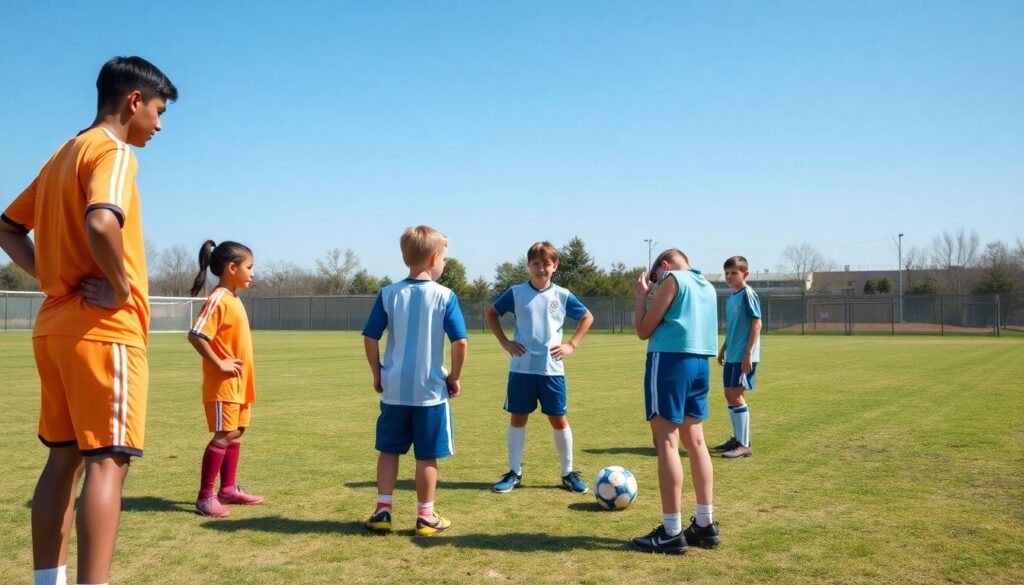
Balance teams, set clear safety rules, and intervene firmly against mockery or bullying. Give quieter players specific missions-like being the playmaker for three minutes-so they receive the ball and build confidence.
Can potrero-inspired training work with very young children (U7-U9)?
Yes, as long as rules are simple and safety is prioritised. Use many 2v2 and 3v3 games, let kids invent variations, and avoid early positional labels or rigid tactical instructions.
How should I explain this approach to skeptical parents?
Show that unstructured moments are intentional, linked to creativity, decision-making, and enjoyment. Invite parents to watch sessions, and explain how top players often grew up in informal play settings similar to the potrero.
What is the role of holiday camps in preserving street creativity?
Holiday camps can act as creativity refreshers. Design them more like clínicas de fútbol callejero para jóvenes talentos than like extended academy sessions, with many free games, mixed ages, and rule experimentation.
Комментарии