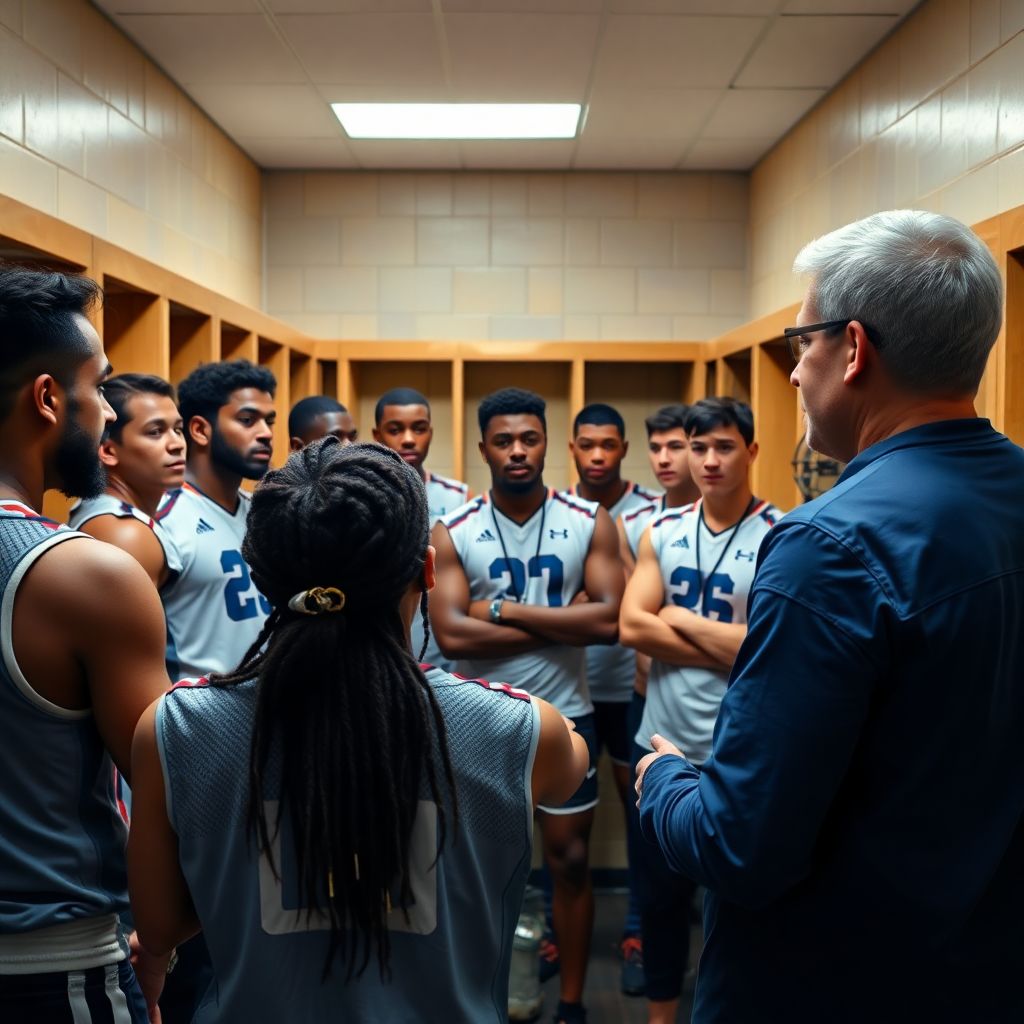
In the locker room and in society we need authority that combines clear role power (captain, coach, institution) with earned moral credibility and competence. Good captains and coaches do not rely only on shouting or titles: they give direction, listen, protect standards, and make others stronger and more autonomous.
Core conclusions on captaincy, coaching and social authority
- Authority is not the same as shouting louder; it is the right and duty to guide others, accepted as legitimate by the group.
- Captains, coaches and institutions each hold different kinds of authority that should complement, not compete with, each other.
- In liderazgo deportivo en el vestuario, authority is earned daily through coherence between words, decisions and effort.
- Healthy authority uses command only when necessary; most of the time it persuades, explains and models behaviour.
- Good leaders deliberately transfer authority to younger players and citizens so the culture survives changes of people.
- Authority can be evaluated with observable indicators such as discipline, initiative, trust and resilience under pressure.
Common myths about authority in teams and communities
The first myth is that authority equals volume and anger. Many players and citizens confuse leadership with the capacity to impose fear. Real authority can raise the voice when needed, but most of the time it is calm, firm and predictable, even under stress.
The second myth is that the coach or captain must always decide everything. In strong teams and communities, authority distributes decisions: some are coach-only, some are shared with captains, and many are delegated to players or members. Over-centralised control makes people passive and secretly resistant.
The third myth is that authority is a fixed personality trait. In reality it is situational and relational. A player can be a clear leader in the locker room, but insecure in public speaking, or vice versa. A citizen may show strong moral authority in the neighbourhood while being shy at work.
The fourth myth is that authority is incompatible with closeness. Many fear that if they are approachable, they will lose respect. What destroys authority is not closeness but the lack of boundaries: joking without limits, tolerating disrespect, or breaking one’s own rules. Warmth plus clarity beats cold distance.
In both sport and civic life, formación para capitanes de equipo y liderazgo should start by dismantling these myths. If young leaders understand that authority is a service role, not a privilege, they will search less for control and more for ways to make the group function better.
Defining authority: captain, coach and institutional power
Authority is the recognised right to influence others’ behaviour and decisions for the good of the group. In football and in society, three main sources of authority interact.
- Positional authority of the coach. Comes from the formal role: chooses line-ups, tactics, playing time, and training content. Similar to a mayor or director who sets direction, allocates resources and decides priorities.
- Social authority of the captain. Emerges from trust, respect and connection with teammates. The captain interprets the coach’s message, maintains the emotional climate and represents the group upwards, like a union delegate or community spokesperson.
- Institutional authority. Comes from the club, federation, law or shared rules. It defines non-negotiables: competition rules, disciplinary codes, ethical standards. In society, this is the legal and cultural framework that limits both captains and coaches.
- Expert authority. Based on proven competence: tactical understanding, reading of the game, or technical mastery. For example, an experienced goalkeeper can have authority on defensive organisation even if not captain.
- Moral authority. Comes from integrity and sacrifice for the group. The player who always helps, never hides, and admits mistakes gains the right to demand effort from others.
- Relational authority. Built through daily micro-interactions: listening, empathy and fairness. This is where coaching deportivo para líderes y entrenadores often focuses, because relationships determine whether instructions are followed with conviction or only with obedience.
A good curso liderazgo para entrenadores de fútbol should help coaches understand these five dimensions and how to align them: when formal power contradicts moral or relational authority, the team silently chooses whom to follow.
Practical behaviors that create legitimate authority in the locker room
Authority becomes visible in repeated behaviours, not in speeches. Below are typical scenarios in the locker room and the kind of actions that strengthen or weaken authority.
-
Scenario: conflict between teammates.
The captain calls both players aside, listens to each version separately, then together. He names the problem clearly (for example, lack of defensive effort), connects it to team goals, and ends with a concrete agreement. The coach supports this process publicly instead of taking over immediately.
-
Scenario: poor training intensity.
The coach stops the session briefly, explains the standard, and asks senior players how intensity affects weekend performance. Captains then lead the next drill at maximum pace. Authority is created by linking demand to reasons and by modelling, not by endless shouting.
-
Scenario: unpopular tactical change.
Before a big match, the coach changes system and some players lose their preferred position. In the meeting, he explains the why, invites questions, and names who will be crucial in the new roles. Captains later reinforce the message privately, reducing resistance and rumours.
-
Scenario: new young player enters the squad.
A senior player with moral authority shows the locker room rules, sits with the newcomer at meals, and protects him from jokes that cross the line. This informal mentoring sends a signal: here authority is used to include, not to dominate.
-
Scenario: after a defeat with many mistakes.
In the debrief, the coach first assumes his share of responsibility, then invites players to self-assess before giving his own analysis. The captain adds one or two key messages, not a second speech. Authority here is shared reflection plus clear next steps.
-
Scenario: values breach (disrespect, lateness).
The coach applies agreed consequences consistently, even to star players. Captains do not protect friends; they support the decision and talk privately about why it matters. This combination shows that rules are real and not decorative.
These small, repeated behaviours are easier to develop with structured formación para capitanes de equipo y liderazgo and with good libros de liderazgo para entrenadores y capitanes that include practical exercises, not only theory.
When command is necessary: coercion, compliance and ethical limits
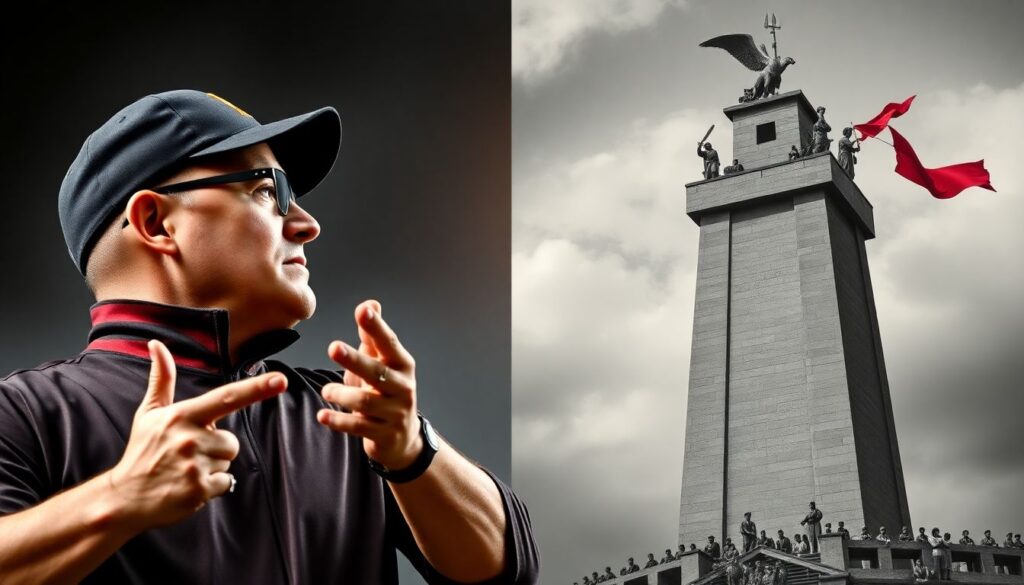
Command and coercion are sometimes necessary, both in sport and in society. The key is to distinguish between legitimate, time-limited use of authority and chronic abuse of power.
Situations where using firm command is appropriate
- Acute safety risks on the pitch or in the street (dangerous tackles, crowd incidents, unsafe facilities) where immediate obedience protects people.
- Clear, repeated violations of agreed rules after several warnings and attempts at dialogue have failed.
- Moments of chaos or panic, when group indecision would worsen the situation (for example, evacuation, medical emergency).
- Short tactical instructions during play, where there is no time for discussion, as long as reflection happens later.
- Protecting vulnerable people from bullying or discrimination, even if it means confronting popular figures.
Ethical limits and risks of coercive authority
- Using fear as the main motivational tool creates short-term compliance but long-term resentment and dependence.
- Public humiliation, insults or threats cross ethical lines and slowly destroy both trust and real performance.
- Confusing personal interest (protecting ego, favouring friends) with team or community interest is an abuse of power.
- Excessive control over private life or opinions of players or citizens undermines autonomy and responsibility.
- Never allowing disagreement or feedback reduces learning and traps leaders in their blind spots.
Coaching deportivo para líderes y entrenadores should train the ability to move along the spectrum: from command in emergencies to facilitation and listening in normal situations, always with clear ethical boundaries.
Transferring authority: mentorship, succession and cultural practices
Strong teams and societies do not depend on one unique leader. They deliberately form new captains and civic leaders. Several frequent mistakes make this transfer of authority fragile.
- Keeping all decisions at the top. When coaches never share decisions with captains, future leaders remain inexperienced. Delegating small decisions (warm-up design, group rules) is safer training than any speech.
- Choosing captains only for talent or age. Star status does not equal leadership capacity. Ignoring relational and moral authority leads to captains without credibility. Clear criteria and open conversations avoid this.
- Mentoring only through criticism. Some leaders think they are «hardening» young players by constant correction without guidance or recognition. Effective mentorship alternates demanding feedback with explicit reinforcement of strengths.
- Not naming values explicitly. When the group never names what it considers non-negotiable, culture becomes invisible and hard to transmit. Short rituals and stories about past captains make values concrete.
- Ignoring off-field leadership. Authority also appears in study habits, social networks, and community involvement. Connecting locker room leadership with citizenship prepares players for life after sport.
A well-designed formación para capitanes de equipo y liderazgo usually includes mentorship by older players, specific tasks of responsibility, and reflection spaces. Similarly, civic programmes mirror this by giving young people real roles in neighbourhood projects.
Evaluating authority: measurable indicators on field and in society

Authority can and should be observed, not guessed. Below is a compact mini-case that shows how to evaluate it with simple indicators instead of abstract opinions.
Mini-case: changing the captain in a local team.
A club in Spain notices that despite good results, the locker room is divided. The coach considers changing the captain but wants objective criteria. Over one month, staff and players observe three indicators in training and matches:
- Response to adversity. After a conceded goal, does the captain organise, communicate and calm, or complain and isolate?
- Respect for rules. Is the captain on time, prepared and consistent with agreed standards, or does he ask for exceptions?
- Influence on others. Do teammates naturally look at this person for guidance, and does performance of others improve around him?
They also check one social indicator off the field: who mediates conflicts in the WhatsApp group and protects younger players. Based on these observable behaviours, the team decides to appoint a co-captain who already shows strong moral and relational authority, and to keep the former captain as a tactical leader.
The coach then designs a simple development plan inspired by ideas from libros de liderazgo para entrenadores y capitanes: monthly feedback meetings, shared responsibility boards, and specific leadership tasks for younger players. Within weeks, discipline and mutual support improve, showing that the adjustment of authority has had concrete effects.
Clarifying frequent doubts about leadership and authority
Is the captain more important than the coach?
They have different kinds of authority. The coach holds formal and tactical power; the captain holds social and moral influence inside the group. Teams function best when these roles are aligned and respect each other, not when one dominates the other.
Can a quiet person be an effective leader in the locker room?
Yes. Authority does not require being loud; it requires clarity, consistency and courage at key moments. A quiet player who speaks rarely but always with fairness and good timing can have more impact than an extrovert who constantly talks without responsibility.
How can a young player start developing leadership?
Begin with controllable behaviours: be on time, train with intensity, support teammates, and communicate clearly. Ask the coach for small responsibilities. Participating in coaching deportivo para líderes y entrenadores or club workshops accelerates this process.
What should a coach do if star players undermine authority?
Address it directly and early, in private first, linking behaviour to team values and consequences. If it continues, apply the same rules as for others. Protecting stars from discipline sends a message that talent is above the group and destroys legitimacy.
Is it useful to take a curso liderazgo para entrenadores de fútbol?
It is useful if the course includes practice: role-plays, case discussions and feedback, not only theory. Choose programmes that work with real locker room situations and connect leadership to tactical and training decisions.
How do books help with leadership in sport?
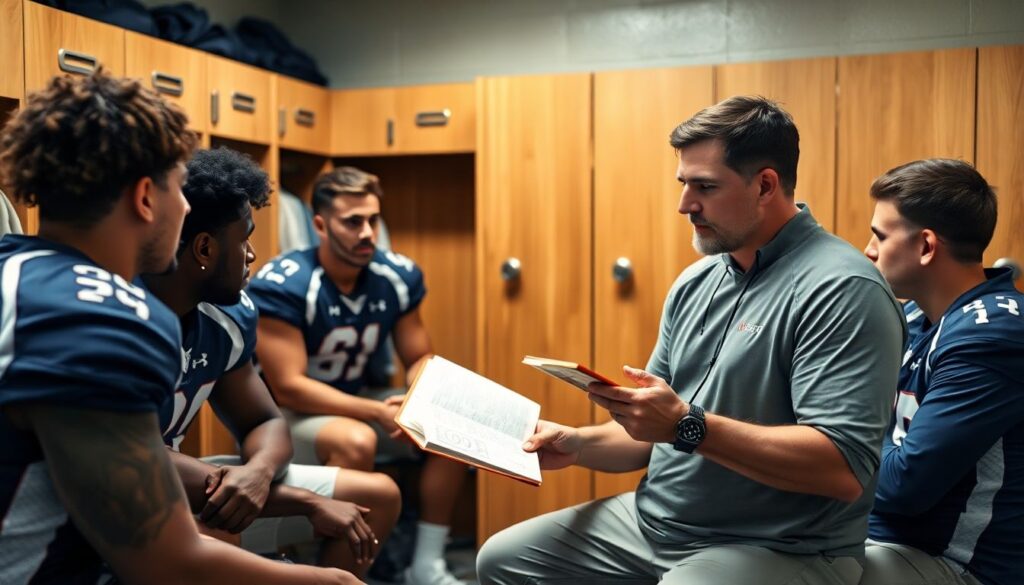
Good libros de liderazgo para entrenadores y capitanes provide vocabulary, frameworks and examples that you can adapt to your context. They are more effective when combined with reflection, conversation with staff and players, and deliberate practice on the field.
Can authority in sport teach something for citizenship?
Yes. Habits such as taking responsibility, respecting rules, speaking up against unfairness and helping weaker members translate directly from the locker room to society. Clubs that link sport with civic projects help players become better citizens, not only better athletes.