Match time in football is a psychological and tactical frame: 90 minutes plus added time, sliced into phases that shape decisions, stress, and joy. Understanding these temporal patterns helps players, coaches, bettors, and fans interpret momentum, manage anxiety, and avoid overreacting to short bursts of play or dramatic late goals.
Temporal dynamics: a concise map
- Football time is elastic: the same 90 minutes feel slow or fast depending on score, context, and stakes.
- Emotional peaks cluster around transitions: kick-off, just before half-time, last 15 minutes, and added time.
- Waiting amplifies anxiety and risk-taking, especially for coaches, players, and people following resultados de fútbol en vivo hoy.
- Game management approaches differ in ease: simple time-awareness is low risk; extreme time-wasting is high risk and punished.
- Added time is a separate psychological phase where probabilities shift less than emotions suggest.
- Fans, bettors, and broadcasters (including those offering dónde ver fútbol online en directo gratis) shape tempo indirectly through pressure.
Anatomy of the 90 minutes: phases and transitions
In football, time is formally simple: two halves of 45 minutes plus added time, with a break in between. Psychologically and tactically, however, those 90 minutes fragment into distinct phases, each with its own emotional climate and risk profile for decisions on and off the pitch.
A practical way to read a match is to think in time blocks: early (0-15), consolidation (15-30), pre-interval (30-45), post-interval reset (45-60), mid-late pressure (60-75), closing stretch (75-90), and finally added time. Coaches and analysts trim or merge blocks, but the idea is the same: time contextualises every decision.
Early minutes usually carry nervous energy and cautious structure. The mid-game often stabilises, with teams settling into patterns. Late minutes magnify each action: a clearance in the second minute feels routine; the same clearance at 89:30 feels heroic or catastrophic. Added time is experienced almost as a separate micro-match governed by urgency rather than structure.
These phases do not guarantee specific outcomes, but they change how people interpret identical events. A missed chance on 10 minutes is frustrating; the same miss in added time can be traumatic. Understanding these temporal lenses lets you watch, coach, or bet with more realism and less emotional distortion.
Psychology of waiting: anxiety, anticipation and decision points
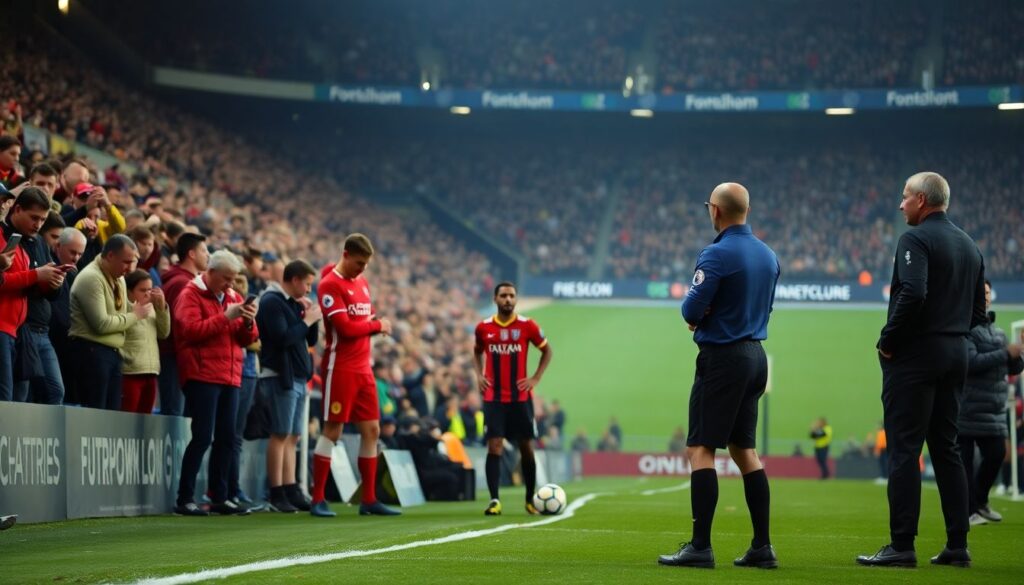
Waiting is the invisible opponent: fans refreshing resultados de fútbol en vivo hoy, players standing over a penalty, coaches glancing at the fourth official's board. The mechanics of waiting drive many of the sport's emotional extremes.
-
Uncertainty accumulation
As time passes without a clear outcome (goal, breakthrough, safety lead), uncertainty piles up. The brain dislikes unsolved situations, so it fills gaps with worst-case scenarios. This intensifies before half-time, before full time, and before key set pieces. -
Perceived time distortion
When defending a narrow lead, time feels slow; when chasing a goal, it feels impossibly fast. This distortion can push players into rushed decisions or, conversely, excessive delay to "eat seconds", often backfiring if the referee adds more time. -
Salience of last moments
The human mind overweights what happens last. A scrappy late goal can reshape the narrative of 89 balanced minutes. For bettors in apuestas deportivas fútbol en directo, this leads to overvaluing late momentum and neglecting the overall match pattern. -
Social amplification of stress
Stadium noise, live TV focus, and social media all amplify waiting. When millions watch a penalty or added time corner, individual anxiety syncs with collective tension, increasing fear of blame and conservative choices. -
Micro-deadlines within the match
Coaches and players set internal deadlines: score before half-time, survive first fifteen minutes, push in last ten. These self-imposed clocks guide substitutions, press triggers, or risk level, but they also create pressure spikes around specific minutes. -
Reward expectation and dopamine
Anticipation itself releases reward signals in the brain. The longer and more uncertain the wait (for a comeback, a VAR decision, or crucial entradas para partidos de fútbol 2026 going on sale during a big game), the more intense the final emotional release, positive or negative.
Momentum, tempo and control: how teams manage time
Time management in football blends strategy, game feel, and rule boundaries. Different approaches vary in how easy they are to adopt and the risks they carry for outcome and reputation.
-
Tempo control through possession
Teams slow or speed the game with passing choices. Short, low-risk circulation cools momentum and lets a leading team bleed minutes with low emotional cost and relatively low referee risk. For squads with strong technical skills, this is a high-convenience, low-risk method of time management. -
Intensity waves in pressing
Coaches schedule "waves" of high press (for example, early in each half or in the last ten minutes). This is medium difficulty: players must read cues and manage energy. The risk is that mistimed waves open space and fatigue, especially if chasing a goal late. -
Structured time-wasting behaviors
Slow throw-ins, prolonged goal kicks, cramp theatrics and drawn-out substitutions are easy to implement but high-risk for image and officiating. In modern football, officials are more willing to extend added time, which reduces the actual gain and increases the chance of cards or fan hostility. -
Substitution timing as a clock
Changes around 60-70 minutes aim to refresh intensity; defensive subs in the last 10-15 minutes aim to protect a lead. This is relatively low-risk if used sparingly, but late defensive subs can invite pressure and lose attacking outlets, turning the clock into an enemy. -
Risk cycling when chasing a result
When behind, teams may choose incremental risk (more players forward gradually) or all-in pushes in final minutes. Incremental risk is harder to organize but safer over time; reckless late surges are easy to execute emotionally but carry high counter-attack risk. -
External time reading by staff and analysts
Analysts, often using live data similar to what you see in mejores casas de apuestas para fútbol online, track expected goals, fatigue, and momentum to suggest when to accelerate or slow things down. High convenience for coaches with staff; low convenience for grassroots teams without data support.
Added time decoded: rules, incentives and strategic use
Before diving into formal rules, it helps to see how people act in late-game micro-scenarios, where emotion and risk collide in the space of a few minutes.
Imagine three mini-scenarios:
-
Scenario A: leading by one goal, 86th minute
A team can choose conservative possession (harder to maintain but lower backlash) or obvious time-wasting (easy, but risks extended added time and bookings). The safest long-term approach is controlled possession with smart, legal use of restarts. -
Scenario B: drawing at home, 88th minute
The home side feels pressure from fans and league position. They can accept the draw (low risk, low emotional reward) or commit numbers forward. Overcommitting is easy emotionally but risks a devastating counter. A balanced push-two or three extra players committed, with rest defense organized-is harder to coach but safer. -
Scenario C: losing by one goal, 90+2
At this stage, risks of conceding another goal are relatively small compared to the value of scoring. Going all-in (keeper forward on corners, long balls) is high emotional cost if it fails, but rationally the risk is acceptable. The challenge is having rehearsed these patterns in training.
With those scenarios in mind, added time can be evaluated in terms of concrete advantages and trade-offs for different strategies.
Structural benefits and opportunities in added time
- Clarified urgency: both teams usually know whether to protect, push, or accept the result, simplifying decisions.
- High leverage moments: each set piece or counter-attack carries outsized narrative weight for fans, broadcasters, and apuestas deportivas fútbol en directo platforms.
- Psychological edge for mentally prepared teams: squads that rehearse late-game scripts suffer less panic and exploit opponents' mistakes.
- Referee focus on fairness: officials often feel pressure to compensate for earlier stoppages, which can reduce the effectiveness of cynical time-wasting.
- Opportunity for specialists: late-game subs with pace or aerial power can have disproportionate influence when fatigue is high.
Limits, risks and hidden costs of late-game tactics
- Added time is finite: no matter how intense it feels, there are only a few real attacks left; desperate long balls can waste these scarce possessions.
- Reputational damage from extreme time-wasting: teams may win short-term but lose neutral fans, media goodwill, and sometimes referee leniency in future matches.
- Injury risk in chaotic finales: tired players sprinting and tackling at full effort increase physical risk in the very minutes where focus is lowest.
- Emotional hangover: dramatic late defeats can poison dressing-room morale and fan confidence, affecting future games more than a calmer loss would.
- Referee discretion: late fouls or simulation may be judged harsher as officials seek control; small misjudgments can produce big swings in outcomes.
Physiology over time: fatigue, recovery and performance pacing
Physical limits shape what is actually possible in football's time structure. Misunderstanding fatigue patterns produces both tactical errors and persistent myths about effort and "character".
-
Myth: full-throttle pressing can last 90 minutes
Reality: continuous high-intensity pressing is unsustainable. Smart teams build pressing windows and recovery phases into their time plan; naive teams burn out after fast starts. -
Myth: late goals always show superior fitness
Reality: late goals can reflect tactical risk, mental lapses, substitutions, or randomness as much as conditioning. Blaming only fitness is appealing but often misleading. -
Myth: experienced players conserve energy by "walking"
Reality: good pacing is about choosing when to sprint, not never sprinting. Veterans who appear passive may be poorly conditioned, not strategically efficient. -
Error: ignoring half-time recovery
Halftime is a mini-recovery window. Teams that manage nutrition, hydration, and re-warm-up effectively can start second halves sharper, particularly in hot conditions or intense games. -
Error: over-substituting purely by minute
Changing players at fixed times (for example always at 70 minutes) without reading actual fatigue can remove effective players and disrupt rhythm when it matters most. -
Error: undertraining "chaos minutes"
Many teams train structured phases but not the fatigue-heavy final minutes with long clearances, second balls, and emotional spikes. Without rehearsal, both body and mind misfire in added time.
Narratives of the match: how time shapes fan and player experience
Time does not just organise tactics; it scripts stories. For a supporter, especially one following resultados de fútbol en vivo hoy from a phone instead of a stadium seat, the game unfolds as a chain of emotional chapters.
Consider a simplified narrative timeline for a knockout match:
Kick-off to 15'   -> Curiosity and scanning: "How are we today?"
15' to 30'        -> Early judgment: "We look solid / nervous."
30' to HT         -> Hope or dread: "We need a goal before the break."
45' to 60'        -> Reset and reframe: "Did the coach fix it?"
60' to 75'        -> Impatience or belief: "Time is running out."
75' to 90'        -> Anxiety peak: "Every attack could be the last."
90'+ added time   -> Emotional free-fall: ecstasy, despair, or numbness.
External layers reinforce this script. Fans hunting dónde ver fútbol online en directo gratis may join midway and latch emotionally onto the last 20 minutes, overweighting late drama. People placing bets through mejores casas de apuestas para fútbol online might focus almost exclusively on "next goal" or "final result" markets in the closing stretch, turning each attack into a financial swing as well as an emotional one.
Long term, memories compress entire matches into a few temporal snapshots: an early red card, a before-half-time equaliser, a 90+3 winner. The journey of waiting, worrying, and recalibrating between those snapshots is forgotten, even though it shaped every decision on the pitch. To understand football deeply-whether as coach, bettor, analyst, or fan with entradas para partidos de fútbol 2026-you need to see how those 90-plus minutes continuously sculpt both behavior and narrative.
Practical queries about match time and behavior
Why do late goals feel more dramatic than early goals?
Late goals arrive when emotional investment and perceived stakes are highest. The brain overweights what happens last, so a goal in added time can redefine the entire narrative of the evening, while an early goal is absorbed into a longer story with more time for correction.
Is time-wasting an effective strategy or a dangerous habit?
Moderate, subtle slowing of the game combined with possession can be effective. Extreme, obvious time-wasting is easy to adopt but risky: referees can extend added time, punish individuals, and reputational damage can accumulate with fans and officials.
How should teams pace their physical effort across 90 minutes?
The most sustainable model is to plan intentional intensity waves and recovery windows, aligned with tactical goals. Trying to maintain maximum effort for all 90 minutes is physiologically unrealistic and often results in late collapses or preventable injuries.
What is the smartest way to approach added time when leading?
Keep the ball when possible, use restarts intelligently, and avoid needless fouls or confrontations. Purely retreating into the box invites pressure; combining compact defending with moments of controlled possession usually reduces both chances conceded and referee-added minutes.
Why do fans and bettors often misjudge late-game probabilities?
They rely on emotion and recency, exaggerating the impact of momentum and underestimating how few real events remain. Refreshing resultados de fútbol en vivo hoy or watching intense coverage can make a comeback feel inevitable when, statistically, it remains unlikely.
Does watching on TV or online change the perception of time?
Yes. Broadcast graphics, countdown clocks, and commentary frame specific minutes as critical, while replays and ad breaks distort flow. Online streams and live tickers create micro-waits that can heighten anxiety compared to a continuous in-stadium experience.
How can a coach help players deal with anxiety in the last minutes?
By rehearsing late-game scenarios in training, simplifying instructions, and predefining roles for closing phases. When players know the plan for the final 10 minutes and added time, they focus on execution rather than on the clock itself.