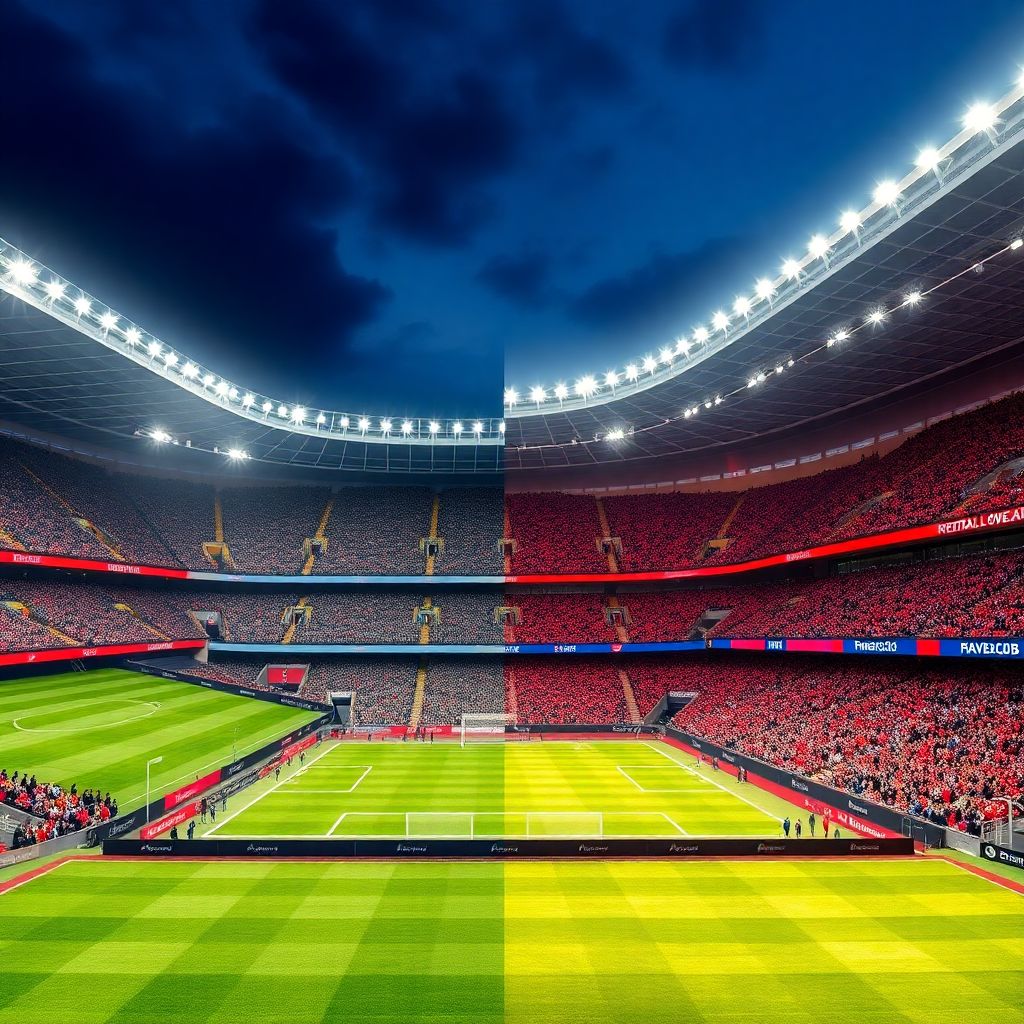
Neighbourhood clubs and global football empires serve different needs. If you value presence, community and affordable live games, clubes de barrio are usually the better choice. If you want the very best players, stable TV coverage and global storylines, global empires and an online subscription to see European leagues fit better.
Core contrasts that define the debate
- Ownership: neighbourhood clubs are often member-led and volunteer-heavy; global empires concentrate control in investors, corporations or states.
- Economics: local revenue depends on gate receipts and small sponsorship; global groups rely on broadcasting, commercial deals and worldwide merchandising.
- Matchday experience: clubes de barrio fútbol entradas baratas versus expensive stadium packages and branded experiences in superclubs.
- Fan identity: local belonging and personal ties compared with global brand fandom across continents.
- Sporting pathway: grassroots shops for talent versus elite finishing schools and massive transfer operations.
- Risk profile: community clubs are fragile but flexible; empires are powerful but vulnerable to political, financial and reputational shocks.
- Regulation: neighbourhood entities live under domestic rules; global empires arbitrage between leagues, federations and jurisdictions.
Origins and identities: community roots versus corporate foundations
Use these criteria to choose whether to strengthen neighbourhood clubs, align with global empires, or design a hybrid in your local ecosystem.
- Purpose of involvement: Decide if your primary objective is community building, talent development, prestige, or financial return. Community-first aims align better with clubes de barrio; prestige and scalable profit push you toward global brands.
- Desired fan experience: If you want families to attend regularly, chat with players and pay entradas partidos fútbol ligas locales precio that stay accessible, invest in local clubs. If you seek tourist demand, VIP boxes and global hospitality, superclub partnerships matter more.
- Identity and storytelling: Neighbourhood clubs embed specific barrios, dialects and micro-histories. Global empires use polished, universal narratives. Choose which type of story you want your competition and marketing to amplify.
- Historical ties: Existing supporter traditions, peñas and municipal backing are assets you lose if you recentre everything on a global brand. Where local history is strong, protect and modernise it instead of replacing it.
- Merchandising culture: For close-knit communities, limited runs and local distribution of gear work; in global models you rely on international logistics and mass online sales. If fans already ask for camisetas de clubes de barrio comprar online, you can scale gradually from grassroots without ceding control.
- Media visibility expectations: Players, sponsors and city halls may demand frequent TV exposure. When this is non‑negotiable, some form of link to top leagues or a multi-club group becomes useful, even if the core identity remains local.
- Time horizon: Community identity compounds over decades. Corporate projects can move faster but may relocate, rebrand or even disappear. If you plan on a 20-30 year horizon for your barrio, prioritise stable local structures with carefully chosen external alliances.
- Compatibility with local politics: Mayors and councils like investments that show up as renovated pitches, academies and accessible tickets. Mega-brand domination with high prices can create resistance. Map your political context before choosing a model.
Financial engines: revenue models, investment flows and power imbalance
The funding model you back will determine who captures value from tickets, media, merchandising and transfers. The table summarises typical options and when they work.
| Model variant | Best suited for | Advantages | Drawbacks | When to choose |
|---|---|---|---|---|
| Community-owned local club | Small cities, barrios with strong associations, amateur and semi-pro tiers | High trust, low fixed costs, alignment with social goals, easier to keep entradas partidos fútbol ligas locales precio affordable | Limited capital, reliance on volunteers, vulnerable to one bad season or local crisis | When your priority is access, integration and cheap local football rather than rapid growth |
| Member-owned historic club | Traditional entities with large regional fanbases and stable local sponsors | Democratic legitimacy, resilience over time, emotional bond that drives season tickets and local TV interest | Slow decision-making, internal politics, difficulty competing financially with state-backed or corporate clubs | When you have history and scale, and you want to modernise without surrendering social ownership |
| Private investor-owned club | Ambitious projects in mid-sized markets seeking fast promotion and infrastructure upgrades | Access to capital, professional management, quicker stadium and academy investment, easier to monetise assets | Risk of over-leverage, disconnect from community, decisions driven only by profit or exit value | When you need capital injections for facilities and can negotiate safeguards for local identity and prices |
| Multi-club global group | Leagues wanting international partners, talent hubs and cross-border exposure | Shared scouting, analytics, loan pathways, global sponsorships, easier suscripción fútbol online ver ligas europeas packaging | Local club may become a feeder, unequal bargaining power, fixture and transfer priorities set elsewhere | When domestic clubs lack scale and you can trade autonomy for infrastructure, visibility and know-how |
| State-backed or mega-brand empire | Iconic cities, tourist hubs, leagues chasing global broadcasting and travel revenue | Huge investment capacity, world-class stars, strong pull for viajes para ver partidos de fútbol en Europa precios at premium levels | High dependence on political and reputational context, risk of backlash over sportswashing and inequality | When your market can sustain high prices and scrutiny, and regulators can enforce financial and ethical rules |
For fans and municipalities in Spain, a mixed system is often most resilient: strong clubes de barrio with low-cost live access plus selective participation in global content through a suscripción fútbol online ver ligas europeas, instead of letting one model eliminate the other.
Sporting impact: talent development, competitive balance and transfer markets
Use these scenario rules to decide how much power to give local clubs versus global empires in your football pyramid.
- If your priority is developing local players, then:
- Strengthen neighbourhood academies with stable public support and clear pathways.
- Limit dependence on early export of teenagers to global groups; negotiate training compensation and solidarity whenever transfers occur.
- If competitive balance in domestic leagues is collapsing, then:
- Cap related-club ownership in the same competition and regulate loan chains from multi-club groups.
- Consider luxury taxes or more progressive revenue sharing from top-tier TV deals back to clubes de barrio.
- If your top clubs dominate but grassroots infrastructure is weak, then:
- Require a fixed share of broadcasting and sponsorship income from global brands to fund local pitches, coaches and medical staff.
- In exchange, allow structured scouting access so that empires still see value in investing in your territory.
- If transfer markets are draining your league of talent too early, then:
- Improve minimum contract standards and education support so players do not leave purely for security.
- Negotiate partnership agreements: global empires commit to staged pathways (loan back, guaranteed minutes) instead of simple extraction.
- If you want your league to serve as a shop window for global empires, then:
- Lean into analytics, style of play and broadcast quality to make your matches attractive to neutral viewers.
- Protect competitive integrity so that feeder arrangements do not predetermine results or distort relegation battles.
- If your women's or youth leagues are underfunded, then:
- Attach obligations for investment in women's teams and academies when approving new foreign or corporate owners.
- Let neighbourhood entities run certain development competitions, with financial top-ups from the biggest brands.
Supporters and social capital: rituals, local ties and brand fandom
This checklist helps decide where to focus resources: strengthening clubs de barrio, amplifying global empires, or designing a portfolio of experiences.
- Map how people actually consume football: Survey how many fans attend local games, pay suscripción fútbol online ver ligas europeas, or save for viajes para ver partidos de fútbol en Europa precios. If most people only watch global TV football, local clubs need urgent support to stay relevant.
- Classify your fan segments: Separate local regulars who value social contact from global brand followers and occasional tourists. Neighbourhood clubs suit the first group; superclubs and national teams fit the second.
- Assess price sensitivity: If many households rely on clubes de barrio fútbol entradas baratas to go with kids or grandparents, protect that price point, even if global content remains premium and mostly on television.
- Audit existing rituals: Identify derbies, youth tournaments, fiestas patronales and peña activities around local clubs. Strengthening these rituals is often a higher social return than chasing a one-off friendly from a global giant.
- Design a balanced product mix: Offer:
- Very affordable local matches every weekend.
- Occasional big events with global empires or national teams.
- Accessible digital content for those who cannot travel.
- Align merchandising with identity: Use global brands for mass appeal, but also push local identity by making it easy to buy camisetas de clubes de barrio comprar online in Spain and abroad, with clear stories on who benefits from each purchase.
- Protect youth connection: Run programmes where kids who follow global stars on TV also experience live neighbourhood matches, stadium visits and training clinics, so they see football as something they can participate in, not just consume.
Governance, law and ethics: oversight, conflicts of interest and accountability
Avoid these common errors when rebalancing power between community clubs and global empires.
- Allowing opaque ownership structures: Not requiring clarity about who ultimately controls clubs, especially when state funds, offshore vehicles or multi-club networks are involved.
- Ignoring conflict-of-interest risks: Permitting the same investors to influence multiple teams in the same competition without strict rules on transfers, loans and voting rights.
- Underestimating community impact: Approving stadium moves, ticket hikes or kick-off times that make it impossible for traditional fans to attend, while prioritising broadcast audiences only.
- Weak enforcement of financial rules: Setting spending or sustainability rules but lacking auditing capacity, which punishes well-run clubes de barrio and rewards aggressive empires with better lawyers.
- Neglecting labour standards: Failing to safeguard fair conditions for players, coaches and staff in lower tiers, even while top clubs attract huge investment and wages.
- Short-term political deals: Agreeing to stadium naming rights, public guarantees or tax breaks for mega-brands without binding community benefit clauses.
- Over-centralising decision-making: Concentrating media rights and key votes in a few big clubs, leaving grassroots organisations and ligas locales without a meaningful voice.
- Inconsistent treatment of local and foreign investors: Either discriminating against external capital or, at the other extreme, granting foreign empires looser standards than domestic community clubs.
- Poor supporter representation: Not integrating structured fan councils or socios into governance, which increases backlash risk when inevitable crises arrive.
Decision tree overview for strategic football ecosystems
- If local stadiums are half-empty and families depend on clubes de barrio fútbol entradas baratas, prioritise stabilising neighbourhood clubs and protecting access.
- If broadcast deals are weak but you have exportable talent, open controlled channels to multi-club groups and negotiate fair solidarity payments.
- If global brands already dominate attention through streaming, require them to co-fund grassroots facilities and coaching in exchange for market access.
- If political pressure focuses on public spending, favour community or member ownership models with clear social-return metrics over opaque empires.
- If your market attracts football tourists willing to pay high viajes para ver partidos de fútbol en Europa precios, ring-fence part of that income for local academies and women's football.
Pathways forward: scenarios, hybrid models and policy levers
- If your immediate pain is empty local stadiums, start by stabilising clubes de barrio with affordable tickets and basic digital tools.
- If broadcast revenues stagnate, selectively court global empires and multi-club groups under clear regulatory conditions.
- If inequality is explosive, enforce redistribution from top tiers and global brands toward grassroots infrastructure.
- If political and social legitimacy are fragile, prioritise transparent ownership and supporter participation before any mega-deals.
Best for social cohesion and inclusion: empowered neighbourhood clubs with cheap local access and clear development pathways. Best for global visibility and top-tier performance: carefully regulated alliances with multi-club groups and major brands. Best for financial resilience: a diversified mix where no single empire or barrio club can crash the entire system.
Practical decision points for clubs, leagues and regulators
Should a league prioritise neighbourhood clubs or global empires?
Leagues should build a mixed ecosystem. Neighbourhood clubs protect access, identity and talent roots, while global empires drive broadcast revenue and international attention. The priority depends on gaps: empty local grounds point to clubes de barrio; weak media deals justify courting global brands under strict rules.
How can local clubs survive when big brands dominate TV and social media?
Local clubs survive by owning what big brands cannot copy: proximity, low prices and real participation. They should keep tickets affordable, offer direct contact with players, sell local merchandise online, and secure revenue sharing or solidarity mechanisms from top-tier broadcasting deals.
When does it make sense to join a multi-club global group?
Joining a multi-club group makes sense when a club lacks capital and high-level expertise but controls a strategic market or talent pool. Any deal should guarantee academy investment, limits on being treated only as a feeder, and protections for badge, colours and access prices.
Are state-backed superclubs always bad for local football?
State-backed superclubs are not automatically harmful, but they magnify power imbalances. Their impact depends on regulation: clear ownership disclosure, financial oversight, competition rules and binding obligations to support grassroots programmes can channel some of their resources into wider benefits.
What can regulators do to protect clubes de barrio?
Regulators can guarantee fair distribution of media income, set minimum facility standards, give tax incentives for community ownership, and protect scheduling and pricing that favour local attendance. They should also include supporter and grassroots representation in league and federation decisions.
How should fans choose where to spend their money on football?

Fans should map their priorities: if community and access matter most, spend on local tickets and merchandise; if elite football excites them, combine a measured streaming subscription with occasional travel. Diversifying spending helps keep both clubes de barrio and high-level competitions alive.