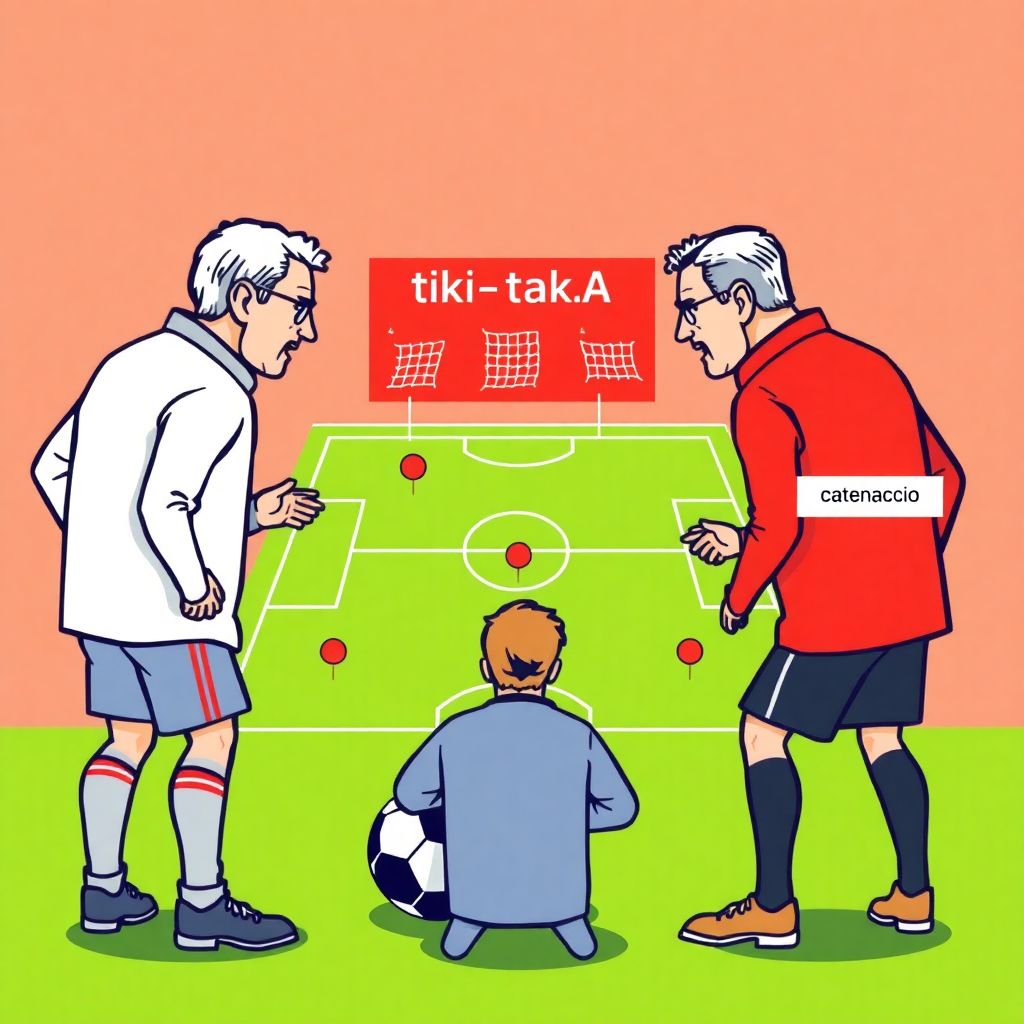
Tiki-taka, catenaccio and gegenpressing are not just tactical systems; they are three worldviews about control, risk and cooperation. The best choice for your team depends on budget, player profiles and club culture: tiki-taka for patient collective control, catenaccio for pragmatic solidity, gegenpressing for high-intensity collective aggression.
Essential insights summarized
- Tiki-taka expresses a belief in rational control through short passing, patience and positional occupation; it needs technically strong, intelligent players and stable club structures.
- Catenaccio reflects a cautious, risk-averse worldview that values compactness, defensive discipline and opportunistic attacking with minimal resources.
- Gegenpressing assumes chaos can be used as a weapon: lose the ball, attack immediately; it trusts collective effort and physical and mental intensity over pure technique.
- On limited budgets, simplified catenaccio or hybrid gegenpressing structures are usually easier to implement than full-positional tiki-taka.
- Each model demands a specific cognitive style: tiki-taka for anticipatory thinkers, catenaccio for disciplined executors, gegenpressing for fast decision-makers under stress.
- Choosing a system is a strategic decision, not just tactical: it shapes scouting, academy work, communication style and even which «libros sobre tácticas de fútbol tiki-taka catenaccio gegenpressing» your staff will prioritise.
Historical roots and ideological DNA of tiki-taka, catenaccio and gegenpressing
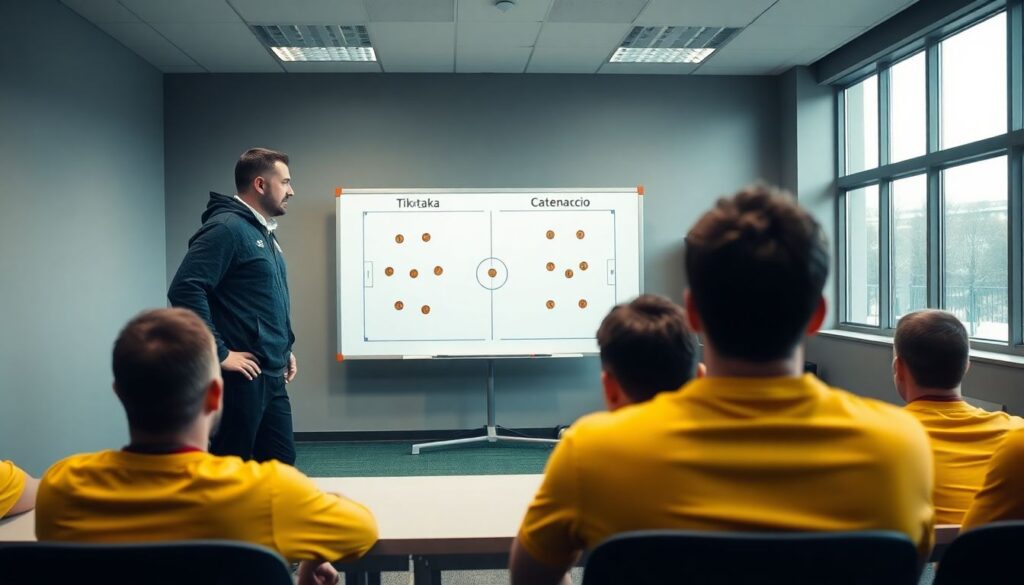
Use these criteria to decide which tactical worldview fits your club or project.
- Belief about control of the game: Is control something you build patiently (tiki-taka), protect by refusing space (catenaccio) or seize through pressing waves (gegenpressing)?
- Attitude to risk: Are you comfortable with long spells of sterile possession, deep defending near your box, or exposing space behind your back line while pressing?
- View of the ball: Is the ball a tool to rest and manipulate rivals (tiki-taka), a trigger to organise your block (catenaccio), or a pretext to attack transitions (gegenpressing)?
- Trust in individuals vs. collective: Do you rely on star decision-makers in tight spaces, on a perfectly organised back line, or on the collective synchronisation of the entire eleven?
- Time horizon for implementation: Can you afford seasons of construction (tiki-taka), months of drilling a compact block (catenaccio), or weeks to build pressing habits (gegenpressing)?
- Budget and market access: Do you have money for many technically gifted players, for a few high-level defenders and a finisher, or for athletic, aggressive profiles that are often cheaper?
- Club culture and fan expectations: Are supporters comfortable with patient circulation, low block suffering, or high-risk, high-energy chaos?
- Training and staff capacity: Can your coaches run complex positional games, detailed defensive shape work, or conditioning-heavy pressing sessions consistently?
- Long-term identity: Does your board want a play-style that can be used for academy-to-first-team alignment (often tiki-taka/gegenpressing) or that prioritises results over aesthetics (often catenaccio hybrids)?
How each tactic structures space, tempo and defensive risk
The table contrasts how tiki-taka, catenaccio and gegenpressing shape the pitch, tempo and risk management, with explicit guidance on who they fit and when to choose each one.
| Variant | Best suited for | Main advantages | Main drawbacks | When to prioritise this choice |
|---|---|---|---|---|
| Tiki-taka | Clubs with technically strong players, stable projects, and the ambition to control matches via the ball. Academies that want a unified philosophy. Useful reference for any curso online de táctica de fútbol y filosofía de juego. |
|
|
|
| Catenaccio | Resource-limited or underdog teams needing short-term solidity. Ideal when your best players are centre-backs, keeper and one or two transition threats. |
|
|
|
| Gegenpressing | Clubs with young, athletic squads and strong sports science support. Coaches attending a clínic de fútbol sobre estilos de juego y modelo táctico often choose this to maximise intensity. |
|
|
|
Typical player profiles and cognitive demands per system
Think beyond positions: these systems demand different mental software from your players.
- If you want to approximate tiki-taka on a modest budget, then prioritise players with excellent first touch and scanning, even if they are slower or weaker physically. Budget version: fewer specialists, more versatile midfielders; premium version: elite press-resistant pivots and creative interiors.
- If your squad is full of disciplined, tactically obedient players but lacks creative flair, then a catenaccio-based low block with clear triggers suits them. Budget version: basic 4-4-2 or 5-3-2 block; premium version: same structure plus a top-class counter-attacking striker.
- If you coach young, aggressive players comfortable sprinting and duelling, then a gegenpressing model can turn their energy into an advantage. Budget version: simple pressing cues and zonal references; premium version: detailed pressing traps and rotation patterns backed by performance staff.
- If you have one or two technically elite players but the rest of the team is average, then blend approaches: tiki-taka principles in specific zones (e.g., left side) with catenaccio compactness elsewhere, or gegenpressing only after controlled losses.
- If your long-term aim is a clear, unified academy-to-first-team pathway, then choose between tiki-taka or gegenpressing as core identity, because both translate well into structured training curricula and materials such as an análisis táctico profesional tiki-taka catenaccio gegenpressing or even a master en entrenamiento táctico y estrategia futbolística.
- If you have access mainly to experienced but slower veterans, then catenaccio-style compact defending with controlled rhythm may extract more value than asking them to press at gegenpressing intensity.
Budget realities: how finances and club organization influence tactical choices
- Clarify your financial level: can you consistently sign top technicians, only a few difference-makers, or mostly free transfers and academy graduates? Your honest answer narrows the realistic space between tiki-taka, catenaccio and gegenpressing.
- Evaluate staff and infrastructure: high-possession tiki-taka and intense gegenpressing both require specialised staff and support (analysis, fitness, medical). If you lack these, lean toward simpler structures like catenaccio or hybrid models.
- List your three most valuable players and what they do best. If they are central defenders and goalkeeper, prioritise catenaccio solidity; if they are agile midfielders, you can build tiki-taka zones; if they are runners and forwards, a gegenpressing transition game fits.
- Consider squad depth. Limited depth makes constant gegenpressing risky; prefer compact blocks plus selective pressing. Greater depth allows rotations and more aggressive systems over a long season.
- Forecast transfer windows: if you expect incremental budget growth, start with a pragmatic, catenaccio-influenced block and gradually add tiki-taka or gegenpressing layers as you upgrade profiles and staff.
- Align with board and fan patience: if results are demanded immediately on a low budget, choose the quickest-to-implement defensive structure. If the club accepts a multi-year identity project, a possession or pressing model can be built step by step.
- Integrate education: invest in internal workshops or a targeted curso online de táctica de fútbol y filosofía de juego so coaches at all levels understand the chosen worldview and can teach it coherently, saving money on constant staff changes.
Collective decision-making: information flows and shared mental models
Common mistakes when selecting and communicating your tactical worldview.
- Copying famous clubs without assessing whether your budget, player types and staff can sustain their version of tiki-taka, catenaccio or gegenpressing.
- Deciding style in isolation at first-team level, without involving academy staff, analysts and medical team in a shared picture of physical and cognitive demands.
- Underestimating communication: players need simple, repeatable language and visuals; relying only on tactical talks without complementary materials such as quality libros sobre tácticas de fútbol tiki-taka catenaccio gegenpressing or internal manuals weakens understanding.
- Ignoring context changes: keeping an ultra-high defensive line and gegenpressing model after injuries to key sprinters, or persisting with pure catenaccio after upgrading offensive talent.
- Mixing contradictory principles: asking for slow, patient tiki-taka in build-up and instant verticality in the same zones, or demanding low-risk catenaccio at the back but man-oriented high pressing with no cover.
- Failing to update «shared mental models» after staff changes: a new assistant coach adds drills that clash with the main philosophy, confusing players and blurring identity.
- Overcomplicating analysis: flooding players with data and videos from every clínic de fútbol sobre estilos de juego y modelo táctico attended by staff, instead of selecting a small number of core principles and repeating them.
- Not tracking learning: skipping systematic feedback loops after matches and training, so the team never converges on a stable model despite constant talking about style.
- Allowing short-term results anxiety to override long-term worldview, oscillating weekly between tiki-taka, catenaccio and gegenpressing identities.
From theory to training: practical drills, scouting priorities and match-day adaptations
For a control-oriented club with resources, tiki-taka is usually the best long-term identity; for underdogs or survival projects, catenaccio-based compactness offers the best risk-reward; for ambitious, energetic squads with medium budgets, gegenpressing often provides the clearest competitive edge and emotional connection with fans.
Concrete practical questions and short answers
Which of the three systems is fastest to implement at semi-pro level?
A catenaccio-style low or mid block with clear counter-attacking patterns is usually the fastest. Roles and distances are simple to explain, and you can start getting results while you refine details.
Can a low-budget team realistically play tiki-taka?
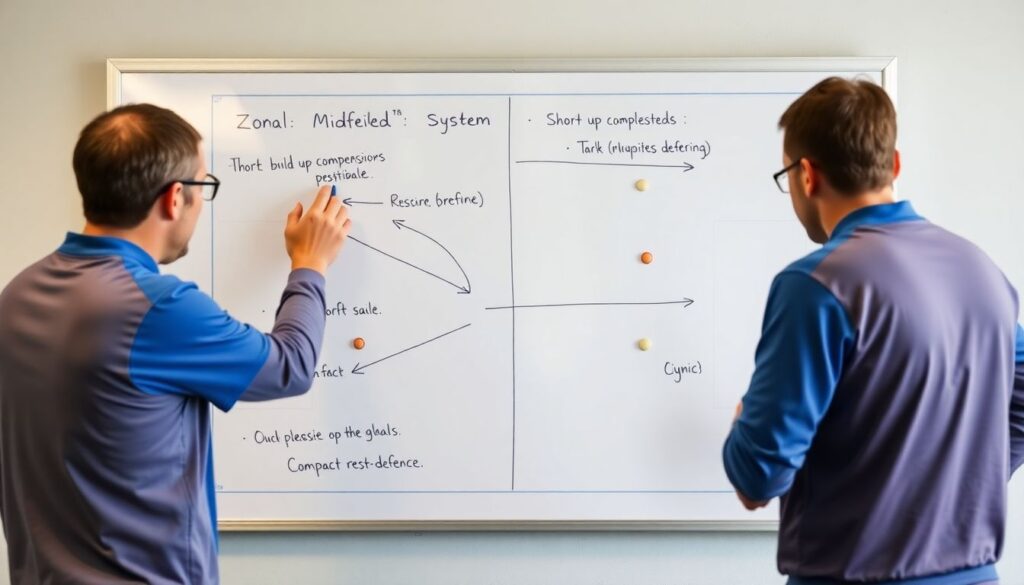
Yes, but only a simplified, zonal version and usually in specific areas of the pitch. Focus on technical midfielders, short build-up combinations and strong rest-defence, not on copying full elite-positional play structures.
How do I blend tiki-taka and gegenpressing without confusing players?
Define clear phases: in possession, prioritise short passing and positional structure; when the ball is lost, have two or three simple pressing triggers and recovery zones. Use repeated small-sided games to consolidate both behaviours.
What player type is non-negotiable for effective catenaccio?
You need at least one commanding central defender who organises the line and a disciplined holding midfielder who blocks passing lanes. Without those organisers, the block loses its compactness and clarity.
Is gegenpressing too risky for youth teams?
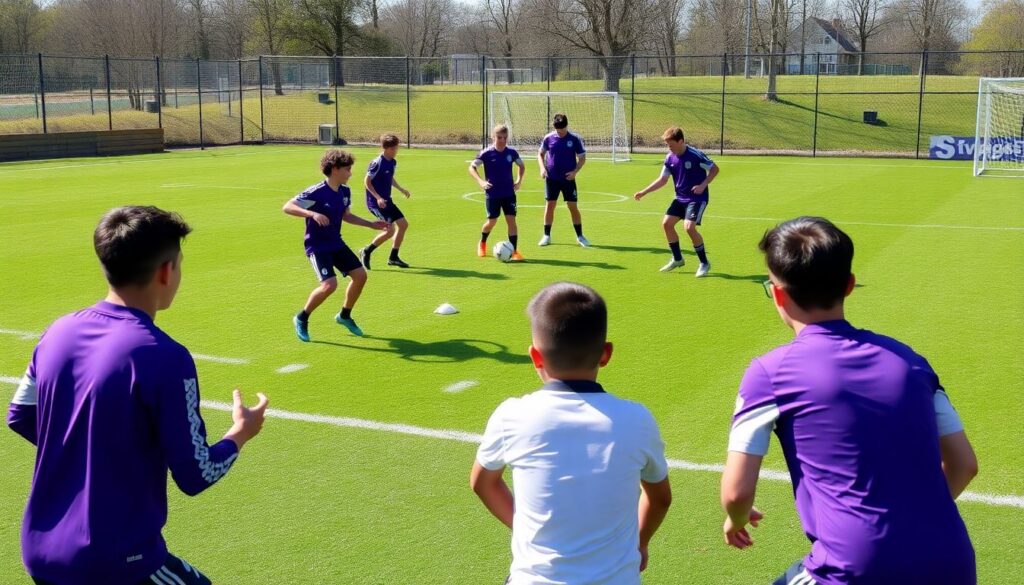
It is demanding but very educational if you manage load and distances. Start with shorter pressing windows and limited zones, and ensure proper recovery; used well, it teaches coordination, communication and transitional awareness.
How can I educate my staff around a chosen worldview?
Combine curated «libros sobre tácticas de fútbol tiki-taka catenaccio gegenpressing» with a focused internal playbook, plus periodic workshops or a targeted «master en entrenamiento táctico y estrategia futbolística» or similar online course aligned with your identity.
What is the minimum analysis level to make a good choice?
You should at least map your squad strengths, physical profiles, budget trajectory and league style, then compare them against the demands of each model. Even a basic written «análisis táctico profesional tiki-taka catenaccio gegenpressing» tailored to your context can prevent big mismatches.