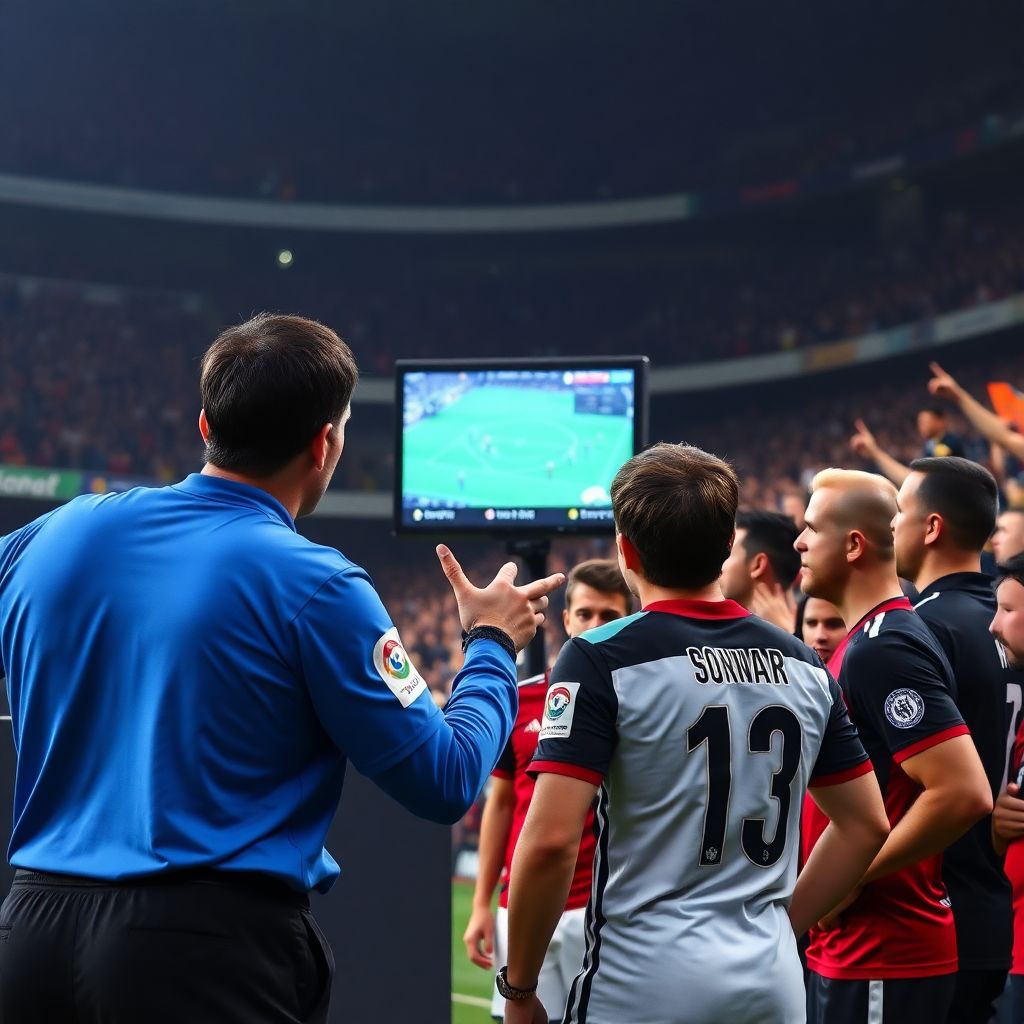
Video Assistant Referee (VAR) is a support system that helps football referees correct clear and obvious errors, not a machine that guarantees perfect justice. It reduces some mistakes and controversies but introduces delays, interpretation issues and new debates about fairness, especially around marginal offsides and subjective fouls or handballs.
Core conclusions about VAR’s promise and limits
- VAR is designed to correct clear and obvious errors in key situations, not to re-referee the entire match.
- The idea of perfect justice in sport is an illusion; VAR shifts and reshapes controversies rather than eliminating them.
- Technology is limited by camera angles, frame rates and human interpretation in the VAR room.
- Referees remain central; cognitive bias and pressure still influence how replays are chosen and interpreted.
- VAR improves some types of accuracy but can damage flow, emotion and the perceived spontaneity of football.
- Better protocols, communication and simple review algorithms can improve outcomes without chasing an unattainable perfection.
Common misconceptions about VAR and fairness
VAR in football is often sold as a tool that will finally deliver pure, objective justice. In reality, VAR only assists referees in a narrow set of incidents: goals, penalties, direct red cards and identity errors. It does not touch every foul, every duel, or every tactical detail.
A persistent myth is that more cameras and technology automatically mean fewer controversias del VAR en el fútbol profesional. Many disputes simply move from the pitch to the screen: was the contact enough for a penalty, is the arm in a natural position, who made the first foul in a messy situation?
Another common belief is that lines on the screen for offside are perfectly scientific. They are based on camera frames, which capture discrete moments, not continuous time. This makes some marginal decisions inherently uncertain, even before humans interpret them. The illusion of the perfect line creates an illusion of perfect justice.
Finally, people underestimate context and game flow. VAR does not evaluate if a decision fits the overall physicality or rhythm of the match. A rigid correction can feel «unfair» to players and fans, fuelling the ongoing debate sobre la justicia del VAR en el fútbol, even when the protocol is followed correctly.
How VAR technology actually works: processes and limits
- Continuous monitoring of the live feed
VAR officials watch multiple camera feeds in real time from a centralized room. They are trained to detect potential clear and obvious errors in the four reviewable categories, but cannot intervene in routine fouls or tactical decisions. - Check vs on-field review (OFR)
Every critical incident is automatically «checked» in the background. Only if VAR sees a possible clear error does it recommend an on-field review. Many checks finish silently, which shapes the VAR en el fútbol opinión as fans only notice the big, visible interventions. - Selection of camera angles and frames
VAR chooses the most relevant angles and replay speeds, especially for offsides and penalty-area incidents. This selection process is a human filter that can amplify or hide certain contacts, influencing the referee’s perception of intensity and intent. - Application of protocol thresholds
The key concept is «clear and obvious error». VAR must decide whether the original decision is so clearly wrong that intervention is justified. This threshold, not always well understood by fans, is crucial for limiting over-involvement. - Technical limits: frame rate and perspective
Offside lines are drawn based on frozen frames and estimated body points. Small time differences between frames can mean several centimetres of player movement. Angled cameras also distort distances. These constraints directly affect the impacto del VAR en la justicia arbitral. - Communication with the stadium
In many leagues, only minimal information reaches fans in the stands. Limited transparency about what is being checked and why reinforces confusion and negative VAR en el fútbol opinión, even when decisions are technically correct.
Human factors: referees, coaches and cognitive bias
VAR does not remove subjectivity; it redistributes it. Several human factors shape how the system works in practice and explain many controversias del VAR en el fútbol profesional.
- Confirmation bias in the VAR room
When the on-field referee makes a decision, VAR officials may unconsciously search for replays that confirm that call, rather than neutrally testing alternatives. This makes some errors survive the review process, especially in ambiguous situations. - Pressure from competition context
In high-stakes matches, VAR officials can become more risk-averse. They may avoid interventions that could be seen as «deciding» the game, or over-intervene to avoid criticism. The context subtly shifts the interpretation of the clear and obvious error standard. - Communication hierarchy
The on-field referee has final authority. Some referees tend to trust their initial feeling and resist changing decisions; others over-rely on VAR. Both patterns affect consistency and fuel the ongoing debate sobre la justicia del VAR en el fútbol. - Strategic behaviour by players and coaches
Actors adapt to VAR. Defenders raise hands to «invite» reviews, attackers exaggerate contact knowing that slow-motion replays can make minor fouls appear more serious. This gamesmanship modifies the ventajas y desventajas del VAR en el deporte in ways the original designers did not fully foresee. - Fan perception and narrative
Supporters remember decisions that harmed their team more vividly than those that helped. This selective memory means the public evaluation of the impacto del VAR en la justicia arbitral is heavily skewed by narrative and club identity.
Statistical evidence: does VAR reduce errors and controversy
Empirical analyses from different leagues suggest that VAR reduces some clear, objective errors but does not eliminate controversy. Interventions are more accurate for binary events (offside position) than for subjective judgments (fouls, handballs).
From the perspective of ventajas y desventajas del VAR en el deporte, it is useful to distinguish between what is gained and what is lost.
Improvements typically associated with VAR
- More correct offside decisions in goal situations, especially when attackers were clearly behind the defensive line.
- Correction of blatant missed penalties and red cards that were outside the referee’s field of view.
- Reduction of «ghost goals» where the ball crossed (or did not cross) the goal line, when combined with goal-line technology.
- Greater deterrence of violent conduct off the ball, knowing that cameras can detect it afterwards.
New or persistent problems that remain
- Long interruptions that break rhythm and damage the emotional intensity of goal celebrations.
- Marginal offside calls that are technically doubtful but decide crucial matches, feeding new controversias del VAR en el fútbol profesional.
- Inconsistent standards for contact in the penalty area between competitions, or even within the same league.
- Limited communication that leaves fans in the dark about the reasoning behind decisions, undermining trust.
Ethical trade-offs: consistency, transparency and game flow
Designing VAR is not only a technical challenge; it is an ethical and philosophical one. Football must decide what kind of justice it wants and which imperfections it is willing to tolerate.
- Consistency versus contextual judgment
Highly strict, consistent application of rules via VAR can clash with the traditional idea of refereeing that adjusts to match intensity. Pursuing maximum consistency may create decisions that feel intuitively unfair, even if technically correct. - Transparency versus simplicity
More explanations help fans understand rulings but can overload broadcasts and slow the game. Finding the right level of communication is central to improving the public VAR en el fútbol opinión without drowning viewers in protocol details. - Accuracy versus flow of the game
Frequent stoppages can make football more fragmented. Every additional check increases accuracy a bit but reduces spontaneity. Discussions about the impacto del VAR en la justicia arbitral must include these costs, not only the counting of corrected errors. - Equality versus spectacle
VAR can equalise opportunities by reducing arbitrary mistakes, but if fans feel that emotion and chaos are disappearing, they may value the system less, regardless of its technical benefits. - Responsibility versus blame shifting
Technology can become a convenient scapegoat. Blaming «the VAR» instead of specific human decisions hides the real accountability structure and feeds confused debate sobre la justicia del VAR en el fútbol.
Practical reforms: improving outcomes without chasing perfection
Instead of imagining that VAR can create perfect justice, competitions can focus on specific, realistic improvements: clearer protocols, quicker checks, better communication and structured review algorithms that guide decision-making in repeatable ways.
Example: simple algorithm for checking a potential goal
The following high-level algorithm illustrates how a goal situation could be reviewed to balance accuracy and game flow, without pretending to eliminate every possible injustice.
- Trigger event
The ball enters the goal and the referee initially awards or disallows it. VAR marks the situation for an automatic silent check. - Define review scope
VAR quickly identifies which of the four check types are relevant: (a) ball in/out, (b) offside, (c) attacking foul or handball, (d) mistaken identity. Irrelevant aspects are ignored to save time. - Set time and evidence limits
- Maximum review time (for example, internal target, not visible to fans).
- Minimum evidence rule: if clear proof is not found within that window, the on-field decision stands.
- Sequential checks
- Check whether the whole ball crossed the line or touched an illegal part of the arm before the goal.
- If necessary, check potential offside with calibrated lines.
- Finally, check any clear and obvious attacking foul immediately before the goal.
- Decision rule
If and only if there is clear and obvious visual evidence that the original decision is wrong in one of the reviewed aspects, VAR recommends a change. Otherwise, the on-field decision is confirmed. - Communication to stakeholders
The referee signals the final decision and, where regulations allow, briefly announces the main reason (for example: «Goal confirmed – onside» or «Goal cancelled – attacking handball»). This simple pattern, repeated consistently, can reduce confusion and soften some controversias del VAR en el fútbol profesional.
Practical answers to recurring doubts about VAR
Does VAR aim to make football perfectly fair?
No. VAR aims to reduce clear and obvious errors in specific key situations. Perfect fairness is impossible because many decisions remain subjective and the technology itself has limits. The goal is better justice, not perfect justice.
Why do offside decisions with VAR still feel unfair?
Marginal offsides depend on frame selection and body-point estimation, which introduce uncertainty. When goals are cancelled for very tight offsides, fans perceive this as excessive precision, feeding the ongoing debate sobre la justicia del VAR en el fútbol.
Why does VAR take so long in some matches?
Lengthy checks usually occur when multiple aspects (offside, potential foul, handball) overlap or when replays are inconclusive. Clear internal time targets and prioritised review algorithms can shorten these interruptions without removing essential checks.
Does VAR remove bias from refereeing?
It reduces some types of error but does not eliminate bias. VAR officials and referees are humans influenced by pressure, expectations and prior decisions. Technology can support, but not replace, human judgment and integrity.
Why are VAR decisions different between leagues?
Each competition can adapt protocols, thresholds and communication style. What counts as «clear and obvious» or «sufficient contact» may vary, which shapes public VAR en el fútbol opinión and perceived consistency.
Is football better with or without VAR?
The answer depends on how much you value corrected errors versus fluidity and emotion. VAR brings important benefits but also visible costs. Thoughtful reforms can improve the impacto del VAR en la justicia arbitral without expecting a perfectly just game.
Can VAR be switched off for minor competitions?
Yes, and many lower leagues play without VAR due to cost and infrastructure limits. This creates a structural difference in refereeing experience that should be acknowledged when comparing competitions.