
Football language turns matches into stories using metaphors, epic narratives and myths. It influences how fans judge players, clubs and rivalries, often more than statistics. Understanding these tools lets you speak and write about football with precision, avoid clichés and build powerful, memorable commentaries, chronicles and analyses.
Core Concepts of Football’s Rhetoric
- Metaphors frame football as war, theatre, religion or business, shaping how we feel and judge.
- Epic narratives transform seasons and careers into sagas with trials, falls and comebacks.
- Myths simplify history into founding stories, legendary nights and symbolic enemies.
- Media and commentary provide the grammar that repeats and stabilises these patterns.
- Language influences tactics discussion, fan identity and long-term collective memory.
- Conscious use of rhetoric improves writing, commentary and critical reading of football discourse.
How Metaphors Shape Match Perception
Metaphors are expressions that describe football using ideas from another domain: war, religion, cinema, family, economics. They are not decorative; they select what we pay attention to. When a match is a «battle», we focus on aggression. When it is a «chess game», we look for strategy and patience.
Consider «they killed the match after the goal». Literally false, but it guides interpretation: control, time-wasting, tactical fouls. Or «a poisoned cross»: the image directs us to danger, deception and surprise. These shortcuts save time in commentary but also hide alternative readings of the same play.
For anyone reading libros sobre lenguaje del fútbol y metáforas, the key is not collecting fancy phrases, but understanding how each choice pushes the audience towards certain emotions and judgements. War metaphors justify hardness and sacrifice; family metaphors («our boys», «the cantera kids») demand loyalty and patience.
- Ask: what metaphor am I using (war, religion, chess, theatre) and what does it highlight or hide?
- Replace an automatic cliché with a fresh, concrete image at least once per text or broadcast.
- When analysing others, note how one repeated metaphor changes your view of a player or club.
Epic Narratives: Crafting Career and Season Sagas
Epic narrative turns results into a saga: heroes, obstacles, betrayal, redemption. In football it structures biographies, documentaries and season reviews, whether in TV pieces, long reads or university work in a máster en comunicación deportiva y relatos épicos del fútbol.
-
Establish an initial normality.
«A quiet full‑back from a small Galician town…» The calm start makes later drama feel bigger.
-
Introduce a call to adventure.
Transfer, debut, promotion or injury. Example: «Everything changed the night he faced Barça at the Camp Nou.»
-
Highlight trials and crises.
Defeats, bench time, criticism. Use concrete scenes, not abstractions: a missed penalty, a hostile press conference.
-
Show transformation and learning.
Not just «he matured», but what changed: routines, relationships, position on the pitch, mentality in big games.
-
Build to a climax.
Final, decisive clásico, last matchday escape. Put the reader «inside» the key 90 minutes with sensory detail.
-
Close with a new balance.
Where is the player or club now? What remains unresolved? This avoids fairy‑tale endings and keeps credibility.
-
Thread a central theme.
For example «resilience», «betrayal» or «belonging». Repeat it subtly through quotes and images instead of naming it didactically.
If you take cursos de periodismo deportivo y narrativa futbolística you will see this same skeleton in most quality reports and documentaries: it is not improvisation, but conscious structure.
- Define in one sentence the epic theme of your piece before writing («from promise to leader», «from chaos to order»).
- Pick 3-5 key scenes that show that theme in action and write around them, not around every match.
- Avoid ending with pure statistics; finish on an image, gesture or phrase that sums up the journey.
Mechanisms of Myth-making in Clubs and Nations
Myths are stories that explain «who we are» as fans of a club or a national team. They mix fact and interpretation and are repeated until they become common sense. They are central in many ensayos y análisis del discurso futbolístico para comprar because they organise whole cultures of support.
-
Founding stories.
The legendary beginning: a group of workers, students, immigrants. Often simplified and cleaned of conflict to offer a pure origin.
-
Glorious nights and sacred defeats.
Certain matches become more than results: comebacks, finals lost «with honour», victories against political rivals. They are retold with stable phrases and scenes.
-
Chosen heroes and traitors.
Players who «embody» values of the club or nation, and others converted into symbols of betrayal (signing for a rival, controversial mistakes).
-
Oppositions with rivals.
Derbies and clásicos are narrated as battles of styles, social classes or identities, even if real differences are smaller.
-
Institutional repetition.
Clubs, federations and media repeat certain slogans in campaigns, museum texts and anniversary acts, solidifying the myth.
-
Selective forgetting.
Episodes that do not fit the myth (corruption, hooliganism, discrimination) are reduced to footnotes or individual «bad apples».
Reading libros sobre mitos y narrativa épica en el fútbol helps to detect these operations and to decide when to reproduce them and when to question them in your own work.
- Identify 2-3 recurring phrases about a club or national team and ask what they hide or simplify.
- In your texts, signal clearly when something belongs to myth («the legend says…») vs verifiable facts.
- Balance emotional resonance with minimal historical accuracy to avoid empty propaganda.
Tropes and Archetypes: Heroes, Villains and Antiheroes
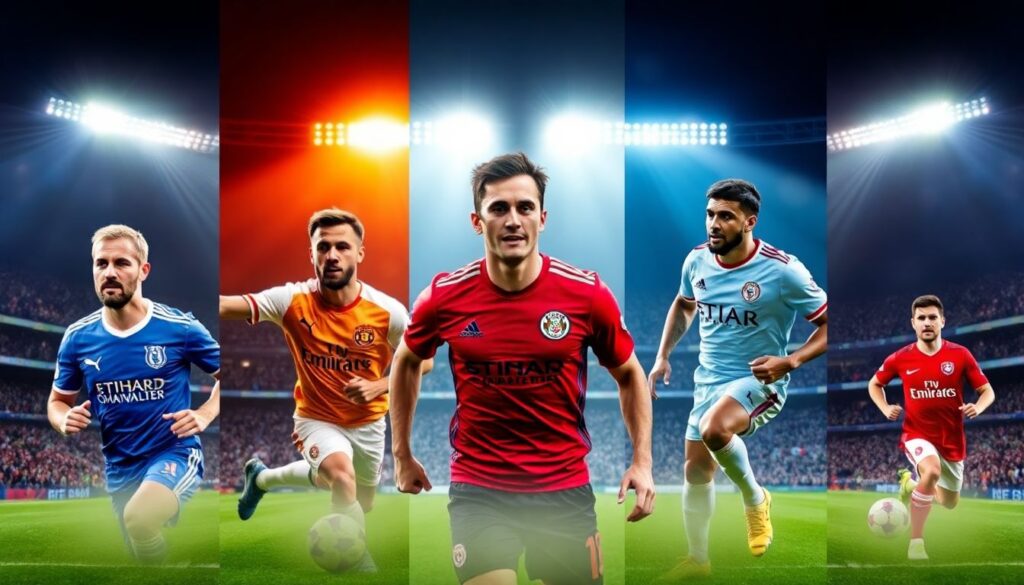
Tropes are recurring narrative devices; archetypes are character models that audiences instantly recognise. In football, we constantly recycle figures like the «local boy who makes good», the «luxury mercenary», the «loyal captain» or the «eternal promise», because they simplify complex careers into digestible images.
Language marks archetypes: «warrior», «genius», «brain», «artist», «killer». Calling a striker an «assassin in the box» praises his effectiveness but also normalises violence metaphors. Presenting a coach as a «professor» dignifies tactical intelligence but may position him as distant or arrogant.
Benefits of using tropes and archetypes

- Offer quick orientation to readers and listeners who do not know all details of a player or club.
- Create emotional hooks that make stories more memorable and easier to retell.
- Provide narrative contrast in large casts: hero vs villain, romantic vs pragmatic coach.
- Connect individual careers with wider cultural stories (self‑made man, rebel, martyr, saviour).
Limitations and risks of overusing them
- Reduce people to stereotypes that ignore context, growth and contradictions.
- Encourage moralising analyses («good guy/bad guy») instead of tactical or structural explanation.
- Can reproduce biases about race, class or nationality under a supposedly neutral football story.
- Make your writing predictable if you always assign the same roles (e.g., «bad boy talent») to similar profiles.
- Before labelling a player, test if the archetype really fits their full story or just one media moment.
- Alternate classic tropes with more nuanced portraits that show contradictions.
- Quote the person’s own words to complicate or challenge the simple role you describe.
Commentary, Media and the Grammar of Excitement
Spoken commentary and headlines use a specific grammar to keep tension high: short phrases, verbs in the present, hyperbole and repetition. A normal shot becomes «he’s going to hit it… he hits it… GOAL!» instead of «he shot and scored». This pattern turns any action into a mini‑climax.
For journalists and students, including those in cursos de periodismo deportivo y narrativa futbolística, it is crucial to distinguish necessary intensity from empty noise. The goal is to guide attention, not to shout all the time.
-
Everything is treated as historic.
Calling every match «the game of the century» or every player «legend» devalues truly exceptional moments.
-
Overuse of war and disaster terms.
«Tragedy», «humiliation», «massacre» for normal defeats can feel disrespectful and distort proportions.
-
Confusing speed with clarity.
Speaking faster and louder does not equal better commentary; concrete verbs and precise detail are more effective.
-
Copy‑pasted formulas.
Repeating the same catchphrases from famous commentators without adapting them to context sounds artificial.
-
Mixing analysis and fan talk.
In professional contexts, emotional outbursts must be balanced with tactical or contextual information.
Many libros sobre lenguaje del fútbol y metáforas and training programmes show how a varied «grammar of excitement» can sustain interest without permanent shouting.
- Reserve superlatives for truly rare events; describe the rest with specific, concrete language.
- Alternate fast, emotional segments with brief analytical pauses to help the audience digest.
- Review your own recordings and mark moments where intensity adds vs where it distracts.
Language Effects on Tactics, Fans and Collective Memory
Words change how we see tactics. Calling a coach «defensive» or «cowardly» for using a low block frames a legitimate strategy as moral failure. Saying a team «parks the bus» simplifies a complex organisation into mere passivity, and fans adopt this lens for months or years.
Mini‑case from Spanish football:
Imagine a team that plays with intense pressing but loses several big games. Two narratives appear:
- «Naive romanticism»: «They die with their idea», «They refuse to grow up».
- «Brave project»: «They stay faithful to a philosophy», «They educate the fans».
Both describe the same tactical behaviour; what changes is evaluation. The second narrative may protect the coach longer and shape how future generations remember this period. This is precisely the kind of mechanism studied in máster en comunicación deportiva y relatos épicos del fútbol and in many ensayos y análisis del discurso futbolístico para comprar.
The same happens with clubs’ historical image: a few key phrases repeated by media, official channels and libros sobre mitos y narrativa épica en el fútbol end up defining what «everyone knows» about a style or identity, even when current data contradicts it.
- When judging tactics, separate aesthetic preference («I dislike low blocks») from moral judgement («it is cowardly»).
- Ask: which 3 phrases are currently defining this team or coach in the media, and are they fair?
- In your own work, document at least one concrete action or match for each big label you use.
Self-check for Using Football Language Consciously
- Can you explain the main metaphor or narrative of your text in one simple sentence?
- Have you avoided automatic clichés where a clearer, more concrete phrase was possible?
- Do your descriptions distinguish between fact, interpretation and myth?
- Have you balanced emotion and analysis according to your medium and audience?
- Would your piece still make sense to a reader who did not watch the match?
Practical Clarifications on Terminology and Usage
What is the difference between metaphor and cliché in football language?
A metaphor is any expression that explains football through another domain («war», «theatre», «religion»). A cliché is a metaphor repeated so often that it loses freshness and precision. You can reuse clichés, but it is better to adapt or renew them for your context.
Are epic narratives always exaggerated or manipulative?
Not necessarily. Epic structure simply organises events as a journey with trials and change. It becomes manipulative when it hides important facts, erases responsibility or turns every detail into heroism. Used carefully, it helps readers follow long careers or seasons without getting lost.
How can I study this topic beyond basic articles and blogs?
You can look for specialised libros sobre lenguaje del fútbol y metáforas, academic or journalistic ensayos y análisis del discurso futbolístico para comprar, and university or private cursos de periodismo deportivo y narrativa futbolística that include rhetoric, storytelling and media analysis.
Is myth-making in football always a bad thing?
Myths can be positive when they give identity, continuity and shared meaning to fans. They become problematic when they justify violence, intolerance or denial of facts. The key is to recognise when you are inside a myth and decide consciously whether to reinforce or question it.
How can a beginner avoid overdramatizing in commentary?
Prepare a varied list of verbs and adjectives before the match, avoid using war or disaster terms for normal plays, and reserve superlatives for truly exceptional actions. Listening back to your recordings and marking unnecessary exaggerations is the fastest way to adjust your tone.
Does this analysis apply to women’s football in the same way?
Yes, but with important nuances. Women’s football often receives narratives about «pioneers» and «fight for recognition», and comparisons with men’s football. It is vital to detect when these frames support growth and when they reduce players to symbols instead of full professionals.
What practical benefit do I get from all this as a fan or amateur writer?
You gain vocabulary, structure and critical distance. This lets you write clearer match reports, create more engaging podcasts or blogs, and enjoy media content with more awareness of how language is guiding your emotions and opinions.