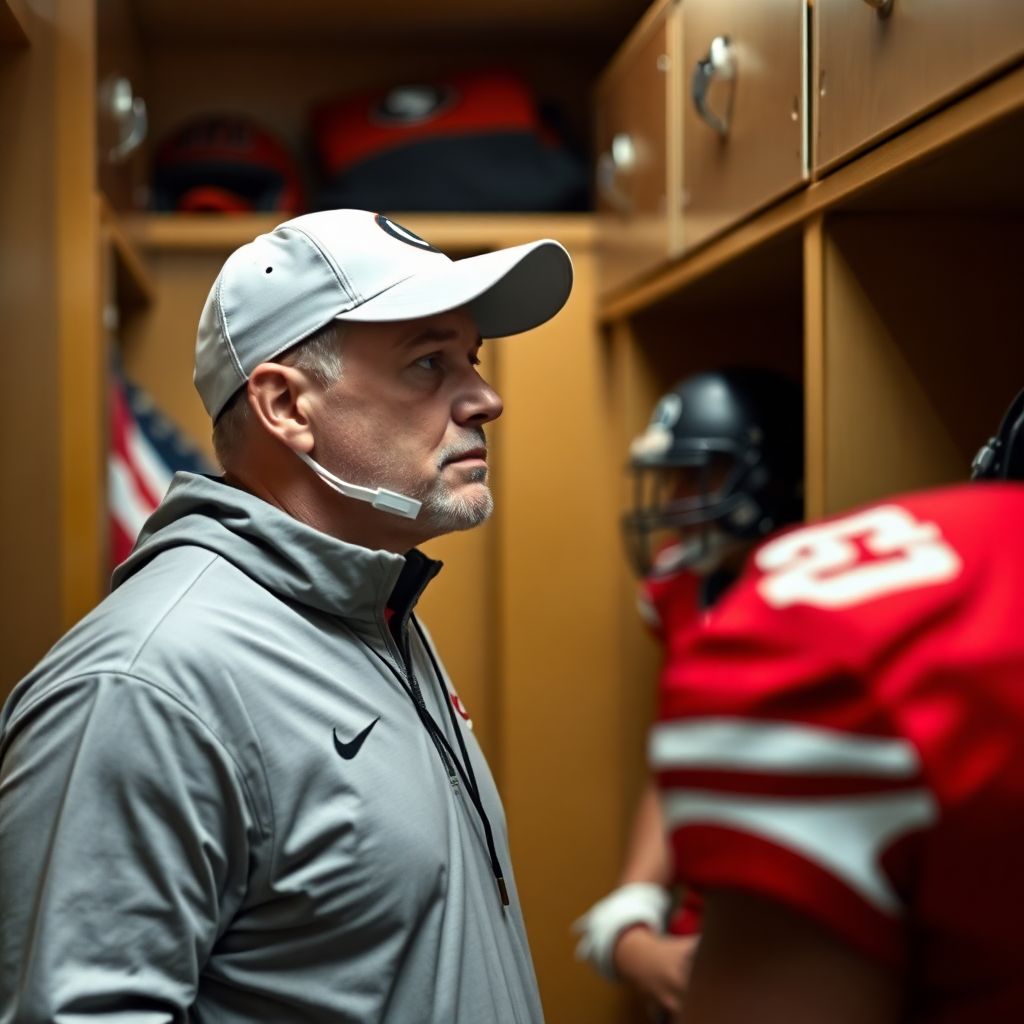
The coach-philosopher is a coach who uses reflection, questions and ethical criteria to guide training, competition and locker-room life. Their role is not to be a guru, but to help players think better, act more responsibly and find meaning in what they do, even in modest, low-budget contexts.
Core propositions of the coach-philosopher
- The coach-philosopher leads by questions and principles, not by slogans or charisma.
- Ethics, team culture and performance are treated as connected, not separate topics.
- Meaning-making in the locker room is part of the training process, not decoration.
- Authority is exercised transparently and with accountability to players and staff.
- Reflection is embedded in daily routines, not added as a rare «motivational talk».
- Limited resources are compensated with clarity of values, shared rules and co-created habits.
Debunking common myths about the coach-philosopher
Myth 1: the coach-philosopher is a kind of mystical guru who speaks in riddles. In reality, this role is very practical: it focuses on how decisions are made, how rules are justified and how the team understands success, failure and responsibility.
Myth 2: only big professional clubs with sports psychologists can afford such a profile. At amateur and semi-professional levels in Spain, a coach can cover much of this role using free resources, shared reflection moments and basic tools you might already find in a curso liderazgo deportivo para entrenadores.
Myth 3: philosophy in football is just a tactical model or a style of play. A true coach-philosopher goes beyond formations. They ask why we play this way, what we refuse to do even if it «works», and how players grow as people through the demands of the season.
Myth 4: philosophical leadership is soft and incompatible with competitiveness. The opposite is more accurate: clear values and coherent decisions reduce noise, excuses and internal conflicts, freeing energy for performance. Tough decisions are still made, but with explicit criteria the group can understand and discuss.
What the coach-philosopher actually is: functions and boundaries
Myth to address: the coach-philosopher replaces psychologists, educators and even the club director. This is an exaggeration. The role has clear functions and also clear limits.
- Guardian of meaning: connects daily drills, rotations and tactical plans with long-term purpose, so players know why their effort matters beyond the next match.
- Ethical filter for decisions: helps define non-negotiables (respect, fairness, transparency) and checks key decisions against these standards, especially in selection and discipline.
- Facilitator of dialogue: structures conversations where players can express concerns, negotiate roles and question habits without fear of ridicule or revenge.
- Shaper of team narratives: works on how the team talks about itself: from «we are unlucky» to «we take responsibility for our reactions», from victim language to agency language.
- Model of reflective practice: shows how a leader admits mistakes, updates strategies and learns publicly, instead of pretending infallibility.
- Boundary keeper: knows when to refer a player to a specialist (psychologist, doctor, social worker) and does not improvise therapy or medical advice.
- Integrator of low-cost resources: uses team discussions, simple reading circles and video reviews instead of expensive programmes, similar in spirit to a compact master coaching deportivo y liderazgo but adapted to local reality.
Micro-practices / diagnostic questions
- What are our three non-negotiable principles, and can every player explain them in their own words?
- When I take a tough decision, do I explain the reasoning, or do I hide behind «because I am the coach»?
- Do I have a clear line beyond which I send players to qualified professionals?
Leadership through inquiry: methods that foster autonomy and trust
Myth to address: good leaders always give answers quickly. The coach-philosopher deliberately uses questions to build autonomy, not dependence.
-
Post-training reflective circles
After selected sessions, invite 5-10 minutes where players respond to two questions: «What worked?» and «What do we change next time?». This shapes a culture where players own the process, instead of waiting passively for feedback. -
Guided video review
Instead of lecturing over clips, ask players what they see, what options they had and what principle was at stake (e.g. solidarity, courage, patience). Even teams with zero analysis budget can do this using phone video and a laptop. -
Role-clarifying one‑to‑ones
Short individual conversations where the coach asks: «What do you think your role is?», «What do you need from me?» and «What can the team expect from you when things go wrong?». This reduces misunderstandings and builds trust. -
Captains as co-questioners
Train captains to use open questions in huddles and at half-time: «What are we missing?», «Who needs support right now?». This distributes leadership and gives voice to younger players. -
Low-resource learning groups
Once a month, create tiny groups (3-4 players) that discuss a short story, article or video related to effort, justice or team spirit. This can be done with material from free blogs or excerpts from libros de liderazgo y filosofía para entrenadores de fútbol.
Micro-practices / diagnostic questions
- In the last week, did I ask more open questions than closed commands during training?
- Can my captains name at least three good questions to use in a difficult moment?
- How often do players propose adjustments before I speak?
Ethics in practice: navigating fairness, responsibility and power
Myth to address: ethics is a theoretical topic, separate from «real football». In practice, most conflicts in teams are about perceived injustice, broken promises or abuse of power, not about tactics.
A coach-philosopher turns ethical principles into concrete, shared procedures that structure daily life in the club. This can be supported by formal formación ética profesional para entrenadores, but also by self-study and peer discussion when budgets are tight.
- Benefits of explicit ethical leadership
- More transparent selection and rotation criteria, reducing rumours and resentment in the locker room.
- Clear, proportional disciplinary processes that protect both the group and individual dignity.
- Trust that the coach will not use information or emotions against players.
- Stronger alignment between club values, coaching behaviours and youth development goals.
- Better handling of conflicts with parents, agents or directors, guided by principles rather than fear.
- Limitations and risks to recognise
- Ethical reflection does not remove all conflicts; it only gives better ways to face them.
- Too much moralising can sound hypocritical if the coach’s own behaviour is inconsistent.
- Time pressure (two matches per week, travel, jobs) may limit formal sessions; ethics then must be embedded in micro-interactions.
- Without support from the club structure, some ethical stands may cost results or even the job.
Micro-practices / diagnostic questions
- Do my players know how and when they can challenge a decision or raise a concern?
- Can I explain a controversial decision using our stated principles, not just convenience?
- Have I ever admitted to the group that I treated someone unfairly and corrected it?
Making meaning in the locker room: rituals, narratives and culture work
Myth to address: team «chemistry» appears naturally if the squad is talented. In reality, culture is always being built-either intentionally or by default. The coach-philosopher works consciously with rituals and stories that give weight to daily actions.
- Mistake: copying elite rituals without context
Imitating famous club routines or slogans that do not fit your level, history or community. This feels artificial and players quickly disengage. Instead, co-create simple, authentic routines that reflect your actual reality. - Misconception: rituals are about superstition
A pre-match circle, a shared gesture after goals or a weekly recognition moment are not magic tricks. They are anchors that remind the team who they are and how they want to behave, especially under pressure. - Trap: heroic narratives centred only on the coach
When every story is «how I won» or «what I did in my career», players remain spectators. Good culture work multiplies protagonists: captains, veterans, staff, even kit managers and volunteers. - Overload: too many speeches, no listening
Constant motivational talks can become noise. Short, well-timed interventions combined with spaces where players speak and reinterpret the season’s story are more powerful. - Neglect: ignoring the silent players
Some footballers rarely speak but strongly influence the locker room mood. The coach-philosopher seeks them out, listens and invites their perspective into team narratives.
When resources are limited, meaning-making work may be as simple as a five-minute end-of-week circle, a shared object that symbolises team identity or using free stories and videos instead of hiring an external culture consultant.
Micro-practices / diagnostic questions
- What two or three rituals actually matter to this team, and why?
- Whose stories are told most often in our locker room-and whose are missing?
- If a new player arrived today, how long would it take them to understand «how we do things here»?
Evaluating philosophical coaching: practical indicators and feedback loops
Myth to address: philosophical coaching is impossible to measure. While you cannot reduce it to a single number, you can observe concrete patterns in behaviour, language and decision-making over time.
Useful indicators include how players handle setbacks, whether conflicts escalate or are contained, how consistently values guide behaviour, and whether leaders at different levels (captains, staff, senior players) reproduce reflective habits, not just the coach’s slogans.
Even without money for formal evaluation, a coach can create simple feedback loops. For example, using basic tools taught in a posgrado psicología del deporte y gestión de vestuario, you can adapt anonymous questionnaires or structured debriefs to your own dressing room.
Mini-case: a season-long feedback loop
Imagine a regional-level football team in Spain with no budget for psychologists. The head coach decides to act as a coach-philosopher in a modest, disciplined way:
- Pre-season baseline: at the first meeting, players answer three anonymous questions on paper: «What do you fear this season?», «What do you hope for?», «What behaviour would make you want to leave the team?». The coach summarises themes and shares them back.
- Mid-season check: in January, the team holds a 30-minute meeting. Players rate from 1-5 how well the team lives up to its principles and give one example of progress and one of regression. The coach listens, clarifies, and together they agree one habit to change.
- End-season reflection: after the last match, the same questions as pre-season are repeated. The squad compares answers and identifies which fears were reduced, which hopes were met and which behaviours must change next year.
Over one season, this low-cost process usually transforms how the group talks about responsibility, fairness and effort. Even if results are average, players often report feeling more heard and clearer about expectations.
Micro-practices / diagnostic questions
- What two behavioural indicators would show that our culture is improving (or deteriorating)?
- How often do I collect structured feedback from players, not just casual comments?
- Do I close the loop by communicating what will change as a result of their feedback?
Practical clarifications for coaches and staff
Is the coach-philosopher a separate staff role or a way of coaching?
In most clubs, especially with limited budgets, it is a way of coaching, not a separate job title. The head coach or an assistant integrates philosophical and ethical reflection into normal tasks.
Do I need formal studies to act as a coach-philosopher?
Formal study helps, but it is not mandatory. Courses like a master coaching deportivo y liderazgo or short ethics programmes are useful; however, you can start with self-reflection, peer dialogue and free educational materials.
How is this different from sports psychology?
Sports psychology focuses on mental skills and well-being. The coach-philosopher focuses on meaning, values, power and responsibility in daily decisions. Both overlap and can complement each other, but they are not identical.
Can I apply these ideas with youth teams?
Yes. With young players you simplify language and use stories, games and short questions instead of long debates. The core remains: help them think, decide and take responsibility, appropriate to their age.
What if my club leadership does not support this approach?
You still control how you speak, how you decide and how you treat people. Start with small, low-visibility practices that improve communication and fairness. If the club later sees benefits, you can propose a more explicit framework.
How much time per week should I dedicate to this?
There is no fixed number. Many coaches start with 10-15 minutes per week for structured reflection and gradually embed questioning and ethical language into every session, so it does not feel like an extra block of work.
What resources do you recommend if I have almost no budget?
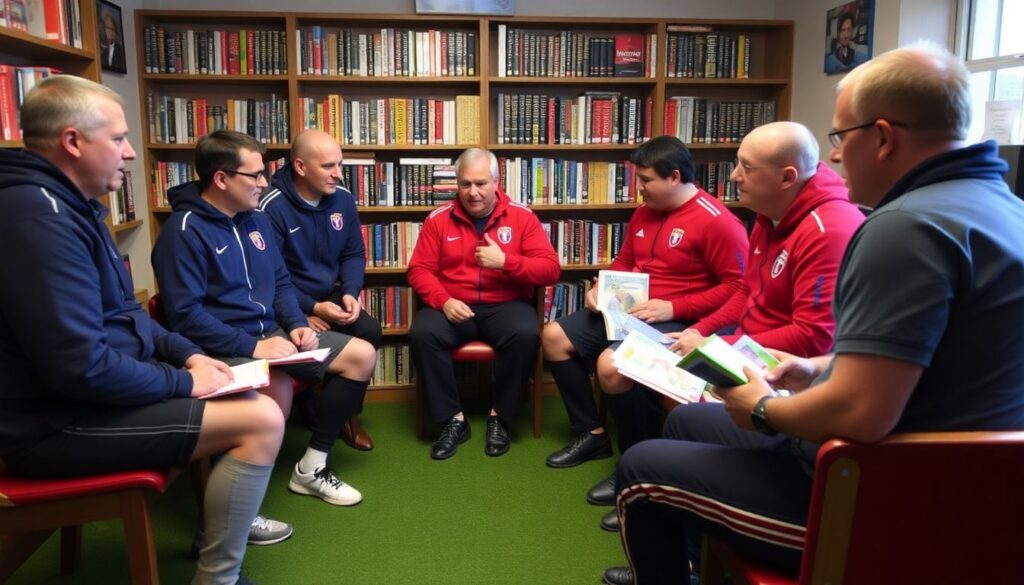
Use free articles, podcasts and public talks, and discuss them briefly with your players. Borrow or share libros de liderazgo y filosofía para entrenadores de fútbol with colleagues and build a mini-library in the club over time.