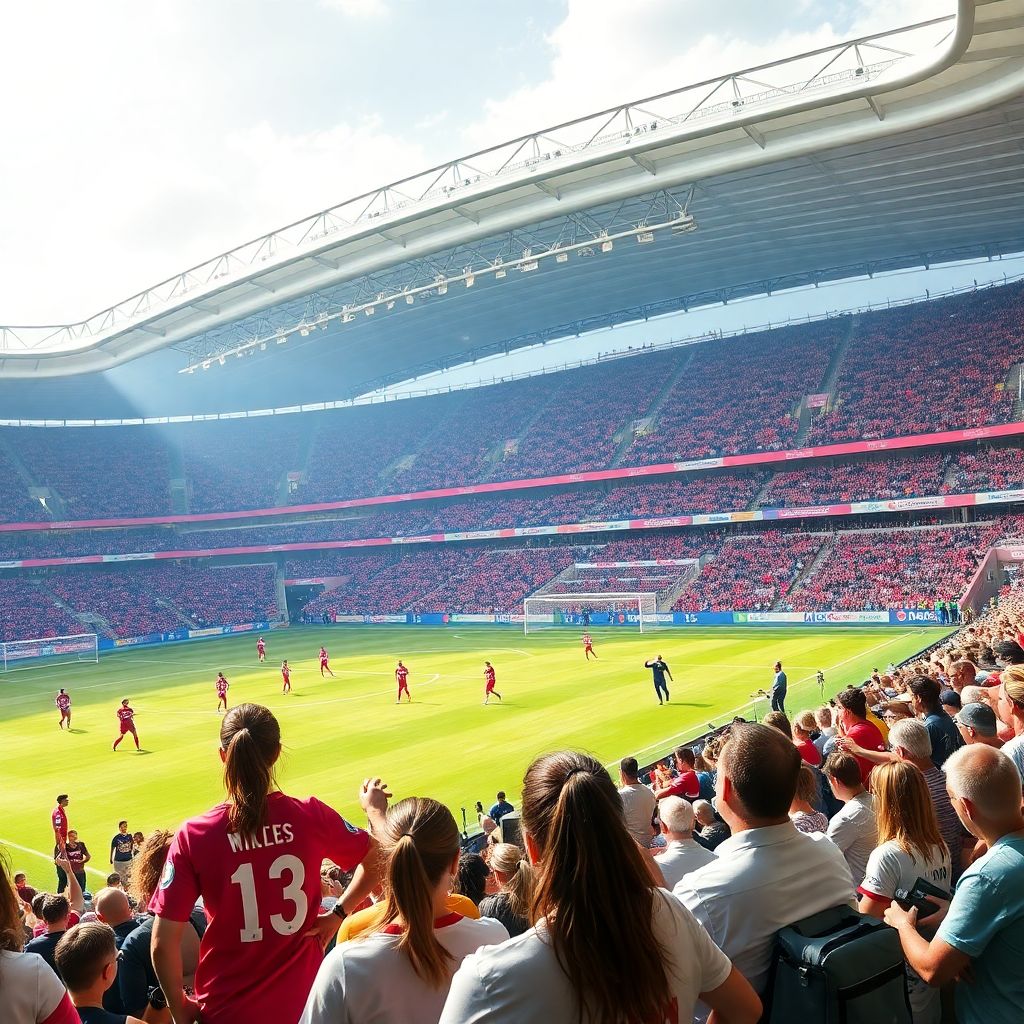
Women’s football’s shift from historical invisibility to challenging the patriarchal model means treating it not as a secondary product, but as a full ecosystem: players, fans, economics, media and rules. Practically, this implies changing how clubs invest, how federations regulate, how broadcasters program and how everyday fans consume the women’s game.
Core Concepts: Gender, Visibility and Institutional Barriers
- Women’s football has a long history, but institutional bans and neglect erased its visibility and continuity.
- The patriarchal model treats men’s football as the norm and women’s football as an exception or add‑on.
- Media practices, scheduling and marketing build or block public perception and demand.
- Economic structures (contracts, sponsorship, prize money) reproduce or reduce gender gaps.
- Policies, governance and legal tools can force minimum standards but rarely change culture on their own.
- Grassroots systems (schools, clubs, academies) determine who can even access the pathway to professionalism.
- Practical change requires synchronised action by clubs, federations, public authorities, brands and fans.
Historical Roots of Women’s Football and Systemic Erasure

Women’s football is not a recent trend; it has existed almost as long as the men’s game. What differentiates it is not a lack of interest or quality, but a century of bans, marginalisation and under‑investment. This produced a broken historical memory and the repeated idea that women’s football is always «starting from zero».
Systemic erasure happened through three main mechanisms. First, direct prohibition by federations and states, often framed as «protecting» women’s health or morality. Second, spatial exclusion: women pushed out of main stadiums and prime time into secondary pitches and invisible time slots. Third, archival neglect: newspapers, federations and clubs simply did not record or preserved women’s competitions.
This erasure matters today because it shapes narratives. When people ask why there are fewer spectators or why professionalisation is more recent, the historical answer is: because access and visibility were actively blocked. For an audience in Spain, this means reading present debates about salaries, stadiums or televisión not as generosity towards a «new» product, but as partial repair of a long structural inequality.
Cultural Narratives, Media Practices and Public Perception
Cultural narratives and media routines translate patriarchy into everyday football practices. They are less visible than bans, but just as powerful in shaping what fans think is «normal» or «valuable». Key mechanisms include:
- Framing as derivative or secondary: women’s football is presented as «the female version» of «real» football, with reduced coverage and infantilising language.
- Unequal storytelling depth: men’s teams receive tactical analysis, history pieces and transfer sagas; women’s teams get occasional feel‑good stories, often focused on sacrifice and personal life.
- Scheduling and platform hierarchy: men’s matches dominate prime time and main channels, while fans must search dónde ver fútbol femenino en vivo streaming on secondary platforms or irregular schedules.
- Commercial signalling: massive campaigns around kits and sponsorships for men’s teams, while camisetas oficiales fútbol femenino comprar online is often limited to a few models, restricted sizes or late releases.
- Language and commentary bias: commentators over‑emphasise «surprise» at quality, compare constantly to men and focus more on errors, reinforcing the idea of lower standard.
- Fan‑culture gatekeeping: some ultras or traditional fan groups police who is a «real» fan or player, mocking attendance, chanting sexist songs or trivialising competitions.
- Betting and statistics visibility: apuestas deportivas fútbol femenino ligas europeas receive less analytical content, odds breakdowns and data visualisation, implicitly signalling a secondary status to data‑driven fans.
These mechanisms combine: if a match is hard to find on TV, barely analysed and surrounded by messaging that it is a «lesser» product, many potential fans interpret low visibility as low relevance rather than as the result of structural decisions.
Economic Structures: Funding, Sponsorship and Professional Pathways
Economics is where the patriarchal model becomes very concrete: contracts, facilities, salaries, travel, nutrition and staffing. Even when a league in Spain is declared «professional», patriarchal logics can persist in how money is generated, distributed and justified.
- Club budgets and internal hierarchies
Women’s sections are often funded as a cost centre attached to the men’s brand. Marketing, ticketing and commercial departments may not set explicit goals for fútbol femenino entradas partidos hoy, assuming low demand instead of testing pricing, family offers or member campaigns. - Broadcast and streaming deals
Rights fees and production standards influence perception. If cameras, commentary teams and graphics are minimal, the product looks «amateur». When fans must navigate multiple platforms to locate dónde ver fútbol femenino en vivo streaming, casual audiences drop off quickly. - Sponsorship and merchandising
Brands test the market through small deals, but the lack of stock, poor visibility on club shops and late availability of camisetas oficiales fútbol femenino comprar online suppress real demand. It becomes a self‑fulfilling prophecy: low offer confirms the belief in low interest. - Player contracts and career security
Short‑term deals, part‑time contracts and limited social security rights keep many players in precarious conditions. This directly affects performance, injury recovery and long‑term planning, especially in leagues undergoing recent professionalisation. - Data, betting markets and analytics
More sophisticated apuestas deportivas fútbol femenino ligas europeas require robust statistics, scouting and media analysis. When these are under‑developed, an important revenue and attention channel (data‑driven fandom) remains underused. - Pathway from grassroots to elite
Without predictable scholarships, semi‑professional tiers and solid second divisions, many players drop out at university age. Economic fragility limits the available pool for top clubs and national teams.
Mini‑scenarios: Applying the Concepts in Everyday Decisions
To move from critique to practice, it helps to visualise concrete scenarios for Spanish and European stakeholders:
- Club ticketing manager in La Liga F: Instead of assuming low demand, the manager tests two home games with targeted campaigns: pack familiar, school collaborations and dynamic pricing. They track which segments respond to fútbol femenino entradas partidos hoy promotions and share data internally.
- Local council in a medium‑size Spanish city: The council negotiates with professional clubs and escuelas de fútbol femenino academias profesionales to ensure equal training slots on quality pitches, public transport access and visible signage around the stadium on match days.
- Broadcaster launching a women’s football vertical: The channel integrates dónde ver fútbol femenino en vivo streaming information into general football listings, uses the same graphics package as for men’s games and assigns recognised commentators, signalling equal editorial status.
- Retail director of a major club: The director aligns the release of camisetas oficiales fútbol femenino comprar online with the men’s launch, ensures full size ranges and creates Autoras de Historia storytelling around players to drive both identity and sales.
Policy, Governance and Legal Instruments Shaping the Game
Policies and governance frameworks translate social pressure into rules. In Spain and across Europe, professionalisation of top women’s leagues, collective bargaining, equal‑opportunity laws and federation regulations are slowly reshaping the field. Yet these tools operate inside broader football power structures, which remain largely male‑dominated.
Regulatory and Policy Advantages
- Minimum standards enforcement: Regulations can require contracts, medical coverage, maternity protections and basic workplace rights that individual clubs might otherwise postpone.
- Facilities and scheduling rules: Federations or leagues can mandate that women’s teams have access to main stadiums for key fixtures, and that league calendars avoid constant clashes with major men’s matches.
- Financial transparency: Governance frameworks can oblige clubs to report budget allocations to women’s sections, helping detect discriminatory patterns.
- Anti‑discrimination and safeguarding: Legal instruments can address harassment, abuse and sexist chants, establishing clear sanctions for fans, staff and institutions.
- Incentives for youth and academies: Licensing rules can link men’s professional status to investment in escuelas de fútbol femenino academias profesionales or community programmes for girls.
Structural Constraints and Blind Spots
- Token compliance without cultural change: Clubs can meet the letter of professionalisation (contracts, logos, social media posts) while continuing to underfund travel, staff and infrastructure.
- Centralisation of decision‑making: Major decisions often remain in the hands of male‑dominated boards and federations, limiting player and women’s‑football experts’ influence.
- Short political cycles: Public programmes supporting women’s football can disappear after elections, making long‑term planning for facilities and grassroots projects difficult.
- One‑size‑fits‑all approaches: Policies imported from men’s football may not fit the specific calendar, physiological needs, or dual‑career patterns of women players.
- Weak enforcement mechanisms: Sanctions for non‑compliance are often minimal or inconsistently applied, especially against powerful clubs or federations.
Grassroots Ecosystems: Clubs, Youth Development and Access
The patriarchal model is reproduced or challenged long before a player reaches a professional contract. Grassroots spaces-schools, municipal pitches, neighbourhood clubs and academies-decide who imagines themselves as a player, coach or fan. Misconceptions and poor design at this level can undo gains made in elite competitions.
- Myth: «Girls are less interested in football»
Often interest is killed by lack of teams, hostile environments or family resistance, not inherent disinterest. When escuelas de fútbol femenino academias profesionales run proactive outreach in schools, participation tends to rise sharply. - Myth: Mixed teams solve everything
Mixed teams can be useful, especially at younger ages, but without gender‑aware coaching they can reinforce stereotypes (boys in central positions, girls on the wings or bench). - Error: Treating grassroots as pure recreation
If clubs assume girls’ teams are «for fun only», they under‑invest in qualified coaches, sports science and pathways, making it impossible to build future elite players. - Error: No visibility for girls’ schedules
Publishing men’s fixtures everywhere while hiding girls’ and women’s games on internal boards signals hierarchy. Integrating youth girls’ games into club matchday communication and local media builds early fan habits. - Myth: Market will automatically reward talent
Without proactive support-scholarships, travel subsidies, links to universities-talent from low‑income or rural backgrounds simply never reaches professional scouts. - Error: Ignoring family and community education
Parents may see football as «not for girls» or «not serious». Workshops, open training sessions and role‑model encounters with professional players can transform these attitudes.
Interventions to Dismantle Patriarchal Models in Football

Challenging the patriarchal model requires coordinated, practical interventions, not just symbolic gestures. Below is a condensed «pseudo‑roadmap» that clubs, federations or municipalities in Spain can adapt. Think of it as a sequence of moves rather than a rigid plan.
Mini‑case: Transforming a Club’s Women’s Section in Three Seasons
Context: A historic Spanish club treats its women’s team as a cost item. Matches are played on a training pitch, marketing is minimal and media coverage is scarce. The board wants to align with social expectations without destabilising finances.
- Season 1 – Visibility and minimum standards
- Guarantee professional contracts and basic medical coverage aligned with league rules.
- Move at least four key games to the main stadium, linked to club member events.
- Synchronise the launch of camisetas oficiales fútbol femenino comprar online with the men’s kit and promote it via club legends, not only women players.
- Publish clear information about fútbol femenino entradas partidos hoy on all the club’s digital channels, mirroring the men’s section structure.
- Season 2 – Structural integration and audience building
- Unify ticketing, CRM and communication so that all season‑ticket holders receive women’s fixtures and dónde ver fútbol femenino en vivo streaming information by default.
- Create joint commercial packages where sponsors support both sections, with specific visibility for women’s competitions.
- Launch girls’ programmes and alliances with escuelas de fútbol femenino academias profesionales, including visits by first‑team players.
- Work with broadcasters and independent media to ensure tactical analysis and data‑driven content comparable to that of the men’s team (including responsible coverage of apuestas deportivas fútbol femenino ligas europeas where legal and ethical).
- Season 3 – Power redistribution and cultural change
- Include at least one former women’s player or women’s‑football specialist on the club board or sporting committee.
- Develop a gender‑equity action plan with measurable targets (budgets, facility access, staffing) and publish annual progress reports.
- Introduce mandatory gender‑awareness training for coaches, staff and fan‑liaison officers.
- Institutionalise mixed matchdays where youth girls’ teams play curtain‑raisers in the main stadium, turning visibility into a structural habit.
Repeated across clubs, federations and public institutions, these interventions do more than «support» women’s football. They rebuild football itself as a space where gender does not determine whose dreams are financed, televised or remembered.
Practical Clarifications on Implementation and Impact
How can a small local club in Spain start supporting women’s football with limited budget?
Begin by reallocating existing resources rather than waiting for new money: share coaching staff across teams, give girls’ matches better time slots and visibility, and build partnerships with nearby escuelas de fútbol femenino academias profesionales for training and knowledge exchange.
Does improving visibility of women’s football automatically generate profit?
Not automatically, but visibility is a precondition for demand. Profit depends on consistent marketing, appropriate pricing, fan engagement and product quality. Clubs should treat women’s football as a long‑term investment, measuring audience growth, sponsorship interest and community impact, not only short‑term ticket sales.
What can individual fans in Spain realistically do to challenge the patriarchal model?
Fans can attend women’s matches, search for fútbol femenino entradas partidos hoy, watch broadcasts, demand better coverage from media, buy camisetas oficiales fútbol femenino comprar online and call out sexist commentary or chants. Collective fan pressure often pushes clubs and broadcasters to adjust priorities.
Are betting and commercialisation always negative for women’s football?
They are tools: they can bring resources, data and visibility, but can also introduce risks (match‑fixing, problem gambling, over‑commercialisation). Clear regulation, ethical sponsorship policies and education are essential so that apuestas deportivas fútbol femenino ligas europeas contribute to sustainability without distorting the game.
How long does it typically take for a women’s section to become sustainable?
There is no universal timeline because it depends on context, investment level and governance. However, clubs that integrate women’s football into their core strategy, communications and commercial planning tend to see steady growth in attendance, merchandising and sponsorship within a few seasons.
Is focusing on elite leagues enough to change the patriarchal model?
No. Elite visibility matters, but without parallel investment in grassroots, schools and academies, change stays superficial. Transforming training environments, coaching education and access for girls is what turns symbolic victories into structural equality.
Can men’s and women’s football share the same brand without one overshadowing the other?
Yes, if the brand intentionally communicates both as core products, aligns launch calendars, shares key sponsors and allocates similar creative talent to content. The problem is not sharing a brand, but using it to perpetuate hierarchy instead of mutual reinforcement.