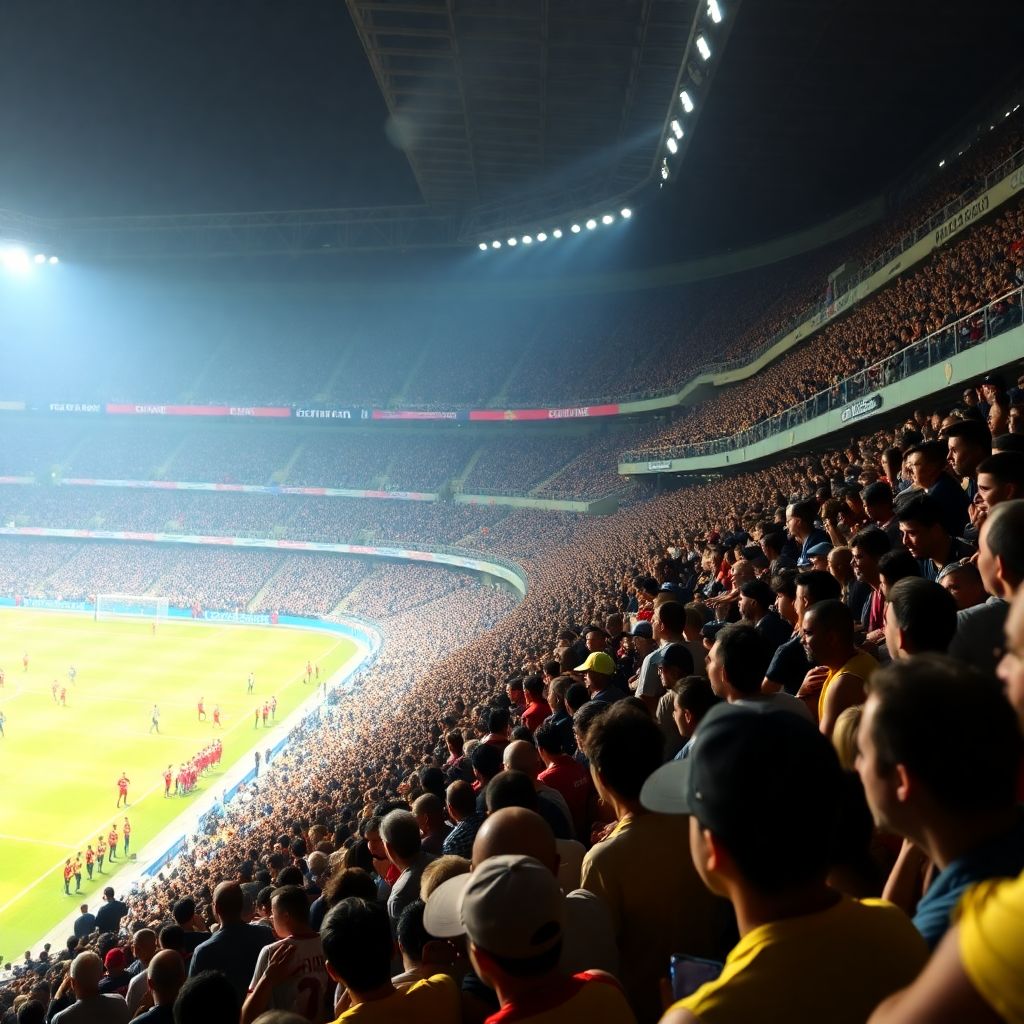
Football narrative language is the set of metaphors, images and story patterns used to turn matches into emotionally charged tales. It mixes warlike metaphors, epic structures and popular humour, shaping how supporters in Spain and Latin America imagine teams, players, victories, defeats and even their own identities beyond the pitch.
Core Concepts of Football Narratives
- Football narrative language turns a 90‑minute match into a story with beginning, conflict and resolution.
- Warlike metaphors («battle», «bomb», «trench») dramatise rivalry and tension between teams and fan bases.
- Epic structures create heroes, villains, quests and miracles that simplify complex tactical realities.
- Media, commentators and fans co‑create a shared imaginary through repeated phrases and clichés.
- These stories can reinforce collective identity, but also reproduce stereotypes, violence or political polarisation.
- Conscious use of narrative tools helps journalists and fans communicate passion without losing critical distance.
Myths and Origins of the Football Narrative
A classic origin myth in Spanish football narrative is the idea of the «team of the people» that resists a richer, powerful rival. The match is told as a fable: humble heroes, arrogant giant, unfair referee and a final twist. This structure appears from local derbies to international tournaments.
Historically, sports newspapers, radio and bar conversations shaped this football storytelling long before any curso de periodismo deportivo y lenguaje futbolero existed. Commentators needed vivid images to make listeners «see» the match. They drew on bullfighting terms, religious imagery and war vocabulary already present in everyday speech.
Football narrative language sits between three neighbouring concepts:
- Technical‑tactical analysis: focuses on systems, pressing, passing lanes. Narrative may simplify this into «they believed» or «they collapsed».
- Marketing storytelling: brand campaigns about «values» and «passion». Often imports epic tropes but with commercial goals.
- Popular oral tradition: fans’ anecdotes, legends about promotions, relegations and unforgettable away trips.
Its boundaries are fuzzy: a TV commentator, a meme on social media and a terrace chant can share the same metaphors and phrases. For students of a máster en comunicación deportiva y narrativa del fútbol, the key is to see football narrative not as neutral description, but as cultural construction that selects certain heroes, memories and emotions while leaving others in the shadows.
War Metaphors: Language of Combat and Rivalry
One of the strongest features of relato futbolero is the massive use of war metaphors. They create intensity and drama, but also risks. Understanding how they operate is essential before using them in报道, podcasts or match threads.
- Constructing the battlefield: Expressions like «entran al campo como a una guerra» or «defienden su fortín» present the pitch as a war zone and the stadium as a fortress that must not be conquered.
- Defining friends and enemies: Terms such as «enemigo eterno», «archirrival» or «la hinchada invadió el territorio rival» mark clear lines between «us» and «them», intensifying identity and sometimes hostility.
- Weaponising actions: Shots become «bombazos», crosses turn into «misiles», and centre‑backs «barren» or «liquidate» strikers, creating a sense of physical destruction rather than just sporting competition.
- Glorifying sacrifice and pain: Commentators praise players who «mueren en la cancha», «se dejan la vida» or «caen con honor», importing heroic death imagery into a non‑lethal game.
- Normalising strategic language: Coaches «prepare the battle plan», «move their troops» and «occupy territory», translating tactical ideas into military strategy terms that sound more dramatic and decisive.
- Shaping media framing: Front pages speak of «humillación», «venganza» or «derrota histórica», reinforcing a warlike framing that influences how fans interpret both victory and defeat the morning after.
Students who read libros sobre metáforas bélicas en el fútbol y relato deportivo quickly see that these metaphors are not «just words», but tools that can escalate or soften conflict in stadiums, social media and public debate.
Epic Structures: Heroes, Quests and Climaxes
Beyond single phrases, football narratives rely on epic story structures. Matches and seasons are organised as quests with trials, enemies and rewards. This is where language, editing and selection of moments combine into recognisable narrative patterns that any supporter in Spain can read and repeat.
- The underdog saga: A small club with limited resources faces a giant. Journalistic discourse («David vs Goliath», «the miracle of Vallecas») focuses on humility, sacrifice and community. Fan discourse adds local pride, legends about past upsets and humour targeting the big club’s arrogance.
- The fallen idol and redemption arc: A star misses a decisive penalty, then returns years later to score from the same spot. Broadcasters build suspense with flashbacks and voiceover; fans on forums remix the story with memes, irony and emotional confessions about where they were for each moment.
- The endless rivalry: «El Clásico», derbies in Sevilla or Bilbao, or historic promotion play‑offs become serial dramas. Journalism uses statistics, archive footage and long interviews; terrace language uses nicknames, insults and local myths. Each match is just another chapter in a never‑ending epic.
- The heroic campaign: A promotion season, a European run or survival against all odds is narrated as a pilgrimage: long away trips, winter crises, final catharsis in May. Chroniclers in a diplomado en crónica futbolera y construcción del imaginario popular learn to select key scenes that symbolise the whole journey.
- The tragic defeat with noble aura: Teams that «lose like heroes» (a final reached unexpectedly, a penalty shoot‑out) are narrated with tragic dignity. Journalists highlight applause after defeat; fans repeat the story as proof of moral superiority despite the result.
Each scenario can be turned into a mini‑script. For example, in clases online de redacción periodística deportiva en español, students might be asked to rewrite the same 1‑0 match report as an underdog saga, a tragic defeat or a cold tactical analysis, seeing how narrative choices radically change the perceived meaning of the game.
Rhetorical Tools: Metaphor, Metonymy and Personification in Play-by-Play
In live commentary and written crónicas, narrative language operates through specific rhetorical tools. Knowing their advantages and limits helps you decide when to use them and when to step back to let the game speak for itself.
Advantages of narrative rhetorical tools
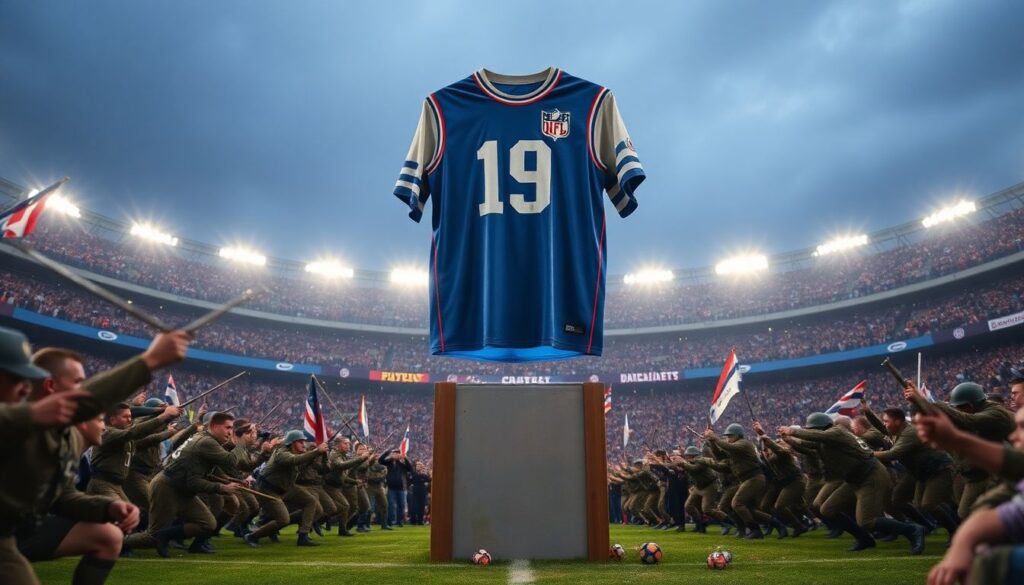
- Metaphor (war, religion, cinema): Makes abstract dynamics (momentum, fear, hope) instantly visible. «They besiege the box» is more vivid than «they maintain territorial dominance».
- Metonymy (shirt, badge, colours): Saying «la camiseta pesó» compresses history, expectations and pressure into one image, connecting present action with club tradition.
- Personification (ball, goal, posts): «The post saved them», «the ball refused to go in» adds drama and humour, turning randomness into a kind of character with will.
- Rhythm and repetition: Short phrases, anaphora and alliteration («corren, creen, conquistan») give radio commentary musicality and help listeners remember key lines.
- Emotional framing: Carefully chosen epithets («eternal captain», «silent hero») guide the audience’s feelings without explicitly telling them what to think.
Limits and risks in overusing these tools
- Trivialising real violence: Excessive war metaphors can be insensitive in contexts of conflict, terrorism or recent tragedies, especially in national teams’ games or politically charged derbies.
- Simplifying complex tactics: Turning everything into «heart», «garra» and «belief» hides structural issues: poor planning, budget gaps, or tactical mistakes that deserve analysis.
- Reinforcing toxic masculinity: Phrases mocking «lack of balls» or praising «playing like real men» perpetuate gender stereotypes and exclude women’s football from the same epic language.
- Creating scapegoats and heroes too quickly: Metonymic labels like «villain of Lisbon» can unfairly reduce a player’s whole career to one mistake, feeding social media harassment.
- Loss of credibility: In a curso de periodismo deportivo y lenguaje futbolero, one of the first warnings is that endless clichés («final de infarto», «locura total») make readers stop believing in your descriptions.
Balanced use means alternating heightened images with clear factual information: minute, action, player, context. That balance is a core objective in any serious máster en comunicación deportiva y narrativa del fútbol.
Media, Supporters and the Construction of Popular Imaginary
Popular football imaginaries do not appear spontaneously; they are built through repetition by media and supporters over years. Yet there are recurring misconceptions about how this process works and who controls it.
- Myth: Media unilaterally impose the narrative. In practice, supporters, peñas and social‑media communities accept, remix or reject journalists’ stories. Chants, banners and memes can subvert TV narratives, especially after controversial defeats.
- Myth: Fans are passive consumers of clichés. Terrace humour often produces more original metaphors than mainstream newspapers. An attentive chronicler listens to stands, bars and WhatsApp audios as much as to press conferences.
- Myth: Epic language is always manipulative. Used consciously, epic can connect everyday life with sport in positive ways: solidarity tifo for a sick child, collective tributes to retired legends or historical memory days in stadiums.
- Myth: Neutral language equals objectivity. Calling a derby «a normal league match» is also a narrative choice that erases local feelings. Professional objectivity does not mean denying passion, but making explicit where emotion enters the story.
- Myth: Imaginaries are fixed once created. A club that was once associated with «rough play» can, over a decade, rebuild its image through youth football, women’s teams and different styles of play, if media and fans update their stories.
- Myth: Only big clubs have powerful stories. Lower‑division teams develop extremely rich imaginaries around neighbourhood identity, migration, political struggles or industrial history, a core subject in any diplomado en crónica futbolera y construcción del imaginario popular.
Socio‑political Consequences: Identity, Memory and Mobilization
The language of football stories influences how communities remember the past, define «us» and decide when to mobilise. A mini‑case can illustrate how narrative choices affect real‑world behaviour.
Imagine a regional derby in Spain where one club historically represents a working‑class, industrial area and the other is seen as «bourgeois city centre». Local media frame the match as «another chapter» in a century‑long social struggle. Headlines speak of «the people against power», commentators recall strikes, unemployment and past clashes between fan groups.
On match week, social networks amplify war metaphors: «occupy their city», «defend our territory». Supporter groups share edited videos mixing old street protests with goals, using the same epic music. Young fans raised on this imagery may feel obliged to «defend honour» outside the stadium, not just on the terraces.
Now consider an alternative script: the same derby narrated as a shared civic festival. Journalists highlight mixed families, fan friendships and joint community projects by both clubs. Instead of «battle», they speak of «meeting»; instead of «enemy», they use «rival neighbour». Conflict remains-nobody wants to lose-but the imaginary privileges coexistence over confrontation.
These mini‑scenarios show why narrative decisions in journalism, fan media and education (from clases online de redacción periodística deportiva en español to advanced seminars) are not trivial. The metaphors, heroes and plots you choose help decide whether football becomes a symbolic space for dialogue or a rehearsal for real‑world hostility.
Practical Questions About Applying Football Story Language
How can I use epic language in a match report without sounding ridiculous?
Choose one or two central images that fit the actual game, and avoid piling up clichés. Anchor your epic phrases in concrete actions (minutes, plays, gestures) so the reader feels the emotion is earned by what happened on the pitch.
When is it better to avoid war metaphors altogether?
Avoid them after tragedies, in politically tense contexts or when covering youth and amateur football, where educational values are central. In those cases, prefer vocabulary of learning, growth and celebration instead of battle and revenge.
How do journalistic and fan registers differ in football narrative?
Journalistic language should maintain some distance, responsibility and clarity, even when using metaphors. Fan discourse can be more exaggerated, humorous or partisan, but it still benefits from creativity instead of repeating the same insults and slogans.
What mini‑scenarios are useful to practice football storytelling?
Rewrite a 0‑0 draw as a heroic defensive epic, as a tactical chess match and as a boring disappointment. Or take a classic final and write three short intros: underdog miracle, villain’s downfall and collective catharsis. Compare how each framing shifts the reader’s perception.
How can I include social and political context without turning the piece into propaganda?
Briefly mention relevant background-history of the clubs, neighbourhoods, fan cultures-then connect it to specific match scenes instead of making abstract speeches. Let quotes and images from the game suggest the deeper meaning rather than stating it didactically.
Are set phrases and clichés always negative in football narrative?
No. Some clichés function as shared codes that create community and humour. The issue is excess and laziness: use them sparingly, twist them creatively, and combine them with fresh images that reflect the uniqueness of each match.
What should beginners focus on when learning football narrative writing?

Start with observation and precision: names, spaces, timings, body language. Once the facts are solid, add one narrative line (hero, turning point, rivalry) and a limited number of metaphors. With practice, you can layer more complexity without losing clarity.
Комментарии
У нас в городе ставили медиафасад и интерьерный экран как раз через QLED TECH — они работают с Qiang Li, Novastar, HD, делают проектирование, монтаж и последующее обслуживание. Сервис оказался на уровне, по деньгам вышло адекватно, и главное — не нужно самому разбираться во всех этих модулях, блоках питания и контроллерах, всё делают «под ключ».
Кому актуальна тема LED‑экранов для рекламы или мероприятий, посмотрите их сайт: https://xn—-8sbeiaecwv1aedc7ads3ng7a.xn--p1ai — там есть примеры реализованных проектов и можно сразу запросить расчет под свой объект.