
The historical evolution of tactical systems in football mirrors shifts in labour, technology and money: from agrarian, slow 2-3-5 shapes to industrially disciplined WM, to flexible pressing and positional play in data-driven global markets. Each tactical change reflects how societies work, consume entertainment and allocate economic power.
Essential historical insights
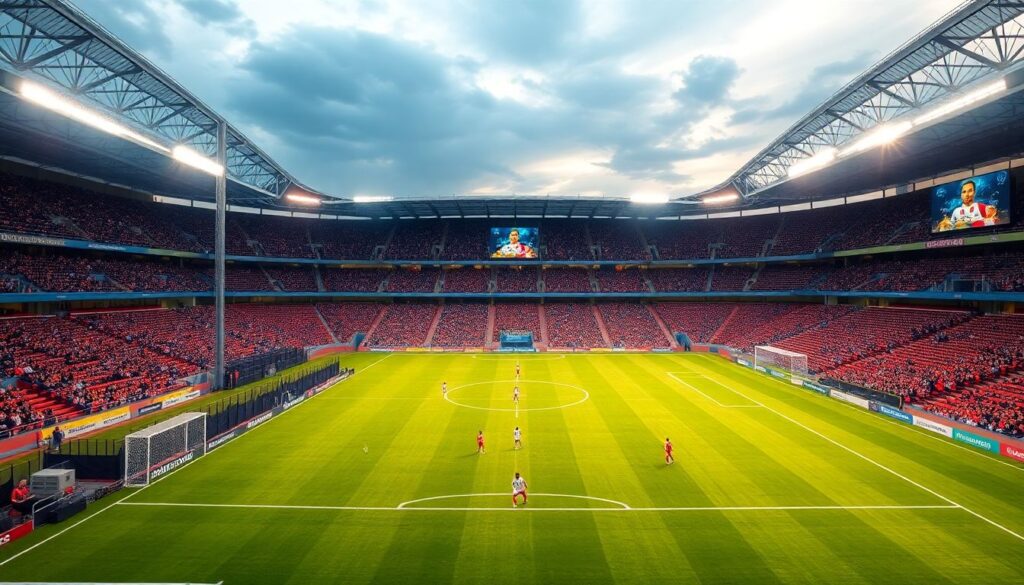
- The evolución histórica de los sistemas tácticos en el fútbol runs in parallel with changes in work organisation, from agrarian rhythms to industrial shift work and modern services.
- Formations, pressing and styles are constrained by infrastructure, media, labour law and transfer markets.
- Broadcasting, sponsorship and globalisation transformed tactics into tools for brand value and asset protection.
- Analytics and tracking data turned intuition into semi-formalised tactical science.
- The relación entre táctica futbolística moderna y cambios socioeconómicos is clearest when comparing elite clubs to financially weaker leagues.
Origins: Early tactical formations and agrarian economies
Early football tactics emerged in societies dominated by agrarian and pre-industrial economies. Matches were rare events, often linked to local festivities, with minimal formal training. Tactical systems were simple because players had little time or incentive to rehearse complex patterns outside their daily work.
The classic pyramid 2-3-5 formation reflected this context. With low physical preparation and rudimentary pitches, teams preferred direct play, dribbling and individual initiative. Defending was reactive. The historia de las formaciones tácticas en el fútbol y su impacto económico starts here: clubs were small, gate receipts limited, and the risk of «investing» in elaborate tactics was low.
Social hierarchy also mattered. Early clubs often came from schools, universities or companies. Tactical discipline resembled the loose authority structures of local communities, not yet the tight supervision of factories. Coaching roles were informal; captains led decisions on the pitch, mirroring community leaders rather than professional managers.
In this phase, there was no developed market for libros sobre táctica futbolística y análisis socioeconómico. Knowledge passed orally, through local rivalries. The economic value of tactical innovation was modest because competitive advantages were short-lived and broadcasting did not yet multiply financial rewards.
- Identify early formations (2-3-5, 1-2-7) and connect them to low training time and semi-amateur status.
- Relate simple tactics to limited financial stakes and absence of mass media.
- Note how informal leadership mirrored local, agrarian social structures.
Industrial Revolutions and the professionalization of tactics
With industrialisation came factories, railways and urbanisation. Clubs could now travel, create regular competitions and schedule training around shift work. This economic regularity enabled structured practices and more complex systems, such as the WM (3-2-2-3), which required rehearsed movements.
Professionalisation of players followed the professionalisation of labour in society. As clubs paid wages, they treated tactics as productive capital. Coaches experimented with offside traps, zonal responsibilities and early forms of pressing. Tactical discipline mirrored the timekeeping, hierarchy and workflow optimisation of factories.
Stadiums became economic assets. Safe, repeatable entertainment demanded organised defending and recognisable team structures. The historia de las formaciones tácticas en el fútbol y su impacto económico becomes visible: better tactics attracted crowds, crowds generated revenue, and revenue financed better coaches and training facilities.
- Regular schedules: industrial work patterns allowed consistent training sessions, supporting complex tactical rehearsals.
- Labour contracts: as players became employees, clubs enforced tactical obedience similar to factory discipline.
- Transport networks: railways and later buses fostered national leagues, raising competitive pressure and rewarding refined systems.
- Mass media: newspapers and radio popularised tactical debates and reputations of innovative managers.
- Coaching roles: managers evolved into specialised tacticians, analysing opponents and standardising game models.
- Rule adjustments: changes like the offside law pushed teams to reorganise lines and spaces systematically.
- Map major formations (WM, 3-2-5) to industrial-era leagues and national competitions.
- Connect wage-paying clubs to stricter tactical discipline and codified roles.
- Check how media coverage amplified the value of successful tactical innovators.
Total War and the impact of mass production on doctrine
The World Wars and the age of total mobilisation reshaped societies and, indirectly, football tactics. Military planning introduced concepts like logistics, coordination and standard operating procedures, which later influenced coaching. In many countries, ex-soldiers brought organisational thinking into clubs and federations.
Mass production principles-standardisation, repetition and optimisation-echoed in training drills and tactical schemes. Teams rehearsed set pieces and coordinated movements as repeatable «patterns», similar to assembly-line tasks. The overall style became less improvisational and more collective, matching societies that had just organised huge war efforts.
International tournaments after wartime, such as the early World Cups, were laboratories for doctrine. Tactical ideas circulated along with diplomatic and economic reconstruction projects. Reconstruction money improved stadiums and youth systems, enabling broader adoption of systematic training and tactical literacy.
At the same time, ideological narratives influenced how tactics were framed. Some countries presented their style as a symbol of national character-discipline, creativity or collective sacrifice-connected to their wartime experiences and rebuilding strategies.
In this context, early seeds of the relación entre táctica futbolística moderna y cambios socioeconómicos became explicit: tactical choices communicated values to domestic audiences and international partners, supporting tourism, prestige and commercial links.
- Identify post-war tournaments that acted as tactical showcases for nations under reconstruction.
- Link repetitive training drills to wider industrial and wartime habits of mass coordination.
- Observe how national styles were marketed as symbols of political and social identity.
Cold War strategies: ideological competition and economic structures
During the Cold War, football became a soft-power arena. Tactical systems reflected different economic and political models. State-socialist programmes invested in centralised academies and sports science, producing highly drilled, collective systems. Market economies favoured club-driven innovation and star-focused tactics that sold tickets and broadcast rights.
Eastern European pressing and collective movement contrasted with more individualist approaches elsewhere, though there was constant exchange. State clubs, effectively subsidised, could maintain squads long-term, refining complex positional automatisms. In Western Europe, transfer markets and commercial pressures pushed some teams towards more flexible, entertainment-oriented play styles.
Television expanded rapidly in this period. Tactical successes had diplomatic and commercial after-effects: tourism, exports, and sponsorship deals. The evolución histórica de los sistemas tácticos en el fútbol thus intertwined with ideological narratives-systems were evaluated not only for sporting success but also for what they «proved» about economic models.
In Spain and other European countries, debates around historia de las formaciones tácticas en el fútbol y su impacto económico overlapped with political transitions and regional identities. Club philosophies became intertwined with perceptions of modernity, openness and integration into broader markets.
Strategic advantages shaped by Cold War economics
- Centralised investment in youth and science in planned economies enabled more uniform, physically intense tactical systems.
- Commercial leagues in market economies experimented with tactics that maximised spectacle, stars and broadcasting appeal.
- International competitions gave tactical winners leverage in cultural diplomacy and sponsorship negotiations.
Limitations and structural constraints during this era
- Political interference often limited tactical risk-taking; some teams prioritised symbolic stability over innovation.
- Restrictions on player movement in both blocs reduced knowledge sharing and slowed tactical cross-pollination.
- Economic inequality between leagues created gaps in physical preparation, technology and support staff.
- Compare centralised academy models to commercially driven club systems when analysing tactical consistency.
- Check how TV rights and diplomatic goals influenced national-team tactical conservatism or risk-taking.
- Note movement restrictions and their impact on how quickly tactical ideas spread.
Post-Cold War transitions: asymmetric conflicts and market forces
After the Cold War, globalisation and deregulated markets transformed football economics. Bosman-style rulings liberalised player movement, creating superclubs that concentrated talent and money. Tactically, this enabled hyper-specialised roles and complex schemes that only squads with deep benches and elite staff could sustain.
At the same time, many leagues and clubs fell into financial precarity. This economic asymmetry produced tactical asymmetry: dominant clubs developed proactive positional play and high pressing, while weaker teams adopted compact, low-risk blocks designed to survive and exploit transitions.
Digital media and early data analysis entered the scene. Clubs started to formalise scouting and tactical planning with statistics, building the foundations for today’s analytics-driven approaches. This period also saw growth in cursos online de análisis táctico y contexto socioeconómico del fútbol, reflecting demand for structured knowledge about how markets shape tactics.
Several recurring misunderstandings appear when linking this era’s tactics to socioeconomic shifts.
- Myth 1: «Tactics alone close financial gaps.» In reality, clever systems can mitigate but rarely erase structural revenue differences.
- Myth 2: «Pressing and possession are purely stylistic choices.» Often they are economic choices about how to protect valuable players and maximise resale value.
- Myth 3: «Globalisation homogenised tactics.» While concepts travel faster, local budgets, cultures and infrastructures still generate strong tactical diversity.
- Myth 4: «Analytics replace coaching intuition.» Data supplements, but does not remove, the need for expert interpretation and context.
- Myth 5: «Economic deregulation always improves competitiveness.» In practice, it can entrench dominant clubs and reduce tactical variety at the highest level.
- Always separate what tactics can change (behaviour, efficiency) from what only economics can change (budget, talent pool).
- When studying a league, compare broadcast deals and wage bills before judging tactical «courage» or «cowardice».
- Note how online education and data tools redistribute tactical knowledge beyond traditional power centres.
The information age: networked tactics and global economic integration
In the information age, tactics and economics are tightly networked. Tracking data, video analysis and global scouting platforms allow clubs to model space, time and risk in unprecedented detail. Tactical systems like modern positional play are inseparable from the tools that measure and optimise them.
Global economic integration intensifies this trend. Investment funds, multinational sponsors and international fanbases push top clubs to prioritise stability, recognisable styles and brand-consistent football. The relación entre táctica futbolística moderna y cambios socioeconómicos is clear: risk is managed not only on the pitch but also in financial portfolios.
This environment generated a knowledge industry: analysts, consultants, and authors producing libros sobre táctica futbolística y análisis socioeconómico, plus structured cursos online de análisis táctico y contexto socioeconómico del fútbol. Tactical literacy became a form of human capital, valuable in coaching, media, betting and recruitment.
The evolución histórica de los sistemas tácticos en el fútbol now proceeds at digital speed. Formations are fluid labels; what matters is how teams manage zones, overloads and rest defence. Economic gaps shape these choices: richer clubs impose, poorer clubs adapt, but both operate within a shared, data-rich global conversation.
You can model the current dynamic as a short, repeatable algorithm when analysing a team:
1. Identify main revenue model (broadcast, transfers, academy, investors).
2. Infer risk tolerance (high, medium, low) from finances and squad depth.
3. Map risk level to tactical profile (pressing, possession, transitions, low block).
4. Check if match tactics align with the club's long-term economic incentives.
5. Adjust evaluation: praise or criticise with this alignment in mind.- When watching a team, first ask how it makes money; then analyse its tactical «risk portfolio».
- Use simple algorithms like the above to connect match behaviour to structural incentives.
- Track how data tools influence not just decisions, but also who has power inside the club.
Self-check checklist for connecting tactics and socioeconomic change
- Can you explain at least one tactical trend in each era using specific economic or social shifts, not only coaching preferences?
- When describing a formation, do you mention how training time, labour rules or media exposure enabled or limited its use?
- Do you avoid myths such as «tactics are independent from money» and instead show their mutual influence?
- Can you apply the five-step algorithm to a current club and justify its style via its revenue model?
- Before drawing conclusions, do you compare examples across leagues with different financial structures?
Practical clarifications and common practitioner concerns
How is this framework different from a purely tactical history of football?
It always pairs tactical shifts with specific socioeconomic changes: labour structures, media, regulation and financial models. Instead of asking only «which formation appeared?», it asks «why did this system become viable economically and socially at that time?».
Can I use this approach when analysing a single match or team?
Yes. Start with the club’s revenue structure, wage bill and competitive context. Then evaluate its tactical choices-pressing, possession, player roles-as tools for managing financial risk, developing assets and meeting fan or sponsor expectations.
Where do I start if I want to study this topic more systematically?
Pick one league and one decade. Map dominant formations, key economic rules (TV rights, transfer regulations) and major social changes. Use the self-check checklist and the five-step algorithm to connect match tactics to those background conditions.
How do online courses fit into the evolution of tactical knowledge?
Cursos online de análisis táctico y contexto socioeconómico del fútbol are part of the information-age shift: they democratise access to tools and concepts once restricted to elite clubs. This further accelerates tactical evolution by spreading ideas across borders and competitive levels.
Is economic inequality always bad for tactical diversity?
Not always. Large gaps can incentivise innovation from underdogs forced to survive against superclubs. However, extreme concentration of resources can reduce diversity at the very top, as dominant models are copied by those trying to close the gap.
Do formations still matter if tactics are now so fluid?
Formations remain useful starting points for describing starting structures and responsibilities. What changed is that you must analyse how teams shift between structures in different phases of play, and how resources and training time make such fluidity possible.
How can coaches at amateur level apply these ideas without overcomplicating things?
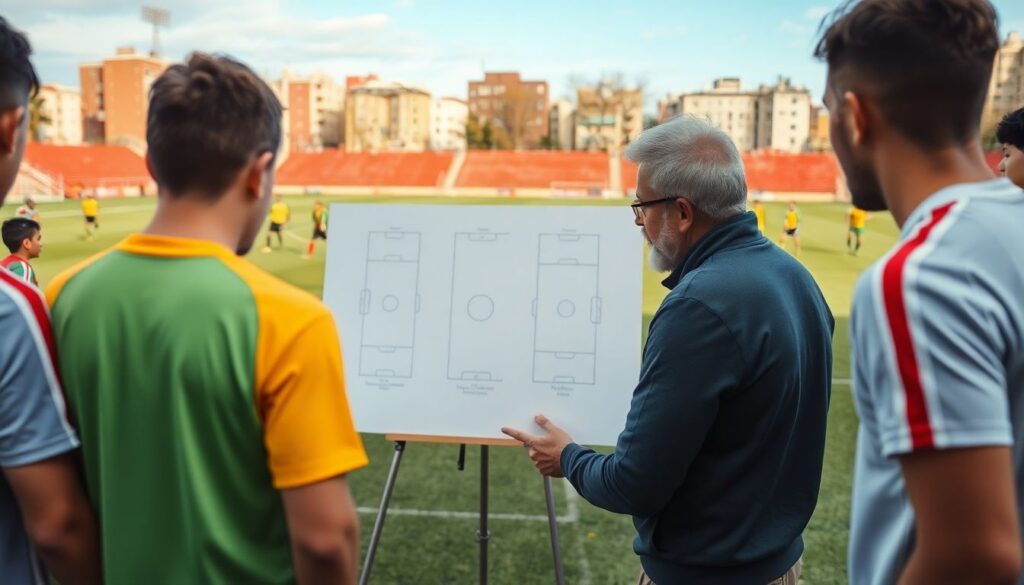
Focus on the basics: how much time and energy your players have, what facilities you access, and what local competition demands. Choose tactical systems that match those socioeconomic realities instead of copying professional models blindly.
Комментарии
У СЭС-службы КлинОн как раз упор на официальную дезинфекцию, дезинсекцию и дератизацию с документами и обработкой по нормам. Делают выезд по Москве и области, работают и с квартирами, и с частными домами, и с офисами/бизнесом. Плюс после обработки дают рекомендации, как закрепить результат (что выбросить, как убираться, как не допустить повторного заражения). Для тех, кто реально хочет решить проблему, а не просто «побрызгать и забыть», это сильно экономит нервы и время.