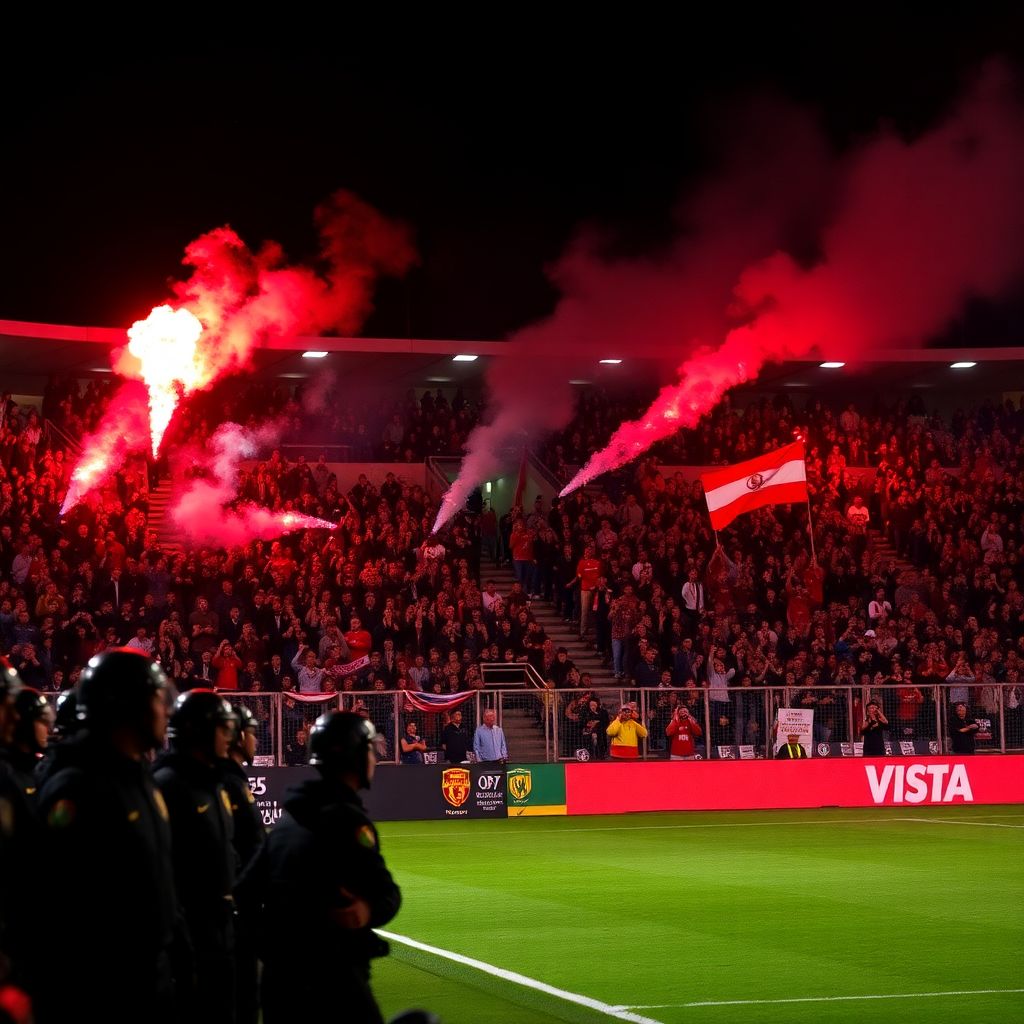
Ultras and barras bravas are organised, highly committed football fan groups that mix intense support with varying levels of violence, territorial control and informal power. They offer belonging, identity and meaning, especially to young men, but also create serious risks for seguridad en estadios de fútbol contra barras bravas, clubs, cities and the wider game.
Essential concepts overview
- Ultras (Europe) and barras bravas (Latin America) are distinct traditions with shared traits: choreography, constant chanting, strong hierarchy and potential for organised violence.
- They provide identity, status and routine for members, especially in working‑class or marginalised neighbourhoods, but also normalise confrontations.
- Group cohesion is sustained through rituals, symbols, internal discipline and informal economies around tickets, parking and merchandising.
- Violence is not random: it follows patterns of territoriality, rivalry and honour, often accelerated by alcohol, policing errors and media attention.
- Institutional responses range from hard security measures to dialogue‑based approaches, each with different implementation costs and risk profiles.
- Effective strategies combine stadium security engineering, fan liaison, community work and sanctions targeting leaders rather than entire fan bases.
Origins and evolution of ultras and barras bravas
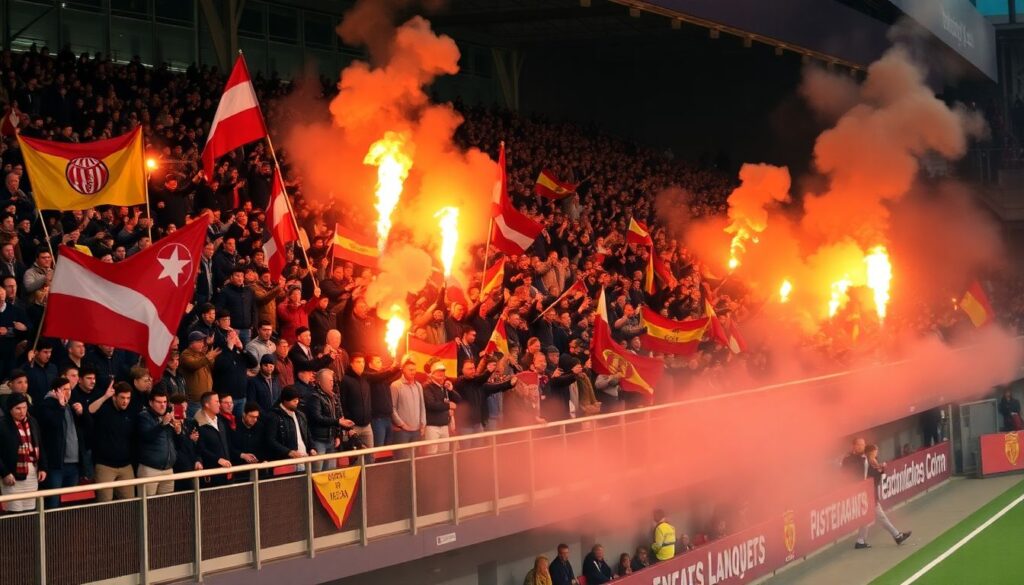
Ultras and barras bravas are organised supporter factions that turn the terrace into a stage for 90 minutes of constant sound and colour. They differ from ordinary fans by their permanent structure, their control of specific sections of the stadium and their willingness to confront rivals and sometimes the authorities.
In Europe, ultras emerged in the late 1960s and 1970s, inspired partly by Italian political collectives and South American terraces. They focused on visual support, autonomy from clubs and opposition to commercialisation. Over time, some groups shifted between left‑ and right‑wing politics, but most prioritised local identity and loyalty to the curva or fondo.
Barras bravas in South America grew from earlier hinchadas, but gained stronger vertical leadership and tighter connections to club boards, local politicians and even criminal networks. In some countries they became gatekeepers for tickets, parking and informal security services, which increased their leverage and capacity for violence.
In Spain, the two traditions intersect: European ultras culture mixes with influences from Argentina and other countries via migration, media and merchandising. This shows up in songs, banners and even in the camisetas y merchandising de barras bravas y ultras fútbol tienda online that reproduce symbols from Buenos Aires, Sevilla or Madrid terraces.
Media products, such as any violencia en el fútbol barras bravas documental completo, have contributed to a transnational imaginary. Young supporters in different cities watch the same clips of confrontations and choreographies, copying styles and narratives of honour, betrayal and resistance. This shared visual language helps explain how similar dynamics appear in very different leagues.
Sociology of belonging: identity, class and neighbourhood
Belonging in ultras and barras bravas is built through everyday practices and local structures rather than abstract ideology. Several mechanisms help explain why these groups are so attractive and so resilient, especially in certain neighbourhoods in Spain and Latin America.
- Collective identity anchored in place. Groups often reference barrios, districts or cities in their names, banners and songs. The terrace becomes an extension of the street, where defending the group is symbolically equivalent to defending the neighbourhood.
- Status and recognition for marginalised youth. For young people with limited access to work or education, being part of a barra or ultra group offers a clear role, visible status and a pathway to influence: leading chants, managing drums, coordinating travel or designing tifos.
- Masculine socialisation and emotional expression. The stands allow intense emotions, physical closeness and even tears, framed as loyalty rather than weakness. Violence can be coded as courage, making it a resource for building a certain model of masculinity.
- Routines and structure. Weekly matches, pre‑game gatherings and trips create a rhythm that organises time and relationships. For some members, this structure partially replaces family, school or workplace routines that may be absent or unstable.
- Boundary drawing against «others». Rival fans, police, club management or the media are defined as outsiders. This shared perception of threat reinforces internal solidarity and can make non‑violent conflict resolution appear like betrayal.
- Informal welfare and mutual help. Within some barras bravas, members help each other find jobs, handle legal problems or manage everyday crises. This solidarity makes leaving the group psychologically and practically difficult.
- Cultural capital specific to the terrace. Knowing the songs, codes, travel routes and history of past fights builds a form of expertise that is respected inside the group, even if not valued in the formal labour market.
These dynamics explain why simplistic calls to «just ban them» often fail. For many members, ultras or barra identity is the core of their social life, not a weekend hobby. Any intervention must understand this depth of belonging and the neighbourhood ecosystems that sustain it.
Mechanisms of cohesion: rituals, symbols and internal structure
Ultras and barras bravas maintain cohesion through a blend of ritual, symbolism and internal governance. These mechanisms both stabilise the group and create channels through which violence can be organised quickly when needed.
Rituals and match‑day choreography. Songs, drums, flags, smoke bombs and choreographed banners (tifos) are rehearsed forms of action that give members a sense of unity. Participating in these rituals is a gateway for newcomers to feel part of the collective. The repetition builds muscle memory for coordinated movement, which can later be repurposed for confrontations.
Symbols and colours. Scarves, stickers, graffiti and tattoos extend the group into public space. Wearing specific colours or logos outside the stadium signals belonging and can trigger confrontations when rival symbols appear. The growth of camisetas y merchandising de barras bravas y ultras fútbol tienda online has expanded these visual markers beyond local shops and stadium stalls.
Hierarchies and leadership. Most groups have clear internal ranks: core leaders, lieutenants, drum sections, banner crews and ordinary members. Leaders control access to tickets, travel lists and sometimes club resources, which reinforces their authority. Decisions about when to escalate or de‑escalate tensions usually flow from this small circle.
Codes, rules and sanctions. There are written or unwritten rules about attendance, loyalty, payment of dues and behaviour in fights. Sanctions can include public shaming, exclusion from away trips or, in extreme cases, physical punishment. This internal justice system can be faster and more feared than formal law.
Informal economies. Some barras bravas and ultras manage parking, food stands, resale of tickets or even security contracts. Control over these flows of money strengthens cohesion: leaving the group can mean losing an income source.
Applied scenarios of group dynamics
On a practical level, understanding these mechanisms helps design interventions. For example, a club in Spain that wanted to reduce pyrotechnics worked not only through bans and searches, but by negotiating with ultra leaders: in exchange for designated banner space and limited legal choreography options, the group agreed to internal sanctions for members bringing flares.
Another case involved a Latin American club that reallocated control of parking lots from the barra to a monitored cooperative of local residents. This reduced the group’s economic leverage and made some younger members more open to participating in official fan clubs instead, without direct confrontational bans.
Violence dynamics: triggers, escalation patterns and territoriality
Violence linked to ultras and barras bravas follows recognisable patterns rather than appearing spontaneously. Knowing these patterns allows clubs, municipalities and security providers to compare intervention approaches by ease of implementation and risk of unintended escalation.
- Triggers and escalation factors.
- Symbolic provocations such as banner theft, graffiti overpainting or insulting songs can be more explosive than the match result itself.
- Alcohol, drug use and long travel times increase the likelihood of confrontations, especially in poorly managed away‑fan receptions.
- Perceived disrespect by police or club officials, such as aggressive searches or last‑minute ticket changes, often turns frustration into collective aggression.
- Media amplification, including sensationalist coverage or viral clips similar to a violencia en el fútbol barras bravas documental completo, can create pressure to «defend honour» in the next match.
- Territoriality and spatial logic.
- Key conflict zones include approach routes to stadiums, nearby bars, public transport nodes and motorway rest areas.
- Inside grounds, specific stands act as «home territory»; any incursion by rivals or heavy police presence there is perceived as invasion.
- Urban geography matters: narrow streets, few escape routes and mixed‑use zones around stadiums all shape how quickly fights escalate and how hard they are to contain.
From a risk‑management perspective, pure repression (large riot squads, mass bans) is relatively easy to implement administratively but carries high risk of displacement: violence moves to less controlled spaces, where bystanders are more exposed. Conversely, dialogue‑based approaches require time and specialised staff but can reduce long‑term hostility if backed by credible sanctions.
Hybrid models are increasingly common in Spain: clubs invest in seguridad en estadios de fútbol contra barras bravas soluciones y servicios such as CCTV, access control and spatial redesign, while also establishing fan liaison officers and structured communication channels with recognised supporter groups.
Relations with clubs, law enforcement and media: cooperation and conflict
The triangular relationship between ultras/barras bravas, clubs and institutions is full of contradictions. The same group can be celebrated for its atmosphere, feared for its violence and courted for its political or electoral influence.
- Myth: «They are either totally autonomous or fully controlled by clubs.» In reality, relationships shift over time and can differ within the same club. A president may rely on the group for noise and visual support, while security staff see them as a constant risk. Informal deals about tickets or travel can coexist with public condemnations.
- Myth: «More police always means more safety.» Heavy deployments without prior communication or understanding of fan logistics can create bottlenecks and flashpoints. Some Spanish cities have shown that smaller, better‑trained units plus clear pre‑match information can work better than large, reactive operations.
- Myth: «Banning the group solves the problem.» Legal dissolution often leads to rebranding: a barra brava or ultra group changes name, logo or formal structure but keeps most of its members and leaders. Without parallel community work and targeted sanctions, underlying dynamics remain.
- Myth: «Media exposure deters violence.» Sensational coverage can instead create reputational competition between groups. Detailed focus on fights, songs and leaders offers a script that others imitate, similar to effects observed around any viral violencia en el fútbol barras bravas documental completo.
- Myth: «Ultras are not interested in dialogue.» While some factions reject any cooperation, others engage pragmatically when they see benefits: protection of collective rights, influence over scheduling or input into stadium regulations. Structured dialogue backed by clear red lines can reduce day‑to‑day tensions.
- Myth: «All commercialisation is negative.» Unregulated sale of camisetas y merchandising de barras bravas y ultras fútbol tienda online can fund violent leaders. But carefully designed, club‑led merchandising, paired with official fan clubs, may channel some identity needs into less risky forms.
Understanding these myths is crucial for comparing policy options. Quick, symbolic reactions (public bans, high‑profile raids) are easy to communicate but may carry hidden long‑term risks. More collaborative approaches take longer to explain but can gradually shift incentives for both clubs and fan groups.
From analysis to action: prevention, community work and policy tools
Moving from conceptual understanding to practice means choosing combinations of tools that are feasible for clubs and authorities in Spain and that keep risk within acceptable limits. It also means supporting professionals and citizens who want to learn more, whether via libros sobre barras bravas y ultras futbol descargar o comprar or a specialised psicología de los ultras en el fútbol curso online certificado.
Comparing intervention approaches by feasibility and risk.
- Hard security first. Focus on CCTV, strict access control, away‑fan restrictions and strong police presence. This is administratively straightforward and visible, but risks displacement of violence to streets and weaker relationships with ordinary fans.
- Dialogue and co‑regulation. Create official supporter councils, fan liaison officers and written agreements on flags, travel and behaviour. Harder to set up and politically sensitive, yet lower long‑term risk if combined with consistent sanctions for violations.
- Community and youth work. Partner with neighbourhood organisations for sport, education and employment projects targeted at high‑risk youth. Implementation is slower and less directly linked to match days but crucial for reducing the next generation’s recruitment into violent groups.
- Targeted legal tools. Use stadium bans, reporting obligations and financial investigations against specific violent leaders and informal businesses. Implementation requires legal expertise but limits collateral damage to peaceful supporters.
Mini‑case: integrated strategy in a mid‑sized Spanish city. A club with recurring clashes between its ultra group and police adopted a combined plan:
- Redesigned stadium access and installed modern seguridad en estadios de fútbol contra barras bravas soluciones y servicios, including cameras and sectorised entrances.
- Recognised an official, non‑violent supporters’ association and offered them space for legal merchandising to counterbalance informal street sales.
- Created a permanent round‑table with police, city officials and fan representatives to adjust match‑day logistics based on ongoing feedback.
- Worked with local NGOs on after‑school programmes and employment workshops targeting areas where recruitment into the ultra group was strongest.
Over several seasons, serious incidents declined in and around the stadium, while some former ultra members shifted into roles within the official association or community projects. The club continued to sanction violence firmly but avoided collective punishments that would alienate the broader fan base.
For practitioners, a practical pathway includes three tracks: continuous learning (through high‑quality libros sobre barras bravas y ultras futbol descargar o comprar and academic articles), professionalisation (for example, a psicología de los ultras en el fútbol curso online certificado focused on fan cultures) and operational partnerships with providers of seguridad en estadios de fútbol contra barras bravas soluciones y servicios. Integrating these tracks increases the chances that stadiums remain intense spaces of belonging without becoming battlegrounds.
Practical questions and clarifications
Are all ultras and barras bravas inherently violent?
No. Many groups prioritise choreography and vocal support, and only a sub‑segment engages in planned violence. However, the same structures that enable coordinated support can also enable rapid mobilisation for confrontations, so risks must always be assessed.
What is the main difference between ultras and barras bravas?
Ultras are more typical of Europe and often emphasise autonomy from clubs and political or subcultural identity. Barras bravas in Latin America tend to have more vertical leadership and closer ties to club management, local politicians and informal economies around the stadium.
Does banning one group solve violence in a club?
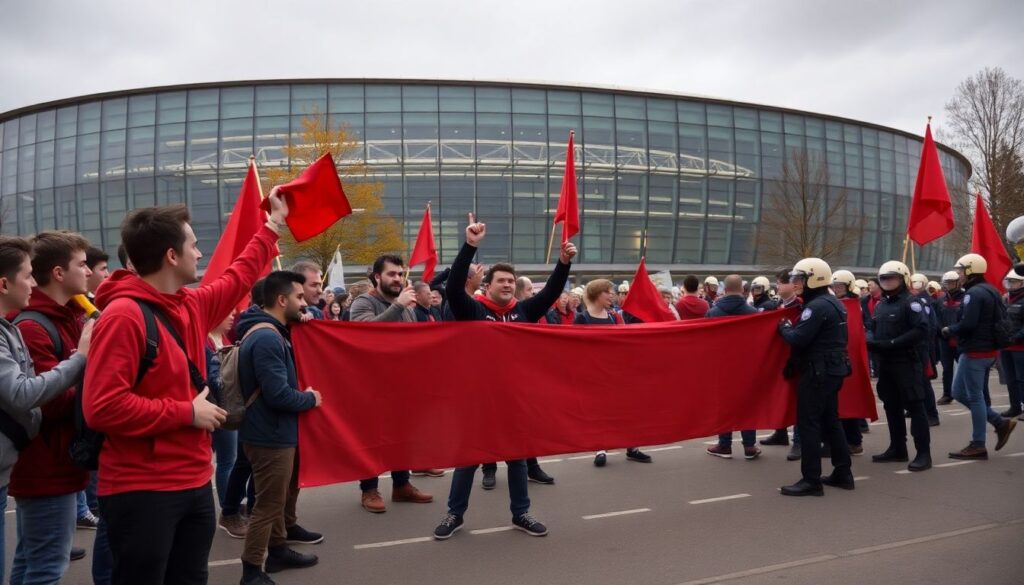
Rarely. Banned groups often reappear under new names or leaders, and younger members may radicalise further. Bans can be useful against specific leaders or factions but should be part of a broader strategy including dialogue, youth work and stadium design measures.
How can ordinary fans help reduce violence?
Ordinary fans can support official, non‑violent supporter associations, refuse to participate in chants that glorify attacks and cooperate with match‑day instructions. They can also report planned confrontations anonymously and push clubs to invest in constructive fan engagement, not just reactive policing.
Is buying merchandise from ultra or barra groups problematic?
It depends on where the money goes. Some camisetas y merchandising de barras bravas y ultras fútbol tienda online fund travel and visual support; others finance organised violence or criminal activities. Supporting official club stores or independent fan projects with transparent finances is usually safer.
Can education really change deeply rooted fan cultures?
Education alone is not enough, but it matters. Courses on fan psychology, community mediation and sports management help professionals design smarter interventions. Combined with credible sanctions and inclusive club policies, educational tools can gradually shift norms around what is acceptable on the terraces.
Are there online resources to learn about these dynamics?
Yes. Beyond books and academic articles, there are documentaries, podcasts and specialist blogs. When watching any violencia en el fútbol barras bravas documental completo, it is important to treat it as one perspective and to complement it with research‑based materials and diverse fan testimonies.