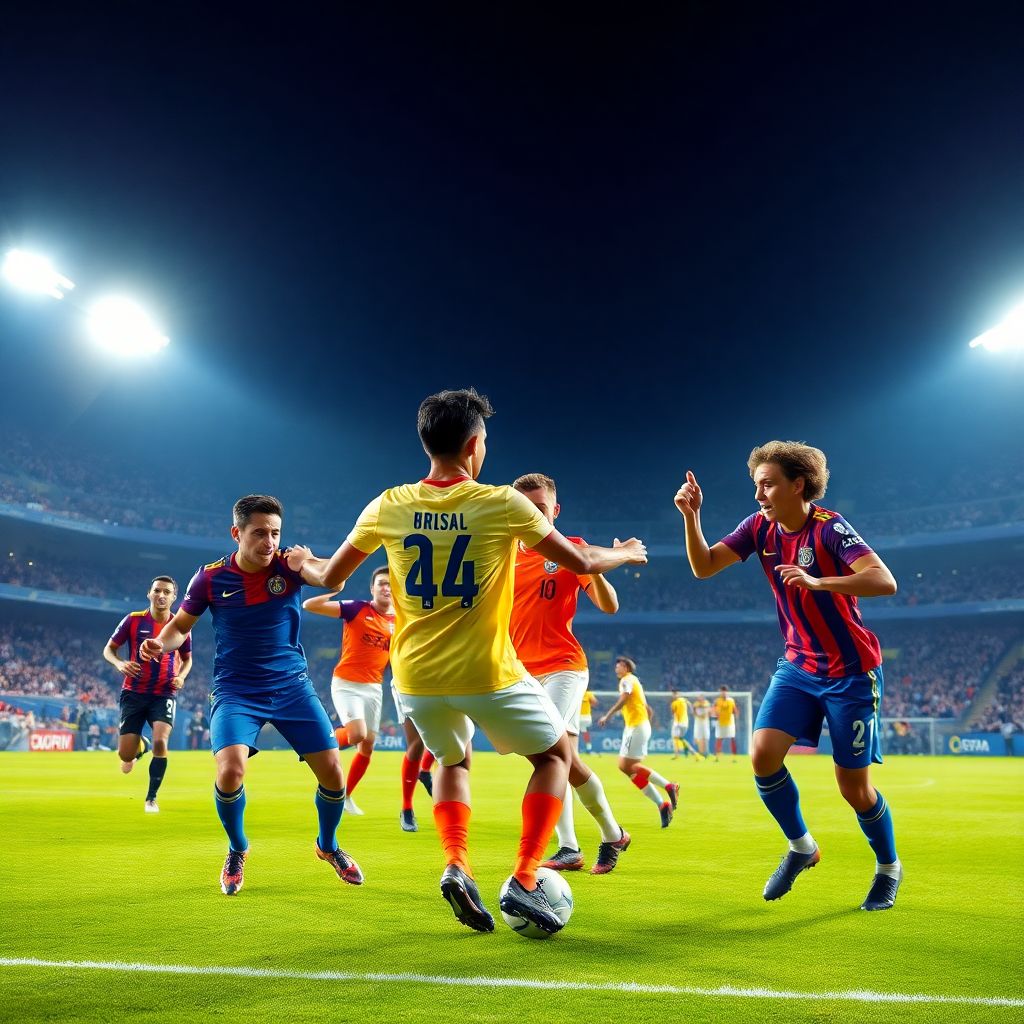
There is no absolutely objective «juego bonito» in football; beauty always depends on values, context, and perspective. Still, we can describe shared patterns: creativity, collective harmony, technical excellence, and emotional impact. The useful move is not to chase a universal formula, but to clarify your own criteria and apply them consistently when you watch, coach, or play.
Core Concepts of ‘Juego Bonito’
- «Juego bonito» names a family of styles, not a single universal system.
- Beauty in football mixes aesthetics (how it looks) and ethics (how it is achieved).
- Results shape our memory of beauty but do not fully define it.
- Historical cultures (Brazil, Netherlands, Spain, Argentina) set different beauty standards.
- Any criteria for beautiful play are partly measurable and partly irreducibly subjective.
- Myths about «pure» beauty often ignore tactical discipline and defensive work.
- Pursuing beauty has moral and commercial consequences for clubs, players, and fans.
Defining ‘Juego Bonito’: A Philosophical Premise
At its core, «juego bonito» is not a rigid tactic, but a way of valuing football. It names the idea that the game should be played with elegance, creativity, and joy, even under competitive pressure. Instead of a specific formation, it is a philosophical stance: winning matters, but how you win also counts as a form of success or failure.
Philosophically, this links directly to aesthetic theory. In art, beauty is judged by harmony, proportion, originality, and emotional resonance. In football, the equivalents are coordinated movement, intelligent spacing, inventive combinations, and the ability to stir the crowd. A well‑timed one‑touch combination can feel like a musical phrase; a pressing trap perfectly executed can resemble a choreographed dance.
However, the concept has limits. «Juego bonito» is not just attacking football or endless possession. A quick, vertical counterattack with two touches can be as beautiful as a long, patient possession if it displays timing, understanding, and courage. Likewise, a defender like Paolo Maldini reading the game and intercepting without fouling can embody beauty in a less obvious way than a dribbling winger.
Consider FC Barcelona under Pep Guardiola, especially in the 2008-2011 period. Many describe that era as the closest approximation to «juego bonito»: positional play, short passing, collective pressing, and constant off‑the‑ball movement. But the beauty did not come only from passes; it came from the coherence of the idea, applied from goalkeeper to striker, in every phase of play.
So, a working definition for discussion is: «Juego bonito» is football played in a way that integrates technical excellence, collective intelligence, and expressive creativity, such that the game is aesthetically satisfying beyond the mere result. This does not give us an absolute standard, but it outlines the territory where arguments about beauty become meaningful instead of purely sentimental.
Aesthetics versus Effectiveness: When Beauty Meets Results
A common suspicion is that beautiful football is naïve, while effective football is necessarily pragmatic and ugly. Philosophically, that split is exaggerated. In practice, styles that are celebrated as «juego bonito» usually emerge when a team finds a way to align aesthetics and effectiveness, even if only for a short historical window.
- Coherence between idea and squad
Guardiola’s Barcelona and Spain’s national team from 2008-2012 are praised not only because they played aesthetically, but because the idea fit the players. Short passing, technical midfielders, and intelligent pressing matched Xavi, Iniesta, Busquets, and Messi. Beauty and effectiveness overlapped because the style amplified existing strengths. - Risk management behind the spectacle
«Juego bonito» is often imagined as pure attack. In reality, the most admired teams manage risk carefully. Spain’s tiki‑taka controlled the ball to reduce counterattacks. The 1970 Brazil side, often idealized, also had structure: Clodoaldo and Gerson balanced the creative freedom of Pelé, Jairzinho, and Rivelino. - Tempo variation as a tool
Aesthetic pleasure often comes from changes in rhythm: slow circulation, then a sudden vertical pass; calm possession, then a direct dribble. Teams that only play fast or only play slow rarely appear beautiful over time. Effectiveness also depends on this variation, because it prevents predictability. - Precision in the final third
Endless circulation without penetration quickly feels sterile. For neutral viewers in La Liga or the Champions League, beauty tends to be associated with concrete actions: a through ball breaking a line, a diagonal run, a one‑touch finish. The aesthetics of «juego bonito» intensify when they result in real chances and goals, not just sterile control. - Defensive contribution as invisible beauty
Modern analysis in Spain emphasizes the beauty of collective pressing. A synchronized high press, forcing a long ball, can be as impressive as a spectacular dribble. The problem is that fans and media often give more highlight space to attacking actions, making the defensive elegance less visible, but no less essential. - Memory filtered by results
We remember Brazil 1982 with affection despite not winning the World Cup, but their aesthetic legacy rests on highlight clips of Zico, Sócrates, and Falcão. If they had won, their style might be considered the definitive «juego bonito». Results filter our memory, yet the immediate aesthetic impression comes from how the team played minute by minute.
The practical conclusion is that there is no necessary opposition between beauty and effectiveness. Instead, the most admired «juego bonito» moments occur when a team finds a style where the same mechanisms that produce results also produce aesthetic satisfaction.
Cultural and Historical Sources of Football Elegance
«Juego bonito» is not born in a vacuum. It grows from cultural expectations, training traditions, street football, and even national myths. Understanding these roots helps explain why fans in Spain, Brazil, or England disagree about what counts as beautiful play.
In Brazil, the expression «jogo bonito» (original spelling in Portuguese) connects with the idea of ginga: rhythmic movement, improvisation, and individual brilliance. Historical idols like Garrincha and Pelé shaped the expectation that beauty emerges from dribbling, creativity in tight spaces, and joyful body language. A simple stepover in a favela match carries the same aesthetic code later seen in the World Cup.
In the Netherlands, the legacy of Rinus Michels and Johan Cruyff created another model: voetbal totaal (total football). Here, beauty is collective and structural: positional interchange, pressing, and spatial occupation. Cruyff then brought this philosophy to FC Barcelona, influencing La Masia and ultimately shaping the tiki‑taka era admired around the world.
In Spain, especially in La Liga, elegance is often associated with technical midfielders and patient build‑up. From Laudrup and Zidane to Xavi and Modrić, the league has celebrated players who control tempo rather than pure physicality. This cultural frame explains why many Spanish fans consider a smart pause or a disguised pass as beautiful as a powerful long‑range shot.
Argentina provides yet another variation: the tension between la nuestra (our style) and more pragmatic approaches. Street football, futsal, and small‑sided games feed dribbling and trickery, while the mythology around Maradona and Riquelme emphasizes the «enganche», the creative playmaker as an artist. For many Argentine fans, beauty lies in the hero who can decide a match with vision and courage.
There are also club‑level cultures. Athletic Club, Real Betis, or Real Sociedad, for instance, cultivate ideas about identity that condition how fans judge beauty and success. Ajax, Barcelona, and Santos are immediately associated with a certain aesthetic expectation, almost like a house style in an art school.
These historical and cultural layers do not produce an absolute definition, but they do create stable patterns. When we argue about whether a match in the Champions League or La Liga embodied «juego bonito», we are rarely starting from zero; we bring in these inherited criteria, often unconsciously.
Operationalizing Beauty: Criteria, Metrics, and Their Limits
From a philosophical perspective, the main challenge is turning a vague idea of beauty into something we can at least discuss with partial objectivity. Coaches, analysts, and even game developers often need operational criteria: what makes a style recognizably «juego bonito» rather than merely functional?
We can outline some positive indicators that tend to appear in matches widely perceived as beautiful:
- Technical quality under pressure: clean first touch, accurate passing, and controlled dribbling when surrounded.
- Collective patterns: visible automatisms such as third‑man runs, overlaps, or coordinated pressing triggers.
- Spatial intelligence: good occupation of width and depth, constant creation of passing lanes.
- Creativity and unpredictability: unexpected passes, changes of direction, and novel solutions in constrained spaces.
- Emotional resonance: the ability to generate tension and release, making even neutral spectators care.
Modern analytics also offer quantitative proxies, even if they cannot capture beauty fully:
- Number and quality of passing sequences leading to shots.
- Frequency of progressive passes and carries breaking lines.
- Team compactness and synchrony in pressing actions.
- Variety of attack zones used (not only crosses or only central play).
- Reduction of purely chaotic phases where no team seems in control.
However, these operationalizations have clear limits. A match with many passes is not automatically beautiful; sterile circulation can feel boring. High pressing numbers do not guarantee elegance if the team lacks timing and coordination. And statistics cannot reflect body language, courage in duels, or the atmosphere in the stadium.
Take as an example Spain’s 2010 World Cup final against the Netherlands. Statistically, Spain dominated possession and produced more passes. For some viewers, this was a masterpiece of control and patience. For others, it was tedious and overcautious. The same numbers support both readings because aesthetic judgment depends on the values and expectations of the observer.
The lesson is twofold: criteria and metrics help us talk more clearly about «juego bonito», but they cannot replace subjective evaluation. Instead of chasing a total formula, it is more realistic to use these tools as conversation aids, aware that the last word will always involve taste, culture, and emotion.
Illustrative Cases: Teams, Matches, and Moments that Persuade
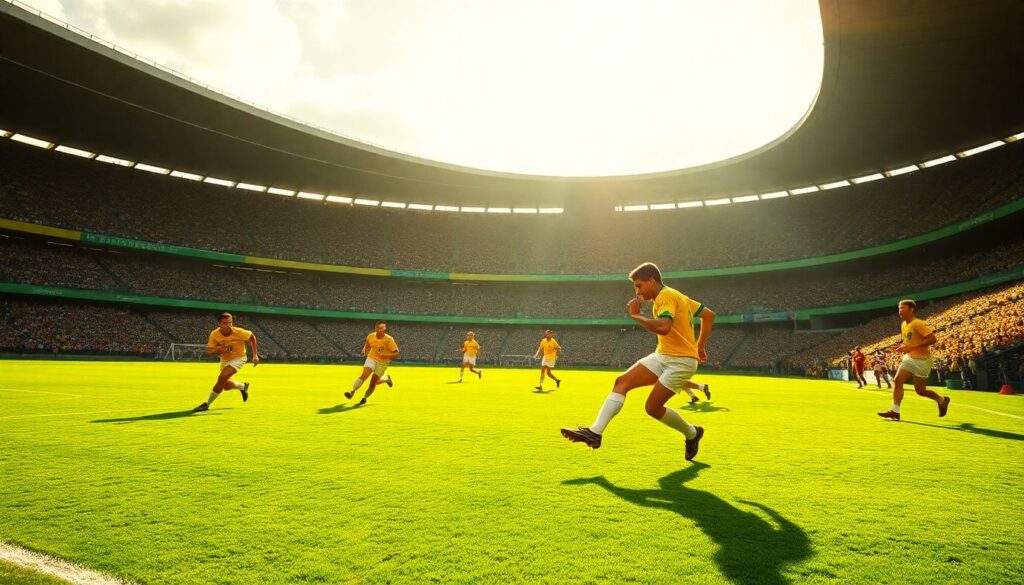
Discussions about absolute beauty become more concrete when anchored in specific matches and teams. Some historical examples are almost universally cited, yet they also reveal common mistakes and myths around «juego bonito».
- Brazil 1970 (World Cup)
Often described as the most beautiful team ever, with Pelé, Jairzinho, and Rivelino. The myth: that they were purely instinctive. In reality, they trained patterns and had clear structure, especially in transitions. The final goal against Italy (Pelé’s lay‑off to Carlos Alberto) is remembered as spontaneous genius, but it also shows positional order and timing. - Netherlands 1974 (Total Football)
Cruyff’s team is a symbol of fluid, attacking play. A frequent error is to assume they ignored defense. In fact, their pressing and offside trap were crucial. When people copy only the attacking rotations without the defensive discipline, they produce chaos, not beauty. - FC Barcelona 2009 vs. Real Madrid (6-2 at the Bernabéu)
This match is iconic in Spain for the combination of positional play, pressing, and ruthless finishing. A common myth: that it was all about short passing. The key moments, however, involve verticality-Xavi’s through balls, Messi attacking the half‑spaces, and quick transitions after high regains. - Spain vs. Italy, Euro 2012 final
Spain produced a dominant display mixing possession and deep penetration. Some later imitations of tiki‑taka copied only the retention aspect, leading to slow, predictable play. The mistake is to equate «many passes» with «juego bonito»; in this match, the passes had clear direction and intent. - Leicester City 2015-16 (Premier League)
At first glance, a counterattacking, direct style seems far from «juego bonito». Yet many neutrals found their vertical transitions and collective commitment thrilling. This case challenges the myth that only possession‑dominant styles can be beautiful. For many, beauty here lay in clarity of idea, intensity, and narrative.
These cases suggest that beauty is rarely about one tactic or one formation. It emerges from coherence: the alignment between philosophy, squad, and match context. Myths arise when we simplify the story, turning complex systems into romantic legends. A more honest analysis recognizes the tactical work and defensive order that quietly support the more visible, spectacular actions.
Moral and Commercial Consequences of Pursuing Beauty
Beyond tactics and aesthetics, «juego bonito» carries ethical and economic implications. When a club declares that it wants to play attractive football, it is not only making a technical choice; it is also sending a message about what it considers respectful to fans, players, and the game itself.
Morally, some argue that there is a duty to entertain: professional football exists because people pay money, invest time, and build identities around clubs. From this view, parking the bus every week, even with good results, can be seen as a kind of aesthetic injustice toward supporters who expect more than survival. Others reply that honesty about limitations is more ethical than pretending to be a «juego bonito» club without the resources or squad profile.
Commercially, beauty sells. Sponsors, broadcasters, and global audiences gravitate toward teams perceived as stylish. The marketing of La Liga frequently highlights the technical quality of matches, using clips of intricate passing and skill moves. However, this commercial incentive can also distort priorities: a coach may feel pressured to «play nice» for TV even when the competitive context calls for pragmatism.
Consider a hypothetical mid‑table Spanish club deciding its long‑term strategy:
- If it chooses a recognizably attractive style, it may attract more young talent, differentiate its brand, and build loyalty even without immediate titles.
- If it prioritizes short‑term survival with purely reactive football, it might secure league status but struggle to grow its identity and fan base.
Neither option is morally pure or commercially guaranteed. The philosophical point is that a declared commitment to «juego bonito» creates obligations: to invest in youth development, to hire coaches aligned with that vision, and to accept that there will be seasons where beauty and results do not perfectly align.
In this sense, «juego bonito» functions like a public promise. Breaking it repeatedly damages credibility more than never making it. Clubs, players, and coaches must therefore decide consciously how far they are willing to go in sacrificing beauty for points, or points for a style that expresses who they want to be.
Quick Practical Guidelines for Watching and Coaching
To make the philosophical discussion actionable, it helps to translate it into simple habits for fans, coaches, and players.
- When watching a match: Notice not only spectacular dribbles or goals, but also off‑the‑ball movement, pressing coordination, and how a team uses space between lines.
- When coaching amateurs or youth: Encourage decisions that balance risk and creativity-reward a good idea even if the execution fails, not only safe sideways passes.
- When judging «beauty» in debates: Make your criteria explicit. Are you prioritizing collective patterns, individual skill, emotional drama, or all three?
- When learning from elite teams: Do not copy their shape; copy the principles that fit your context (support angles, rhythm changes, pressing triggers).
- When reflecting on your club’s identity: Ask whether your expectations of «juego bonito» match the resources, academy profile, and historical culture of the club.
End-of-Reading Self-Check
- Can I explain why an absolute, universal definition of «juego bonito» is impossible, yet still talk meaningfully about football beauty?
- Do I distinguish between myths of beautiful play and the actual tactical and defensive work that sustains it?
- Have I clarified my own criteria for calling a match or team beautiful?
- Do I see how cultural and historical contexts (Brazil, Netherlands, Spain, Argentina) shape different standards of elegance?
- Am I aware of the moral and commercial trade‑offs that come with publicly committing to «juego bonito» as a long‑term philosophy?
Concise Clarifications on Common Doubts
Is there any fully objective definition of «juego bonito»?
No. There are shared patterns and widely admired examples, but judgments of beauty always involve cultural background, personal taste, and emotional response. We can clarify criteria, not eliminate subjectivity.
Does «juego bonito» always mean attacking and high‑scoring matches?
Not necessarily. Many beautiful performances involve control, patience, and defensive intelligence. A 1-0 win can be aesthetically impressive if the team shows coherence, courage, and technical clarity in every phase.
Are possession‑based teams automatically playing beautiful football?
No. Possession is only one tool. If it lacks verticality, risk, and creativity, it often feels sterile. Conversely, a vertical, counterattacking team can produce very attractive football when transitions are well coordinated and technically clean.
Can a small or limited team realistically pursue «juego bonito»?
Yes, but the style must fit the players. For modest squads, beauty may come from clear collective patterns, intensity, and smart use of space rather than constant domination of the ball.
Do results completely determine whether we call a style beautiful?
Results strongly influence memory and narrative, but they do not fully decide beauty. A losing team can be admired for its style, and a winning team can be criticized for playing in a way perceived as dull or purely opportunistic.
Is focusing on beauty irresponsible in professional football?
It depends on context. At the top level, clubs must balance entertainment, identity, and competitiveness. A clear, realistic philosophy that integrates beauty and effectiveness is more responsible than chasing either extreme blindly.
How can I train myself to see «hidden» beauty in matches?
Observe off‑the‑ball actions, team shape, and pressing triggers. Rewatch clips focusing on one player’s movement, not the ball. Over time, you start to appreciate the patterns that make the visible moments of brilliance possible.