Video Assistant Referee reduces some clear mistakes but does not create perfect justice. New error modes appear: opaque protocols, power shifts to remote rooms, and selective intervention. To fix problems, diagnose symptoms (delays, confusion, distrust), separate technical from political causes, then adjust procedures, communication, and governance before changing core technology.
Priority symptoms and immediate actions
- Repeated long delays without clear explanation around key incidents.
- Perception that VAR only favors big clubs or home teams.
- Players and coaches openly questioning referee integrity after reviews.
- Broadcast audiences confused about what VAR is checking.
- Strong disagreement between televisión replay and final VAR decision.
- Public frustration that tecnología VAR fútbol ventajas y desventajas were never honestly explained.
- Bookmakers and bettors complaining about impacto del VAR en las apuestas deportivas.
How VAR technology introduces new error modes
Even if the base refereeing is solid, VAR introduces specific «failure patterns» you should watch for.
- Time and flow symptoms
- Extreme pauses that break match rhythm for relatively simple checks.
- Multiple minutes to draw offside lines in seemingly obvious situations.
- Restart confusion: nobody in the stadium knows if play has fully resumed.
- Communication symptoms
- Stadium audience has no clue what is being reviewed or why it takes so long.
- Commentators give conflicting explanations on TV about the same incident.
- Referees signaling decisions that fans interpret as the opposite.
- Perceived inconsistency symptoms
- Very similar handballs treated differently week to week.
- VAR interventions for soft penalties but silence for clear fouls.
- Opiniones sobre el VAR en el fútbol profesional polarised between clubs and even inside the same federation.
- Technology-human mismatch symptoms
- Camera angles not aligned with offside lines, creating visual doubt.
- Low frame rate leading to «frozen» contact that exaggerates force.
- Operators struggling to find the best angle under time pressure.
- Trust and legitimacy symptoms
- Fans repeating that estadísticas errores arbitrales antes y después del VAR do not match their lived perception.
- Players celebrating goals cautiously, expecting every play to be re-checked.
- Media narratives that «the real power is now outside the pitch».
Power dynamics: referees, review rooms, and federations
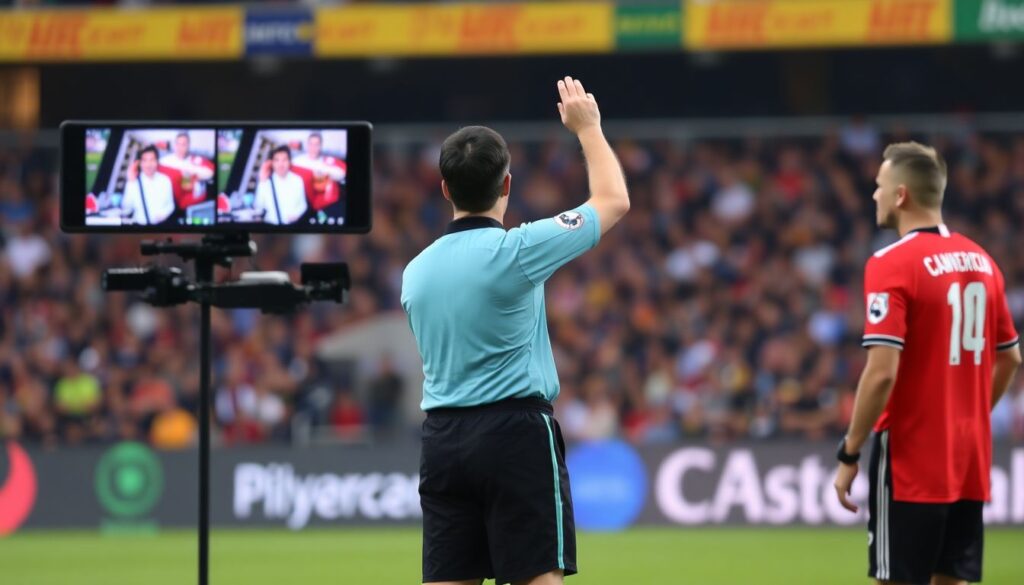
Use this checklist to quickly diagnose where a specific VAR problem is rooted: field, booth, technology provider, or governance. Start from the most common and easiest to verify.
- Are on-field referees comfortable overruling the VAR room when they keep strong conviction?
- Does the VAR team have clear, written criteria for «clear and obvious error», shared with all referees?
- Is there a transparent hierarchy (who has final word) documented for match incidents?
- Do referee appointments for VAR follow consistent performance criteria or opaque internal politics?
- Is the technology provider selected and renewed transparently, or via closed contracts?
- Are post-match VAR audios and protocols systematically published, or only when it helps the federation narrative?
- Do match officials receive independent training, or fully controlled by the same federation leadership they might embarrass?
- Is there a conflict of interest policy for VAR officials connected to clubs, broadcasters, or betting companies?
- Are referees evaluated on game control and communication, or only on «correctness» as judged by VAR frozen frames?
- Does the federation allow external audits of VAR application, including impacto del VAR en las apuestas deportivas and competitive balance?
- Are clubs and players able to access full incident reports, including angles and decision paths, under clear rules?
- Is there an appeals mechanism for systemic misuse of VAR (not for single judgment calls) with predefined thresholds?
When VAR increases controversy: common symptom patterns
This section connects visible symptoms to likely causes and concrete remedies. The table is designed for competition organisers, referee departments, and broadcasters in Spain to troubleshoot without breaking their live «production» environment: start with observational, read-only checks, then apply low-risk changes.
| Symptom (what you see) | Probable causes | How to verify (read-only first) | How to fix (from least to most intrusive) |
|---|---|---|---|
| Long reviews with fans and players visibly lost |
|
|
|
| Perception that VAR favors big clubs |
|
|
|
| TV replay looks «clearly» opposite to final decision |
|
|
|
| Constant feeling that «everything depends on VAR» |
|
|
|
| Growing mistrust in referees despite fewer objective mistakes |
|
|
|
| Bettors and bookmakers upset about late VAR swings |
|
|
|
| Referees appear psychologically affected by prior VAR mistakes |
|
|
|
Assessing trust: measurable and qualitative indicators
To troubleshoot confianza in referees under VAR, use a progressive, low-risk workflow. Start with observation and data already available; only then consider regulatory or technological changes.
- Define what «trust» means in your competition
- Clarify whether you focus on fans, players, coaches, or betting markets.
- List 3-5 concrete behaviours that signal trust (e.g., protests intensity, media tone).
- Align internally so everyone measures the same concept when asking cómo influye el VAR en la confianza en los árbitros de fútbol.
- Collect existing quantitative indicators (read-only)
- Cards for dissent, benches sanctions, crowd incidents.
- Complaint letters, official club statements, disciplinary cases.
- Match interruption minutes for protests after VAR checks.
- Add targeted qualitative inputs
- Short structured interviews with captains and coaches.
- Regular, neutral roundtables with referees and competition managers.
- Fan focus groups with clear, moderated guidelines.
- Map trust «hotspots» by competition segment
- Separate big derbies from low-pressure matches.
- Distinguish between domestic leagues, cups, and international games.
- Detect where VAR decisions trigger most emotional reaction.
- Compare pre-VAR and post-VAR perceptions cautiously
- Do not rely only on nostalgia; look for any archived surveys or media analyses.
- Where data exists, contrast it with current indicators.
- Explicitly state uncertainty where no reliable baseline exists.
- Identify which issues are technological vs. narrative
- Tag each major incident: camera/line issue, protocol confusion, or pure interpretation.
- Quantify how many crises would remain even with perfect cameras.
- Prioritise narrative and governance fixes where tech is not the root cause.
- Prototype communication changes first
- Test improved graphics and explanations in low-profile matches.
- Monitor whether better information reduces anger despite unchanged decisions.
- Iterate messaging before investing in new hardware or complex tools.
- Only then, review regulatory framework
- Evaluate if your local implementation goes beyond IFAB spirit.
- Consider adjustments to intervention thresholds and offside interpretation.
- Pilot changes in secondary competitions before top-tier leagues.
- Share independent evaluations publicly
- Commission external studies on VAR’s effect on trust and fairness.
- Publish results in accessible language, including limitations.
- Repeat regularly to track improvement, not to claim perfection.
Practical troubleshooting workflow for VAR incidents
This workflow helps decide when to escalate from internal review to external audit or structural reform. Think of your top competition as «production»: never experiment live without read-only checks and small pilots.
- Classify the incident type precisely
- Tag: offside, penalty, red card, mistaken identity, or other.
- Note: intervention (on-field review), silent check, or missed intervention.
- Record competition, stadium, and officials involved.
- Secure and review all technical assets
- Archive all camera feeds, calibration files, and VAR logs.
- Ensure chain of custody: no edits or missing frames.
- Conduct an internal, non-punitive review first.
- Evaluate protocol compliance
- Compare actions taken to written VAR protocol step by step.
- Identify any skipped or improvised steps.
- If protocol was followed but outcome is unpopular, focus on communication, not scapegoats.
- Check for recurring patterns
- See if the same referee, VAR, stadium, or technology appears in multiple controversies.
- Look for incident clusters (e.g., specific competition phase).
- Prioritise issues that repeat over isolated one-offs.
- Decide escalation level
- Low-level: internal memo, coaching, or clarification to officials.
- Medium-level: public explanation, adjustment to guidelines, extra training.
- High-level: formal investigation, external audit, or suspension of technology/provider.
- Engage stakeholders in a controlled way
- Brief affected clubs and referees privately before public statements.
- Prepare consistent talking points for media and digital channels.
- Avoid mid-investigation leaks that undermine confidence in the process.
- Implement small, testable changes
- Adjust specific communication phrases or stadium messages first.
- Pilot procedural tweaks in lower divisions or friendly matches.
- Monitor impact via both performance data and opiniones sobre el VAR en el fútbol profesional gathered from stakeholders.
- Review risk before major reforms
- For changes to core protocols, seek IFAB and FIFA guidance.
- Run simulations with historical match data where possible.
- Ensure legal and contractual implications (broadcasters, betting, sponsors) are assessed.
- Document and share learnings
- Maintain a knowledge base of cases, fixes, and outcomes.
- Update referee education materials regularly.
- Present lessons to clubs and media at the start of each season.
Regulatory and technical remedies that actually work
To reduce systemic VAR friction in Spanish football and preserve the referee’s authority, focus on prevention: good architecture avoids most crises before they appear.
- Clarify the philosophy of VAR publicly
- State clearly: VAR is to correct «clear and obvious» errors, not to re-referee matches.
- Explain limitations and trade-offs, not just benefits.
- Limit intervention scope
- Resist adding new reviewable categories every season.
- Define a high bar for offside and handball interventions to protect flow.
- Standardise referee communication
- Adopt mandatory short announcements for all reviews and outcomes.
- Train in calm, neutral tone even under hostile crowd pressure.
- Invest in robust, redundant technology
- Ensure enough calibrated cameras at all eligible stadiums.
- Set clear technical fallback procedures for partial outages.
- Publish structured transparency
- Release regular incident reports and aggregated statistics.
- Where possible, publish VAR audio after matches under consistent rules.
- Strengthen independence and accountability
- Separate refereeing governance from short-term club politics.
- Use mixed committees (referees, former players, independent experts) for oversight.
- Optimise training for human-tech interaction
- Simulate high-pressure review scenarios with real broadcast setups.
- Include cognitive bias training and decision-making under time constraints.
- Align with betting and broadcast ecosystems
- Design data feeds and messaging that reflect real-time VAR status.
- Clarify in commercial contracts how VAR-related delays and changes are handled.
- Continuously re-evaluate law interpretations
- Gather feedback from all stakeholders each season.
- Adjust local guidance where global laws allow, to fit Spanish football culture.
- Educate the next generation
- Integrate VAR literacy into coaching, referee, and player education pathways.
- Use grassroots and youth competitions to teach realistic expectations about justice and error.
Concise answers to recurring VAR dilemmas
Does VAR really reduce errors or only shift them?
VAR reduces some categories of clear factual mistakes, especially offsides and mistaken identity, but introduces new error modes: calibration issues, over-interpretation of slow-motion, and protocol confusion. The net effect depends on how strictly «clear and obvious» is respected and how well communication is managed.
Why do fans feel more angry now if accuracy is higher?
Expectations increased faster than actual accuracy. Fans were sold the idea of perfect justice, so any remaining controversy feels intolerable and suspicious. Transparency, education, and honest messaging about limitations are necessary to realign perception with reality.
How should leagues in Spain handle media pressure after a big VAR mistake?
Secure all evidence, publish a clear, time-lined explanation, and admit errors without attacking referees personally. Announce specific improvements (training, protocol tweaks) and follow up, instead of improvising new rules mid-season under talk-show pressure.
Is publishing VAR audio a good or bad idea?
It helps legitimacy if done under stable rules, with context and expert explanation. Selective, one-off releases used as political tools damage trust. The key is consistency, privacy safeguards, and education so audiences understand what they hear.
Can VAR ever be perfectly fair given camera and human limits?
No. There will always be gray areas in interpretation and physical limits in cameras and frame rates. The goal should be «significantly fairer and more transparent than before», not perfection. Acknowledging this openly reduces disappointment and conspiracy theories.
How can referees maintain authority when a remote room can overrule them?
Authority comes from decisiveness, clarity, and perceived neutrality, not infallibility. Referees should make strong initial decisions, use VAR as a safety net, communicate clearly, and accept corrections as part of a team process, not as humiliation.
What is the biggest single change to improve trust in VAR?
For most competitions, standardised, brief explanations of all reviews directly from the referee, combined with regular public reporting of aggregated VAR statistics and typical clips, offers the fastest trust gains without heavy structural reforms.