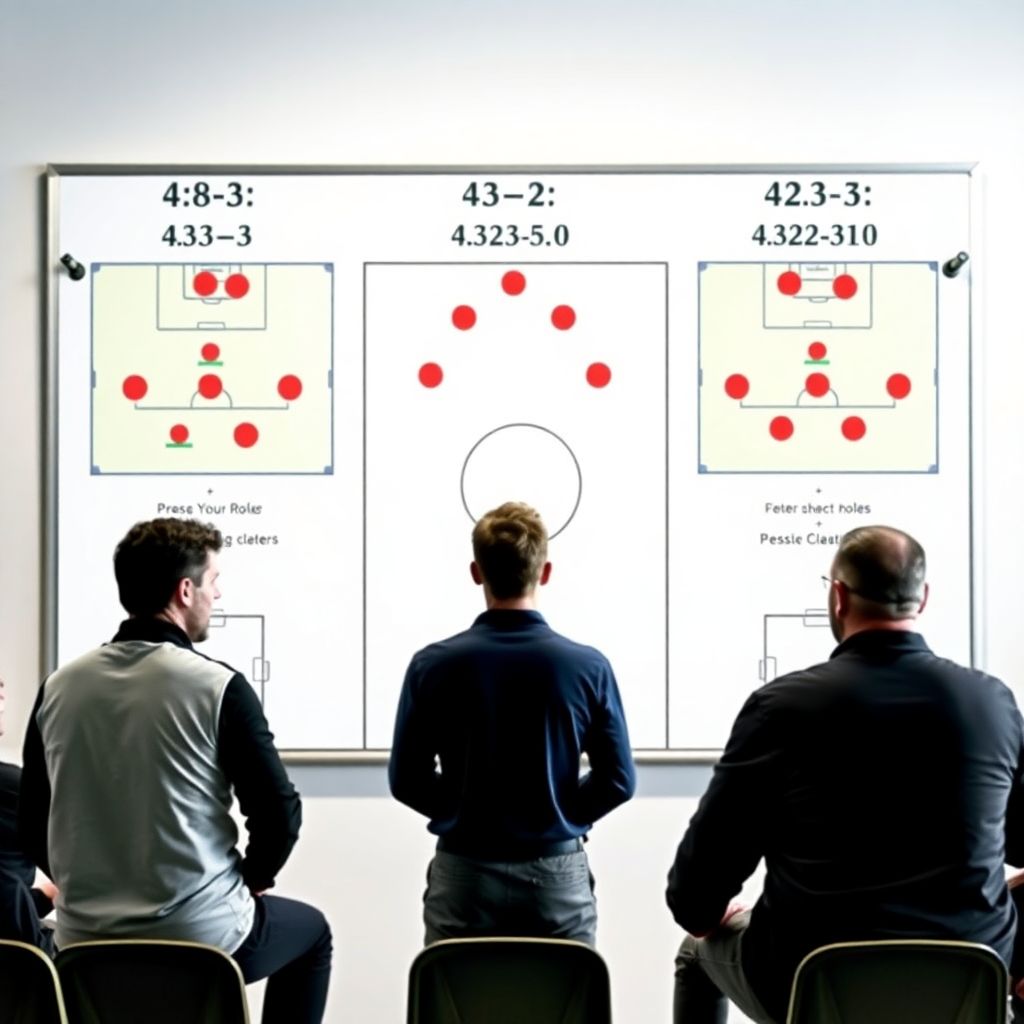
The best formation is the one that matches your players’ profiles, your pressing idea and your club’s resources. 4-3-3 is clearest for width and high pressing, 3-5-2 maximises central control with fewer attackers, and 4-2-3-1 balances safety and creativity. Think in «roles talking»: who gives width, who connects, who protects.
How these formations ‘speak’ to each other on the field
- 4-3-3 speaks through wingers and a single pivot: clear width, vertical pressing and simple reference points.
- 3-5-2 speaks through wingbacks and central overloads: domination of middle zones but more complex timing wide.
- 4-2-3-1 speaks through the double pivot and the number 10: stable rest defence with a creative connection line.
- For limited squads and grassroots budgets, 4-3-3 or a simple 4-2-3-1 are easier to train than a fluid 3-5-2.
- Against back fours, 3-5-2 can create natural two‑v‑two centrally; against back threes, 4-3-3 often finds better wide superiority.
- Transitions decide everything: choose the system that gives you the clearest reactions after losing and winning the ball.
Width and Channel Control: Fullbacks, Wingbacks and Wingers in 4-3-3 vs 3-5-2 vs 4-2-3-1
Use these criteria to choose how your system «occupies» the wings and half-spaces:
- Player profiles outside: If your fullbacks are runners but not great crossers, 4-3-3 with wingers providing final balls is safer than asking them to function as pure wingbacks in a 3-5-2.
- How you want to press: Teams that trigger the press from wingers jumping to centre-backs usually feel more natural in 4-3-3 or 4-2-3-1; 3-5-2 needs wingbacks with huge engines and timing to jump without exposing the back line.
- Preferred crossing zones: If you like early crosses from deeper channels, fullbacks in 4-3-3 or 4-2-3-1 fit; if you want cut-backs from the byline, aggressive wingbacks in 3-5-2 or high wingers in 4-3-3 are better.
- Protection of your flanks when you lose the ball: A 4-2-3-1 with a disciplined wide midfielder can close the fullback-winger channel quickly; 3-5-2 often leaves big distances for the nearest central midfielder to cover if a wingback is high.
- How many players you want between lines: 4-3-3 sends wingers inside or outside depending on the fullback’s run; 4-2-3-1 naturally offers the number 10 and at least one wide player between lines; 3-5-2 prefers the two advanced midfielders occupying half-spaces while wingbacks stretch the pitch.
- Communication and clarity for semi-pro / amateur teams: With limited training time and budget, simpler messages like «wingers wide, fullbacks support» in a 4-3-3 are easier than teaching complex wingback behaviours in a 3-5-2.
- Opposition back line structure: Against a flat back four, 3-5-2 gives two strikers pinning centre-backs and wingbacks attacking fullbacks; against a back three, 4-3-3 or 4-2-3-1 often finds clearer 2v1s on the outside.
- Club philosophy and pathway: If your academy already works with 4-3-3 (very common in cursos de táctica futbolística 4-3-3 3-5-2 4-2-3-1), it is cheaper to keep the same width principles across teams than to change to 3-5-2 for a single squad.
Midfield Responsibilities: Holding Pivots, Box-to-boxs and Number 10s as connective tissue
The midfield «grammar» of 4-3-3, 3-5-2 and 4-2-3-1 changes who links phases and who protects rest defence. The variants below help you adapt the system to your squad and competition level.
| Variant | Best suited for | Strengths | Weaknesses | When to choose it |
|---|---|---|---|---|
| 4-3-3 with single holding pivot (6) and two box-to-box 8s | Teams with one intelligent holding midfielder and energetic interiors, especially in development contexts and modest-budget clubs. | Clear build-up structure, strong pressing from 8s, easy to teach. Works well with typical academy drills and many libros de táctica de fútbol formaciones 4-3-3 3-5-2 y 4-2-3-1. | If the 6 is overloaded or isolated, central transitions become fragile. Requires a disciplined front three in pressing. | When you want aggressive pressure, vertical runs from midfield and a simple, repeatable model for training sessions. |
| 4-3-3 with double pivot in build-up (6 drops between CBs, one 8 forms 2nd pivot) | Teams without a natural top-class 6 but with defenders comfortable on the ball; good for coaches using software de análisis táctico para formaciones 4-3-3 3-5-2 4-2-3-1 to fine-tune rotations. | More secure rest defence, easier exit versus two-striker presses, protects fullbacks when they advance. | Can slow circulation and reduce one extra player between lines if automatisms are not clear. | When opponents press high with two forwards or your centre-backs dislike long carrying into midfield. |
| 3-5-2 with single 6 and two advanced 8s | Teams wanting to dominate central lanes, with at least one creative midfielder and strikers willing to press. | Huge central presence, natural triangles in half-spaces, good for controlling second balls and counter-pressing. | Wingbacks need extreme stamina; if they are pinned deep, width and chance creation suffer. | When rivals defend narrow in a low or mid block and you trust your three centre-backs to manage open space. |
| 4-2-3-1 with double pivot and classic number 10 | Balanced teams that need stability, have one creative playmaker and maybe limited overall athleticism. | Double pivot shields transitions, number 10 connects lines, structure is intuitive for many players and easy for clases online de análisis táctico de sistemas de juego fútbol to explain. | If the 10 does not work defensively, presses can break; wingers must help inside to avoid the pivots being outnumbered. | When you want flexibility: you can shift to 4-4-2 in defence and 4-3-3 in attack with simple role instructions. |
| 4-2-3-1 with more defensive 10 (false 10 / third midfielder) | Clubs that face strong rivals, defend deeper or protect young centre-backs; useful in máster en entrenamiento táctico y sistemas de juego en fútbol scenarios. | High defensive compactness, three central midfielders in many moments, good for counter-attacking with wide players. | Less creativity between lines, you rely more on wide players and fullbacks for chance creation. | When your main objective is not to be open between the lines and you plan to counter-attack from an organised block. |
Build-up Logic: Progression Lines and overloads from back to front
Think in simple «if-then» rules to decide when each system communicates best from the back, especially when your budget limits training time and extra staff.
- If your centre-backs are calm on the ball but your fullbacks are average, then a 3-5-2 can help by keeping three players in the first line and pushing width higher through wingbacks, creating safe passing angles without needing premium attacking fullbacks.
- If your squad is technically modest and you cannot afford long, complex build-up patterns, then a basic 4-2-3-1 with wide players high and a clear «find the 10» rule is a cost-effective option: fewer automatisms, more direct references.
- If you have one high-quality 6 and two dynamic 8s, then 4-3-3 lets you build in a 1-2 triangle ahead of the centre-backs, inviting pressure and playing vertical to inside wingers; this works even in low-budget environments with well-structured weekly microcycles.
- If opponents press with two strikers and block your pivot, then shifting your 4-3-3 into a temporary 3-2 build (fullback inside or 6 dropping between centre-backs) gives a stable base, similar to 3-5-2, while keeping the front three high.
- If your club invests in more «premium» tactical resources (video analysts, detailed software de análisis táctico para formaciones 4-3-3 3-5-2 4-2-3-1), then 3-5-2’s rotational build-up-6 dropping, 8s swapping height, wingbacks inverting-can be exploited because staff can coach small details on video.
- If you coach at amateur level with one or two sessions per week, then prioritise a build-up script that players can remember under pressure: for example, 4-3-3 with 6 showing between centre-backs and fullbacks high, or a compact 4-2-3-1 asking fullbacks to step only when the ball is on their side.
Defensive Conversations: Pressing Triggers, Midblock Shape and Covering Principles
- Define your main defensive height first: if you want to press high, 4-3-3 and 4-2-3-1 offer clearer winger triggers; if you prefer a mid block, 3-5-2 and 4-2-3-1 give more central bodies.
- Decide who jumps to the opposition fullback: in 4-3-3, it is usually your winger; in 3-5-2, the wingback; in 4-2-3-1, winger or fullback depending on the zone. Fix this in training with repetitive, low-cost pressing drills.
- Clarify the role of your 6 or double pivot: is the priority to screen the passing lane to the striker, to press the ball carrier, or to cover the far half-space? Connect this answer to your chosen system.
- Map your rest defence when attacking: for wide attacks in 4-3-3, keep the far fullback and at least one 8 protecting counters; in 3-5-2, usually two centre-backs plus the 6 must hold; in 4-2-3-1, the double pivot is key.
- Use a simple midblock shape as your anchor: 4-3-3 can fall into a 4-1-4-1, 3-5-2 into a 5-3-2, 4-2-3-1 into a 4-4-1-1. Train this shape every week, even in short sessions.
- Link pressing triggers to visual cues: back pass, poor first touch, or pass into the fullback with closed body. Decide how each formation reacts to these cues and repeat them in game-like rondos and positional games.
- Evaluate your centre-backs’ speed: if they are slow and you cannot reinforce the squad, avoid very high lines; a compact 4-2-3-1 or deeper 3-5-2 midblock may protect them better than an aggressive 4-3-3 press.
Transition Language: Fast-break protocols and recovery priorities
Usual mistakes when choosing between 4-3-3, 3-5-2 and 4-2-3-1 are less about the paper shape and more about unclear transition rules.
- Picking a 3-5-2 for «defensive solidity» but not defining which midfielder steps out to press after losing the ball, leaving the 6 surrounded and wingbacks too high to react.
- Choosing 4-3-3 for counter-attacking but asking wingers to defend too deep, so they start transitions far from the striker and counters lose speed.
- Going for 4-2-3-1 without clarifying whether the number 10 joins the first counter-press or marks the opposition pivot, creating hesitation in the crucial first seconds.
- Underestimating the physical cost of wingbacks in 3-5-2: if your squad is semi-pro and trains little, repeated transitions up and down the line can kill intensity late in matches.
- Not planning «exit routes» after regaining: in 4-3-3, you usually want an immediate vertical pass to a winger; in 4-2-3-1, a diagonal into the 10 or opposite winger; in 3-5-2, direct to one striker with the other running in depth.
- Changing formation mid‑season without adjusting set-piece structures, so your rest defence on attacking corners does not match your transition principles in open play.
- Copying elite models from libros de táctica de fútbol formaciones 4-3-3 3-5-2 y 4-2-3-1 or from cursos de táctica futbolística 4-3-3 3-5-2 4-2-3-1 without adapting to your players’ running capacity and decision speed.
- Investing in complex video work or cursos when a few clear, cheap training games (3v2, 4v3 transition drills) would already align your chosen system with your players’ instincts.
Hybrid Moments: How teams shift formationally in-game and exploit mismatches
4-3-3 is usually best if you want simple width, clear pressing and easy role explanation, especially in lower-budget or development contexts. 4-2-3-1 often suits balanced squads needing safety plus a creative link. 3-5-2 works best when you own strong central defenders and wingbacks and can invest training time in automatisms.
Straight answers to recurring tactical confusions
Is 4-3-3, 3-5-2 or 4-2-3-1 «best» for modern football?
No system is universally best. 4-3-3 is usually cleaner for pressing and developing young players, 4-2-3-1 offers balance and flexibility, and 3-5-2 maximises central control. Choose according to your squad’s profiles and competitive context.
Which system fits a small-budget club with limited training time?
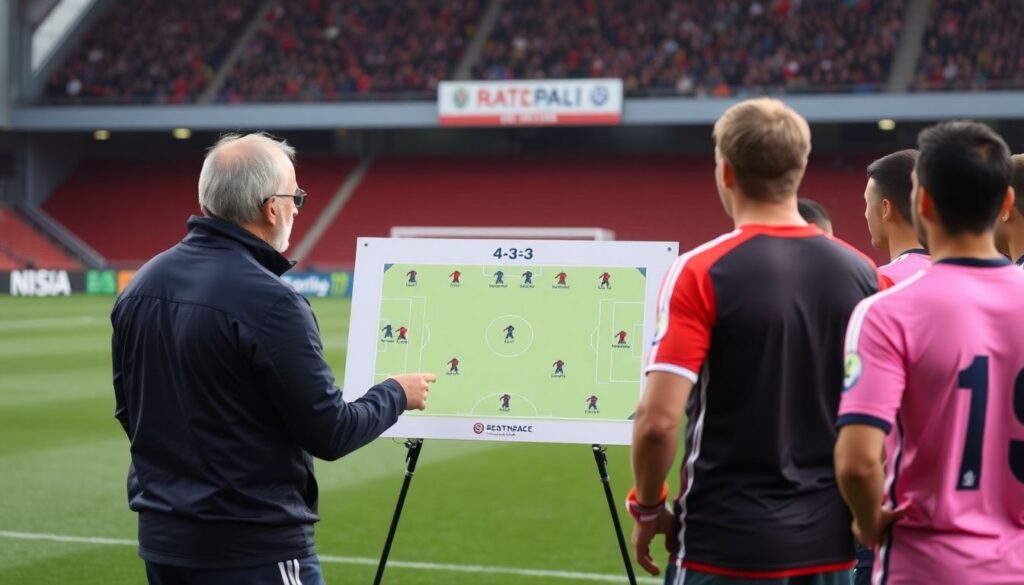
Generally a straightforward 4-3-3 or a compact 4-2-3-1. Both are easier to explain, align well with many cursos de táctica futbolística 4-3-3 3-5-2 4-2-3-1, and demand fewer rehearsed rotations than a sophisticated 3-5-2.
When does 3-5-2 make more sense than 4-3-3?
3-5-2 is attractive when you have three reliable centre-backs, two tireless wingbacks and at least one creative central midfielder. It shines against teams that defend narrow, because you dominate the middle while still stretching them wide.
How do I use a number 10 effectively in 4-2-3-1?
Define two clear tasks: a pressing role (jumping to the pivot or centre-back) and a receiving map (between lines, mostly in half-spaces). Train automatisms with wide players so they know when the 10 drops and they must attack depth.
Can amateur teams play the same systems as professional clubs?
Yes, but with simpler rules. Use the same base shapes-4-3-3, 3-5-2, 4-2-3-1-but reduce the number of rotations and pressing triggers. Focus on 2-3 core principles per phase instead of copying all the details from elite teams.
Are online resources useful for learning these formations?
They can be very useful. Clases online de análisis táctico de sistemas de juego fútbol, specialised libros de táctica de fútbol formaciones 4-3-3 3-5-2 y 4-2-3-1 and even affordable software de análisis táctico para formaciones 4-3-3 3-5-2 4-2-3-1 help you visualise patterns and correct details between matches.
How do hybrid shapes work during a match?
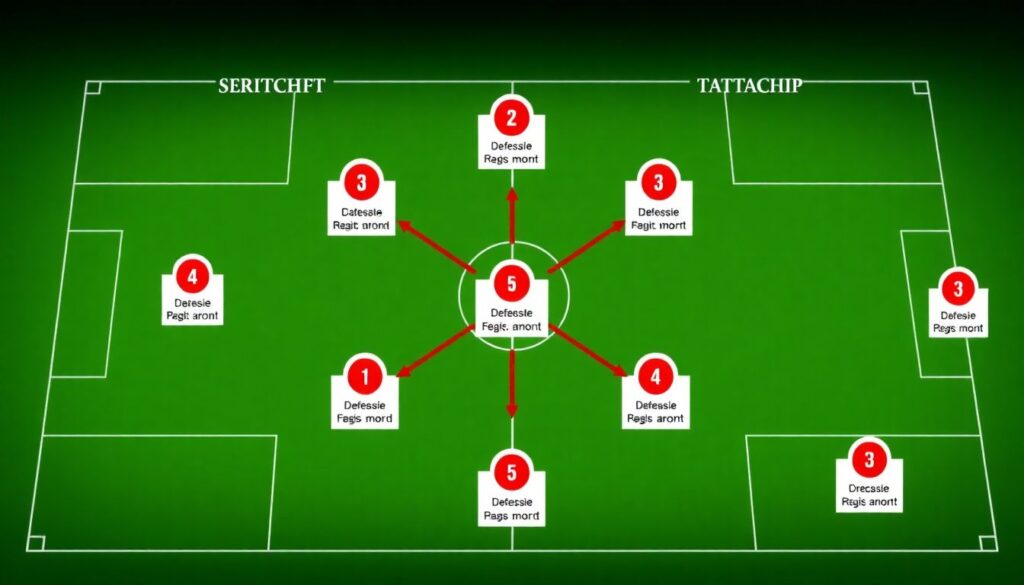
Hybrid shapes mean you defend in one structure and attack in another. For example, a 4-2-3-1 can defend as 4-4-1-1 and build like 4-3-3 when a pivot steps up. The key is consistency in player cues, not the drawing itself.