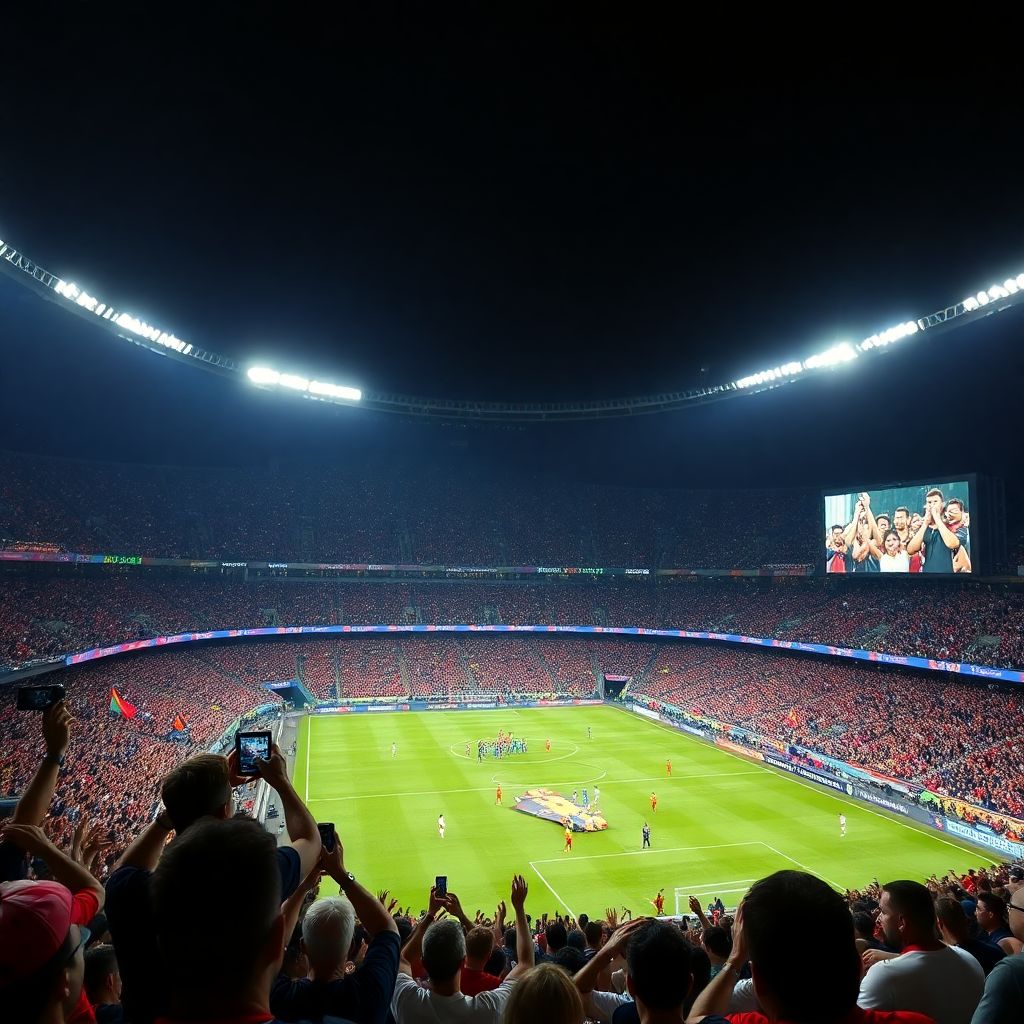
Television transformed football from local, potrero-based play into a global media product, changing what «the game» means for players, fans and clubs. Camera angles, commentary and schedules reshape how we read tactics, value individual brilliance and even define «success». Understanding this shift is essential for interpreting modern Spanish and global football culture.
How TV Changed What We Mean by Playing
- Shifted football from local community ritual to mass broadcast spectacle.
- Turned matches into made-for-TV narratives with heroes, villains and cliffhangers.
- Encouraged rule, format and scheduling changes to fit broadcasting needs.
- Reframed players as global celebrities and brands rather than just teammates.
- Standardised how fans in Spain and worldwide see and talk about tactics.
- Linked everyday playing to ideals learned from fútbol en vivo por televisión.
Historical shift: from local pitch rituals to broadcast spectacles
Originally, «the game» was defined on the potrero, the barrio pitch or the village field: uneven ground, improvised goals, fluid rules and a tight social circle. Meaning came from the people present, the shared history and the specific micro-culture of each place in Spain or Latin America.
With mass broadcasting, that meaning migrated to the screen. For many fans, the real reference is no longer their local seven-a-side on Sunday, but La Liga or the Champions League framed by television. The standard of what counts as «good play» is set by televised matches, not by local improvisation.
Television also redefined who is included in «we». Before, «we» meant the players on the pitch and a few neighbours watching from the touchline. Now, «we» can mean millions of viewers following fútbol en vivo por televisión at the same time, reacting on social networks and adopting a shared emotional calendar around fixtures.
This shift turned football into a recurring broadcast event with predictable slots, sponsorships and cross-promotions. The match stopped being just a local ritual and became an episode in a long-running media saga, coordinated across mejores canales deportivos para ver fútbol, radio, press and, more recently, plataformas de streaming para ver fútbol online.
Technical innovations that altered game perception
Specific technologies changed not only how we see football, but also what we think is important in a match:
- Multi-camera setups – From a single, high, central camera to dozens placed behind goals, on cranes and rails, guiding attention to duels, spaces and gestures that used to be invisible to the regular spectator by the corner flag.
- Slow motion and super slow motion – Transform brief contacts into extended dramas. Fouls, offsides and handballs become moral debates because fans repeatedly see what players experienced only once and at full speed.
- Close-ups and reaction shots – Direct the emotional reading of the game: the frustrated coach, the anxious goalkeeper, the crying child in the stands. Television adds layers of individual psychology to a collective sport.
- Graphics and live data – From basic scoreboards to heat maps and expected goals, overlays teach fans to interpret matches through statistics. Analysts and coaches must now answer not only «who won?», but «was the performance efficient according to the graphics?».
- Audio capture and mixing – Controlled crowd noise, field microphones and commentary balance change the perceived intensity. The same play can feel epic or flat depending on how sound engineers mix fans, whistles and voices.
- Time-shifting and on-demand viewing – DVRs and replays on plataformas de streaming para ver fútbol online let people re-watch sequences, freeze frames and build their own «evidence», which affects tactics debates and refereeing arguments.
- High-definition and ultra-HD – Sharper images allow reading small details: defensive lines, body positioning and minor jersey pulls. This increases scrutiny over players and referees and encourages a more forensic culture among viewers.
Narrative framing: commentators, replays and the manufactured drama
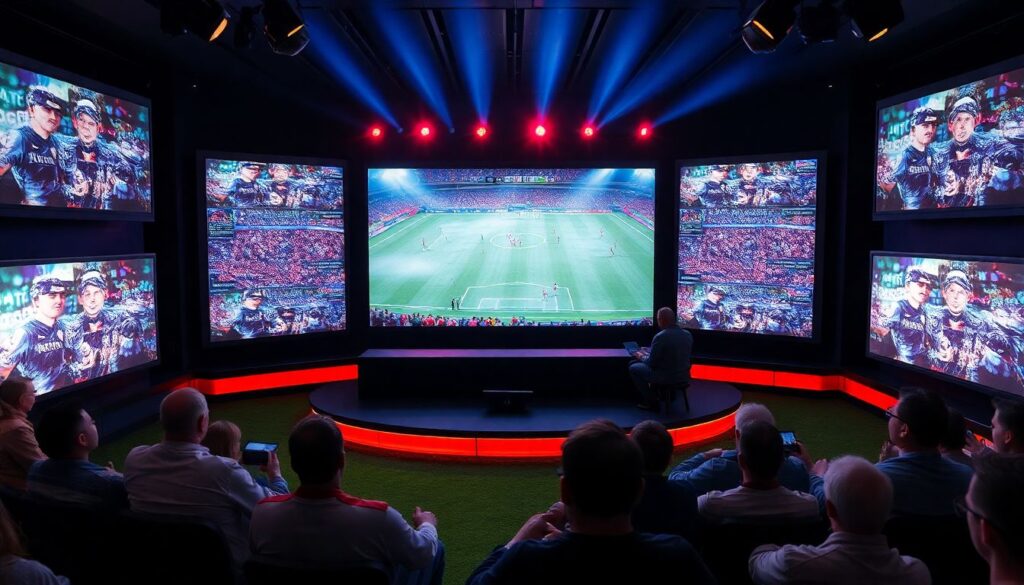
Narrative framing is the set of tools television uses to tell viewers what the match «means» beyond the raw result. It shapes fan memory and often overrides what players felt on the pitch.
Pre-match storylines
Broadcasters build anticipation through head-to-head statistics, revenge narratives, transfer gossip and local rivalries. When fans in Spain compare paquetes de televisión con canales de fútbol, they often consider which channels build the most engaging narrative around their club, not just who has the rights.
Live commentary and co-commentary
Commentators create a running script: framing certain players as leaders or weak links, suggesting tactical readings and judging refereeing decisions. Co-commentators (ex-players or coaches) add authority, which heavily influences how casual viewers evaluate «good» and «bad» decisions.
Replay selection and timing
Producers decide which actions to replay and from which angles. A borderline offside might be replayed many times, turning it into the central event of the match. Conversely, intelligent off-ball movement may never be shown, under-valuing that skill in public perception.
Halftime and post-match analysis
Studio segments with ex-players, touchscreen tactics boards and video breakdowns summarise 45 or 90 minutes into a few «key moments». This narrative condensation guides what fans discuss the next day and how future games are interpreted.
Season-long arcs
Television packages matches inside longer arcs: title races, relegation battles, «last chance» scenarios for a coach. The result of one match is rarely presented as isolated; it becomes an episode in the story of a club, a star or even a league brand.
Economic levers: advertising, rights and the commodification of play
Television did not just tell new stories; it also reorganised the money around football. Rights, packages and ads changed how the game is planned and consumed.
Upsides of the TV-driven football economy
- Stable revenue streams for clubs – Broadcast rights and sponsorships linked to audience metrics give clubs predictable income, which funds academies, infrastructure and medical teams.
- Professionalisation of lower divisions – When second-tier leagues secure television deals, they can pay better wages, improve pitches and attract more qualified coaches.
- Incentives for tactical innovation – Teams that play attractive football get more prime-time exposure and higher commercial value, encouraging work on styles that «sell» to broad audiences in Spain and abroad.
- New jobs within the game – Analysts, camera operators, pundits, content creators and social media teams become part of the football ecosystem, especially around mejores canales deportivos para ver fútbol.
- Accessible access for diverse fans – Fans who cannot attend stadiums for economic, geographic or mobility reasons can still follow their team through fútbol en vivo por televisión or streaming bundles.
Constraints and trade-offs created by television
- Scheduling distortions – Kickoff times are decided for peak audiences and global markets, not for local fans or players’ biological rhythms, sometimes harming performance and match-going experience.
- Paywall barriers – The suscripción tv deportes precio can exclude lower-income supporters, fragmenting the fanbase between stadium-goers, legal subscribers and those who rely on highlights or illegal streams.
- Over-commercialisation of the matchday – More ad breaks and branded segments can dilute the sense of a continuous football ritual, turning it into a sequence of sponsored moments.
- Pressure for constant content – Clubs adapt to a 24/7 media cycle with behind-the-scenes shows, which may intrude on training, dressing-room privacy and long-term tactical work.
- Dependence on broadcasters’ agendas – When a league relies heavily on a few big broadcasters, its strategic priorities (scheduling, competition format, expansion) can be shaped by TV needs more than by sporting logic.
Rules, pacing and format changes driven by television needs
Television’s search for rhythm and clarity feeds a series of myths about why rules and formats evolve. Understanding these myths helps coaches, players and analysts interpret changes without falling into simplistic explanations.
- Myth: «All rule changes are for TV drama» – Many adjustments are driven by player safety, fairness or long-standing IFAB debates. Television often amplifies certain effects (e.g., VAR drama), but is not always the original cause.
- Myth: «More interruptions always help broadcasters» – Excessive stoppages can make neutral viewers switch channel, so broadcasters balance drama (VAR checks, confrontations) with flow; leagues must negotiate between both needs.
- Myth: «Shorter formats mean less football» – Tournaments with mini-leagues or play-offs may reduce the number of minutes per team, but increase the volume of «high-stakes» content, which is more attractive for TV but not necessarily worse for competitive balance.
- Myth: «TV only wants goals, not tactics» – High-level broadcasters now invest in telestration, heat maps and tactical cameras because a segment of the audience demands depth. Compact defensive blocks can be as «sellable» as attacking fireworks if well explained.
- Myth: «Old football was pure, modern football is fake» – The potrero era also had its pressures, local politics and economic interests. Television changed the scale and visibility of those forces, not their existence.
- Myth: «Streaming killed traditional TV logic» – Even when you use plataformas de streaming para ver fútbol online, match windows, highlight edits and cross-promotions often copy classic television logics, just with more personalisation and data.
Cultural consequences: fandom, hero-making and globalized meanings
Television turned local idols into international brands and redefined how people everywhere, including Spain, form their football identity. A child in Sevilla can grow up following an English or German club, because televised leagues feel as emotionally «near» as the local team.
Hero-making changed, too. Before, legends were built through oral stories and local memory. Now they are built through curated highlight packages, social media clips and global campaigns coordinated across mejores canales deportivos para ver fútbol and digital platforms. Failure and success are reframed by what is repeatedly shown, not only by what happens once on the pitch.
Globalised coverage also standardises language. Terms like «pressing», «transitions» or «false nine» spread because television experts and streaming commentators use them across countries. Local tactical dialects still exist, but they are filtered through a shared media vocabulary that shapes how coaches design training and how fans judge decisions.
Mini-case: from potrero moves to televised benchmarks
Imagine a winger from a Madrid barrio, raised on street football. On the potrero, success meant beating your direct marker and entertaining friends. After years of watching elite fútbol en vivo por televisión, the same player now associates «good play» with specific, televised benchmark actions: perfectly timed pressing triggers, body orientation in build-up, or celebrated «signature moves» from global stars.
When that player joins an academy whose matches are broadcast as part of paquetes de televisión con canales de fútbol, their own self-evaluation is filtered through those screens. They do not just ask, «Did we win here today?», but «Did I play in a way that would look good on TV?». Television has quietly reconfigured the sense of the game, even when no cameras are present on the training ground.
Short checklist and algorithm to review TV’s impact in your context
- Clarify your baseline: write what «good football» meant to you before heavy TV/streaming exposure.
- Map the main broadcasters, streaming platforms and shows that shape how you and your players watch football.
- List three concrete behaviours (tactical choices, celebrations, risk-taking) that changed after more televised football in your environment.
- Decide which TV-influenced elements you want to adopt intentionally and which you prefer to limit or question.
- Observe: record a match or training and note moments that imitate televised behaviours or camera-driven logic.
- Compare: contrast those moments with your baseline definition of «the game» and your current sporting objectives.
- Adjust: choose one small rule, routine or communication change for the next week, then repeat the observation-comparison cycle.
Practical clarifications on TV’s impact for coaches, players and analysts
How should a coach in Spain adapt training to a TV-shaped game?
Use video to align players’ mental images with your ideas, but keep some sessions free from cameras and external noise. Alternate drills that simulate televised pressure (crowd, noise, high stakes) with exercises that reward creativity and potrero-style improvisation.
Does watching too much televised football harm young players?
It depends on what and how they watch. Curated tactical clips, varied leagues and guided viewing can be positive. Passive consumption of highlight reels and star-centric narratives may distort expectations and undervalue team roles or defensive work.
How can analysts avoid overfitting to TV angles and graphics?
Complement broadcast footage with wide-angle tactical cameras whenever possible. Re-check conclusions by observing live matches from different positions in the stadium and by talking directly with coaching staff about intentions and constraints not visible on screen.
Is the move from traditional TV to streaming changing football’s meaning again?
Streaming increases personalisation and fragmentation, but it still follows many TV logics. The biggest change is data: platforms can track what people watch and for how long, which may amplify certain content types and further shape what is valued in the game.
What can local amateur clubs do in a TV-dominated environment?
Use television expectations as a language, not as a prison. Borrow useful tools (basic video analysis, storytelling, highlight clips) while keeping local rituals: shared meals, informal tournaments and spaces where playing is not reduced to what looks good on screen.
How should fans interpret disagreements between what they saw live and what TV shows?
Remember that live perception and edited replays are different realities, both partial. Treat television as a powerful, but not neutral, lens. When in doubt, consider the selection of angles, the commentator’s agenda and what the director chose not to show.
Does the price of sports TV subscriptions influence tactical styles?
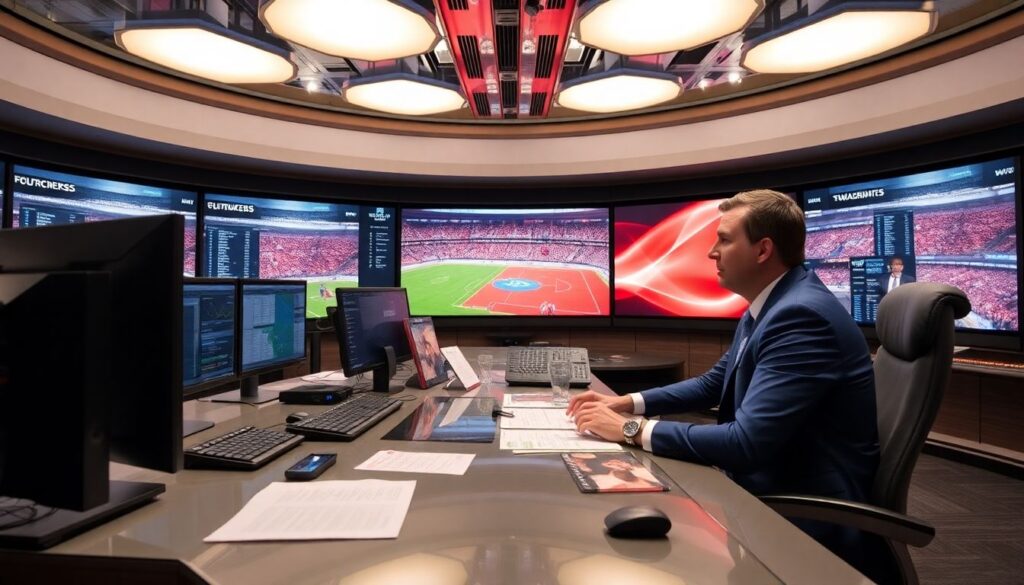
Indirectly, yes. When suscripción tv deportes precio pushes broadcasters to maximise paying audiences, they may prefer leagues and styles seen as entertaining. This can pressure clubs to adopt more «TV-friendly» approaches, especially in highly commercial competitions.