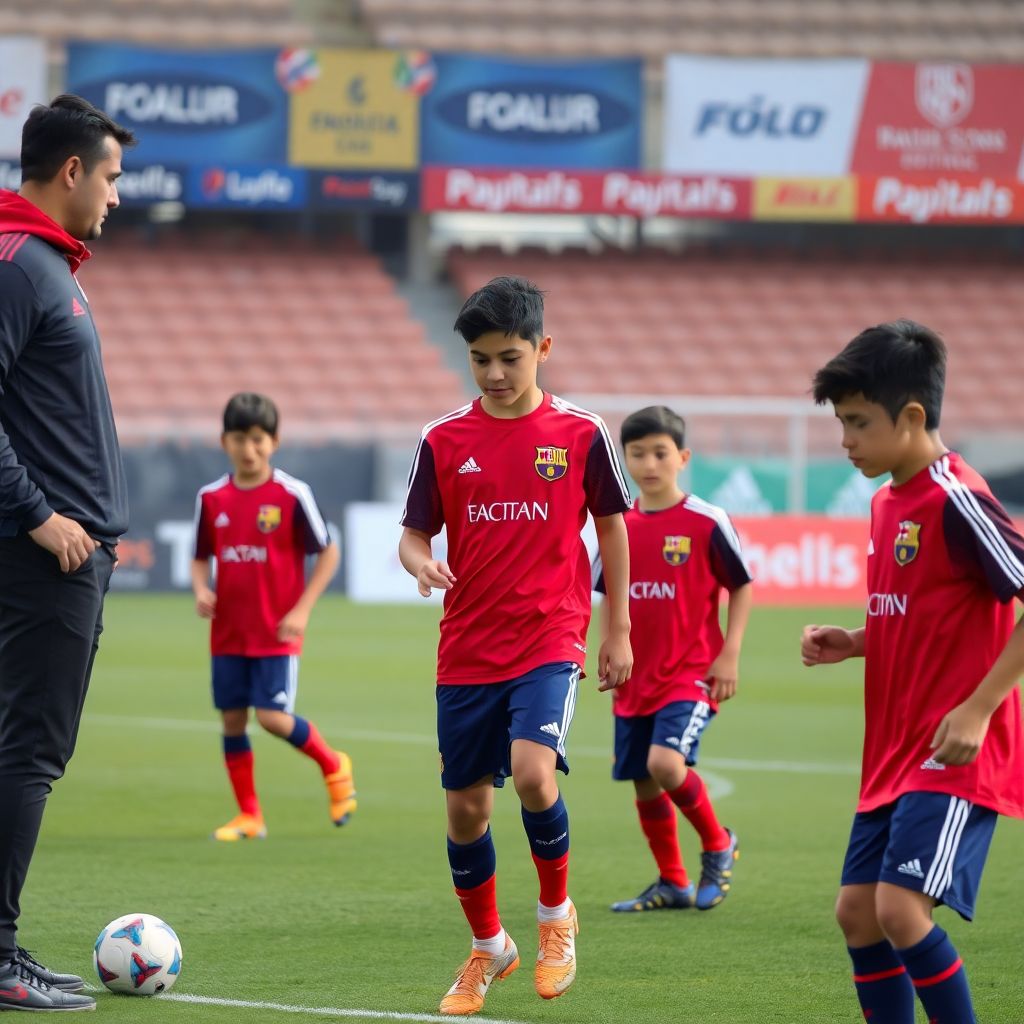
Youth talent commodification is the process by which children’s abilities, especially in sport, are turned into tradable assets through academies, scouting, contracts and image rights. It affects training, education and family life, particularly in contexts like academias de fútbol para niños talentos en España, and requires safeguards, transparency and low‑cost alternatives for responsible development.
Core dynamics of talent commodification

- Young athletes are treated as future financial assets rather than primarily as learners and children.
- Private and professional academies standardise training to fit market expectations and transfer opportunities.
- Scouts and intermediaries filter access to opportunities, creating information and power imbalances.
- Early specialization and long contracts concentrate risks (injury, burnout, deselection) on the child and family.
- Regulation often lags behind practice, especially around cross‑border movement, representation and image rights.
- Parents’ decisions are shaped by hope, fear of missing out and unequal access to trustworthy advice.
- Ethical alternatives prioritise education, gradual exposure to competition and shared decision‑making.
How academies reshape young talent into marketable assets
Youth academies transform raw ability into marketable talent by imposing structures, routines and performance metrics that align with professional demand. In football, this means adjusting how children train, compete and present themselves to fit club needs, transfer markets and broadcasting expectations, not only their personal learning curve.
In practice, the mejores escuelas de alto rendimiento para niños futbolistas segment young players by perceived potential, provide intensive training and link them to professional clubs. This pathway offers access to facilities and expertise, but also embeds children in a system where selection, promotion and eventual transfer become central objectives.
Academies act as brands. A prestigious badge on a child’s CV increases their perceived market value. Internal data, video analysis and standardised physical tests are used to rank players and justify decisions on scholarships, renewals and release. The player becomes a profile in a portfolio that clubs manage strategically.
In Spain, some academias de fútbol para niños talentos en España partner with foreign clubs, effectively turning local children into international prospects. This can create opportunities but also pushes families toward early, high‑stakes choices about relocation, schooling language and long‑term commitment to football over alternative careers.
Practical recommendation: Parents and coaches should ask any academy for written information on training load, education partnerships, release policies and support after deselection. Families with limited resources can prioritise strong grassroots clubs with qualified coaches, public sports programmes and structured school support instead of high‑fee residential academies.
Scouting networks: incentives, gatekeeping and information asymmetry
Scouting systems connect children to elite academies but operate with asymmetric information and unequal incentives. Scouts and intermediaries decide who is visible, when and to whom, often holding more knowledge than families about the real value of a player and the risks involved.
- Decentralised observation: Club and independent scouts watch local leagues, school tournaments and trials, including through servicios de ojeadores de fútbol base para fichar talento juvenil. They identify players who fit physical, technical or tactical profiles set by clubs.
- Informal ranking and signalling: Scouts share opinions within networks, creating reputations for certain children. A player labelled a «prodigy» may receive disproportionate attention, trials and pressure compared with his or her actual developmental stage.
- Trials and short evaluations: Children are invited for limited trial periods. Performance under stress and unfamiliar environments can distort evaluation, yet decisions heavily affect the child’s future opportunities and self‑perception.
- Intermediaries and representatives: A representante deportivo para jóvenes promesas del fútbol may negotiate better conditions but can also introduce conflicts of interest, especially when representing multiple players competing for similar positions.
- Opaque financial flows: Payments for scouting services, signing fees or informal bonuses are rarely transparent to families, creating mistrust and making it difficult to assess whether a recommended move is in the child’s best interest.
- Information gaps for families: Parents often lack comparative data on academy outcomes, education completion or deselection rates. This makes marketing messages and individual success stories disproportionately influential in decision‑making.
Practical recommendation: Families should request all offers in writing, avoid verbal promises and consult independent advisors (for example, local players’ unions or trustworthy coaches) before signing any document. In low‑resource contexts, recording key points from conversations and comparing offers calmly over several days can already improve decision quality.
Economic models behind child prodigy commercialization
Youth talent becomes a commercial asset through several recurring economic models that involve clubs, academies, agents, brands and, indirectly, families. Understanding these models helps parents and practitioners anticipate where pressures and conflicts of interest may emerge.
-
Club‑owned academy pipeline
A professional club invests in its own academy, hoping that a small portion of players reach the first team or generate transfer fees. Children receive training and basic support, while the club controls their development pathway and potential future contracts.
Example: A La Liga club runs youth teams from under‑8s to under‑19s, offering scholarships and, later, professional deals with buyout clauses.
Advice: Ask how many academy players actually reach professional squads and what happens to those who do not. -
Independent private academies
Academies charge fees to families, sell training packages, tournaments and camps, and sometimes earn commissions when players sign with clubs. Children effectively become paying customers and potential assets in future deals.
Example: A private centre markets itself as one of the mejores escuelas de alto rendimiento para niños futbolistas, offering intensive programmes plus exposure to scouts from multiple clubs.
Advice: Compare costs with public or club‑linked alternatives; verify coaching qualifications and written policies on safeguarding and education. -
Third‑party career management
Some agencias de gestión de carrera para niños prodigio del deporte sign young athletes to long‑term management agreements, taking a percentage of future income from salaries, sponsorships and image rights.
Example: A 14‑year‑old signs a management contract that reserves commercial rights until early adulthood, in exchange for logistical and legal support.
Advice: Seek independent legal review; avoid any agreement that limits schooling choices or forces participation in specific competitions or content creation. -
Brand and media monetisation
Social media content, sponsorships and appearances turn children into online brands. Revenue comes from advertising, merchandise or paid collaborations, often tied to on‑field performance and club visibility.
Example: A youth player builds a large following on video platforms through trick‑shot clips, attracting sponsors before turning professional.
Advice: Limit exposure, keep accounts under parental control and protect the child’s right to withdraw from public content. -
Scholarship and relocation packages
Offers combining sports training, schooling and housing redistribute costs between clubs, families and host institutions. The «price» is often commitment, relocation and reduced flexibility for alternative paths.
Example: A teenager moves from a small town to a big city residency, with partial scholarship but extra living costs for the family.
Advice: Calculate total costs (travel, accommodation, time) and compare them with staying locally plus targeted extra training.
Practical recommendation: Families should map all potential income and cost streams, including hidden ones (transport, private tutoring, lost parental work hours), before committing to any commercial model. Low‑resource households can focus on local competition, free regional development programmes and school‑based sport to reduce financial risk.
Mini‑scenarios of youth talent commodification in practice

Before assessing regulation and risks, it helps to visualise typical scenarios where commodification shapes real decisions for children, families and practitioners.
-
Local prodigy under transfer pressure
A 12‑year‑old stands out in a small grassroots club. Within a season, multiple scouts make contact. One offers an immediate move to a big‑city academy with limited schooling support, another proposes gradual integration with clear educational guarantees. The family must choose between short‑term exposure and long‑term stability. -
Family over‑investing in private services
Parents with modest income pay for extra training sessions, long journeys to trials and branded equipment to keep their child visible. When the child is released from an academy, debts and frustration remain, affecting siblings’ opportunities and family dynamics. -
Academy using children as marketing assets
An academy highlights one successful graduate in every campaign, without communicating how many others left without support. New families join based on this narrative, unaware of the real probability distribution of outcomes.
Practical recommendation: Clubs and academies should disclose typical pathways (including non‑professional exits) and support options. Policymakers can encourage transparency by linking public funding or facility access to minimum reporting standards on education completion and post‑academy outcomes.
Regulation gaps, exploitation risks and safeguarding failures
Regulation in youth sport often focuses on competition rules and transfers, leaving grey areas around representation, image rights and cross‑border movement. Exploitation risks emerge when economic incentives are strong and oversight is weak, particularly for families with limited legal and financial literacy.
Positive aspects and potential benefits when well‑regulated
- Structured academies can provide high‑quality coaching, medical support and injury prevention that are not available in many grassroots environments.
- Clear contracts and transparent scholarship schemes may reduce informal payments and create predictable paths for motivated children.
- International partnerships can expose players to different playing styles, languages and cultures, broadening their personal development.
- Responsible agents and agencies can protect minors from unfair clauses and negotiate time for education and rest.
- Formal safeguarding frameworks and regular audits can deter abusive behaviour and improve response to complaints.
Limitations, vulnerabilities and systemic risks
- Regulation often lags behind digital practices, leaving children exposed to uncontrolled online branding and data collection.
- Families may sign long‑term agreements without understanding legal language or real probabilities of professional success.
- Early talent labelling increases dropout risks when children are released, especially if schooling was disrupted or undervalued.
- Cross‑border recruitment of minors can lead to isolation, cultural shock and dependency on a single club or intermediary.
- Complaint mechanisms are frequently unclear, slow or perceived as risky by families afraid of losing opportunities.
Practical recommendation: Policymakers should mandate written, child‑friendly explanations of contracts, independent legal advice for families before signing, and robust education requirements. Clubs and academies should separate safeguarding structures from performance departments to avoid conflicts of interest.
Parental agency, consent and the commercialization trade-offs
Parents play a decisive role in how far and how quickly a child’s talent is commercialised. Misconceptions and pressures can lead to decisions that maximise short‑term exposure but undermine long‑term wellbeing, education and autonomy.
-
Myth: «If we do not say yes now, the chance is gone forever»
Reality: Development is non‑linear; many players bloom later. Rushing into poorly documented offers can lock families into unfavourable conditions.
Tip: Ask for time to review any proposal; a serious organisation should accept a short reflection period. -
Myth: «A representative is always necessary as early as possible»
Reality: A representante deportivo para jóvenes promesas del fútbol can be useful in complex negotiations, but early contracts may not add value and can restrict options.
Tip: Delay formal representation until there is a concrete professional or semi‑professional opportunity on the table. -
Myth: «More training hours automatically mean more progress»
Reality: Over‑training increases injury and burnout risk. Quality, fun and rest are critical, especially before adolescence.
Tip: Monitor fatigue and school performance; reduce extra sessions if either deteriorates. -
Myth: «Social media fame guarantees contracts and security»
Reality: Online popularity is volatile and can increase pressure and exposure to abuse without improving on‑field development.
Tip: Keep personal accounts private or adult‑managed; do not tie the child’s identity solely to football. -
Myth: «Only expensive academies produce professionals»
Reality: Many professionals emerge from modest clubs and school‑based programmes where they received consistent coaching and emotional support.
Tip: For low‑income families, combine local clubs, community facilities and occasional quality clinics instead of long‑term high fees.
Practical recommendation: Parents should regularly check with the child about motivation and enjoyment, not only results and opportunities. Involve children in age‑appropriate decisions, including the right to step back from high‑pressure environments.
Ethical alternatives and operational frameworks for responsible development
Responsible systems treat young athletes as children first and potential professionals second. This implies redefining success to prioritise health, education, autonomy and long‑term participation in sport, regardless of professional outcomes.
Example of a balanced, low‑resource‑friendly development pathway
Consider a 13‑year‑old in a Spanish town with limited financial means. Instead of relocating to an expensive academy, the family and local club adopt a structured, ethical framework:
- Local base, external benchmarks: The player trains with the grassroots team, occasionally attending open training days at larger academias de fútbol para niños talentos en España for benchmarking, not immediate transfer.
- Education‑first scheduling: School performance is monitored jointly by parents and coach. Any drop triggers a temporary reduction in training volume.
- Targeted extra support: The club organises car‑sharing for away matches, uses municipal facilities and invites qualified coaches for short clinics, reducing costs while improving quality.
- Transparent contact with scouts: If servicios de ojeadores de fútbol base para fichar talento juvenil show interest, meetings are held at the club with a second adult (coach or educator) present, and notes are kept for reference.
- Stepwise decision rules: The family adopts simple rules such as: no signing of long‑term contracts before a certain age, independent legal advice for any agency or management deal, and non‑negotiable continuation of formal education.
This approach allows the child to develop in a stable social environment while staying visible to higher levels. It spreads risk over time and keeps options open, which is especially important for families and clubs with limited resources.
Operational recommendations for stakeholders:
- Academies and clubs: Publish clear policies on education, release, and post‑academy support; establish independent safeguarding officers; cap weekly training hours by age group.
- Parents: Build a written file with all offers, communications and evaluations; request school feedback each term; define maximum acceptable travel time and cost per week.
- Policymakers: Support community clubs with facilities and coach education; require basic contract literacy sessions for families; collaborate with child‑protection agencies to monitor cross‑border recruitment.
Practical answers for common concerns from parents and practitioners
How early is too early to enter a high‑performance academy?

Under about 12, the priority should be varied play, enjoyment and broad skill development. Early entry into intensive systems is not necessarily harmful if training volume, pressure and travel are controlled and schooling remains stable.
What should families look for when evaluating an academy in Spain?
Review coaching qualifications, education partnerships, safeguarding policies and transparency about deselection. Ask for written information on weekly schedules, travel demands and support for players who do not reach professional level.
Are career management agencies appropriate for children?
Agencias de gestión de carrera para niños prodigio del deporte should be approached with caution. Representation may be useful near professional contracts, but early, long‑term agreements can restrict flexibility and create dependency.
How can low‑income families support a talented child without over‑spending?
Prioritise good local coaching, school sport programmes and occasional quality clinics over constant travel and high fees. Share transport, seek municipal subsidies and avoid debt for equipment or camps marketed as «essential».
What role should schools play in protecting young athletes?
Schools can monitor academic progress, detect fatigue or stress and coordinate with families and clubs. Clear communication channels and flexible homework arrangements help balance sport and education without sacrificing either.
When is it reasonable to consider moving city or country for sport?
Relocation should be considered only when there is a structured package combining high‑quality sport, secure education and strong safeguarding, with clear exit options. Families should test arrangements with short stays before any permanent move.
How can coaches avoid contributing to unhealthy commodification?
Coaches can emphasise learning goals over results, rotate playing time, communicate honestly about probabilities and encourage multiple interests beyond sport. Transparent dialogue with parents reduces pressure and unrealistic expectations.