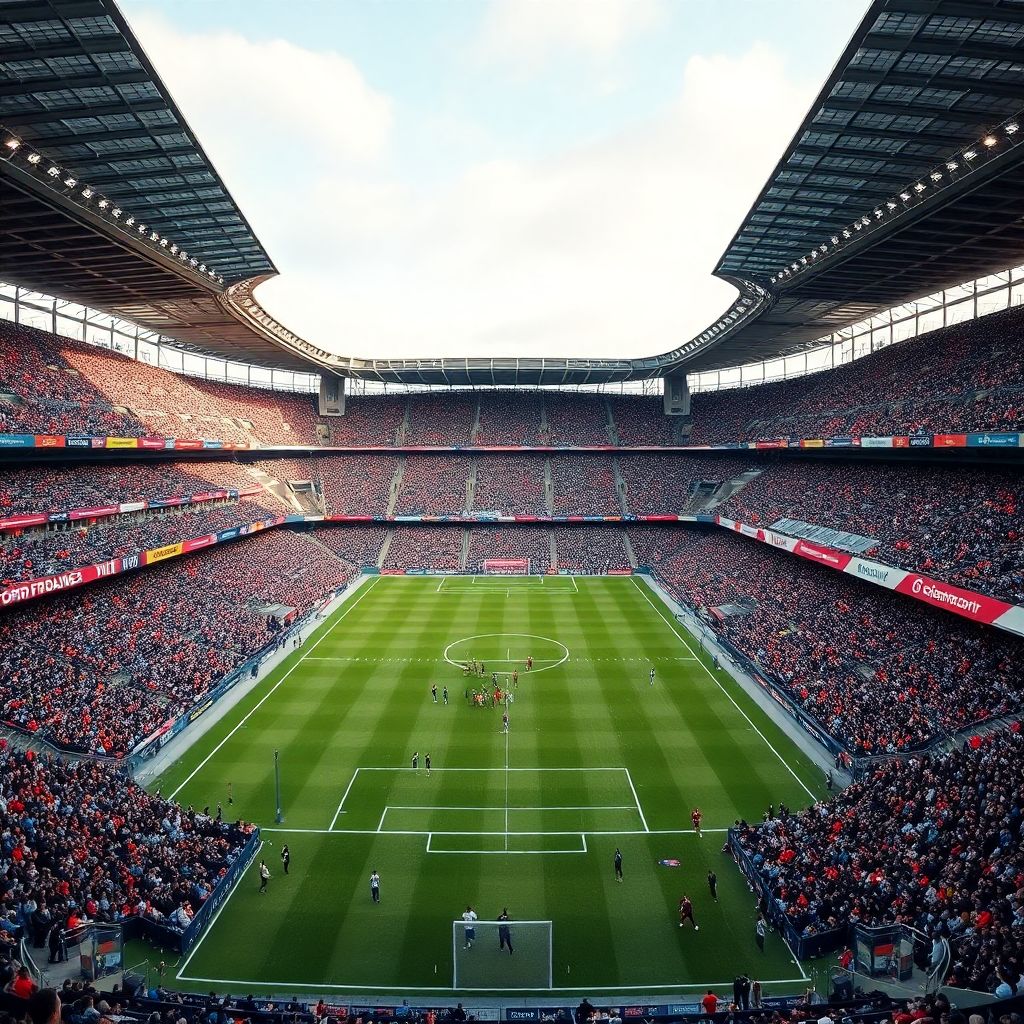
Modern football is both a sport and a business: the game still exists, but hyper‑commercialisation pushes many decisions toward profit over sporting merit. The practical answer is to protect the sporting core (rules, competition formats, youth and grassroots) while putting clear limits on the most extractive commercial practices.
Core distinction: sport, spectacle, or commercial product
- Sport prioritises fair competition, uncertainty of outcome and open access based on merit.
- Spectacle prioritises entertainment value, star power and storylines, sometimes over sporting logic.
- Commercial product prioritises predictable income streams and brand control for owners and sponsors.
- The negocio del fútbol moderno blurs these three layers, but they are not the same thing.
- The more revenue depends on tightly controlled formats, closed leagues and global brands, the further football drifts from community sport.
- Fans, regulators and clubs can still redirect choices: what to monetize, how to price, and how to share power.
What defines a sport? Criteria to separate play from profit
To understand whether football is still a sport or already just a business, it helps to be precise about what makes something a sport in the first place. Profit is not the enemy; many traditional sports have always involved money. The real issue is: what sits in the driving seat?
A healthy sport is built around four pillars: clear rules applied equally to all participants; competition structures that reward sporting merit; pathways that allow new talent and smaller clubs to rise; and decision‑making that treats the integrity of the competition as non‑negotiable. Everything else – sponsors, tickets, hospitality – should serve these pillars.
In a fully commercial logic, the order is reversed. Competition formats are bent to maximise audiences, kick‑off times follow television schedules in Asia or the Americas, and club strategies are designed around brand exposure more than local identity. This is the core of the comercialización del fútbol profesional: when commercial value, not sporting fairness, becomes the primary design principle.
So the useful distinction is not «sport vs. business» but hierarchy of goals:
- Sport at the centre, business as a tool.
- Balanced: sport and business compromise continuously.
- Business at the centre, sport as content.
Modern top‑tier football in Europe and beyond often operates in the third mode, while grassroots and semi‑professional levels remain much closer to the first.
| Dimension | Sport‑centred football | Business‑centred football |
|---|---|---|
| Main objective | Fair competition, local pride, player development | Revenue growth, brand value, global reach |
| Key decisions driven by | Sporting integrity and fans in the stadium | Investors, broadcasters, sponsors |
| View of players | Members of the club and community | Assets, content and marketing vehicles |
| View of fans | Participants and co‑owners of identity | Consumer segments and data points |
Revenue mechanics: broadcasting, sponsorship, matchday and merchandising
To see cómo gana dinero la industria del fútbol, break revenue into four main streams. The balance between them tells you how far a club has moved from local sport to global entertainment business.
- Broadcasting and TV rights
Derechos de televisión del fútbol are often the largest income source for elite leagues. Broadcasters pay for live content, highlights and international distribution. League organisers then distribute this money between clubs, using formulas that can reward both sporting performance and audience size. - Sponsorship and commercial partnerships
Shirt sponsors, sleeve sponsors, training kit sponsors, naming rights for stadiums and training grounds, official betting partners, airlines, banks – this is the core of marketing deportivo en el fútbol. Brands pay to attach themselves to the club's image and fan base, online and offline. - Matchday: tickets, hospitality and events
Traditional ticket sales, season tickets, VIP and corporate boxes, food and beverage, stadium tours and non‑football events (concerts, conferences). In smaller clubs this is still the main breathing space; in mega‑clubs it becomes a premium experience for tourists and corporate clients. - Merchandising and licensing
Replica shirts, fashion lines, videogames, collectibles and collaborations with global brands. The more global the fan base, the more relevant this stream becomes. Here football clearly behaves like an entertainment IP, not just a local sport. - Player trading and performance bonuses
Transfer fees, sell‑on clauses and bonuses from domestic and international competitions. This is volatile, but for some clubs it is a planned business model: developing talent to sell at a profit.
Club‑level scenarios that show where the money leads
Imagine a mid‑table La Liga club. If most income comes from broadcasting and sponsorship, the board will focus on staying in the top division, protecting the brand and appearing attractive to TV audiences. Matchday prices may rise, kick‑off times worsen for local fans, and the squad becomes a portfolio of tradeable assets.
Now imagine a third‑tier Spanish club where the bulk of revenue still comes from local sponsors and fans in the stadium. Decisions are more likely to favour community events, accessible pricing and youth development. The same sport is being played, but the business model quietly reshapes almost every choice that matters.
How governance and ownership structures shift priorities
Who owns and governs a club or league determines whether football feels like a public good or a private entertainment product. The negocio del fútbol moderno is not neutral; it rewards certain ownership models over others.
- Member‑owned clubs and «social» models
Structures like socios in Spain or multi‑sport community clubs elsewhere keep formal power in the hands of members. These clubs can still chase global growth, but they must at least persuade a voting base that sees itself as more than customers. - Private investors and leveraged buyouts
When clubs are bought by investment funds or via heavy debt, financial returns move to the centre. Cost‑cutting, aggressive commercial activation and plans to reshape competition formats (for example, closed or semi‑closed leagues) are logical outcomes of this structure. - State‑linked and sovereign wealth ownership
Here football becomes part of a broader political or branding strategy. Investment can be massive, but the club's priorities are tied to soft‑power goals, not necessarily to the long‑term health of the domestic football pyramid. - League‑driven vs. club‑driven governance
In some countries, leagues negotiate derechos de televisión del fútbol collectively and apply financial rules centrally. In others, powerful clubs negotiate separately or dominate decision‑making. The more fragmented the governance, the easier it is for short‑term commercial interests to capture the system. - Role of national federations and UEFA/FIFA
Regulators can protect sporting integrity (financial controls, youth quotas, promotion/relegation rules) or they can themselves become engines of comercialización del fútbol profesional by constantly expanding competitions and match calendars for extra income.
Player career paths and labor commodification in modern football
Players sit at the intersection of sport and business. They are workers, entertainers, assets and community symbols at the same time. Hyper‑commercialisation tends to treat them primarily as financial products; this creates both opportunities and clear human limits.
Upsides of the modern professional system for players
- Higher potential earnings over a shorter career, especially for those who reach top leagues or major international tournaments.
- Better professional environments: specialised coaching, sports science, medical care and data analysis that can extend careers and improve performance.
- Global visibility: the chance to build a personal brand, negotiate sponsorships and secure life‑changing contracts abroad.
- Clearer pathways: academies, scouting networks and structured youth competitions give talented players from many regions a realistic route into professional football.
Limits and costs of commodifying football labour
- Extreme inequality between a small elite and the vast majority of professionals who earn modest wages and face career insecurity.
- Early specialisation and pressure in academies, including long separations from family, disrupted education and the psychological cost of being «released» as an asset that no longer fits.
- Fixture congestion driven by commercial calendars, increasing injury risk and reducing recovery time for top players.
- Dependence on agents and intermediaries whose incentives do not always align with long‑term player wellbeing.
- Reduced local identity when squads are rebuilt each season as a trading portfolio rather than a long‑term sporting project.
Fan experience vs. monetization: stadiums, pricing and community impact
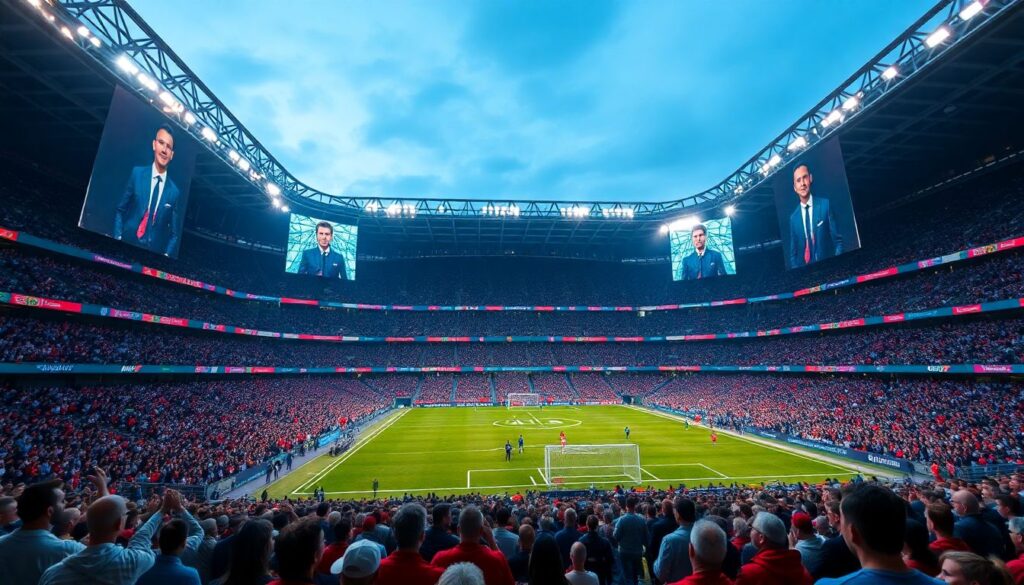
Fans are the foundation of football as a sport, but also the main target of every business model built on it. Hyper‑commercialisation often damages the matchday experience in subtle, cumulative ways.
- Myth: higher prices always mean better football
Reality: higher prices often pay for global stars and premium facilities, but they can also disconnect local fans and create a tourist‑heavy atmosphere that feels less authentic. - Mistake: treating fans as data, not as people
Obsession with CRM tools, dynamic pricing and constant upselling can turn a stadium visit into a sales funnel. Loyal supporters feel managed, not respected. - Myth: more games equal more happiness
Adding extra competitions, expanded formats and frequent friendlies may increase short‑term revenue, but it also creates fatigue for players and fans. Not every minute of football needs to be monetised. - Mistake: copying elite club strategies at all levels
Small and medium clubs that imitate the commercial playbooks of global giants risk alienating their core community without having the brand power to attract international audiences. - Myth: community work is just PR
Done seriously, local projects, affordable tickets and open training sessions protect the legitimacy of clubs and build long‑term loyalty that even the best marketing campaign cannot buy.
Regulatory responses and models to rebalance sport and commerce
If football is to remain a sport first and a business second, practical guardrails are needed. These do not kill the negocio del fútbol moderno; they simply limit its ability to erode sporting integrity and community value.
One pragmatic policy approach is to treat football as a regulated cultural asset rather than a normal entertainment company. This can include ownership fit‑and‑proper tests, restrictions on leveraged buyouts, fan representation on boards and protections for club names, colours and stadium locations.
A simple decision logic that federations or leagues can apply looks like this:
Decision rule for any new commercial proposal
- Does it preserve open sporting competition (promotion/relegation, access based on merit)? If not, reject or redesign.
- Does it increase calendar congestion beyond safe limits for players? If yes, scale back or redistribute matches.
- Does it keep live access affordable for a meaningful share of local fans? If not, introduce pricing caps or quota systems.
- Does it share additional income with lower tiers, women's football and grassroots structures? If not, negotiate solidarity mechanisms.
- Is fan representation involved in the decision? If not, consult and repeat the evaluation.
At club level, a practical recommendation is to separate clearly between «core sport» and «commercial expansion» budgets. For example, a club could commit publicly that a fixed share of revenue from new sponsorships or international tours will be reinvested in youth academies, women's teams and local facilities. In this way, comercialización del fútbol profesional becomes a lever to strengthen, not replace, football as a shared cultural practice.
For fans, the most realistic actions are collective: supporting independent supporter groups, backing campaigns for fair kick‑off times and away‑fan protections, and choosing where to spend money (season tickets vs. constant new shirts). None of this will fully stop hyper‑commercialisation, but it can slow its worst effects and keep football recognisably a sport.
Practical questions readers often raise
Is it hypocritical to love football and criticise its commercialisation?
No. It is normal to enjoy the sport and still be uncomfortable with some business practices around it. The key is to stay informed, support clubs and initiatives that align with your values, and be selective about what you pay for and promote.
What concrete power do fans really have today?
Individually, power is limited; collectively, it is significant. organised supporters can pressure clubs on ticket prices, kick‑off times and badge or colour changes, and can influence sponsors who do not want to be linked to fan backlash.
Are TV subscriptions helping or hurting the future of football?
Subscriptions finance professional structures, but an over‑reliance on them shifts power to broadcasters and can fragment access. Supporting reasonable packages while resisting constant price rises and anti‑fan scheduling is a more balanced position.
Should smaller clubs try to become global brands too?
Only after securing their local base. For most small and medium clubs, focusing first on community loyalty, youth development and stable finances is wiser than chasing international followers they cannot monetise sustainably.
How can parents protect young players from the harsh side of the system?
By treating academies as education environments, not just talent factories: insisting on schooling, monitoring workload and emotional pressure, and choosing clubs that have a track record of supporting those who do not «make it» professionally.
Is refusing to buy shirts or pay for streaming an effective protest?
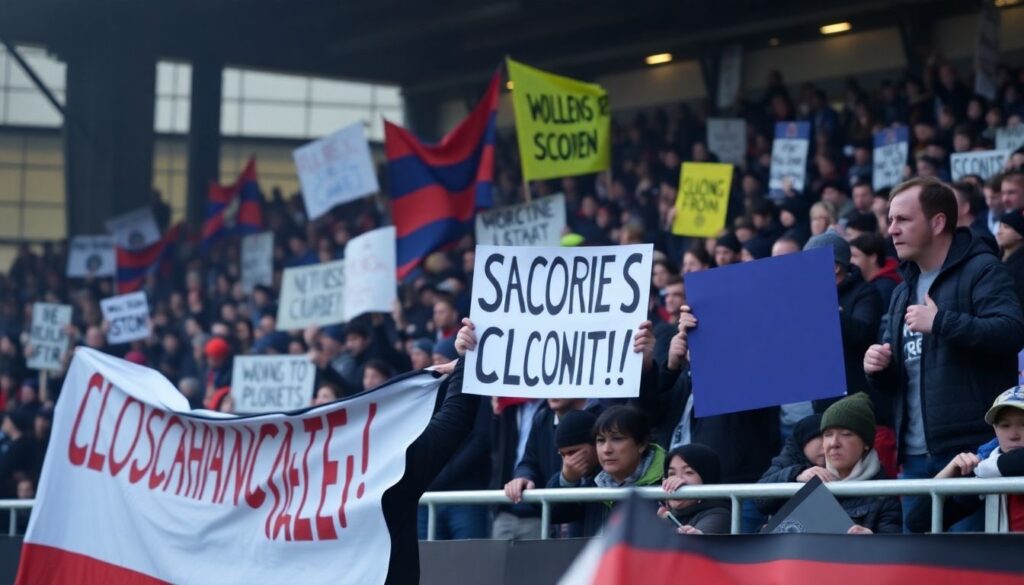
On its own, it has limited impact. Combined with organised campaigns, clear demands and communication with clubs and sponsors, targeted spending (or boycotts) becomes a stronger tool to influence behaviour.
Can local amateur football stay untouched by big business?
Completely untouched, no. But local leagues can keep costs low, resist unnecessary branding and maintain volunteer‑based models, preserving spaces where football is still primarily about play, not profit.