
The «individual genius» myth in football is the belief that one star decides matches, while the collective tactical system is secondary. In reality, repeatable success comes from structures that amplify talent and reduce chaos. Coaches must detect ego-centric biases, measure team effects, and design training that rewards coordinated behaviours.
Debunking the Genius Myth: Core Arguments
- The most decisive «talent» is often an invisible system: clear roles, synchronised movements, and stable principles in all phases.
- Isolated highlights hide systemic value; the real question is how a player changes team metrics, not how many dribbles he completes.
- Without a robust structure, individual brilliance becomes unpredictable, streaky, and impossible to transfer between matches and seasons.
- Tactical systems protect against injuries, off-days, and opponent adaptations; star-centred models collapse when the reference player is neutralised.
- Training, match analysis, and scouting must focus on interactions and collective patterns, not just on who scores or appears in highlights.
- Resources such as libros sobre tácticas de fútbol y sistemas colectivos or a curso online de táctica futbolística y juego colectivo are useful only if they help you build repeatable team behaviours, not new tricks for one player.
Why the ‘Individual Genius’ Narrative Persists
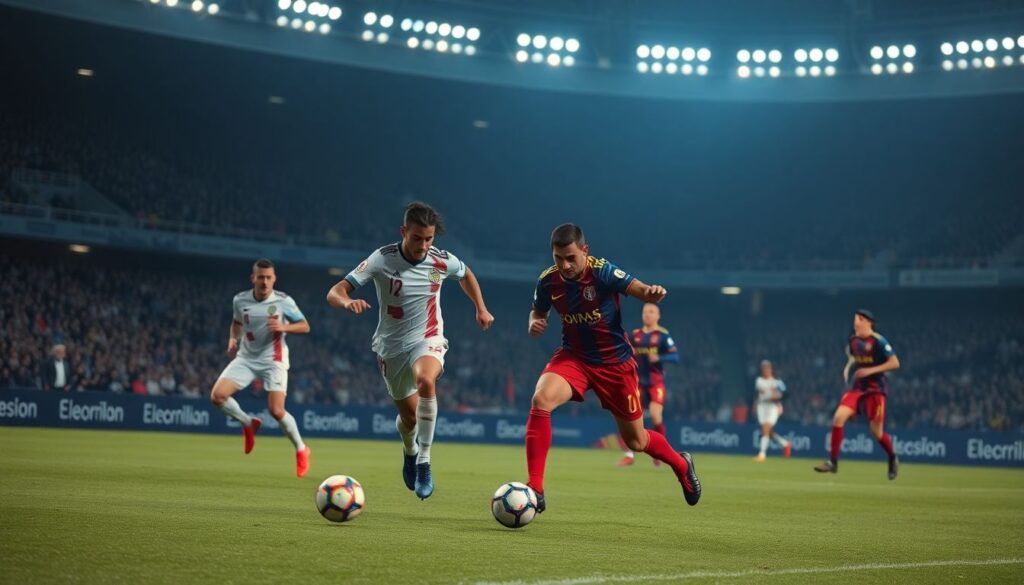
The «genio individual» story is emotionally attractive and easy to sell. Goals and dribbles are visible, replayed, and shared; compact blocks, cover shadows, and good rest-defence are not. Media, fans, and even many coaches overvalue the last action and undervalue the many invisible micro-decisions that made it possible.
Another reason is cognitive bias. Humans like simple cause-effect explanations: «we won because of him». It is harder to accept that a goal started 20 seconds earlier with an intelligent pressing trigger, a correct body shape when receiving, or the third man supporting on the far side. The brain shortcuts complexity and credits the final executor.
In many development environments, incentives are misaligned. Youth players are rewarded for showy actions, not for scanning, timing, or unselfish runs that open space. Scouts often rate players in isolation, with little context about team structure. Even some clases de análisis táctico de fútbol para entrenadores fall into this trap, focusing on individual clips instead of collective mechanisms.
Finally, the myth persists because systems are harder to copy. You can «steal» a move from a star in one viewing. To understand why a 4‑3‑3 or 3‑2‑5 structure functions, you must study distances, roles, and automatisms over many matches. That demands more time, more discipline, and better methodological support than most amateur environments currently have.
How to Quantify Systemic Tactical Value versus Solo Skill
-
Evaluate contribution to team structure, not just output.
Measure how a player helps maintain spacing, supports circulation, and enables pressing. For example: how often his positioning offers a safe passing lane, or restores numerical balance after loss.
-
Track «team effect» with and without specific players.
Compare team metrics in minutes with a player on the pitch versus off it: chance creation quality, ball progression, pressing success, rest-defence stability. The best players improve these collective indicators, even if they do not score.
-
Use possession sequences instead of isolated actions.
Analyse how actions connect: third-man combinations, wall passes, switches of play. Rate players on how often their decisions keep the sequence alive and move the block forward, not only on highlight events.
-
Link tactical intentions to KPIs.
If your idea is to attract pressure and switch sides, define clear KPIs: switches after pressing attraction, progressive passes to weak side, entries into the exposed zone. Judge players on executing the idea, not freestyle improvisation.
-
Weight defensive and off-ball intelligence properly.
Assign explicit value to cover, pressing triggers, and protection of central lanes. Many «genius» players lose more value off the ball than they add on the ball; systemic analysis exposes this balance.
-
Compare repeatability under different conditions.
Check if performance holds against different blocks, game states, and opponents. Systems that work only when the star is comfortable are fragile; systems that sustain team metrics regardless of who plays are robust.
Structural Elements That Make Tactical Systems Reliable
Reliable systems are not schemes drawn on a whiteboard; they are sets of constraints and shared references that guide behaviour under pressure. Below are typical contexts where structural thinking is decisive and frequent errors you can prevent quickly.
-
Build-up under high press
Error: trusting the «press-resistant» genius to dribble out of trouble. Quick fix: define clear roles for first and second lines, automatic support angles for the pivot, and pre-agreed long outlets when the press cannot be broken.
-
Chance creation against low blocks
Error: giving the ball to the best dribbler and hoping for magic. Quick fix: organise occupation of five vertical lanes, create width-depth balance, and design specific patterns for third-man runs and cutbacks.
-
Defensive transition after loss
Error: allowing stars to walk after losing the ball, assuming others will «cover». Quick fix: clear counter-pressing rules (who jumps, who covers), plus minimal rest-defence structure (2-3 or 3-2) behind the ball at all times.
-
Set-piece organisation
Error: designing corners around one aerial specialist while neglecting blocks, screens, and second balls. Quick fix: assign specific zones and movements for each player and practise alternative routines when the main target is marked.
-
Rotations between lines
Error: letting talented players roam freely, destroying compactness. Quick fix: frame rotations as «exchanges», not «adventures»: every forward movement requires a compensating movement by another player to maintain structure.
-
Load management over a season
Error: over-relying on a star until physical or mental drop. Quick fix: build a game model that allows rotation without identity loss, supported by deeper learning such as a máster en entrenamiento táctico y sistemas de juego en fútbol.
Empirical Cases Where Systems Consistently Beat Star Performers
In practice, system-first teams frequently outperform rivals that depend on one or two stars, especially across long competitions. Below are recurring advantages of robust systems and, for balance, real limits and cautions when applying a system-first approach.
Advantages of system-first approaches
- Performance stability across matches, coaches, and line-ups, because principles guide decisions more than individual inspiration.
- Better resistance to opponent plans aimed at neutralising one player; threats are distributed across multiple zones and roles.
- Faster integration of new signings, as they plug into clear references instead of negotiating chemistry with a single star.
- Higher ceiling for «average» players, who gain clarity regarding space, timing, and risk, raising the collective baseline level.
- Improved training efficiency: sessions target collective behaviours, so every exercise reinforces match principles instead of isolated tricks.
Limits and important cautions
- Systems cannot replace quality; they amplify it. Over-structuring a technically weak group does not create elite performance.
- Rigid systems can suffocate creativity if players are punished for any deviation, even when context requires improvisation.
- Overconfident coaches may ignore outlier talent, forcing stars into generic roles instead of designing the model to maximise them.
- Measurement bias is possible: if your KPIs only track what fits your current model, you may discard unconventional but valuable profiles.
Practical Frameworks for Building System-First Teams
To dismantle the «genius first» bias in daily work, you need simple frameworks that expose typical errors and give fast preventive actions. Below is a compact guide you can plug into training, match preparation, and even external asesoría táctica para equipos de fútbol y entrenamiento colectivo.
-
Define non-negotiable principles before choosing stars
Error: building the model around the most famous player. Prevention: write 5-7 game principles (with ball, without ball, transitions) that define your identity; then decide how each player, including stars, serves them.
-
Design training around interactions, not individuals
Error: endless finishing drills for one striker while the rest wait. Prevention: prioritise small-sided games with clear tactical constraints (e.g., third-man rule, mandatory switch of play) so decision-making and coordination are trained every session.
-
Use video analysis to show chains, not clips
Error: highlight reels centred on one player. Prevention: choose sequences that show how movements link (pressing trigger → recovery → circulation → final action). Explain explicitly how the system creates the goal.
-
Balance merit and structure in selection decisions
Error: automatic selection of a star despite damaging the block. Prevention: define role-based criteria (defensive work, spacing respect, positional discipline) and make them as important as goals/assists when deciding line-ups.
-
Educate players on tactical language
Error: speaking in vague terms («play free», «show your quality») that feed the genius myth. Prevention: use specific cues: fix the full-back, attack half-spaces, protect rest-defence, close passing lanes inside.
-
Continuously upgrade your own tactical literacy
Error: relying only on personal playing experience. Prevention: invest in good libros sobre tácticas de fútbol y sistemas colectivos, enrol in a curso online de táctica futbolística y juego colectivo, or pursue a structured máster en entrenamiento táctico y sistemas de juego en fútbol to systematise your knowledge.
Changing Incentives and Culture to Reward Collective Execution
Transforming from genius-centred to system-first requires adjusting what you praise, measure, and show publicly. This mini-case illustrates a concrete shift you can replicate quickly.
Mini-case: from «hero of the day» to «chain of actions» culture
-
Problem diagnosis
A semi-professional team in Spain structured its internal awards around goals and assists. Players started forcing shots, stars stopped defending, and tactical sessions were poorly attended because «talent decides on Sunday». Results were erratic despite having strong individuals.
-
Simple intervention
The staff replaced «Man of the Match» with «Chain of the Match». After every game, they chose one decisive sequence (e.g., press → recovery → combination → goal) and publicly named all players involved, including those who made off-ball runs or defensive actions.
-
New incentives in training and analysis
Video reviews highlighted where the chain started, not just the finisher. On the training pitch, coaches stopped saying «give it to our star» and instead used language like «activate the far-side full-back» or «prepare the third-man run». Players saw that invisible actions were recognised.
-
Observed behavioural shifts
Forwards pressed with more intensity because they knew first ball-winners were credited in the «Chain of the Match». Creative players started scanning for supporting runs instead of always finishing themselves. The team’s consistency improved, and lesser-known players felt genuinely valued.
-
How you can replicate it fast
Next weekend, pick one key sequence and publicly reward everyone in the chain. At your next session or during clases de análisis táctico de fútbol para entrenadores you run or attend, break down that sequence as a model of how collective execution outperforms isolated genius.
Practical Clarifications for Practitioners
Does focusing on systems mean I should ignore individual talent?
No. System-first means you start from collective principles and then adapt roles to maximise each player’s strengths. Stars still matter, but they function as high-impact pieces inside a coherent structure, not as licences to ignore team organisation.
How can I explain this idea to players without overloading them?
Use simple visual examples: show one goal where a star dribbles alone, and another where three simple passes create a tap-in. Ask which is easier to repeat every week. Then connect this to two or three clear principles you want them to follow.
What is a quick way to see if my team is too star-dependent?
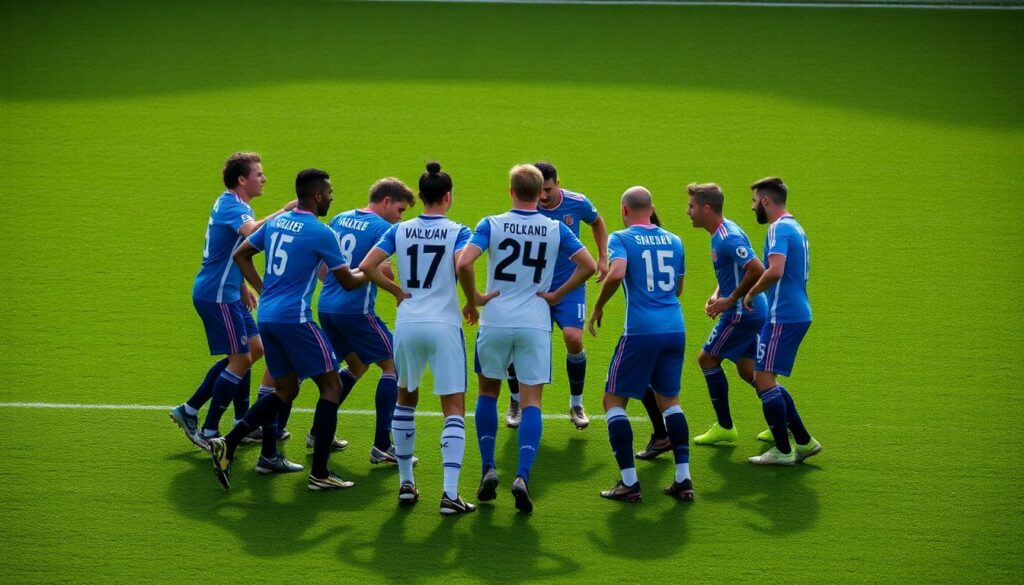
Check performance when the star is absent or well-marked. If your chance creation and defensive stability collapse, you have a dependency issue. Another indicator: frequent complaints from teammates about roles being unclear or spaces always clogged around the star.
Can small amateur teams really build effective systems?
Yes, provided you simplify. You do not need complex patterns; you need 4-5 clear rules (spacing, pressing, transitions) and training games that reinforce them. Even at modest levels, clarity and discipline often beat chaotic teams with one or two better players.
How should I choose educational resources to avoid reinforcing the genius myth?
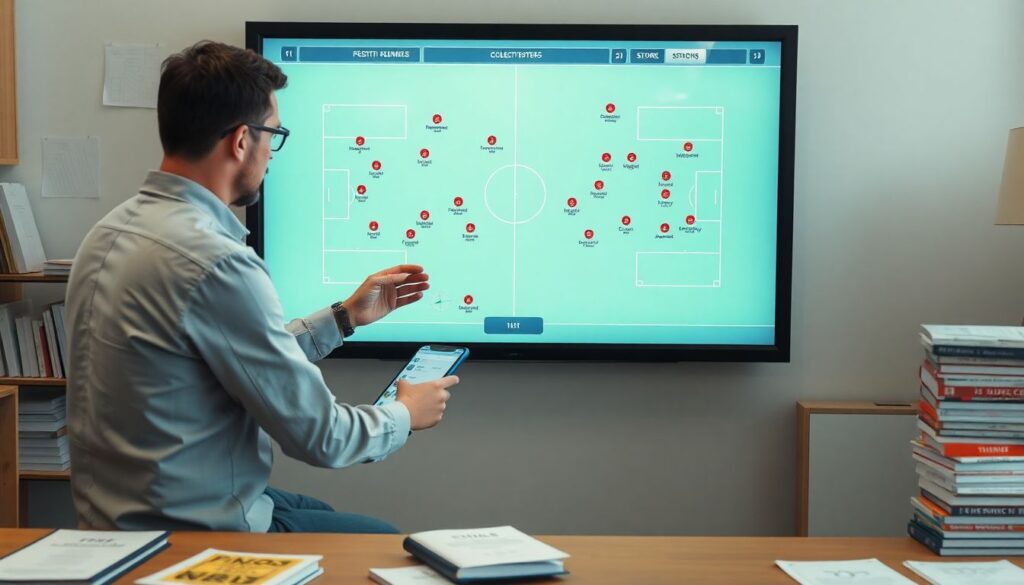
Prioritise materials that explain collective structures, space occupation, and roles in different phases, not just tricks or isolated actions. When looking at libros sobre tácticas de fútbol y sistemas colectivos or a curso online de táctica futbolística y juego colectivo, check that the syllabus covers team behaviour and match analysis.
Is external tactical consultancy useful for shifting team culture?
It can be, especially if internal staff are strongly attached to the genius narrative. Good asesoría táctica para equipos de fútbol y entrenamiento colectivo will audit your principles, training design, and incentives, then propose small, high-impact changes instead of a total revolution.
What if my best player refuses to adapt to the system?
Start by negotiating roles and explaining how the system actually increases his influence and prolongs his career. If, after a clear process, the player still undermines collective principles, you must be ready to reduce his minutes; otherwise, the model will not stick.