
When investment funds buy football clubs, control shifts from supporters to financial actors focused on returns. Identity can erode through branding changes, ticketing policies and short-term decisions. Safe steps exist (fan governance rights, regulation, contracts), but they face hard limits against concentrated ownership and global capital.
Common Misconceptions About Investor-Controlled Clubs
- «New investors automatically mean modernisation and success» – money without aligned governance can accelerate identity loss.
- «Fans keep real power because they are the soul of the club» – without legal rights, emotional ownership does not block decisions.
- «Fondos de inversión comprando clubes de fútbol only rescue bankrupt teams» – many enter healthy clubs to extract value.
- «Regulators will always protect tradition» – rules often lag behind complex financial structures.
- «You can always reverse a sale» – venta de clubes de fútbol a fondos de inversión is usually long term and hard to undo.
Myths About Private Equity and Fan Ownership
A frequent myth says that when a fund buys a club, «nothing really changes because fans are the essence». In reality, private equity and similar vehicles acquire legal control; fan culture matters, but it does not override shareholder rights or loan covenants.
Another misconception is that fondos de inversión comprando clubes de fútbol are mainly a form of charity or patronage. Modern investors usually apply the same financial logic they use in any other asset class: buy, improve measurable KPIs, possibly leverage, and exit at a higher valuation.
Supporters often assume that «democracy» survives informally: if fans protest strongly enough, owners will step back. This can work in exceptional cases, but in many Spanish and European clubs, the statutes give no binding veto to fans, even when inversores extranjeros en clubes de fútbol españoles propose radical changes.
Finally, there is confusion between economic and emotional ownership. Fans say «our club», but the law recognises shareholders, creditors and sometimes leagues or public authorities. Understanding this gap is the first safe step to design realistic protections instead of relying on moral arguments alone.
How Investment Funds Secure Control: Legal, Financial and Share Structures
The route from «community club» to «financial asset» usually follows a few concrete steps, which explain why fan power shrinks after a sale.
-
Legal form change or capital increase
Traditional member associations convert into companies or issue new shares. If existing socios cannot buy enough, an external fund can obtain majority control through a capital increase, diluting members. -
Acquisition of majority equity
The classic venta de clubes de fútbol a fondos de inversión involves buying more than half of the shares, often via a holding company. Control then sits above the club in a corporate chain that fans rarely see or influence. -
Shareholder agreements and veto rights
Even with minority stakes, funds can negotiate vetoes on budgets, transfers, debt levels or stadium projects. These protective clauses mean that nominal local owners cannot act freely without investor consent. -
Debt-based control
Some funds lend money secured against future TV income, stadium revenues or player sales. If the club breaches covenants, lenders can effectively dictate strategy or even take equity, limiting room for community-oriented decisions. -
Multi-club and fund structures
Groups that own several teams or run dedicated «sports funds» optimise synergies and player trading. For them, cómo invertir en clubes de fútbol a través de fondos is a portfolio question, not a single-club identity project, which weakens local focus. -
Regulatory arbitrage
Complex holding structures in different jurisdictions can reduce tax or reporting obligations and make it harder for local regulators and supporters to see who really controls the club and on what terms.
Operational Shifts After Takeover: Governance, Staffing and Sporting Decisions
Myth: «Operations stay the same; only the balance sheet changes.» In practice, investor control alters daily life at the club.
-
Board and governance redesign
Independent presidents or long-serving local directors are replaced by fund representatives, deal-makers and external advisors. Decision cycles become shorter and more KPI-driven, with fewer informal consultations with supporters. -
Staffing and back-office restructuring
New owners centralise finance, legal and marketing functions across their portfolio. This can improve professionalism but often removes long-term employees who embodied the club’s culture and local knowledge. -
Sporting strategy aligned with financial exit
Player recruitment may shift towards flipping talent quickly rather than building a stable core. Coaches are evaluated less on long-term style and more on near-term valuation effects, such as qualifying for European competitions or showcasing saleable players. -
Ticketing, hospitality and fan experience
Prices, seating categories and match-day schedules are optimised for revenue. Traditional terraces, singing sections or low-income supporter areas can be squeezed out in favour of corporate hospitality and international tourists. -
Data and analytics dominance
Quantitative models inform decisions on players, merchandising and global expansion. This can add rigour but may sideline local traditions, derby priorities or youth academy commitments that are harder to model financially. -
Media and communication strategy
Communication becomes more polished and brand-oriented, with less transparency on ownership debates. Critical voices inside the club, including former players, may receive less access or visibility.
Identity and Brand Changes: From Community Symbol to Asset
Myth: «Identity is untouchable; no owner will dare change it.» Under financial pressure, almost every symbolic element can be reconsidered.
Strengths Seen by Investors and Some Officials
- Professionalised branding teams can expand global awareness without necessarily erasing local symbols.
- Stadium refurbishments, even when commercially driven, may improve safety, comfort and accessibility for many fans.
- Modern digital engagement (apps, streaming, social media) can connect the diaspora and new international supporters.
- Clearer visual identity and merchandising strategy can stabilise revenues, making the club less dependent on single-season results.
Structural Limits and Risks for Club Identity
- Pressure to monetise every asset can push toward logo tweaks, kit colour changes or stadium naming deals that clash with tradition.
- Marketing narratives may shift from «our barrio and our people» to generic global slogans, weakening local emotional ties.
- Scheduling for TV markets in other time zones can disrupt long-established routines of match-going communities.
- When inversores extranjeros en clubes de fútbol españoles focus on cross-border brand synergies, local languages, symbols and historical rivalries may be treated as optional.
- Efforts to «clean up» ultras or political expression can, if badly handled, erase legitimate cultural practices and songs.
- Supporters have limited formal tools to block these changes unless statutes, licensing rules or contracts explicitly protect specific identity elements.
Financialization Consequences: Short-Term Gains vs. Long-Term Stability
Myth: «Financialization is just about sensible management.» In reality, it changes the time horizon and the definition of success.
-
Confusing liquidity with sustainability
An immediate cash injection from a fund can pay debts and sign players, but it may be backed by new obligations. Without transparency, fans misread a short-term boost as proof of long-term health. -
Underestimating exit pressure
Funds are not permanent owners. When they plan an exit, decisions may favour quick value increases over youth investment, stadium maintenance, or community projects that pay off more slowly. -
Ignoring concentration of risk
Multi-club models can spread risk for the fund but concentrate sporting risk for each individual club, especially when it becomes a feeder for bigger «sister» teams within the same structure. -
Overreliance on transfer market cycles
Clubs turned into trading platforms depend heavily on player sales. A few bad windows, injuries or regulatory changes can destabilise the entire business model. -
Neglecting the social licence to operate
When investors ignore the impacto de los fondos de inversión en la identidad de los clubes de fútbol, they increase political and reputational risk: boycotts, municipal tensions, or even new regulations targeted at their model.
Countermeasures: Fan Governance Models, Contracts and Policy Interventions
Myth: «Nothing can be done; money always wins.» In reality, there are practical, if limited, tools that supporters, managers and regulators in Spain can use to protect identity when dealing with fondos and inversores extranjeros en clubes de fútbol españoles.
Fan and Community Governance Safeguards
-
Golden share or identity veto
Negotiate a special share held by a trust, municipality or supporter organisation that can block changes to name, colours, crest, stadium location or relocation outside the city. -
Statutory minimum fan representation
Include in club statutes that a certain number of board seats go to democratically elected supporter representatives with access to key information and voting rights on strategic issues. -
Transparent reporting obligations
Require annual publication of ownership structure, debt, related-party transactions and long-term strategy, making it harder to hide asset stripping or risky leverage.
Contractual Protections in Sale and Investment Deals
-
Binding community clauses
When negotiating venta de clubes de fútbol a fondos de inversión, insert clauses on ticket affordability, academy investment, women’s team support and stadium access for grassroots events, with measurable targets and penalties. -
Long-term commitments and anti-flip mechanisms
Use minimum holding periods or step-up penalties if a fund sells quickly, discouraging purely speculative entries that ignore sporting continuity. -
Reversion rights
For critical assets like training grounds or stadium land, create mechanisms where, if conditions are breached, ownership can revert to the club, city or a community entity at a pre-defined valuation formula.
Public Policy and League-Level Measures
-
Licensing standards for new investors
Leagues and federations can require clear business plans, suitability tests and disclosure of how funds are structured before approving acquisitions, especially when dealing with cómo invertir en clubes de fútbol a través de fondos at scale. -
Identity protection rules
Regulators can define non-negotiable elements (home city, main colours, historical name) that cannot be changed without supermajority supporter approval or public consultation. -
Tax and transparency incentives
Offer benefits for clubs that embed supporter ownership or community trusts, and penalise opaque structures that separate local operations from offshore control with minimal transparency.
Mini-Case: A Safer, But Not Perfect, Path

Imagine a mid-table Spanish club facing debt and attracted by fondos de inversión comprando clubes de fútbol. Local leaders negotiate with an international fund that will become majority owner under strict conditions.
The agreement includes: a golden share for a supporter foundation; fixed percentages of revenue earmarked for academy and women’s football; a 10-year stadium non-relocation clause; and two fan-elected board seats. The fund gets a clear financial framework, while regulators approve the deal with periodic reviews.
This structure does not fully prevent identity risks, but it creates enforceable brakes. It shows that while financialization cannot be reversed easily, clever governance and contractual design can turn a total loss of control into a negotiated sharing of power, with transparent limits and obligations on all sides.
Practical Clarifications for Supporters, Managers and Regulators
Do funds always destroy a club’s identity?
No, but they increase the risk. Identity survives when contracts, statutes and regulations clearly protect key elements such as name, colours and stadium location, and when supporters hold formal, not just symbolic, influence.
Are foreign investors worse than domestic ones?
Not automatically. The real issue is the time horizon, leverage used and respect for the community. Inversores extranjeros en clubes de fútbol españoles can be responsible if rules and contracts align their interests with long-term sporting and social goals.
What can fans realistically negotiate before a sale?
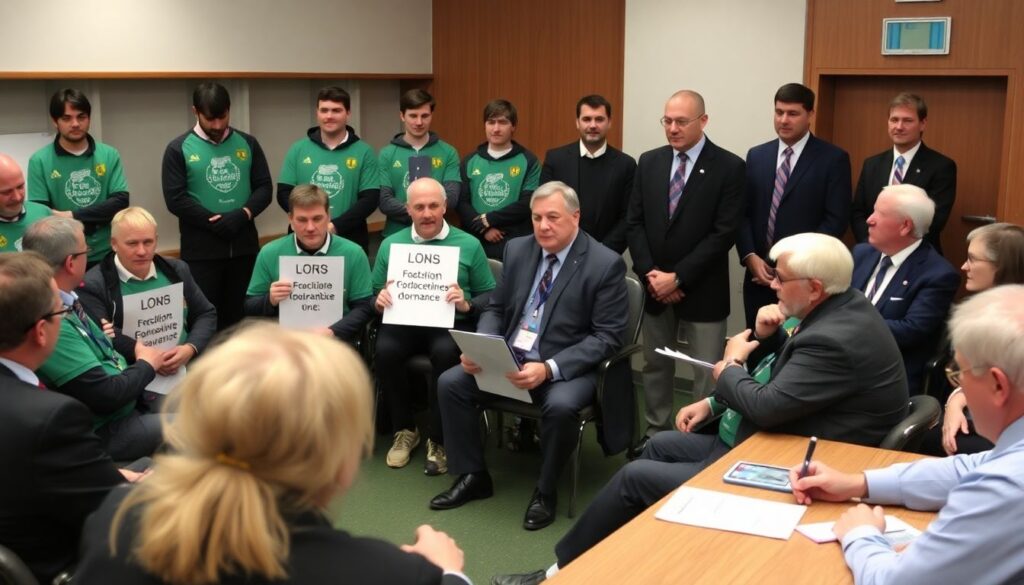
Fans can push for golden shares, fan board seats, community clauses and transparency commitments. They should coordinate with local authorities and leagues so that these demands appear in formal documents, not only in public statements.
Is member ownership always safer than fund ownership?
Member models usually protect identity better, but they can suffer from underinvestment and weak governance. A mixed model with investor capital plus strong fan rights can, in some situations, balance financial needs and tradition more effectively.
Can regulators completely stop speculative funds?
No, but they can raise the cost of purely speculative behaviour through fit-and-proper tests, disclosure rules, identity protections and limits on risky leverage. This does not block all investment but filters and shapes who enters the system.
How should managers prepare when approaching investment funds?

They should map non-negotiable identity elements, define acceptable debt levels, and consult fans early. Entering talks with a clear red-line list and draft clauses makes it easier to secure protections during negotiations.
Is it still possible for small investors to buy into a club ethically?
Yes, through supporter trusts, community shares or regulated vehicles, but they must be transparent about risks and governance. The key is aligning financial participation with rules that prioritise sporting sustainability and community benefit.