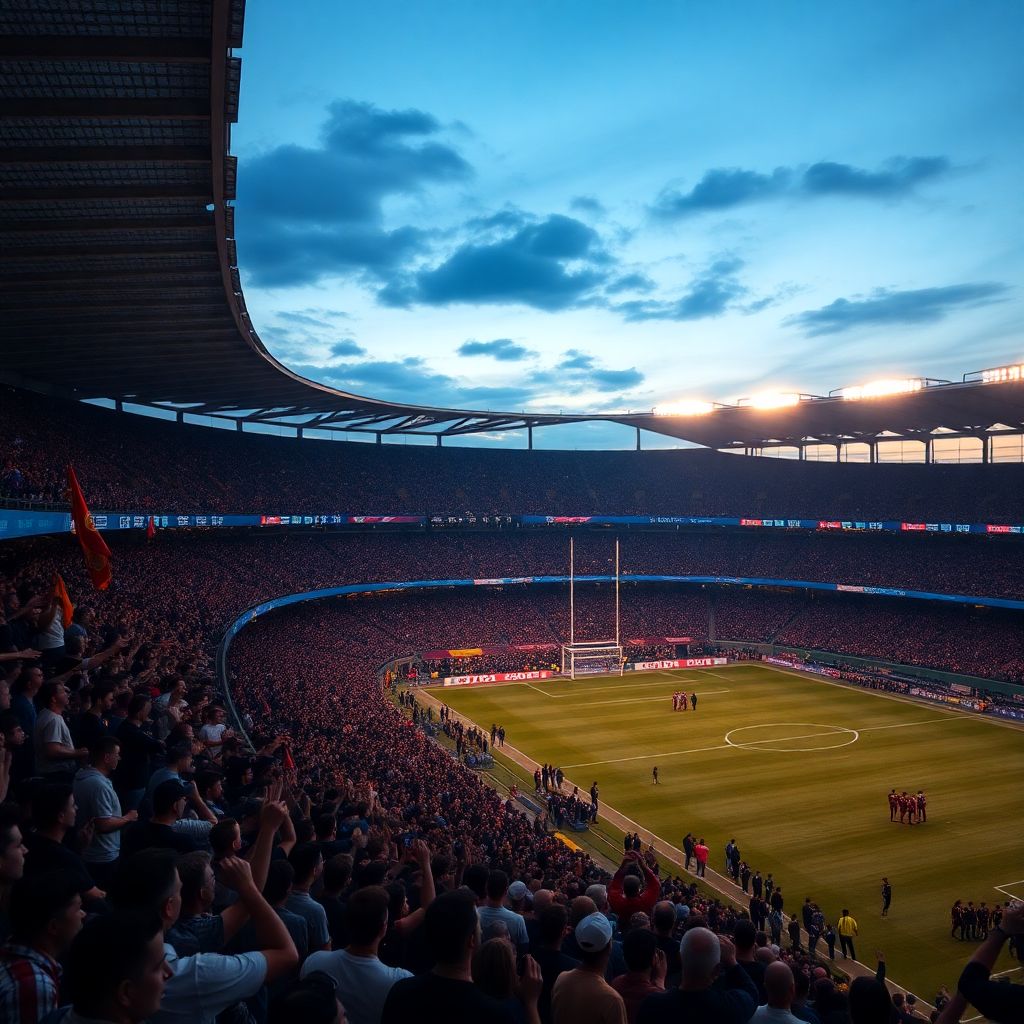
Football as a secular religion means that, for many supporters, the stadium and its routines work like a non‑theistic church: myths about clubs and heroes, repeated match‑day rituals, sacred symbols and songs create belonging, moral order and meaning, even if no official doctrine or supernatural belief is involved.
Core Observations on Football’s Sacred Dynamics
- Myths about clubs, stadiums and legendary matches function like founding stories and saints’ lives.
- Rituals in the stands structure time, emotions and group cohesion before, during and after games.
- Scarves, banners and chants operate as portable altars, relics and shared liturgies.
- Ultra groups and barras bravas stage identity performances that mark belonging and boundaries.
- Media, merchandising and tourism help sacralise certain matches while commodifying devotion.
- Stadium religion can generate solidarity and civic pride, but also exclusion, aggression and politicisation.
Stadium Myths: Origin Stories and Legendary Moments
When people speak of a stadium as a «cathedral» or call a club’s ground «sacred», they are describing secular myths. These stories explain why a place, shirt or date matters: a promotion achieved against all odds, a miraculous comeback, a dramatic relegation escape, or a tragic disaster that reshaped the club’s identity.
Such myths usually take three forms. First, origin stories: narratives about how a club was founded by workers, migrants or students, and how «our» style of play was born. Second, epics: key derbies, cup finals or European nights that supposedly revealed the club’s true soul. Third, martyr tales: losses, injustices and fallen heroes that demand remembrance and loyalty.
In Spain (es_ES context), you see this around stadium nicknames and phrases – «La Catedral», «El Templo», «La Bombonera europea». These names condense decades of sporting memory into a sacred label. Fans, journalists and even city officials repeat them until they feel like historical facts rather than rhetorical choices.
Myths shape behaviour. They define «how a true fan behaves» (never leaving early, never booing an academy player, always travelling to a certain away ground) and build expectations around games that are treated as pilgrimages. Good research or reflection on fútbol como religión secular starts from mapping these narratives before moving to rituals and symbols.
Rituals in the Stands: Pre-match Routines and Collective Practices
Rituals in the stands are repeated, rule‑like actions that structure the fan’s experience. They are not random habits; they carry shared meaning and usually follow an implicit script. Core mechanics include:
- Spatial routine: Always entering through the same gate, greeting the same vendors, standing in the same block. This fixes the «sacred geography» of match‑day.
- Temporal markers: Meeting hours before kick‑off at the same bar or plaza, starting certain songs at minute 7 or 90, leaving together. Time becomes ritualised, not just scheduled.
- Vocal liturgy: Chants for players, insults for rivals, minute‑by‑minute soundtracks. The curva functions like a choir that knows when to lead, respond or fall silent.
- Embodied gestures: Raising scarves during the anthem, jumping with backs turned to the pitch, coordinated tifos. Bodies become instruments that materialise unity.
- Object‑centred acts: Kissing the badge, touching a stadium gate for luck, lighting flares at predefined moments. Objects act like secular relics or candles.
- Communal storytelling: Elders retell classic matches in the bar, young fans share memes and clips on phones. Oral tradition and digital culture reinforce the same myths.
- Post‑match debrief: The walk home, radio call‑ins and messaging groups work like a closing rite that reinterprets what «really» happened and what it means for the community.
Symbols and Iconography: Scarves, Chants, Flags and Their Meanings
Symbols translate abstract values (loyalty, courage, neighbourhood pride) into concrete visuals and sounds. In football‑as‑religion, they appear across several recurring scenarios.
- Home‑end identity walls: In the fondo or curva, giant flags and murals show saints, political figures or club legends. These images mark territory and proclaim what the group stands for to both allies and rivals.
- Match‑day clothing codes: Scarves, retro shirts and limited‑edition tops work as everyday vestments. Even choices like wearing camisetas de barras bravas y cultura ultras comprar online from specific groups send strong messages about allegiance and internal hierarchies.
- Soundscapes of belonging: Signature chants and hymns function like creeds. Singing them correctly proves competence and commitment; refusing to sing can be read as dissent or distance from the group’s values.
- Commemorative displays: Minutes of silence, mosaics and banners for deceased fans or players echo religious mourning rituals. They reaffirm that the community stretches beyond the 90 minutes and beyond the living.
- Transnational fan culture: Tifo ideas travel through videos, social media and documentales fútbol religión hinchas dónde ver on streaming platforms. Ultras borrow symbols from clubs abroad, adapting them to local histories while keeping a shared visual grammar.
- Textual banners and slogans: Quotes, inside jokes and political lines on banners act as public declarations of doctrine. They show how a group interprets its own history, enemies and allies.
Identity Performance: Fan Groups, Belonging and Boundary Making
Identity performance means that fans are not just «having» an identity; they constantly enact it through style, language and practices. Ultras, peñas and casuals all perform different versions of «true» support. This performance has benefits, but also serious limitations.
Constructive roles of performed supporter identity

- Creates strong bonds of solidarity and mutual help, especially in long‑term peñas and neighbourhood‑based groups.
- Offers clear roles and recognition for youths who may feel invisible in other areas of life.
- Produces creative culture: songs, tifos, podcasts, libros sobre fútbol como religión y cultura de hinchas, fanzines and art that preserve local stories.
- Strengthens urban and regional pride, connecting clubs to cities and barrios rather than just to global brands.
- Can channel frustrations into regulated rivalry instead of diffuse violence in other settings.
Risks and constraints of intense fan identity
- Rigid norms about «real fans» can exclude women, families, migrants or casual supporters from core spaces.
- Group pressure may normalise risky behaviours (confrontations, pyrotechnics, heavy drinking) as tests of loyalty.
- Political or ideological purity tests inside groups can polarise local communities and split stands.
- Commercial interests may co‑opt the aesthetics of ultras while ignoring their social demands, creating resentment.
- Legal repression targeting barras bravas can criminalise entire youth subcultures instead of isolating specific violent actors.
Sacralization Processes: How Commerce and Media Turn Sport into Ritual

Sacralization is the process through which ordinary matches, shirts or chants become «untouchable» for a community. Media narratives, club marketing and fan repetition work together to build this aura. Yet analysis is often distorted by persistent errors and myths.
- Myth 1 – «It’s all artificial marketing»: While branding departments amplify certain stories, they rarely invent devotion from zero. They select and exaggerate feelings that already exist in the terraces.
- Myth 2 – «Only big clubs have religion‑like cultures»: Small clubs and lower‑league stadiums often show even denser ritual life, precisely because the community is more local and tightly knit.
- Myth 3 – «Modern football killed authenticity»: Television and social media have transformed rituals, but have also created new pilgrimages (away days in Europe, pre‑match fan parades) and new symbolic battlegrounds.
- Myth 4 – «Commerce and faith can’t mix»: In practice, merchandising (from scarves to jerseys) can be both cynical exploitation and genuine support. The same fan may feel proud buying a historic shirt and suspicious of constant limited editions.
- Myth 5 – «All intense fandom is dangerous»: High emotional investment does not automatically lead to violence. Context, leadership and norms matter more than decibel levels or tifo size.
- Myth 6 – «Ritual equals irrationality»: Rituals often have practical functions: coordinating singing, protecting vulnerable members, or negotiating with police. Calling them «irrational» hides their organisational intelligence.
Social Functions: Solidarity, Conflict Management and Political Expression
The «religion» of football in the stands performs social work. It creates networks of solidarity (mutual help, crowdfunding, anti‑eviction campaigns), offers controlled arenas for rivalry, and sometimes gives visibility to political causes. The same tifo can be devotional, artistic and explicitly political.
Consider the experience of buying entradas para partidos con mejores tifos y ambiente en las gradas in Spain: fans are not just seeking quality football, but a collective emotional journey. The curva offers a script: pre‑game procession, choreo at kick‑off, choreographed insults, and post‑match songs. This script helps transform private frustrations into shared narratives of dignity, injustice or hope.
For researchers or educators designing a curso online sociología del fútbol religión y sociedad, or for practitioners working with fan groups, it is useful to treat the match as a process that can be analysed and even «debugged». Here is a short, practical algorithm for checking whether a specific match atmosphere functioned as a healthy secular ritual:
DEFINE match_context (derby?, decisive?, recent_conflicts?)
OBSERVE:
  rituals_before  = documented pre-match routines
  rituals_during  = chants, tifos, gestures
  rituals_after   = post-match behaviours
  outcomes_social = solidarity, tensions, incidents

CHECK:
  1. Are core rituals stable and recognisable across matches?
  2. Do participants report feeling belonging, not fear?
  3. Are conflicts mostly symbolic (chants, banners) rather than physical?
  4. Are political messages debated, not imposed by threats?
  5. Do online reactions reinforce community ties more than hate?

IF (belonging_high AND physical_violence_low AND rituals_stable)
  THEN classify_as "constructive secular ritual"
ELSE
  FLAG elements (leaders, locations, timings) for dialogue and redesign
This kind of step‑by‑step review travels well from academic settings to practice. It can guide clubs, federations, NGOs and even authors of libros sobre fútbol como religión y cultura de hinchas or producers of documentales fútbol religión hinchas dónde ver when they evaluate whether a terrace culture is evolving toward inclusion or toward destructive conflict.
Concise Answers to Common Supporter Questions
Is calling football a «secular religion» just a metaphor?
No. It is a sociological concept that highlights concrete parallels with religion: myths, rituals, symbols, sacred times and spaces. It does not claim that football replaces all aspects of faith, but that it fulfils some similar social and emotional functions.
How can I study football religion seriously beyond fan opinions?
Combine participant observation in the stands, interviews with different types of supporters, and systematic documentation of chants, tifos and routines. Complement this with academic texts and libros sobre fútbol como religión y cultura de hinchas that offer theoretical frameworks and comparative cases.
Where can I find structured learning on football, religion and society?
Look for a curso online sociología del fútbol religión y sociedad offered by universities, specialised institutes or credible independent platforms. Good courses include empirical case studies, methods for fieldwork in stadiums and critical discussions about politics, gender and commercialisation.
How do documentaries help understand football as religion?
Well‑made documentales fútbol religión hinchas dónde ver on reputable streaming services show rituals and myths in everyday context, not just highlight reels. Use them as visual field notes: pause to observe symbols, listen to language and compare fan practices across countries and divisions.
Are ultra shirts and barra brava merch always a bad sign?
Not necessarily. Camisetas de barras bravas y cultura ultras comprar online can be fashion, identity statement or support for a group. The key is context: group history, local norms and how they act on match‑day matter more than clothing alone.
How can clubs encourage passion without encouraging violence?
Work with organised fan groups to co‑design rituals, clear rules and sanctions. Protect creative expression (tifos, drums, flags) while setting firm limits against racism, sexism and physical aggression. Evaluate each match with a short checklist like the algorithm above.
Does buying tickets for «the best atmosphere» support or exploit fans?
It can do both. Buying entradas para partidos con mejores tifos y ambiente en las gradas helps finance clubs and sometimes fan initiatives, but can also turn organic culture into a tourist spectacle. Transparent ticket policies and fair support for local groups reduce exploitation risks.