Football can still act as cultural resistance in a hyper‑capitalist era, but in partial, fragile ways. Resistance appears when communities use the game to defend local spaces, values and identities against commodification, while staying aware of co‑optation risks. The key is organised, safety‑minded, long‑term practice, not romantic, one‑off gestures.
Core arguments: football as cultural resistance
- Football becomes resistance when it protects communal control over time, space and meaning, not just when it is «popular».
- Hyper‑commercialisation narrows this space, but does not erase it; it pushes resistance into smaller, more local niches.
- Fan practices, not club brands, are the main carriers of counter‑hegemonic cultures around the game.
- Stadiums and surrounding public spaces work as arenas of negotiation, not pure resistance or pure consumption.
- Institutions often absorb dissent symbolically while maintaining extractive business models.
- Cultural resilience can be monitored through language, rituals, governance and money flows around football.
Historical roots of football as communal dissent
Defining football as cultural resistance means looking beyond tactics and trophies. It refers to ways in which people use the game to question, slow down or partially redirect dominant logics such as profit maximisation, consumerism and authoritarian control. The ball is a tool; the real terrain is everyday life and power relations.
Historically, football functioned as communal dissent when working‑class neighbourhoods, migrant groups or oppressed nations turned clubs into vehicles of identity and mutual aid. In Spain, many teams were born from worker associations or local bars; matches mixed leisure with informal organising, fund‑raising and political socialisation, even under censorship.
This tradition is visible in classic «futbol y politica libro» narratives that trace how clubs embodied anti‑authoritarian sentiments or national aspirations. Yet not every political use of football is resistance; sometimes power uses football for its own legitimacy. The line is drawn by who sets the agenda and who benefits materially and symbolically.
In the hyper‑capitalist era, resistance no longer looks like giant confrontations between unified «people» and «system». Instead, it is fragmented: small clubs defending their grounds from speculation, fan collectives challenging abusive kick‑off times, or ultras using banners and chants to keep social conflicts visible inside sanitised brand environments.
- Clarify your definition: focus on who controls spaces, narratives and money around football.
- Document local histories: talk to older fans and community organisers about how your club historically related to work, neighbourhood and politics.
- Distinguish between state/brand propaganda and bottom‑up initiatives when reading football history.
Commercialization’s mechanisms and local impacts
Hyper‑capitalism restructures football through a series of intertwined mechanisms that reshape how fans, players and cities relate to the game. Understanding these mechanisms is essential before any attempt at cultural resistance, because many well‑intentioned actions end up reinforcing the very dynamics they wanted to contest.
- Financialisation of clubs: Clubs become investment assets. Decisions prioritise debt servicing, valuation and short‑term returns over local needs. Stadium move projects or ticket hikes are justified as «rational business», while community stakeholders lose influence in governance structures.
- Global brand logic: Clubs target global audiences, often diluting local symbols to avoid controversy. The matchday experience is redesigned to fit sponsors and broadcasters, sidelining unprofitable practices such as long banners, political tifos or affordable standing terraces. Local accents and languages may be downplayed in official content.
- Broadcast and streaming dependence: Timetables, competitions and even rules are increasingly adapted to television and digital platforms. Fans planning to buy «entradas partidos futbol grandes ligas comprar» must navigate dynamic pricing and late scheduling, while many locals are priced out or relegated to weekday late‑night slots that harm work and family rhythms.
- Merchandising and lifestyle capture: Identities are redirected into consumption patterns. Fans are nudged to «camisetas de futbol retro comprar online» through official channels, with nostalgia monetised by brands that had little to do with the original eras. DIY culture and informal economies around scarves, fanzines and street art face repression or regulation.
- Territorial transformation: Stadiums and training grounds become anchors for real‑estate operations, displacing neighbours and small businesses. Public subsidies and infrastructures serve private profit, while community access to pitches shrinks. Urban policy adopts the language of «smart districts» and «events» rather than everyday sporting life.
- Data extraction and surveillance: Tickets, apps and loyalty programmes gather detailed information about fans. Behaviour in stadiums and online is tracked to optimise sales and control dissent, reinforcing asymmetries between individual consumers and corporate actors.
The combined effect is a narrowing of spaces where collective, non‑market values can flourish. Resistance, therefore, is less about refusing all commerce and more about defending pockets of autonomy: member‑run clubs, community pricing, inclusive chants, fan‑controlled media and solidarity projects that are not easily repackaged as content.
- Map the commercial mechanisms affecting your club (tickets, TV, real estate, data) and who decides on them.
- Identify which practices (chants, fan media, local symbols) are hardest to monetise and need priority protection.
- When engaging sponsors or clubs, demand transparency around governance and community impact, not only discounts.
Fan practices that effectively subvert market logic
Not all fan practices are equally resistant. Some reproduce the consumer script, while others introduce friction into hyper‑capitalist dynamics. The goal is not purity but leverage: using everyday behaviours around football to expand collective agency, solidarity and critical reflection.
- Collective ticket and travel organising: Supporters’ groups can negotiate group rates, discourage dynamic pricing and prioritise lower‑income fans when allocating away tickets. This challenges individualised, auction‑style markets and keeps live attendance socially mixed instead of segregated by income.
- Independent media and education: Fanzines, podcasts and reading circles around, for example, a «futbol y politica libro» or «cursos online sociologia del futbol y deporte», help interpret the game critically. They reduce dependence on official narratives and sportswashing campaigns, and they connect matchday experiences with broader social issues.
- Ethical merchandising alternatives: Instead of simply choosing where to «camisetas de futbol retro comprar online», fan collectives can design and sell their own ethically produced apparel, using profits to finance banners, subsidies for tickets or local social projects. This re‑routes part of the value chain back to the community.
- Content refusal and selective engagement: Fans can boycott certain «documentales sobre negocio del futbol streaming» or promotional series that romanticise abusive owners, while amplifying documentaries and journalism that expose structural problems. On social media, refusing to engage with clickbait reduces free advertising for problematic actors.
- Solidarity actions linked to matchday: Food drives, anti‑eviction campaigns, anti‑racist initiatives or workers’ strike support organised around fixtures connect football emotion with concrete struggles. The key is to centre the affected communities, not the club’s brand, in communication and decision‑making.
- Democratic supporter organisations: Well‑structured peñas and associations can push for member ownership, voting rights on key decisions, and transparency. Even when they cannot change ownership, they can influence club reputations, sponsor decisions and media narratives.
- Choose one practice (media, travel, merch, solidarity) and develop it consistently over seasons, not as a one‑off stunt.
- Evaluate whether your actions change power relations (who decides, who benefits), not only symbols or slogans.
- Protect activists’ safety by establishing internal protocols for digital security, legal support and de‑escalation.
Stadiums and public space: arenas of contention
Stadiums and surrounding streets sit at the crossroads of leisure, commerce and politics. They are neither pure «cathedrals of capital» nor timeless working‑class temples; they function as contested spaces where multiple actors-clubs, police, city halls, sponsors, ultras, families-struggle over visibility, movement and meaning.
In Spain, matchday often extends into wider urban rituals: bars, plazas, metro lines. These spaces can amplify resistant cultures (chants, banners, songs in minority languages) but also expose fans to policing, surveillance and commercial capture. Recognising both potentials and limits is crucial for safe, realistic strategies.
Transformative potentials of football spaces
- Enable large‑scale collective expression through chants, mosaics and tifos visible on broadcasts.
- Offer recurring, embodied experiences of belonging that counter isolation and individualism.
- Provide «cover» for politicised messages framed as humour, rivalry or local pride.
- Create regular, low‑threshold entry points for youth into community organising.
- Connect neighbourhood economies (bars, vendors, public transport) in ways that can support mutual aid.
Structural and safety limitations
- Intense securitisation: CCTV, stewards and police lines limit choreography, banners and protests.
- Repression risks: fines, stadium bans and criminal charges can follow certain forms of expression.
- Accessibility barriers: high prices and inconvenient kick‑off times exclude workers, carers and disabled fans.
- Tokenisation: clubs may showcase a few «colourful» fans while marginalising critical voices.
- Gendered and racialised violence: harassment and profiling reduce who can safely participate.
- Map high‑risk zones (turnstiles, away sections, police lines) and times, and design actions that minimise exposure.
- Combine in‑stadium symbolism with off‑stadium organising (assemblies, workshops, local campaigns).
- Build relationships with legal support groups and human‑rights organisations before major mobilisations.
Institutional responses and grassroots alternatives
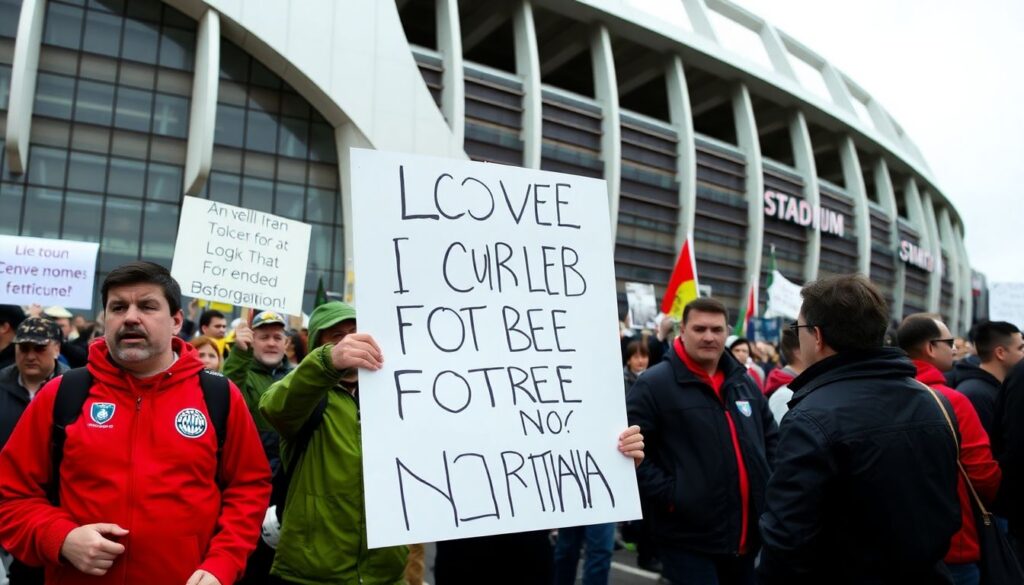
Institutions-clubs, leagues, federations, municipalities, sponsors-do not simply oppose fan resistance; they often absorb and redirect it. Understanding typical patterns helps grassroots groups avoid predictable traps and build more autonomous alternatives, especially in football‑centric countries like Spain.
- Corporate social responsibility as containment: Clubs launch charity campaigns or «community days» that highlight goodwill while leaving ticket pricing, labour conditions or governance untouched. Activists may be invited to participate under tight framing, diluting demands into apolitical «values».
- Symbolic inclusion, material exclusion: Institutions feature diverse fans in campaigns and signage, yet maintain barriers for those same groups to attend matches, access decision‑making or work in stable, decent conditions around the club.
- Dialogue without accountability: Periodic meetings with fan groups can become rituals where concerns are «heard» but not acted upon. Reports and minutes accumulate without clear timelines, metrics or consequences for non‑compliance.
- Myth of «no politics in football»: Authorities selectively suppress certain messages (anti‑racist, pro‑worker, feminist) while allowing others (nationalist symbols, military displays, commercial campaigns), presenting their choices as neutral rule enforcement.
- Romanticising grassroots while centralising power: Federations or brands may celebrate small clubs and barrio football in marketing, even as their policies (fixture clustering, licensing rules, facility fees) weaken those same ecosystems.
In response, grassroots alternatives take several forms: supporter‑owned clubs, community trusts that buy stakes in threatened teams, autonomous leagues, and alliances between fan groups and local movements. These structures are not immune to conflict or co‑optation, but they shift the baseline by giving communities formal tools and assets.
- When institutions propose «dialogue», insist on written agendas, measurable commitments and follow‑up dates.
- Support or create organisations with legal status (associations, cooperatives, trusts) that can hold assets and sign agreements.
- Challenge the «no politics» myth publicly with clear explanations of existing political choices in football governance.
Indicators for assessing cultural resilience in football
Cultural resilience in football is the capacity of communities to maintain and adapt shared meanings, practices and solidarities despite commercial pressure. To move beyond intuition, groups can use simple indicators to track whether their club’s culture is being hollowed out or re‑energised.
One approach is to create a lightweight «resilience dashboard» that supporters revisit every season. The idea is not scientific precision but collective reflection based on observable facts. Below is a conceptual template you can adapt for your context in Spain or elsewhere:
{
  "membership_and_voice": {
    "club_membership_open": true/false,
    "members_with_vote_on_key_issues": low/medium/high
  },
  "matchday_culture": {
    "non_sponsor_banners_visible": low/medium/high,
    "political_or_social_chants": rare/occasional/frequent
  },
  "economic_justice": {
    "ticket_price_trend": down/stable/up,
    "income_diversity_in_stands": low/medium/high
  },
  "knowledge_and_memory": {
    "local_history_projects_active": yes/no,
    "education_initiatives": none/ad_hoc/ongoing
  }
}
Supporter groups can score each dimension collectively, perhaps after a season‑end assembly or in an online survey. Over time, patterns emerge: some clubs may keep vibrant chants but lose democratic governance; others may win partial ownership but see matchday rituals fade. This helps prioritise efforts and understand trade‑offs.
Mini‑case: a mid‑table club in a Spanish regional capital noticed more tourists buying «entradas partidos futbol grandes ligas comprar» style packages via resale sites, while long‑term locals stopped attending. The supporters’ association tracked this as a fall in «income diversity in stands» and responded by campaigning for resident pricing, tighter resale rules and community season tickets.
- Define 4-6 indicators that your group can realistically observe each season.
- Schedule a yearly collective review and publish a brief summary to build transparency and memory.
- Use results to set concrete goals (e.g., «increase youth participation in assemblies», «stabilise ticket costs for low‑income fans»).
Self‑check: are we practising cultural resistance or just consuming?
- Can you explain who governs your club and stadium, and how fans influence those structures?
- Do at least some of your football‑related expenses support community‑controlled projects, not just big brands?
- Are there regular spaces (online or offline) where fans reflect critically on the game, beyond result talk?
- Have you discussed safety, legal risks and inclusion when planning actions, especially for women, migrants and minors?
- Do your initiatives outlast individual seasons, coaching cycles and marketing campaigns?
Practical questions from practitioners
Is it naive to see football as resistance when clubs are multi‑million businesses?
It is risky but not naive. The business layer is powerful, yet cultures are not fully programmable. Resistance survives in how people use the product: collective organising, critical media, solidarity actions and pressure on governance. The key is to keep expectations realistic and focus on concrete leverage points.
What are safe first steps for a new fan collective in Spain?
Start with low‑risk, relationship‑building activities: reading groups around a «futbol y politica libro», informal meetups before matches, or a small fanzine. Map local allies (neighbourhood associations, unions, anti‑racist groups) and learn basic legal rights for demonstrations and banners before planning visible actions.
How can we resist without losing access to tickets or being banned?
Prioritise tactics that are hard to criminalise: carefully worded banners, coordinated but non‑violent chants, independent research and public reports. Avoid personal insults or incitement, document everything, and keep a channel for dialogue with club and local authorities while maintaining autonomy.
Do online actions really matter compared to stadium protests?
Yes, especially for fans who cannot attend regularly. Independent blogs, podcasts and social media campaigns can shift narratives, expose contradictions and support legal or institutional efforts. Combining online work with physical presence-assemblies, leafleting, street murals-makes resistance harder to ignore or co‑opt.
Are courses and documentaries actually useful, or just more content?
They can be either. Critical «documentales sobre negocio del futbol streaming» and well‑designed «cursos online sociologia del futbol y deporte» provide tools to understand structures behind everyday frustrations. The test is whether they lead to new practices and alliances, not just more isolated consumption.
Can buying official merchandise ever be part of resistance?
Sometimes. If a member‑owned club uses fair labour and reinvests profits locally, purchasing may strengthen democratic structures. In most cases, balance it with support for independent fan projects and ethical alternatives, and stay critical of how brands use nostalgia and identity to drive sales.
Is it better to reform big clubs from within or focus on small community clubs?
Both paths have value and limits. Big clubs offer visibility but strong resistance; community clubs allow deeper change but smaller reach. Many practitioners adopt a dual strategy: modest reform efforts at the top while investing most energy in building robust, local football ecosystems.