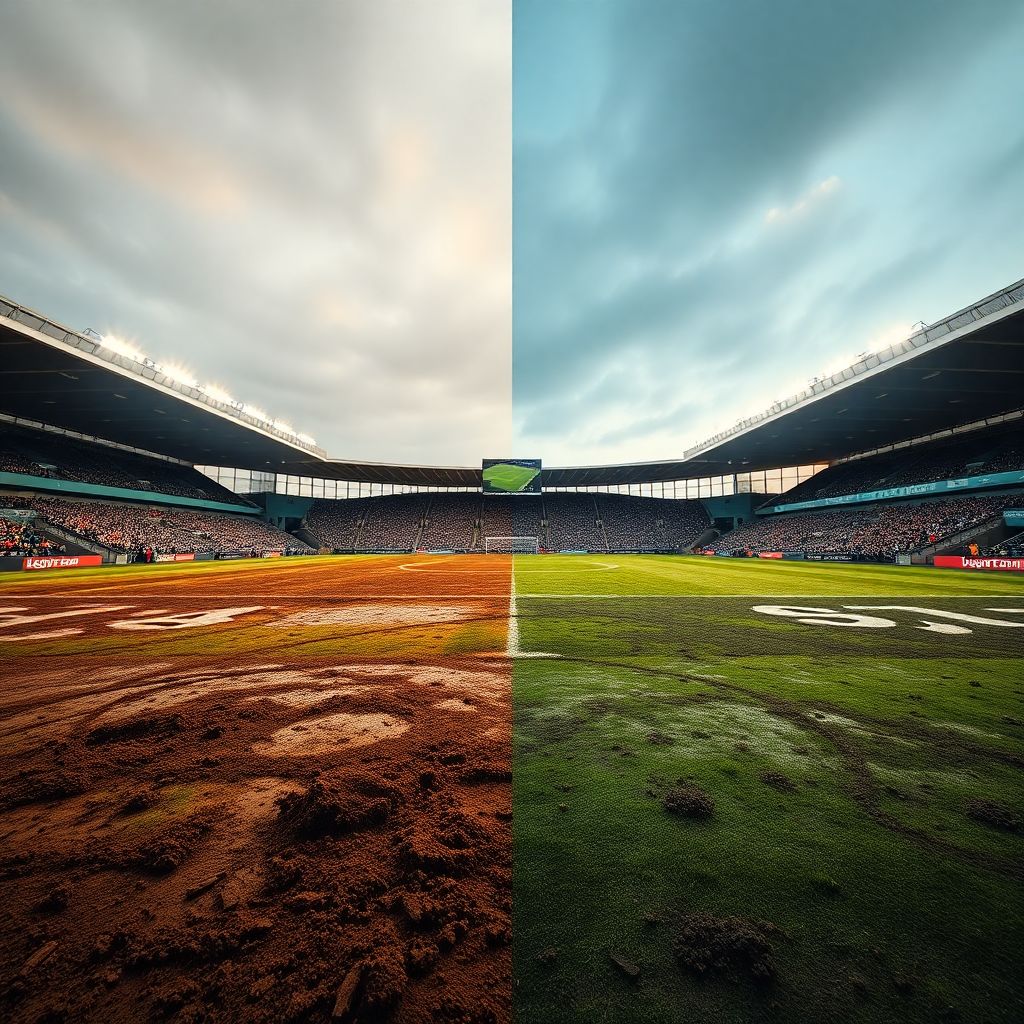
Nostalgia for a supposedly «purer» football usually mixes real differences (rules, money, media) with selective memory. Earlier eras had fewer cameras, slower pace and less commercial pressure, but also more violence, worse pitches and weaker player protection. Understanding context, evidence and how memory works helps avoid romanticising the past or unfairly dismissing today’s game.
Central arguments about a ‘purer’ past
- Nostalgia edits out boring, dirty or violent aspects of old football, keeping only highlights and heroic stories.
- Rules, tactics and physical preparation changed constantly; there is no single «old» style to compare with today.
- Money and media exposure grew gradually; corruption and pressure existed long before modern broadcasting deals.
- Player welfare, contracts and medical care were usually worse in the past, even if players seemed more «close to the people».
- Media, books and documentaries often frame past eras as golden ages, reinforcing romantic views.
- Concrete indicators (rules, fouls, salaries, minutes played, injuries) help discuss purity more objectively.
Myths that shape nostalgia for old football
When people claim that earlier football in Spain or elsewhere was more «pure», they usually bundle several different ideas: less money, fewer foreign players, more loyalty, fewer simulations and a stronger local identity. These elements are not always from the same decade and often mix La Liga memories with World Cups or European club competitions.
A common error is comparing a handful of iconic games with today’s full calendar. We remember epic derbies, finals and World Cups, not the many low‑quality league matches on muddy pitches. Streaming platforms now give access to partidos de fútbol clásicos en streaming; watching a full ninety minutes instead of short highlights quickly shows how selective memory can be.
Another myth is that players were automatically more loyal or attached to a single club. Transfer rules, low wages and weak players’ unions limited mobility. What sometimes looked like romantic loyalty was also lack of alternatives. Modern contracts and global scouting change behaviour, but do not mean that attachment or identity disappeared.
Nostalgia is reinforced by objects and rituals. Camisetas de fútbol retro originales, bar conversations and coleccionismo de recuerdos y memorabilia de fútbol antiguo create a tactile connection to a chosen era. This is culturally valuable, but it can hide the fact that the game on the pitch was inconsistent, often brutal and heavily shaped by the constraints of its time.
What contemporaneous rules and tactics actually looked like
Understanding how rules and tactics worked in their own time is the quickest way to cool down romantic assumptions about purity.
- Offside and attacking freedom: Earlier offside rules (for example with more defenders required to keep an attacker onside) often limited attacking play. What can look like elegant build‑up in old footage was partly a response to stricter constraints.
- Back‑passes and tempo: Before restrictions on passing to the goalkeeper, defenders slowed the game by using the keeper as a safe outlet. The pace many fans associate with «modern» football is linked to rule changes that discouraged time‑wasting.
- Tackling and physical contact: Referees allowed more heavy contact and tactical fouling. This did not mean «fairer» football; it often meant more unpunished violence, with less protection for creative players and fewer red cards for dangerous play.
- Substitutions and squad use: Limited or no substitutions forced injured players to stay on the pitch or teams to continue with fewer men. Tactical flexibility was restricted, and long‑term injuries were more common, reducing overall quality.
- Formations and space: Popular systems like WM or rigid 4‑4‑2 structured space differently. Some matches were extremely closed and conservative. The idea that everyone attacked with joy is not supported when you watch full games or consult libros sobre la historia del fútbol antiguo.
- Refereeing standards and technology: Without VAR, goal‑line tech or multiple cameras, blatant errors went uncorrected. Fans sometimes interpret the absence of technology as purity, but it also meant results decided by mistakes that today would be corrected.
How commercialization and money altered incentives
Money and media did change football, but not in a simple «good before, bad now» line. To avoid naive conclusions, look at specific incentive shifts.
- Ticket‑driven local clubs: Earlier clubs depended strongly on match‑day revenue. This pushed them to play attractive football at home but also to prioritize survival over long‑term planning. Facilities, pitches and youth structures often suffered.
- Early television and sponsorships: The first big TV contracts and shirt sponsors in Spain and Europe changed kick‑off times and visibility, but also kept clubs financially alive. What many see as the start of «impurity» also financed better stadiums and academies.
- Global broadcasting and branding: Large international deals rewarded big brands and star players. This increased inequality but also allowed more professional staffing, analytics and medical departments. Commercialization is not only shirts sold; it affects how clubs structure all operations.
- Player salaries and power balance: Higher wages and freer movement gave players more bargaining power. In the past, some players were tied to clubs with little legal recourse. Modern contracts may feel colder, but they reduce exploitation.
- Merchandising and nostalgia products: The popularity of camisetas de fútbol retro originales and premium DVDs or streaming packs of classic matches shows how nostalgia itself became a product. Clubs and platforms monetize the idea of a purer past, which can reinforce selective narratives.
- Content ecosystems: Documentales sobre la historia del fútbol and magazine formats generate value around storytelling. Some productions are rigorous; others amplify myths because drama sells better than nuance.
Player welfare, training and athleticism: then versus now
Romantic images of players staying at the same bar as fans often ignore the physical cost of older training methods and medical standards. Comparing eras means balancing emotional proximity with objective welfare.
Benefits often associated with earlier eras
- Stronger perceived connection between players, clubs and local communities, especially in medium‑sized Spanish cities.
- Less intrusive media coverage of private lives, allowing simpler daily routines for many players.
- Lower tactical complexity in some periods, which could give technically gifted players more space in specific leagues.
- Fewer commercial events, which reduced off‑pitch obligations and sponsor‑driven appearances.
Limitations and risks that nostalgia tends to hide
- Inadequate sports medicine and rehabilitation, leading to chronic pain and early retirement for many former professionals.
- Non‑specialized training and poor nutrition, which reduced peak performance and career length.
- Heavier balls, worse boots and irregular pitches, increasing joint and head‑injury risks.
- Weak contractual protections and low pensions, leaving some retired players in precarious situations.
- Limited rotation and substitutions, forcing injured players to continue and aggravate injuries.
Media, storytelling and the manufacturing of memory
Media do not just record football history; they actively construct it. To avoid falling into easy romanticization, it helps to recognize recurring patterns in how stories are told.
- Highlight packages versus full matches: Most archival content is reduced to goals and dramatic moments. When fans finally watch partidos de fútbol clásicos en streaming, they often notice long phases of slow or imprecise play that never appeared in short clips.
- Hero narratives and villains: Many documentales sobre la historia del fútbol focus on a few charismatic figures and clear narrative arcs. This leaves out ordinary players, tactical detail and structural issues, and it turns specific seasons into symbols of a whole era.
- Selective memory in books and chronicles: Libros sobre la historia del fútbol antiguo sometimes rely heavily on newspaper reports, which were themselves influenced by club politics and social context. Without triangulating sources, books can repeat the biases of their time.
- Nostalgia‑driven programming: TV channels and platforms schedule classic matches, anniversary specials and debates because they attract audience segments that prefer familiar heroes. This reinforces the idea that old football was uniformly superior.
- Material culture and collections: Coleccionismo de recuerdos y memorabilia de fútbol antiguo – tickets, scarves, programmes, stickers – works as a personal archive. Each object anchors positive memories, while negative matches and conflicts rarely leave such pleasant artefacts.
- National and club identity framing: Media often integrate past victories into national or club identity. This framing simplifies complex contexts (political transitions, economic crises) into clean sports stories, feeding the impression of a lost golden age.
Empirical indicators for assessing ‘purity’ in football
«Purity» is a vague term, but you can approach it more rigorously by defining what you mean and then checking concrete indicators. This reduces emotional argument and helps you compare decades without idealizing one side.
A simple three‑step method for fans and analysts:
- Define your version of purity in advance. For example:
- Less financial inequality between clubs.
- More homegrown players in starting elevens.
- Fewer simulations and time‑wasting behaviours.
- Greater tactical diversity across the league.
- Choose measurable proxies for each element.
- For inequality: ratio of highest to lowest club budget in a league.
- For homegrown players: percentage of minutes played by academy graduates from each club.
- For simulations: number of fouls called per match and disciplinary reports about dissent or diving.
- For diversity: distribution of common formations and pressing styles across teams.
- Compare specific seasons instead of eras.
- Pick concrete years (for example, one in the 1970s, one in the 1990s and one recent season) and collect comparable data.
- Complement numbers with qualitative sources: full‑match replays, coaching manuals, interviews and press coverage.
- Ask whether differences support your purity definition or if they only support a feeling of familiarity with «your» era.
Thinking this way turns a vague debate («football was better before») into a structured comparison. It will not remove emotion – football identity is emotional by nature – but it makes it harder to fall for simple myths or marketing‑driven nostalgia.
Short answers to recurring doubts about nostalgia
Was football really more honest and clean in the past?
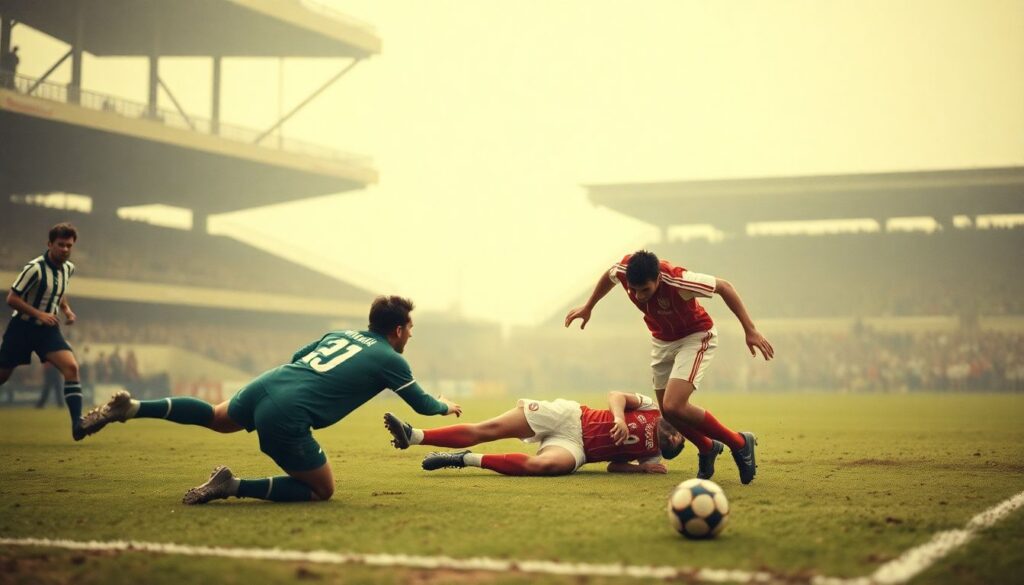
No. Fouls, dives and referee manipulation already existed. The difference is that fewer cameras and less global media meant many incidents were not recorded or widely discussed. Today’s visibility creates the impression that problems are new, when they often are not.
Why do classic matches often feel more exciting than current games?
Because you usually watch classic games that were exceptional even in their own time. Boring or low‑quality matches from those seasons are rarely rebroadcast. Selection bias, not objective superiority, explains a large part of the difference in perceived excitement.
Does more money automatically mean less pure football?
More money changes incentives but does not automatically corrupt the game. It can fund better youth academies, medical care and infrastructure, while also increasing commercial pressure and inequality. The key is how money is regulated and distributed, not its mere presence.
Are players today less loyal to their clubs than before?
Players have more mobility and contractual freedom now, which can look like less loyalty. In earlier eras, legal and economic restrictions limited movement. Some «loyalty» was the result of weak player rights rather than stronger emotional attachment.
Should we stop enjoying retro shirts, books and memorabilia?
No. Enjoying retro culture is compatible with a realistic view of the past. The important part is to remember that merchandising and storytelling often highlight best moments and heroes, not the full reality of everyday football in those decades.
How can I check my own nostalgic biases about football?
Periodically watch full matches from different eras, not just short highlights. Compare specific seasons using clear criteria (rules, tactics, player welfare, finances). Read diverse sources, including those that challenge your preferred narrative about your club or country.
Are modern tactical systems to blame for football feeling less romantic?
Modern tactics can make games more controlled and structured, but earlier eras also had defensive and conservative systems. The feeling of lost romance often comes from personal life stages and media framing, not solely from tactical evolution.