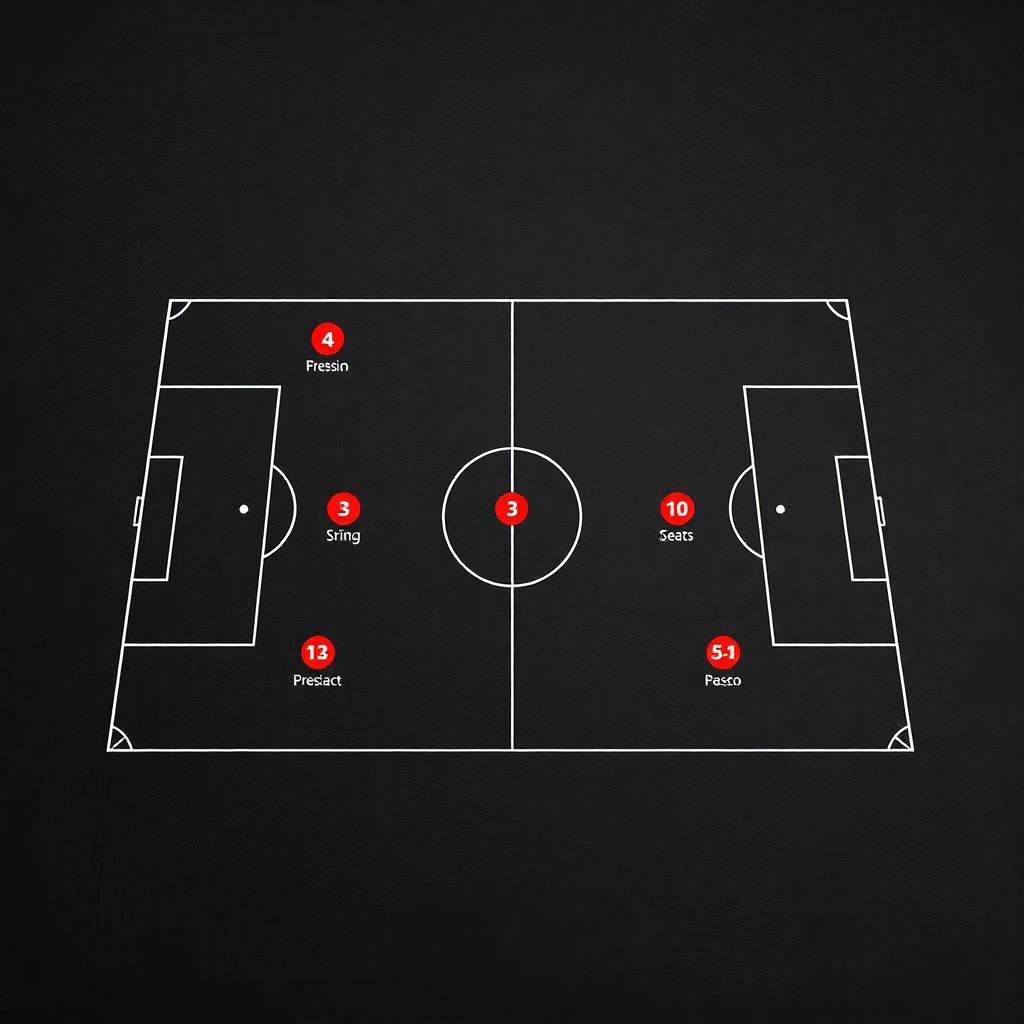
4‑3‑3 «speaks» width, individual duels and high pressing, while 5‑3‑2 «says» compactness, central control and counter‑attacking. In Spain’s es_ES context, 4‑3‑3 suits clubs wanting positional play and wingers; 5‑3‑2 fits resource‑limited teams protecting the middle and exploiting transitions, especially against technically superior opponents.
Tactical thesis: what a formation signals
- 4‑3‑3 signals width, isolation of full‑backs and a strong pressing identity in the opposition half.
- 5‑3‑2 signals central congestion, defensive security and a willingness to suffer without the ball.
- 4‑3‑3 invites positional play, circulation and patient «attacks by zones».
- 5‑3‑2 invites quick vertical passes, knock‑downs and counter‑attacks through the forwards.
- 4‑3‑3 highlights wingers and attacking full‑backs as main creators.
- 5‑3‑2 highlights centre‑backs, pivots and strikers’ partnerships as decision‑makers.
- 4‑3‑3 suits possession coaches and academies; 5‑3‑2 suits underdogs and physically strong squads.
Grammar of space: how 4-3-3 and 5-3-2 encode positioning
Use these criteria to choose whether your team «speaks» 4‑3‑3 or 5‑3‑2 as its main tactical language.
- Width vs central density
- 4‑3‑3: Natural five‑lane occupation with high and wide wingers; full‑backs can underlap or overlap.
- 5‑3‑2: Three central defenders and three central midfielders compress the middle; width appears later via wing‑backs.
- Persona tip – possession coach: If you want clear wide triangles and half‑space occupation for a detailed análisis táctico profesional 4-3-3 5-3-2 para entrenadores, start from 4‑3‑3.
- Vertical structure and lines
- 4‑3‑3: Classic three‑line structure (defence‑midfield‑attack) plus full‑backs as a dynamic fourth line.
- 5‑3‑2: Often behaves as 3+2+3+2 in possession, with centre‑backs stepping in and wing‑backs forming a midfield line.
- Persona tip – counter coach: Prefer 5‑3‑2 if you want a clear platform of five behind the ball ready to jump into counters.
- Use of half‑spaces
- 4‑3‑3: Interiors live in half‑spaces; they connect pivots, full‑backs and wingers with frequent third‑man runs.
- 5‑3‑2: Half‑spaces often belong to strikers dropping or to a wing‑back arriving late, so timings are different.
- Persona tip – youth developer: 4‑3‑3 is usually clearer for teaching half‑space roles in academies and clínic para entrenadores sobre sistemas tácticos 4-3-3 y 5-3-2.
- Rest defence and protection of the box
- 4‑3‑3: Rest defence often 2+1 or 3+2; needs coordinated full‑backs and pivots.
- 5‑3‑2: Natural 3+2 or 5+3 behind the ball; the box is crowded by default.
- Persona tip – semi‑pro underdog: If you concede many crosses and cut‑backs, 5‑3‑2 usually stabilises you faster.
- Distances between lines
- 4‑3‑3: Can stretch opponents, but your own block may open if forwards don’t work backwards.
- 5‑3‑2: Makes it easier to keep 25-30 metres between first and last line, ideal for compactness without data claims.
- Coaching detail: In Spain’s lower categories, shorter distances of 5‑3‑2 often reduce chaos when players tire.
- Role clarity for wide players
- 4‑3‑3: Clear winger vs full‑back partnership on each side.
- 5‑3‑2: Wing‑backs must «speak» defence and attack simultaneously, a harder role for inconsistent players.
- Persona tip – youth academy: If your wide players are still learning defensive timing, 4‑3‑3 simplifies their tasks.
- Flexibility to morph in‑game
- 4‑3‑3: Can turn into 4‑2‑3‑1 or 3‑4‑3 with minor adjustments.
- 5‑3‑2: Can become 3‑5‑2 or 5‑4‑1 depending on your pressing plan.
- Tooling tip: Good software de análisis táctico de sistemas de juego fútbol helps you test these morphs before choosing a base shape.
Drill ideas for spatial grammar
- 4‑3‑3 lane game: Divide the pitch into five vertical lanes; allow only two players per lane in possession to teach spacing.
- 5‑3‑2 compactness wave: 7v5+GK in a 35‑metre zone; back five slide as a unit while midfield three protect the inside.
Offensive dialects: chances, passing patterns and overloads
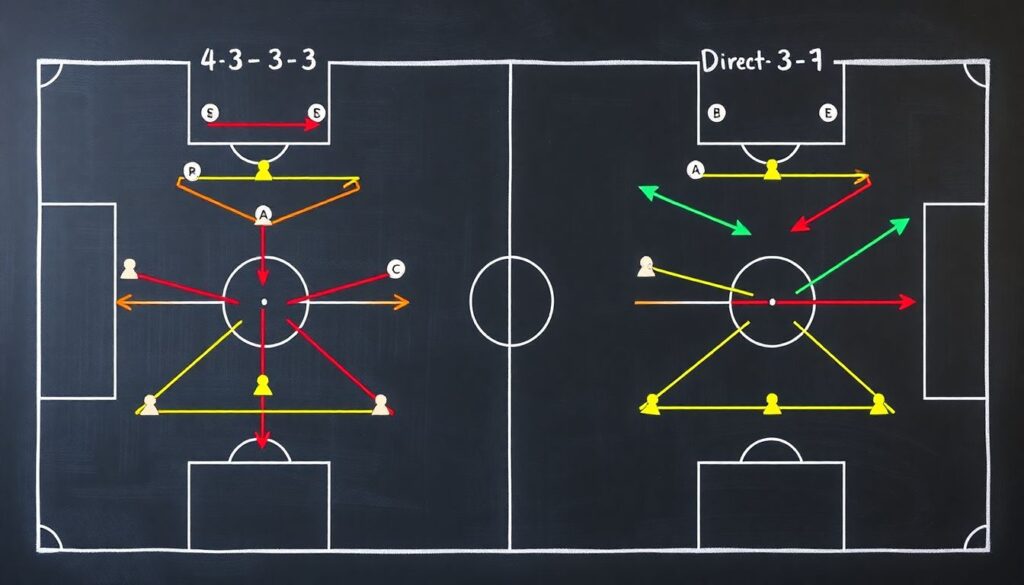
Both systems can attack well, but they generate chances through different patterns and rhythms. Think of each variant below as a dialect you can adopt depending on your squad and league context.
| Variant | Best for | Pros | Cons | When to choose |
|---|---|---|---|---|
| Positional 4‑3‑3 (wide wingers) | Possession coach, youth developer, teams in Spain facing low blocks | Stable wide triangles, clear half‑space roles, good for libros de táctica fútbol 4-3-3 vs 5-3-2 style learning | Needs technically strong full‑backs and interiors; can be vulnerable to counters if rest defence is weak | When you want to dominate the ball, teach structure and impose your game at home |
| Direct 4‑3‑3 (channel runs) | Counter‑punching teams with fast wingers and a target 9 | Quick access to depth, frequent 1v1s for wingers, simple patterns for intermediate squads | Less control in midfield, risk of stretched team if second balls are lost | When opponents press high and leave space behind; in windy or poor‑pitch conditions |
| Counter 5‑3‑2 (low block) | Underdogs, semi‑pro or amateur teams with strong central defenders | Excellent box protection, natural central overloads, straightforward counter lanes for strikers | Limited wide presence in sustained attacks, strikers can become isolated | When facing technically superior rivals or in two‑legged ties where away draw is acceptable |
| Pressing 5‑3‑2 (mid‑block) | Teams with fit forwards and aggressive wing‑backs | Can trap opponents in central corridors, launch short counters, and protect half‑spaces | Wing‑backs must cover huge distances; timing of the front two presses is crucial | When rivals build through the middle and their full‑backs are not primary creators |
| Hybrid 5‑3‑2 into 3‑4‑3 | Advanced squads and coaches comfortable with in‑game shape changes | Defensive security of back five, attacking width of front three when wing‑back steps up | High cognitive load; mistakes in timing can open big gaps on flanks | When you want to start cautious then gradually push a wing‑back higher to chase the game |
Pattern‑play drills for attacking dialects
- 4‑3‑3 third‑man pattern: 7v0 in half‑pitch: CB-pivot-interior-winger, finishing with cut‑back. Add passive defenders to stress timing once pattern is clear.
- 5‑3‑2 counter lane drill: Start from low block 5+3 vs 5 attackers; on regain, must find one of the two strikers within three passes, finishing in 6-8 seconds.
To deepen these ideas, a curso online de táctica fútbol sistemas 4-3-3 y 5-3-2 combined with simple video tagging in software de análisis táctico de sistemas de juego fútbol will let you compare which patterns fit your players’ decision‑making.
Defensive vocabulary: shape, coverage and pressing triggers
Defensively, each system offers different «words»: cover, press, shuffle, trap. Use these scenario‑based rules to decide.
- If you face strong wingers and overlapping full‑backs, choose 5‑3‑2.
- Back five gives natural 2v2 or 2v3 cover wide.
- Wing‑backs can jump without leaving the last line exposed.
- Drill: 8v7 on a side channel; defend with back five plus two midfielders, forcing the ball back or inside trap.
- If you want to press high and lock opponents into build‑up, 4‑3‑3 usually speaks more clearly.
- Front three can press three centre‑backs or GK+CBs symmetrically.
- Interiors can jump to full‑backs while pivot covers central lane.
- Drill: 7v7+GK in 2/3 pitch, pressing from goal kicks with strict starting positions for front three.
- If your team suffers between lines, 5‑3‑2 offers better «coverage vocabulary».
- If your centre‑backs are weak in big spaces, avoid a very aggressive 4‑3‑3; either deepen the block or move to 5‑3‑2.
- If your forwards work hard defensively, 4‑3‑3 can create a very intense first line, ideal for coaches who enjoy análisis táctico profesional 4-3-3 5-3-2 para entrenadores with pressing triggers and cues.
- If your midfield three is your strength, both shapes are valid, but:
- 4‑3‑3: midfielders must defend more horizontally, helping wide.
- 5‑3‑2: midfielders defend more vertically, protecting central corridors.
Transitions as sentences: how each formation communicates intent on turnover
Use this quick checklist to pick the formation whose «transition sentences» match your game model.
- Define your first reaction on loss. If you want immediate counter‑press in wide areas, 4‑3‑3 is more natural. If you prefer fast retreat to a block, 5‑3‑2 aligns better.
- Assess your recovery speed. Slow centre‑backs and pivots benefit from the spare man and cover angles of 5‑3‑2 in negative transitions.
- Check your depth threats. If you have two complementary strikers who attack different channels, 5‑3‑2 speaks fluent counter‑attack; if you rely on wide dribblers, 4‑3‑3 communicates that better.
- Plan your rest‑attack structure. In 4‑3‑3, aim for at least three players behind the ball when attacking; in 5‑3‑2, ensure one wing‑back stays connected to the back line.
- Choose your pressing triggers. 4‑3‑3: bad pass to full‑back or inside CB. 5‑3‑2: back pass into central corridor or pass to isolated pivot.
- Design one rehearsed «transition sentence» per system. For 4‑3‑3, maybe «win‑wide, third‑man inside»; for 5‑3‑2, «win‑central, play striker’s feet, runners beyond».
- Test under fatigue. In training, simulate the last 10 minutes of a match; whichever system keeps its transition behaviours under tired legs is your safer choice.
Player roles as phonemes: which profiles carry the message best
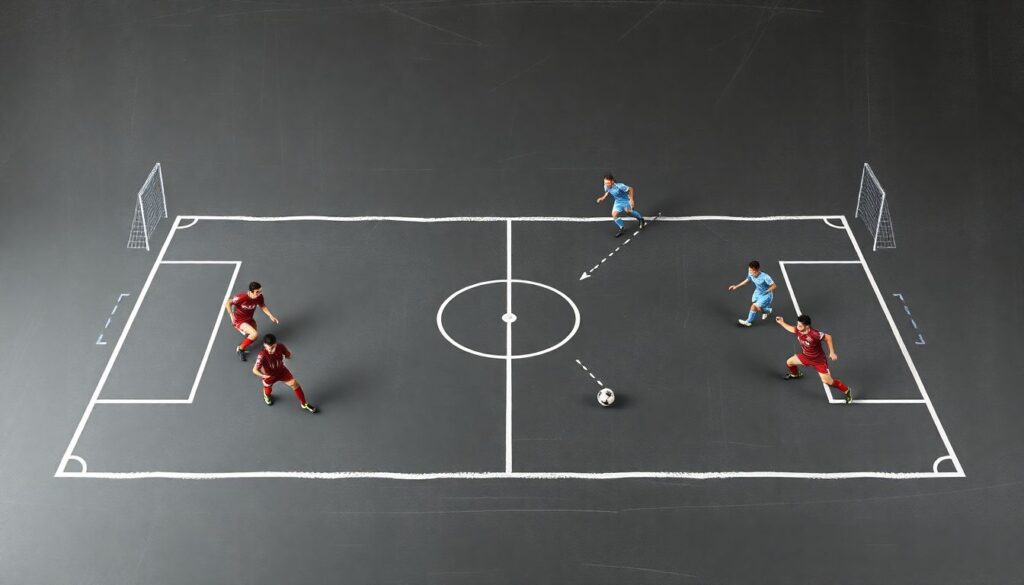
A formation fails when the «phonemes» (player profiles) do not match the language. Avoid these common errors when deciding between 4‑3‑3 and 5‑3‑2.
- Full‑backs miscast as wing‑backs.
- Problem: Defensive full‑backs forced to play as attacking wing‑backs in 5‑3‑2; they cannot provide width or final‑third quality.
- Solution: Either recruit more dynamic wide players or keep a 4‑3‑3 where their main job is to defend first.
- Lone striker without support in 4‑3‑3.
- Problem: Target 9 isolated, wingers too wide, interiors not arriving in the box.
- Solution: Train interior runs beyond the striker or consider 5‑3‑2 to give him a partner.
- Three centre‑backs who cannot progress.
- Problem: In 5‑3‑2, if your back three are uncomfortable carrying the ball or splitting lines, you will only defend, never attack.
- Solution: Use a back four or train specific carrying lanes and simple vertical passes.
- Interiors without clear identity.
- Problem: In 4‑3‑3, interiors neither defend transitions nor arrive in the box.
- Solution: Define one as more box‑to‑box, another as more supportive; drills with finishing from cut‑backs plus immediate counter‑press.
- Wing‑backs who do not defend the far post.
- Problem: In 5‑3‑2, crosses from the opposite side find unmarked far‑post attackers.
- Solution: Repetition of 5v4 crossing games focusing on far‑post tracking.
- Goalkeeper distribution ignored in the decision.
- Problem: Choosing 4‑3‑3 build‑up patterns without a GK who can play as spare man under pressure.
- Solution: If the GK is limited with feet, consider more direct 4‑3‑3 or protective 5‑3‑2 and adjust your clinic and libros de táctica fútbol 4-3-3 vs 5-3-2 study accordingly.
- Youth players overloaded with role complexity.
- Problem: Asking U14 wing‑backs to master both winger and full‑back tasks in 5‑3‑2.
- Solution: Start from 4‑3‑3; introduce 5‑3‑2 gradually once they show positional maturity in training or in a clínic para entrenadores sobre sistemas tácticos 4-3-3 y 5-3-2.
Coaching syntax: instructions and training drills that translate formation language
4‑3‑3 is usually best for coaches who want to dominate the ball, develop young players and press high; 5‑3‑2 is usually best for underdogs, counter‑attacking sides and teams prioritising defensive stability. For many es_ES coaches, the optimal path is learning both, then choosing per squad profile and competition level.
Practical training ideas by persona
- Possession coach: Alternate 4‑3‑3 positional games (6v4, 7v3 rondos) with 11v11 where your team must complete a set number of switches before finishing.
- Counter team coach: Use 5‑3‑2 in 3/4‑pitch games starting from low block; give bonus points for goals scored within 10 seconds of regaining.
- Youth developer: First cycle: full season of 4‑3‑3 to build clear references; second cycle: introduce 5‑3‑2 in specific game plans or tournaments.
- Ambitious amateur coach: Combine a curso online de táctica fútbol sistemas 4-3-3 y 5-3-2 with simple tagging in software de análisis táctico de sistemas de juego fútbol to create your own mini playbook.
Practical clarifications and edge cases
Can I switch between 4‑3‑3 and 5‑3‑2 within the same season?
Yes, but change the ball‑orientations and roles gradually. Introduce the new shape in specific match plans and in controlled training games before using it for a full competitive match.
Is 4‑3‑3 always more attacking than 5‑3‑2?
No. A passive 4‑3‑3 can be less dangerous than an aggressive 5‑3‑2 with high wing‑backs and coordinated counters. Intensity, starting heights and risk tolerance matter more than the raw numbers.
Which system is better for youth teams in Spain?
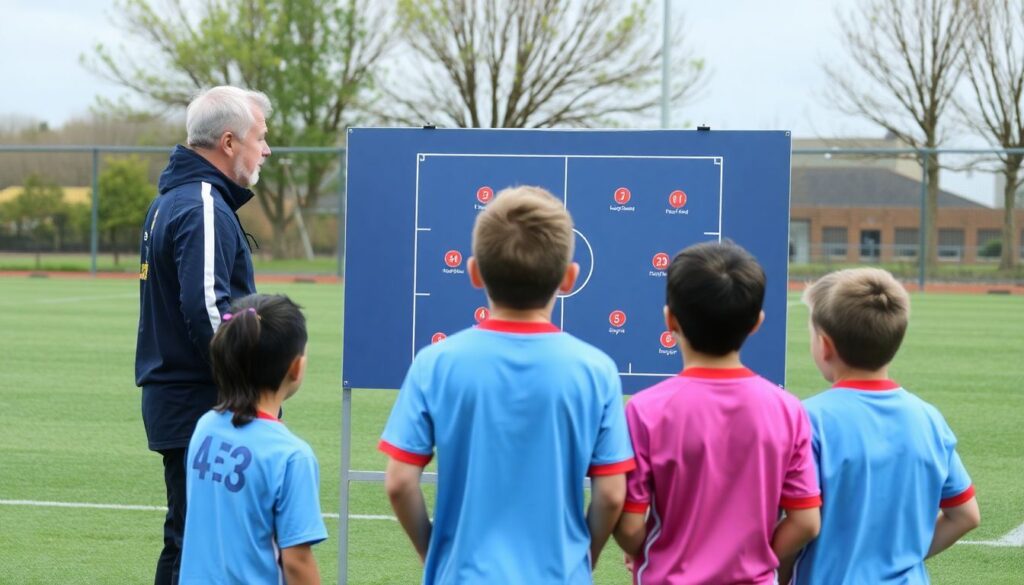
For most youth categories, 4‑3‑3 is clearer to teach basic positional concepts, pressing and wide play. Once players understand those, 5‑3‑2 can be introduced to explore alternative roles and defensive concepts.
How do I know if my squad fits 5‑3‑2?
You need three reliable central defenders, at least two high‑stamina wing‑backs and a pair of forwards who can combine. If any of those lines are weak, 5‑3‑2 may expose your limitations instead of hiding them.
Can a small‑sided team (7‑a‑side) apply these ideas?
Yes. Think in principles instead of numbers: width, depth, cover, rest defence. For example, in 7‑a‑side you might mirror 4‑3‑3 with 2‑3‑1 or 3‑2‑1, and 5‑3‑2 with 3‑3‑1, keeping similar roles.
Do I need advanced tools to analyse both systems?
No, but basic video and simple software de análisis táctico de sistemas de juego fútbol help a lot. Even drawing pressing traps and transition patterns on freeze‑frames will improve your clarity and players’ understanding.
How can I keep learning beyond this comparison?
Combine libros de táctica fútbol 4-3-3 vs 5-3-2 with a focused clínic para entrenadores sobre sistemas tácticos 4-3-3 y 5-3-2, then apply concepts in your context. Recording sessions and matches will close the feedback loop.