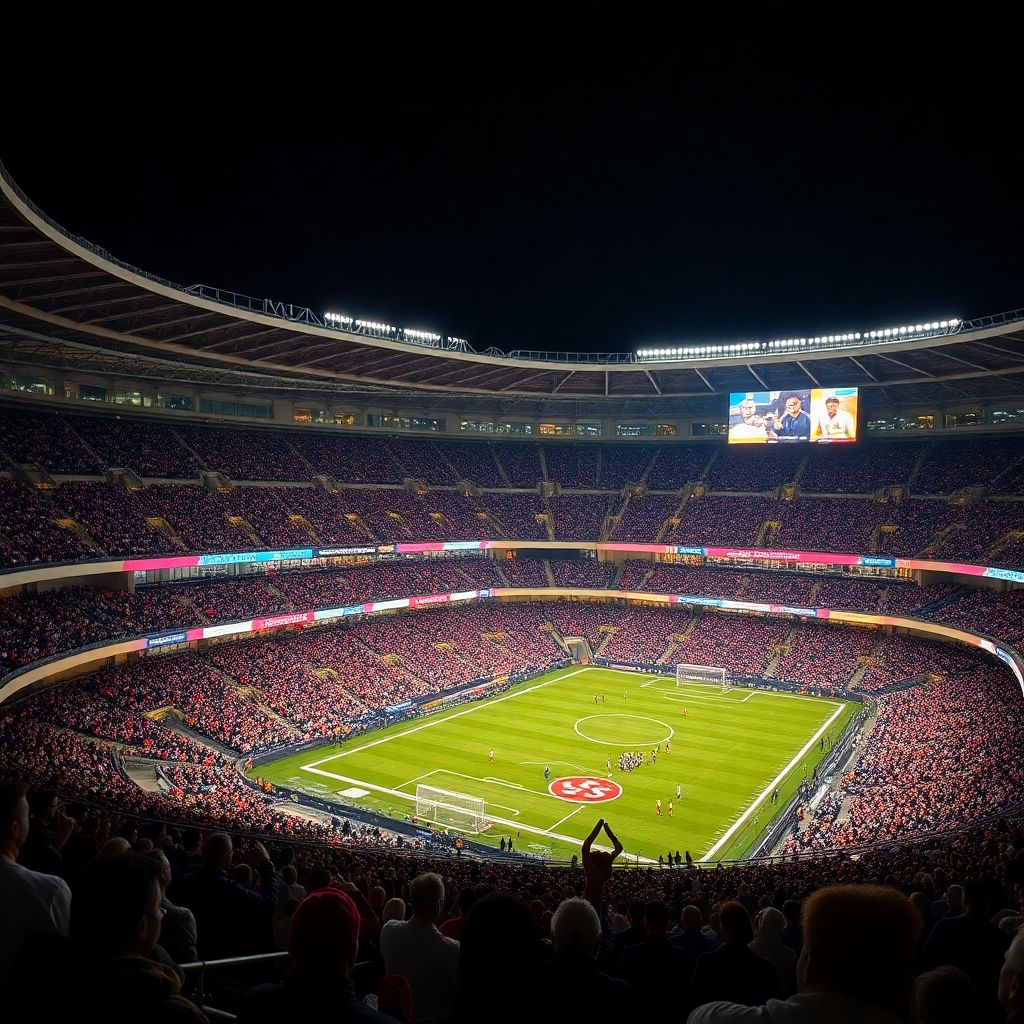
Modern stadiums resemble an agora because they concentrate people, emotion and visibility, yet they are usually privately owned, highly commercialised and tightly controlled. They work as conditional public forums: open to mass participation, but filtered through tickets, surveillance, sponsorship and regulations that shape who enters, what is visible and which voices are allowed.
Core propositions: the stadium as contemporary public forum
- A stadium is a privately controlled venue that temporarily performs as a mass gathering space, not a fully open civic square.
- Access, behaviour and expression are filtered through tickets, security protocols, contracts and sponsor interests.
- Digital infrastructure and surveillance technologies turn the crowd into measurable, traceable data.
- Commercial logics prioritise paying spectators, premium zones and brands over unmediated collective experience.
- Despite constraints, stadiums can host real political expression, but usually under strict rules and risk management.
- Public authorities, operators and clubs can redesign rules and layouts to make stadium life more inclusive and civically meaningful.
Debunking myths: what stadiums are-and are not-doing for civic life
The idea of the stadium as a new democratic agora is powerful, but often overstated. Supporters, politicians and developers like to claim that a large arena automatically rebuilds community, stimulates debate and revitalises urban life. In practice, most stadiums offer a conditional and carefully choreographed version of publicness.
First, access is restricted by price, security checks and event schedules. A supposedly shared space appears only during matches, concerts or mega-events, and even then only for those who hold valid entradas estadio eventos deportivos. Outside those windows, many facilities are closed, fenced or patrolled as private property.
Second, the right to speak and display messages is limited. Chants, banners or tifos are tolerated as long as they fit club policies, league regulations and sponsor sensitivities. Political or critical messages may be prohibited or selectively sanctioned, which undermines the image of the stadium as an open political arena.
Third, opaque partnerships blur lines between public and private power. Municipalities may subsidise construction, provide infrastructure and police presence, while club operators and event companies effectively govern the interior. Understanding the stadium as an agora therefore requires careful attention to ownership, contracts and governance rather than romantic metaphors.
From the ancient agora to the modern bowl: brief historical continuity
The comparison between the classical agora and the contemporary stadium works only if we are precise about how each space organises collective life:
- Assembly and visibility. Both agoras and stadiums gather large crowds in a focused setting where bodies, reactions and symbols become visible to each other. The key continuity is mutual spectatorship: you watch the event, but you are also part of the spectacle.
- Ritual and identity. Ancient assemblies, religious festivals and today's derbies or cup finals all perform belonging to a city, nation or community. Flags, colours, anthems and choreographies translate abstract identities into sensory experience.
- Spatial framing of conflict. Agoras hosted debates and legal disputes; stadiums contain rivalry and aggression through rules, segregated sectors and police lines. Conflict remains, but it is framed as "safe" competition rather than open confrontation.
- Institutional guardianship. City councils once governed the agora; now clubs, leagues, event promoters and municipal authorities co-manage stadium norms, from access rules to emergency protocols.
- Technological mediation. Where the agora relied on voice and immediate presence, stadiums add PA systems, giant screens, social media and broadcast cameras. They produce a hybrid public: those inside the bowl and millions watching remotely.
- Economic embedding. Markets and stalls surrounded historical plazas; modern arenas anchor bars, malls and real-estate projects. The social function of gathering is increasingly tied to consumption and property values.
Physical design, access and social inclusion: who uses the space
The way a stadium is planned and built largely determines whether it works as an inclusive civic stage or as an exclusive entertainment machine. Decisions in diseño y construcción de estadios modernos influence who enters, how they move and what kind of public they become.
- Match-day spectators. The dominant users are ticket holders segmented by price and status: ultras, family stands, away fans, corporate boxes and VIP lounges. Each group experiences a different "public", from highly choreographed support to quiet business networking.
- Local residents and neighbours. For nearby communities, the stadium is also noise, traffic and occasional employment. If ground floors host shops, clinics, schools or community rooms, neighbours can reclaim some everyday access. If not, the venue becomes a fenced void for most of the week.
- Workers and precarious staff. Cleaners, catering crews, stewards and temporary event staff use the stadium as workplace, not leisure space. Their movement is controlled by back-of-house corridors, staff entrances and strict supervision, often invisible to the main crowd.
- Fans with disabilities and older supporters. Ramps, lifts, sightlines, accessible toilets and calm areas determine whether people with mobility, sensory or cognitive needs can actually participate. Accessibility is a core test of whether the "agora" is for everyone or only for the able-bodied.
- Non-sport users on off-days. Conferences, exams, religious gatherings or vaccination drives can turn the bowl into a broader civic venue. This depends on pricing, booking policies and the willingness of operators to host low-margin or non-commercial activities.
- Remote participants. Large screens, apps and broadcasting extend the "stadium public" far beyond the seats. Fans who cannot afford tickets or live abroad still participate symbolically, but with less influence on the rules that govern the physical site.
Surveillance regimes: cameras, data and the choreography of visibility
Stadiums are among the most intensely monitored urban environments. High crowd density, commercial interests and terrorism fears have normalised heavy use of sistemas de videovigilancia para estadios, access control and data analytics. These systems shape not only safety but also the limits of dissent, anonymity and spontaneity.
Benefits of stadium surveillance and datafication
- Reduced risk of large-scale disasters through real-time crowd monitoring, capacity management and rapid emergency response.
- Identification and sanctioning of violent offenders, racist abuse and repeated breaches of stadium rules, supporting safer atmospheres.
- Efficient access through digital tickets and turnstiles, often integrated with transport and payment systems.
- Improved operations via analytics on flows, concession queues and usage patterns, which can lead to better layouts and staffing.
- Enhanced fan comfort within certain soluciones de estadio inteligente y experiencia del aficionado, such as personalised information, wayfinding and in-seat services.
Risks and structural limitations of pervasive monitoring
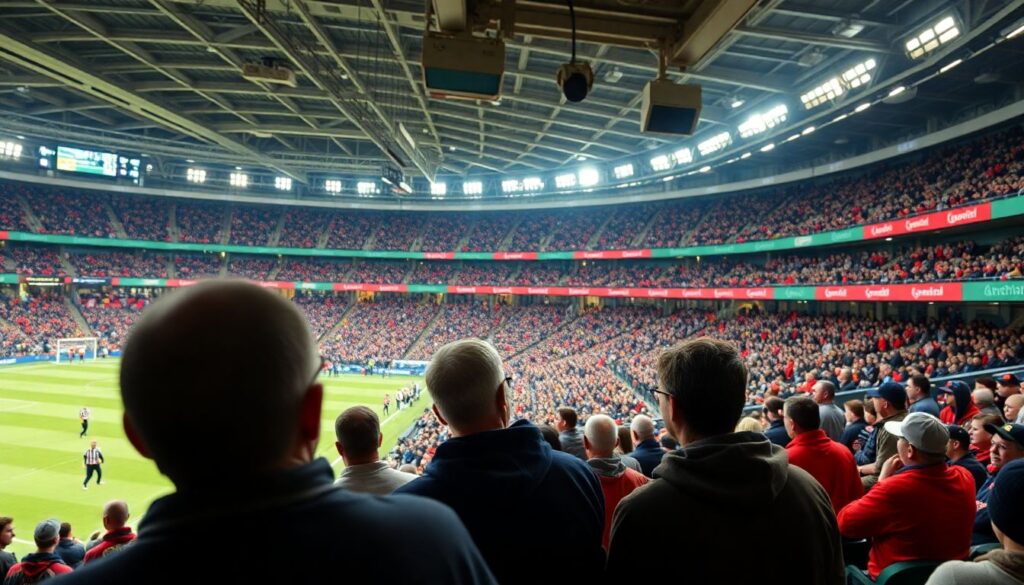
- Erosion of privacy through biometric systems, face recognition and data sharing with law enforcement or commercial partners.
- Chilling effects on protest and free expression when fans know that banners, chants and gestures are individually traceable.
- Opaque decision-making around watchlists, banning orders and data retention, often without clear appeal mechanisms.
- Discriminatory outcomes if algorithms and stewards disproportionately target racialised groups, ultras or away supporters.
- Function creep, where technologies introduced for safety become tools for marketing, behavioural profiling and crowd manipulation.
Commercial forces and the erosion of communal experience
Commercialisation transforms how stadiums feel and what kind of public they host. The crowd is reimagined as segmented consumers whose attention and emotions can be sold to sponsors and media partners. This shift brings predictable mistakes that weaken the idea of the stadium as a shared civic agora.
- Confusing spending with belonging. Treating high-spending fans as "better" supporters undermines solidarity. Over-pricing tickets, hospitality and merchandising can squeeze out long-time locals while importing a more affluent, less rooted audience.
- Over-programming every second. Constant music, ads, light shows and screen content reduce spaces for organic chants, silences and ritual. The venue becomes an advertising platform where unscripted collective expression is seen as a risk to be managed.
- Ignoring non-event life. Designing a stadium solely around match-day consumption leads to dead perimeters, empty plazas and underused concourses. Without everyday functions-markets, services, civic uses-the "publicness" of the site shrinks to a few hours per week.
- Short-term sponsorship thinking. Renaming rights, brand zones and exclusive contracts may bring revenue but can displace local symbols, historic names and fan-created spaces that carry deep meaning and memory.
- Outsourcing responsibility to private security. Heavy reliance on servicios de seguridad privada en estadios without strong public oversight can shift priorities from rights and inclusion toward purely contractual risk avoidance.
Regulation, protest and rights: managing dissent in controlled venues
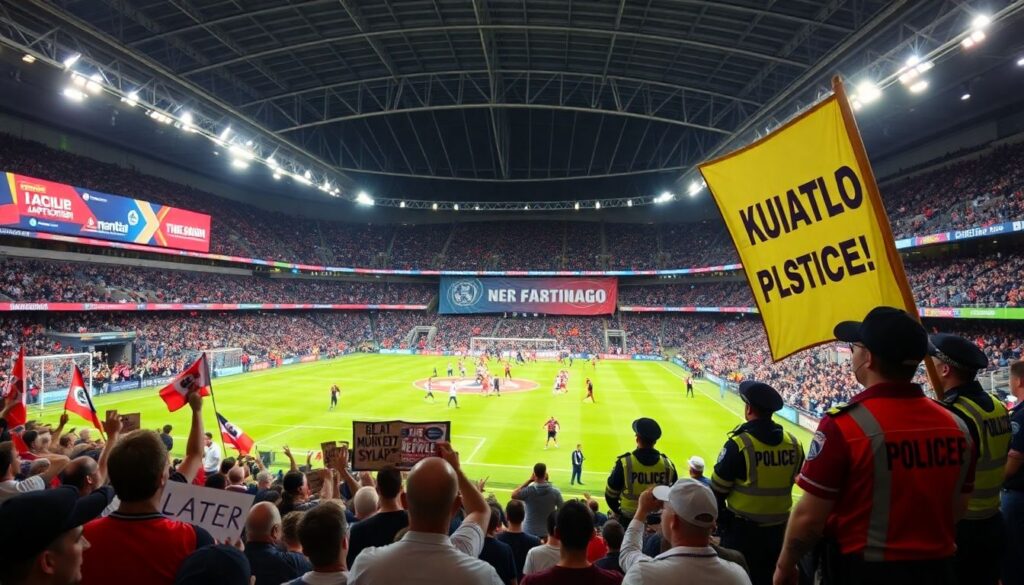
Regulations decide whether a stadium is only a stage for branded entertainment or also a site where social concerns can appear. Ground rules, competition regulations, national law and policing strategies interact to define what kinds of banners, tifo, chanting and gatherings are permitted or sanctioned.
Clubs and city authorities must balance risk management with rights to expression, non-discrimination and due process. Bans on political messages, supporter groups or specific symbols can sometimes protect vulnerable communities; in other cases they suppress legitimate protest about corruption, ticket pricing or social issues. Transparency and dialogue with fan groups are essential.
To make this more operational, you can treat "stadium as agora" as an evaluable condition rather than a metaphor. The following short algorithm helps planners, policymakers or fan organisations quickly check how far a given venue supports meaningful public life.
- Define the reference event. Pick one typical high-attendance match or concert as your test case.
- Check access conditions. For that event, list ticket prices, categories of access (including free or discounted tickets) and physical entry barriers. Ask: who is structurally left outside?
- Audit rules on expression. Collect written stadium regulations, league rules and recent disciplinary decisions. Mark which kinds of messages (political, social, critical, commercial, fan culture) are allowed, restricted or banned.
- Map surveillance and control. Identify cameras, monitoring rooms, data systems and cooperation with police. Note what data is collected, who owns it and how long it is kept.
- Evaluate everyday uses. Observe or document how the site is used on non-event days: open public routes, community facilities, commercial areas, or complete closure.
- Score and iterate. On a simple 1-5 scale, rate the venue for inclusion, expressive freedom, transparency and everyday utility. Document gaps and propose concrete improvements in governance, design or technology.
Concise answers to common practical questions
Is a stadium legally a public space or private property?
Most stadiums in European cities are legally private property, even when municipalities co-own or subsidise them. Public law still applies, but internal rules, contracts and ticket terms grant operators wide powers to control access, behaviour and expression.
How can architects support more civic life in new stadium projects?
Architects can design permeable ground floors, mixed-use perimeters and genuinely public routes through the site. Integrating community facilities, flexible halls and open plazas into the core layout-not as afterthoughts-helps stadiums function as civic places beyond match days.
Do smart stadium technologies always improve fan experience?
Digital systems can streamline access and information, especially within integrated soluciones de estadio inteligente y experiencia del aficionado. However, badly designed apps, intrusive tracking or aggressive advertising may frustrate supporters and raise privacy concerns, so governance and consent are as important as gadgets.
What role should police play compared to private security services?
Police should focus on serious crime and public order, while stewards and private security handle routine crowd management. Clear protocols, training and accountability are needed so safety is not pursued at the expense of rights, inclusion or proportionality.
Can political banners and protests be allowed without losing control?
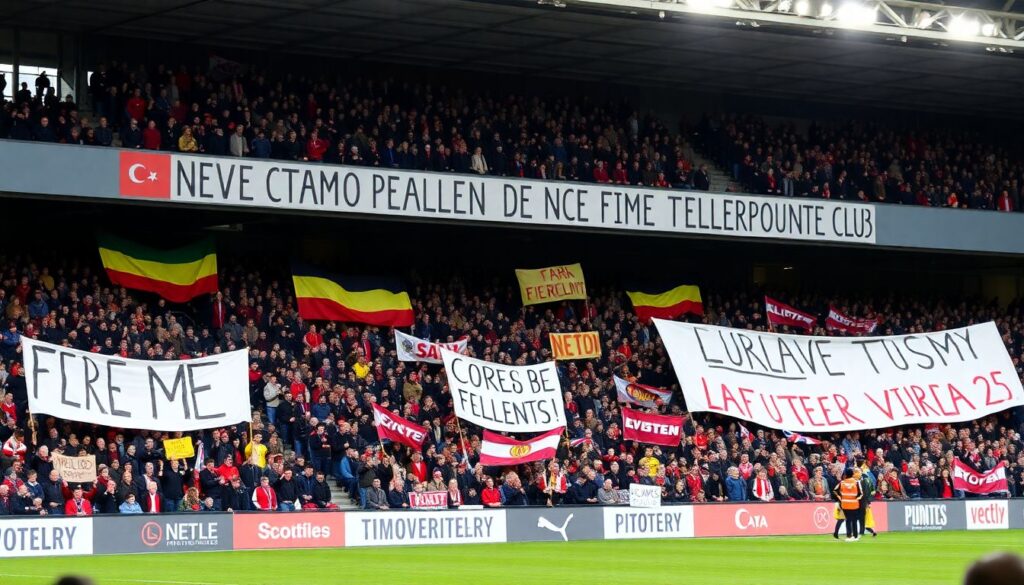
Yes, if rules are transparent, content-neutral and consistently enforced. Clubs and leagues can permit non-violent, non-discriminatory messages while clearly banning hate speech, incitement and harassment. Structured dialogue with supporter groups helps anticipate tensions and co-create safe protest practices.
How can local residents benefit from a nearby stadium?
Neighbourhoods gain more when stadiums host community events, provide accessible services and maintain open public spaces on non-event days. Participatory planning, local hiring agreements and clear mobility plans reduce negative impacts such as congestion, noise and rising housing costs.
What is a quick way to evaluate a stadium's civic quality?
Use a simple checklist: who can afford tickets, who feels welcome, what kinds of messages are allowed, how intrusive surveillance is, and how the site works on non-event days. Regularly revisiting this checklist with fan and community input keeps governance responsive.