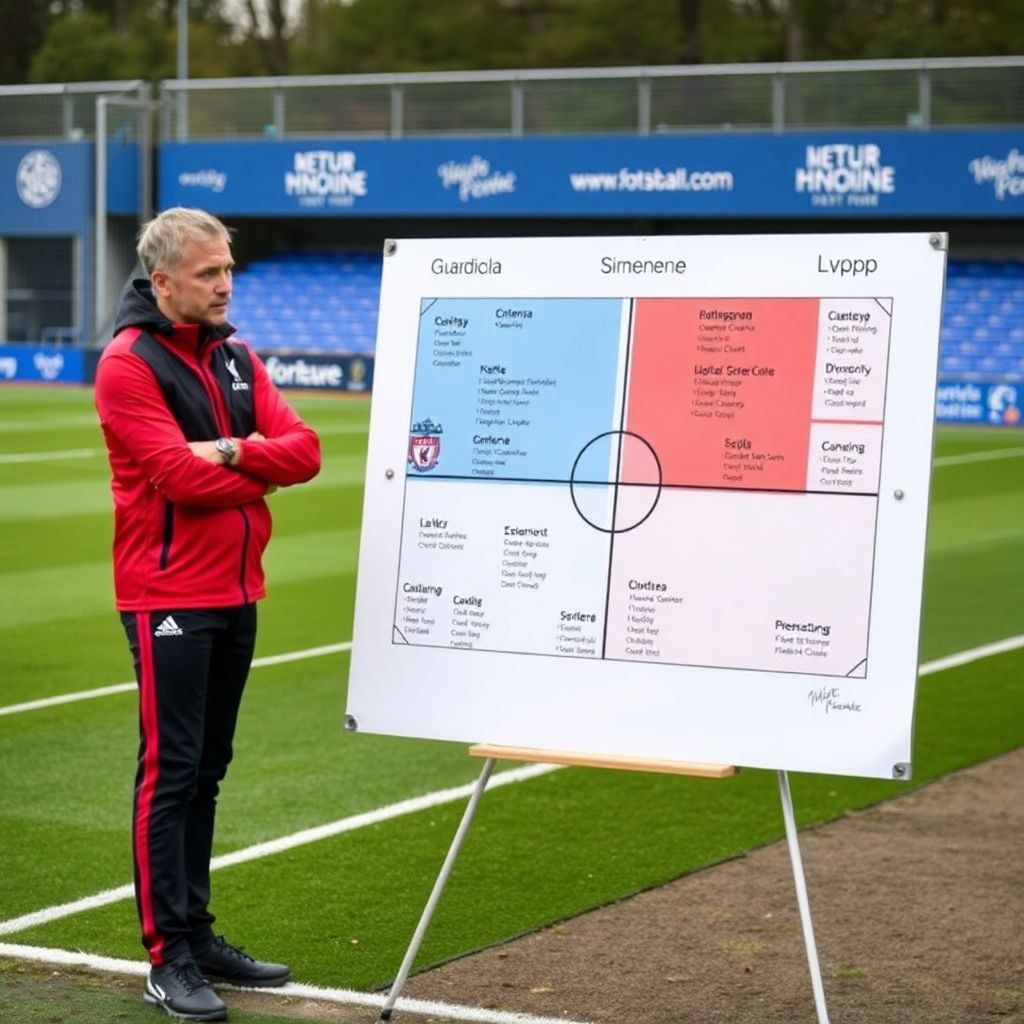
A coach can be a practical football philosopher when ideas are turned into repeatable match behaviours, not slogans. Guardiola, Simeone and Klopp show three usable models: possession, defensive identity and pressing-emotion. Each offers clear training routes but also risks of rigidity, player mismatch and unrealistic copying in lower competitive contexts.
Debunking Myths That Oversimplify Coaching Philosophy
- Myth: Philosophy is about romantic ideas. Reality: It is a concrete set of training tasks, rules and decisions that repeat under pressure on matchday.
- Myth: Copying elite coaches is enough. Reality: Constraints (level, time, squad profile) decide whether a Guardiola, Simeone or Klopp idea is applicable.
- Myth: One system equals one philosophy. Reality: Shape (4‑3‑3, 4‑4‑2) is only a container; philosophy is about behaviours in key game moments.
- Myth: Philosophy is something you «have» and never change. Reality: The best coaches adjust details each season while protecting core principles.
- Myth: More complexity means more sophistication. Reality: For many squads in Spain, a simplified, clear identity is more powerful than overloaded tactics.
How a Coach’s Philosophy Appears on Matchday: observable choices
A coaching philosophy is the consistent way a team behaves in the main game phases: with the ball, without the ball, and in transitions. It becomes visible through repeatable patterns that you can recognise from game to game, not through interviews or theoretical speeches.
On matchday, this philosophy appears in observable choices. For example: where the team presses, which zones they use to progress, how full-backs and pivots position, how they react after losing the ball, and how they manage advantages or suffering periods. These choices are the «practical philosophy» of the coach.
Comparing Guardiola, Simeone and Klopp, the difference is less about formations and more about priority decisions. Guardiola maximises control with the ball, Simeone maximises compactness and suffering capacity, Klopp maximises intensity and collective pressing rhythms. Each model has different implementation difficulty, resource demands and risk profile for a typical Spanish club.
Many Spanish coaches try to translate insights from libros sobre filosofía del fútbol de Guardiola Klopp Simeone into training. The key is to transform concepts into simple rules and drills that your players can execute under Segunda B, Tercera or youth‑level pressure, instead of chasing an abstract, elite‑only ideal.
Pep Guardiola: converting tactical theory into daily practice
Guardiola’s approach is demanding but also very structured, which helps implementation if you adapt it to your level. Think of it as a school of positional play with non‑negotiable rules.
- Space before players: The ball and the structure dictate who moves, when and where. Training focuses on occupying interior and exterior lanes with specific distances and angles.
- Positional games as a language: Rondo variations and position‑specific games are used every week to create habits: third‑man runs, up‑back‑through passing, and constant creation of free men.
- Ball circulation to unbalance: The team circulates not for possession itself but to move the block, attract pressure and attack weak sides. Players must recognise triggers to play vertical at the correct moment.
- High rest‑defence: Even when attacking, many players are positioned to counterpress immediately. This is a key practical detail that young coaches often forget when copying Guardiola’s ideas.
- Micro‑coaching of roles: Each role (for example, interior, false nine, inverted full‑back) receives precise tasks. This increases clarity but requires time on the pitch and video to educate players.
- Risk profile: Implementation is complex. If distances are wrong or players lack technical level, the team may lose balls in bad zones and look fragile. The style is less forgiving in amateur contexts.
- Learning resources: A curso de táctica y filosofía de juego estilo Guardiola can help structure your ideas, but it must be complemented with your own contextual adaptation, not blind imitation.
Diego Simeone: constructing identity through defensive culture
Simeone offers a model that many semi‑professional and youth teams in Spain can apply more easily, because it relies less on high technical quality and more on discipline, compactness and emotional cohesion.
- Low and mid block compactness: Lines move together, with very small distances between defenders and midfielders. The priority is to protect central zones and force play outside.
- Clear suffering mentality: Players accept long periods without the ball. This is trained via small‑sided games where the defending team stays organised under overloads, plus strong communication habits.
- Vertical counterattacks: Once the ball is recovered, the first thought is forward, exploiting space left by the opponent. A few rehearsed patterns (wide release, lay‑off, third runner) give clarity.
- Role of leaders: Emotional leaders on the pitch transmit the culture: intensity in duels, defensive celebrations, and discipline off the ball. Without such leaders, the philosophy loses power.
- Flexibility of structures: Simeone can use 4‑4‑2, 4‑1‑4‑1 or 5‑3‑2, but the behaviours remain the same: narrowness, aggressiveness, and calculated risk in pressing moments.
- Risk profile: If the team defends too deep without pressure on the ball, they can be pinned back and concede many crosses and shots. Also, some creative players may feel limited and lose confidence.
Jürgen Klopp: emotion, gegenpressing and collective rhythms
Klopp’s model is attractive for coaches because it combines clear principles with a strong emotional narrative: high pressing, fast attacks, and collective joy in regaining the ball. It is more physically demanding but conceptually simple if reduced to a few rules.
- Strengths and practical advantages
- Easy to communicate: «The best playmaker is the counterpress» gives a simple mental picture for players at almost any level.
- High impact with limited build‑up quality: Teams that lack technical defenders can still dominate through pressure and direct attacks.
- Strong team identity: Shared sprinting, pressing and celebrations create togetherness, especially in Spanish dressing rooms where emotion matters.
- Clear training link: Small‑sided transition games, 6v6+keepers, and finishing exercises with immediate pressing connect directly to weekend behaviour.
- Limitations and risks to manage
- Physical and mental load: Without rotation and smart session planning, players can burn out quickly, especially with two games per week.
- Space behind the press: If one line jumps and the rest do not follow, the team is broken and concedes clear chances.
- Adaptation to Spanish opponents: Many teams in Spain are comfortable going long; if you press badly, they bypass you and attack your last line repeatedly.
- Over‑reliance on intensity: When energy is low or the pitch is heavy, the team may lack alternative game plans and become predictable.
Coaches often look for an análisis táctico Guardiola vs Simeone vs Klopp pdf to compare pressing heights, block shapes and transition patterns. These comparisons are useful only if they end in concrete training decisions, not just diagrams.
Assessing philosophy: metrics, patterns and game moments to track
Many errors around «being a philosopher of the game» come from evaluating only results. To judge how practical and healthy your philosophy is, you need to observe specific patterns and avoid common traps.
- Confusing slogans with behaviours: Saying «we want the ball» or «we are aggressive» means nothing if you do not define where, when and how. Track at least one observable behaviour per principle (for example, number of presses after loss, or number of passes before vertical play).
- Ignoring level and context: Copying elite principles without adjusting to your players’ qualities leads to frustration. A máster online en entrenamiento táctico y filosofía del juego may show advanced patterns, but the real work is to simplify them for your reality.
- Over‑focusing on one phase: Guardiola followers can forget rest‑defence, Simeone followers may undertrain attacking structure, and Klopp followers may not prepare slow attacks. Evaluate all four phases: attack, defence, offensive and defensive transition.
- Not measuring game moments: Instead of generic stats, review key moments: how your team behaves after scoring, after conceding, in last 15 minutes, or when reduced to 10 players. Philosophy is proven when stress appears.
- Underusing match and training video: Many coaches watch games emotionally, not analytically. Creating simple clips of 3-5 examples per principle helps players understand what your philosophy actually looks like.
- Separate world between training and matches: If the exercises do not reproduce the real time and space of competition, your philosophy stays at theory level. Every main idea must have a direct training equivalent.
Public charlas y conferencias de entrenadores sobre filosofía del fútbol are inspiring, but the practical test is whether you can describe, in one sentence per line, how your team should act in each game phase – and then see it on video three weekends in a row.
When coaching philosophy becomes dogma: risks and course corrections
Dogma appears when a coach keeps the idea and ignores the evidence on the pitch. Guardiola, Simeone and Klopp have all modified details over the years: more direct play, different block heights, or different pressing triggers. That flexibility protects them from becoming prisoners of their own brand.
Imagine a Spanish third‑tier coach who wants to apply a very purist positional build‑up. The centre‑backs and goalkeeper are limited on the ball, and the pitch is small and bumpy. Week after week, the team concedes goals from risky passes near their own box, yet the coach insists that «this is our philosophy».
A simple, practical correction could look like this pseudo‑plan:
1. Keep the principle: "We want to attract and find the free man."
2. Adjust the rule: Build short only after goal‑kicks when structure is ready;
   use longer, directed balls when pressed with bad body orientation.
3. Modify training:
   - 2 sessions per week on structured build‑up
   - 1 session on second‑ball reactions after long passes.
4. Re‑evaluate after 3 matches with video clips and player feedback.
In this way, the coach remains a «philosopher of the game» but in a practical sense: the idea guides decisions, yet evidence from the Spanish context (players, pitches, rivals) continuously shapes how the philosophy lives on the pitch.
Concise Practical Answers on Implementing a Coaching Philosophy
How do I choose between a Guardiola, Simeone or Klopp style for my team?
Start from your players’ strengths, not from your preferences. If you have technical midfielders, a positional model fits; if you have disciplined defenders and fast forwards, a compact‑counter model works; if your group loves intensity, a pressing‑based style is natural.
Can an amateur coach really be a «philosopher of the game»?
Yes, if your ideas are clear, consistent and visible on matchday. Philosophy at amateur level means having simple, repeatable rules for each phase of play, not copying every detail of elite teams or using complex jargon.
What is the minimum I should define in my coaching philosophy?
Define four things: how you want to build up, how you want to defend, what happens after losing the ball, and what happens after regaining it. If you can explain each in one or two sentences, you have a usable base.
How can I study these coaches without getting lost in theory?
Pick one or two matches per coach and analyse only one phase at a time, for example, pressing after loss. Short, focused notes are more valuable than a huge, unfocused analysis, even if you downloaded a long PDF or full course.
What if my players resist a change of philosophy?
Reduce the change to a few clear rules, explain the «why» with video, and progress step by step. Keep some familiar elements so players feel secure while they adjust to new behaviours.
How long does it take before my philosophy is visible?
If training is aligned, you can see first signs within a few matches, but more stable patterns usually appear after several weeks of consistent work. Frequent tactical changes delay this process.
Is it useful to mix elements from all three coaches?
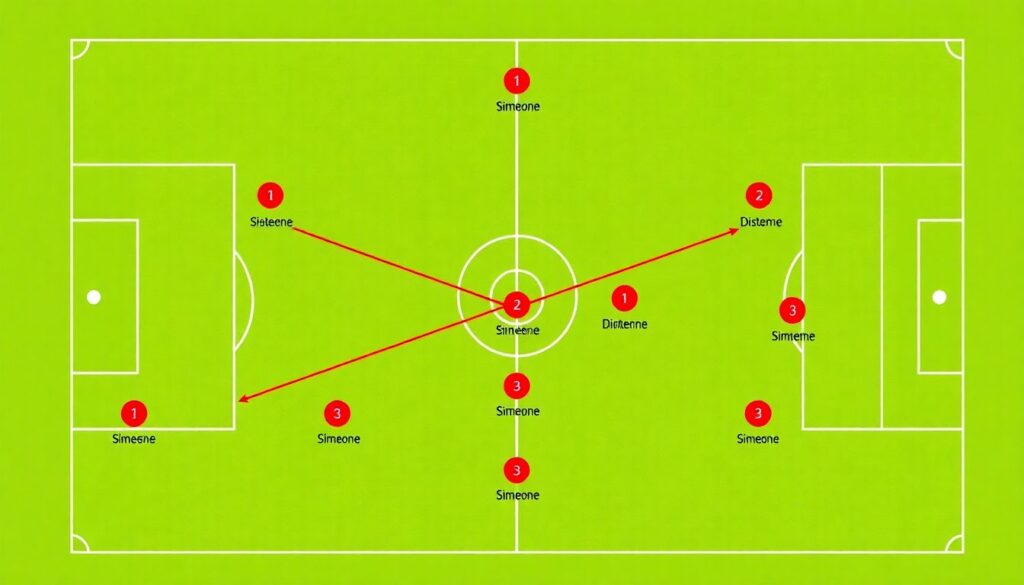
It can work if you mix at the level of principles, not of random exercises. For example, you might combine a Simeone‑style compact block with Klopp‑style counterpressing after regaining, but you must keep distances and roles coherent.