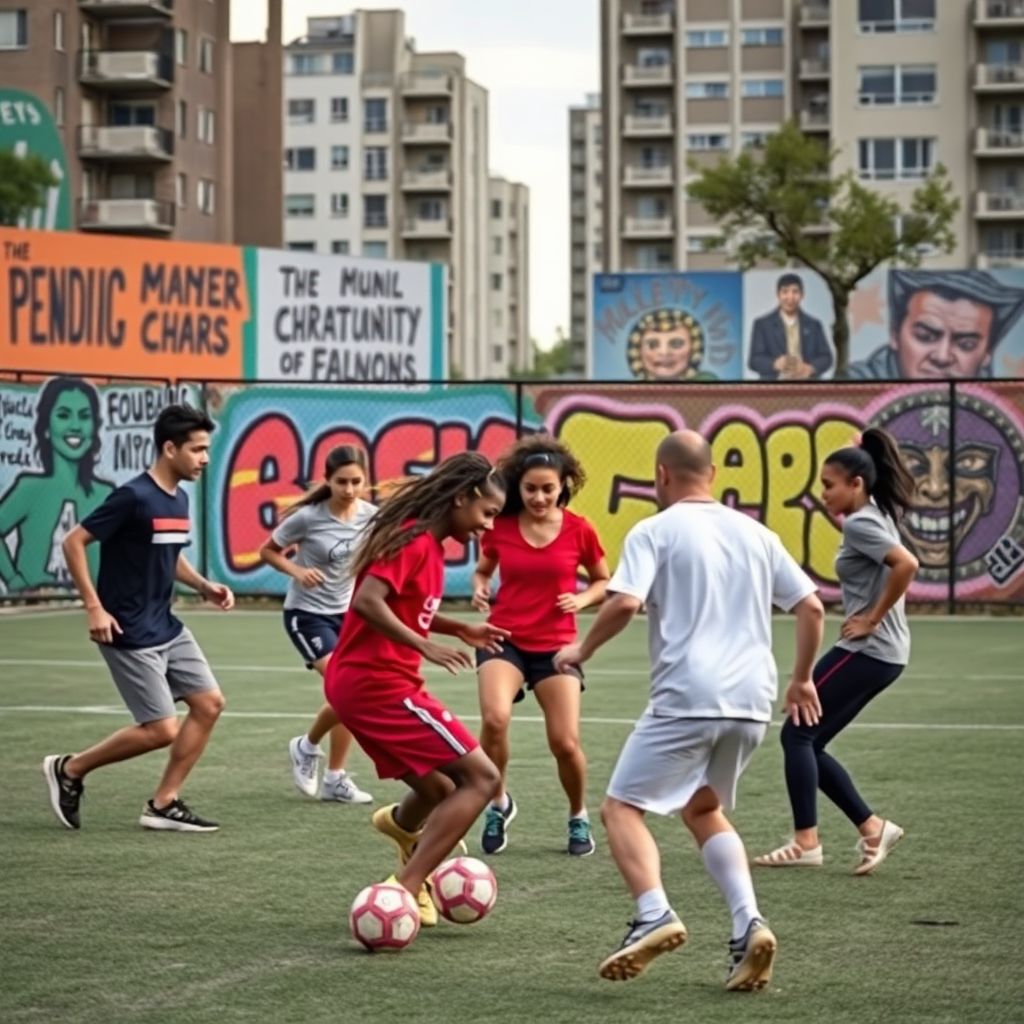
Football powerfully shapes masculinities by rewarding certain behaviours, narratives and bodies, but it can also open space for new gender identities if change is intentional and well designed. Safe steps include small mixed-gender projects, critical reflection and community alliances; key limitations are structural inequalities, commercial pressures and deeply rooted cultural myths.
Core propositions on how football shapes masculinities
- Football is not naturally masculine; it became coded as masculine through history, institutions and media.
- Masculinities in football are multiple and contested, from hyper-aggressive to caring and cooperative styles.
- Training sessions, chants and locker rooms are powerful spaces where boys and men learn gender norms.
- Women, non-binary and queer players are not simply added to football; they transform its gender rules.
- Grassroots initiatives can promote new masculinities, but they face limits from elite clubs, sponsors and federations.
- Critical education, such as cursos sobre género y deporte online or talleres de nuevas masculinidades a través del deporte, helps connect practice with theory.
Debunking persistent myths about football and masculine identity
The impact of football on masculinities refers to the ways participation, fandom, institutions and media stories around the game define what it means to be a man or masculine. It includes norms about toughness, emotion, sexuality, leadership, care and appearance that are learned, reproduced and sometimes resisted through football.
A central myth is that football simply reflects pre-existing male nature. In reality, clubs, coaches, families, the market and media actively use football to teach that "real men" should be competitive, emotionally restrained, heterosexual and physically dominant. These are social scripts, not biological truths, and they vary by place and time.
Another myth is that football is either totally liberating or totally oppressive. For many boys and men, the sport offers community, joy and a space to express emotions that are forbidden elsewhere. At the same time, it can punish those who do not fit hegemonic masculinity: queer fans, women players, quiet boys or men who show vulnerability.
A further illusion is that adding more women or rainbow flags automatically changes masculinities. Inclusive campaigns matter, but without deeper work on power, everyday language and decision-making, dominant gender norms remain intact. Safe, realistic steps combine symbolic changes with concrete practices such as mixed leadership teams, codes of conduct and ongoing critical education.
Historical trajectories: football’s role in constructing male norms
Historically, football has helped define "proper" masculinity through several mechanisms that still shape new identities today:
- Industrial-era discipline and teamwork. Early clubs were linked to factories, schools and the military. Football was used to train male workers and citizens in discipline, hierarchy, loyalty to the group and acceptance of physical risk.
- Nationalist and militarised narratives. Especially in Europe and Latin America, international matches framed male players as warriors defending the motherland. This elevated courage, sacrifice and dominance while sidelining care, doubt or vulnerability.
- Exclusion of women from clubs and stadiums. Institutional rules, informal practices and safety concerns created male-only spaces where boys learned to associate football, and often public space itself, with male privilege and entitlement.
- Media heroes and celebrity culture. Newspapers, radio, TV and now social media turned male stars into models of success. Their lifestyles, bodies and relationships shaped what many young men considered desirable or acceptable.
- Professionalisation and commercialisation. As football became a major industry, commercially attractive forms of masculinity-strong, glamorous, heterosexual, consumerist-were promoted by brands, often marginalising more diverse or critical male identities.
- Recent feminist and LGBTQ+ challenges. Women's football, queer fan groups and academic fields such as a máster estudios de género y masculinidades or a diplomado en estudios de género e identidad en el deporte question historical norms and offer alternative ways of being masculine in and around the game.
Mechanisms of influence: play, rituals, media and locker-room cultures
Football influences masculinities and emerging gender identities through repeated, everyday practices more than through abstract ideas. Understanding these mechanisms helps design safe interventions and recognise limits.
- Training and match routines. Coaching styles, feedback and role allocation teach boys and men how to handle pain, failure and success. For example, praising "playing through injury" reinforces stoic, self-sacrificing masculinity, while normalising rest and care legitimises vulnerability and mutual support.
- Locker-room talk and bodily norms. Changing rooms are semi-private spaces where language, jokes and comments about bodies, sexuality or emotions are policed. They can be sites of homophobia and sexism, but also of solidarity and redefinition if guided carefully.
- Fan rituals and chants. Singing, banners and choreographies in stadia build collective identity. Chants can insult opponents using feminised or homophobic language, reinforcing misogyny, or celebrate diversity and anti-violence norms when supporter groups choose different scripts.
- Media coverage and social networks. Sports journalism, influencer culture and series about footballers propose models of "successful" masculinity. Stories focusing only on dominance and wealth close space for alternative identities, while coverage of caring fatherhood, mental health or activism widens acceptable masculinities.
- Institutional policies and sanctions. Codes of conduct, disciplinary procedures and anti-discrimination rules send strong messages about what is tolerated. When sexist chants or homophobic slurs go unpunished, they become part of normal football masculinity; when sanctioned, they become visible as problems.
- Educational and reflective spaces. Workshops, reading groups using libros sobre masculinidades y fútbol, or structured reflection within clubs can explicitly connect personal experiences to gender theory, helping players and coaches name and change harmful norms.
Comparative case studies: Latin America, Europe and Africa
Across regions, football both reproduces and reshapes gender norms, but in different ways. Comparing Latin America, Europe and Africa highlights context-specific opportunities and constraints for promoting new masculinities through the sport.
Contextual strengths and openings
- Latin America. Strong club identities and community-based football schools can support collective projects on care, anti-violence and emotional expression, especially when linked to local movements for gender justice.
- Europe. Institutional support for women's leagues, anti-discrimination policies and academic networks (including cursos sobre género y deporte online) offer tools to question hegemonic masculinity from within federations and universities.
- Africa. Football's intense community presence and integration with local rituals means that shifts in football practices can influence broader village or urban neighbourhood norms, especially through youth tournaments and school programmes.
- Transnational networks. Fan alliances, NGO collaborations and digital activism allow sharing of strategies, training materials and monitoring tools across regions, strengthening safer approaches and giving visibility to alternative masculinities.
Structural and cultural limitations
- Economic inequalities. Poverty, precarious infrastructure and dependency on sponsors can make clubs prioritise short-term performance or brand demands over slow cultural work on gender.
- Deeply rooted machismo and heteronormativity. In different forms across the three regions, male dominance, homophobia and control over women's bodies restrict what can be openly questioned in football spaces.
- Weak protection mechanisms. Limited legal frameworks, poor enforcement or fear of retaliation can discourage reporting of abuse, harassment or discrimination in clubs and stadiums.
- Instrumentalisation of "gender projects". Sometimes funders or clubs adopt gender initiatives mainly for image. Without community participation and long-term commitment, these projects have little impact on how masculinities are actually lived.
- Migration and transnational pressures. Aspirations to play in European leagues or copy foreign models can make local players and coaches adopt rigid, commercialised masculinity ideals that reduce space for experimentation.
Intersectional dynamics: class, race, sexuality and regional variation
Approaches to football and masculinities often ignore intersectional realities. This generates recurrent mistakes that limit both analysis and interventions.
- Assuming one single "toxic masculinity". Treating all male behaviours in football as part of one homogeneous pattern hides differences between working-class, middle-class, racialised or rural masculinities, and blocks more precise, safer strategies.
- Erasing race and migration histories. Analyses that treat players as colour-blind "athletes" overlook how racism, colonial histories and xenophobia shape who is seen as naturally talented, disciplined or problematic.
- Ignoring sexuality and gender diversity. Focusing only on men versus women leaves out gay, bisexual, trans and non-binary people who participate in football or are affected by its cultures, limiting possibilities for truly inclusive identities.
- Over-romanticising grassroots football. Community pitches and informal leagues can reproduce as much sexism, homophobia and class domination as professional clubs. Assuming they are naturally liberating leads to unsafe interventions without proper safeguards.
- Transplanting models without adaptation. Copying a successful European anti-violence campaign or Spanish talleres de nuevas masculinidades a través del deporte directly into African or Latin American contexts, without co-design, can provoke resistance or unintended harm.
- Neglecting rural-urban differences. Gender norms in small towns, villages or peripheral barrios often differ from big-city contexts where most academic research and pilot projects take place.
Interventions and futures: grassroots programs, clubs and policy levers
Transforming masculinities through football requires careful, stepwise strategies that prioritise safety and recognise limits. Below is a condensed example inspired by initiatives in Spanish and Latin American clubs.
Mini-case: Safe pathway to work on new masculinities in a youth club
- Initial mapping and alliances. A local club in a working-class neighbourhood collaborates with a university programme (for example, a máster estudios de género y masculinidades) and an NGO that also runs a diplomado en estudios de género e identidad en el deporte to map existing gender practices, risks and resources.
- Clear framing and consent. The project is introduced to coaches, families and players not as "fixing bad boys" but as improving team cohesion, reducing violence and protecting everyone's well-being. Participation rules, confidentiality and referral routes for serious cases are defined.
- Pilot workshops linked to practice. Short sessions before or after training combine exercises on emotions, respect and bystander intervention with football drills. Materials include short videos and accessible libros sobre masculinidades y fútbol to connect local stories with broader debates.
- Locker-room and sideline adjustments. Coaches agree to stop homophobic and sexist language, introduce new team rituals that celebrate mutual support, and set consequences for insults between players and parents during matches.
- Monitoring, limits and referral. The team tracks changes in conflicts, drop-out and perceived safety. Facilitators recognise limits: they cannot replace mental health services or legal systems, so serious violence or abuse is referred to specialised institutions.
- Scaling with care. After one or two seasons, elements that work are shared with neighbouring clubs and regional federations, including through cursos sobre género y deporte online, while emphasising the need to adapt to each context rather than copy-pasting.
This kind of path shows both the potential of football to foster new, more caring masculinities and the importance of realistic boundaries, ethical safeguards and long-term institutional change.
Practical clarifications for researchers and practitioners
How is "masculinity" in football different from male biology?
Masculinity refers to social norms, behaviours and expectations associated with being a man, not to biological sex. In football, this includes ideas about bravery, emotion, sexuality and leadership that players and fans learn, reproduce and sometimes challenge, regardless of their bodies.
Can mixed-gender teams alone transform harmful masculinities?
Mixed teams can open new possibilities but do not automatically change power relations. Without attention to who leads, who speaks, how conflicts are addressed and how institutions support change, mixed teams may reproduce existing hierarchies and stereotypes.
What are safe first steps for a small club with limited resources?
Start with low-cost measures: agreeing on language rules, adding short reflective moments to training, inviting a local expert for one session and connecting with online resources such as cursos sobre género y deporte online. Avoid promising more protection or psychological support than you can realistically offer.
How should I integrate academic knowledge into community projects?
Use accessible materials-videos, infographics, short textos, or libros sobre masculinidades y fútbol-rather than heavy theory. Collaborate with academic partners running a máster estudios de género y masculinidades or similar programmes to co-design activities with community members, not for them.
What ethical risks arise when addressing violence and discrimination?
Raising these issues can expose participants to stigma or retaliation. Establish confidentiality rules, referral pathways to specialised services and clear protocols with club leadership so that facilitators are not left alone handling serious cases beyond their competence.
Is it useful to measure changes in masculinities, and how?
Yes, but measurement should be modest and participatory. Combine simple indicators-such as self-reported sense of safety, language changes or conflict types-with qualitative feedback from players, coaches and families to avoid reducing complex identities to a single score.
How can policymakers support safer, gender-transformative football?
Policymakers can tie funding and licensing to gender and equality criteria, support long-term training cycles for coaches, and finance collaborations between clubs, schools and organisations that run talleres de nuevas masculinidades a través del deporte, ensuring continuity beyond short projects.
Комментарии