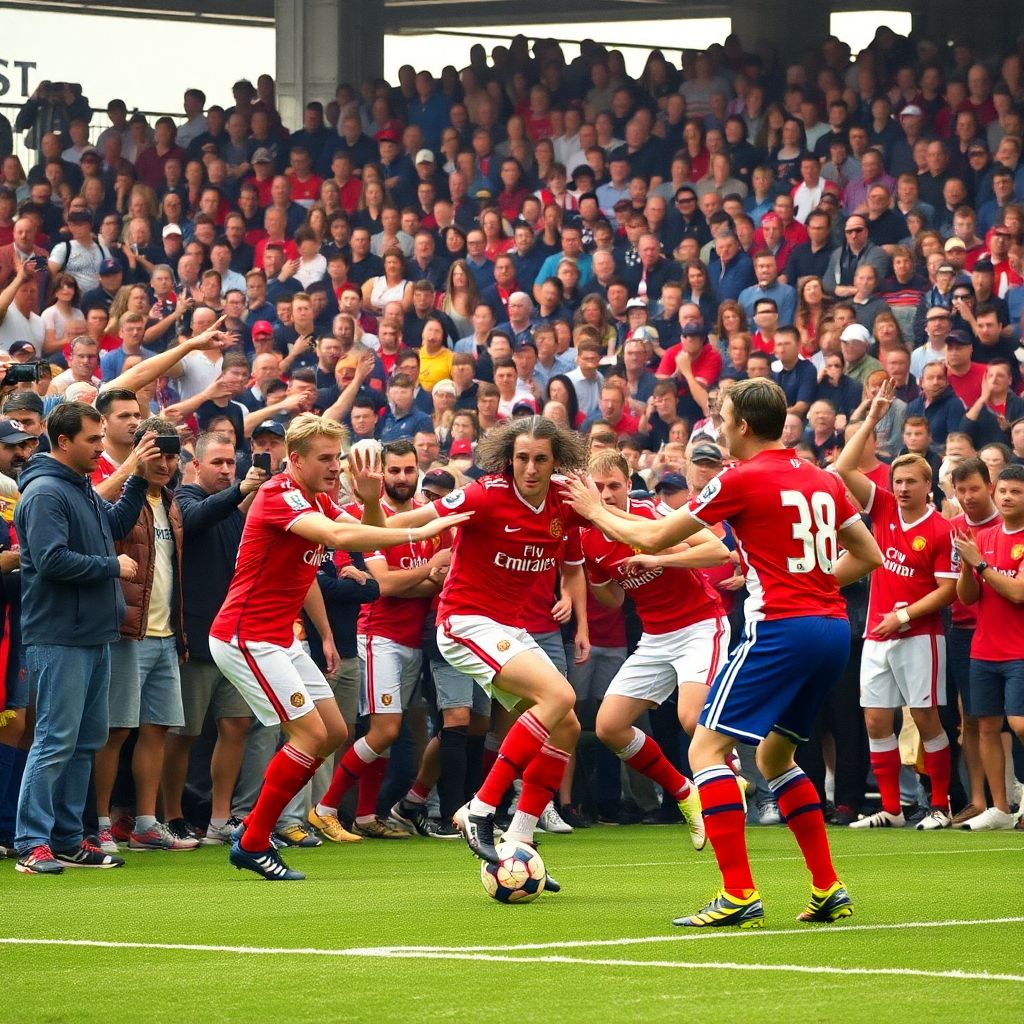
There is no fully «objective» beauty in football, but there are shared aesthetic patterns: harmony between players, timing, surprise, difficulty and control under pressure. These patterns make fans in Spain and elsewhere agree that certain moves, matches or teams are «beautiful», even while personal taste and cultural context keep beauty partly subjective.
Core aesthetic claims about football
- Football beauty is not purely subjective, but intersubjective: based on patterns many observers can recognise and discuss.
- Elegance on the pitch combines difficulty, control, timing and intelligibility in a single coherent action.
- Context matters: the same pass looks more beautiful in a high-pressure moment than in a friendly.
- Historical styles and national traditions (for example in Spain, Brazil, Italy) shape what fans call «beautiful».
- Data and video analysis can track stability, fluency and creativity, but cannot fully capture emotional impact.
- Coaches and scouts can use aesthetic criteria as weak signals of game understanding, not as substitutes for effectiveness.
Myths and misconceptions: is beauty universal on the pitch
Talking about «objective beauty» in football often hides three different ideas: statistical effectiveness, shared aesthetic judgments and personal taste. Clarifying the borders between them helps avoid confusion when we argue about whether a team is «playing well» or «only playing beautifully».
First, beauty is not the same as success. A deflected goal in added time can be decisive but aesthetically poor, while a flowing combination of one-touch passes that ends in a miss can be beautiful but ineffective. Objective beauty does not mean «what wins more points».
Second, beauty is not fully universal. Fans who watch videos de las jugadas más bonitas de la historia del fútbol tend to agree on some iconic moves, but disagreement quickly appears when comparing styles: possession versus transitions, improvisation versus structure, dribbling versus collective movement. Cultural and generational experience influence what we perceive as graceful.
Third, beauty is not random either. There are recurrent patterns that many observers, even from different countries, find compelling: coordinated team movements, technical actions done under pressure, surprising solutions that remain clearly intelligible. In this sense, talk about «objective» beauty really points to relatively stable aesthetic criteria that can be argued and refined, not to hard scientific facts.
Philosophical foundations: applying aesthetic theory to the game
Several classic ideas from aesthetics help to describe how beauty works in football and why some plays feel more than just «efficient». Key lenses include:
- Form and unity in variety: Beautiful plays organise many moving parts into one recognisable pattern: a counter-attack with three passes, a positional attack shifting the block, or a pressing trap. The spectator perceives a whole, not just isolated actions.
- Proportion and balance: Good spacing between lines, angles of support and distances between players give a sense of equilibrium. Even fans without tactical vocabulary often feel when a team’s shape is «right» or «wrong».
- Expressive intensity: Beauty is not cold geometry. A tackle that recovers the ball and immediately launches a vertical attack expresses aggression and purpose; a slow, patient build-up expresses control and confidence. The emotional tone is part of the aesthetic value.
- Gesture and embodiment: Football is played with bodies in motion. A first touch that opens the field, a curved run to attack space or a goalkeeper’s standing save are gestures that condense meaning in micro-seconds, similar to dance or theatre.
- Distance and absorption: At times we watch analytically (distance: «good press, nice third-man run»), and at others we are absorbed, forgetting analysis and simply feeling the move. Beauty often appears in that moment of total absorption when the play «clicks».
- Narrative coherence: A match is read as a story. Beautiful actions often feel like logical, satisfying «sentences» inside that story: a move that punishes a pattern repeated all game, or a goal that «had to arrive» after sustained pressure.
- Intersubjective validation: A judgment becomes more solid when others can understand the reasons: «look at the timing of this third-man run», «observe how the block shifts before the through ball». This shared reasoning is the closest we get to objectivity.
Measurable criteria: can elegance and grace be quantified
Even if beauty cannot be fully captured in numbers, several dimensions of elegant play can be observed, compared and partially measured in practice:
- Coherence between idea and execution: Evaluate whether the chosen action fits the game situation. For example, a risky vertical pass is more elegant when the team has created exactly the gap to exploit, rather than when it is a random gamble.
- Temporal precision and rhythm: Analyse timing: when does the pass or dribble occur relative to opponent movements? Well-timed actions often look smoother because they make defenders arrive «late». Video tagging, even in basic amateur analysis, can detect regularity in good timing.
- Economy of means: Count touches and unnecessary movements. Elegant play tends to achieve more with less: controlled first touches, minimal preparation steps, passes to the correct foot of the receiver. This economy can be roughly tracked during video review.
- Spatial organisation: Observe line heights, width and depth. Beautiful attacks often open and close spaces in waves: stretching the rival, then suddenly compressing to attack between lines. Simple frames frozen during videos de las jugadas más bonitas de la historia del fútbol usually reveal this organisation.
- Creativity under constraints: Grace appears when players produce non-obvious solutions in tight spaces or high stakes. Analysts can tag «unexpected but effective» actions, building a small catalogue of creative responses for each player or team.
- Emotional resonance: This is harder to measure, but patterns exist: collective gasps in the stadium, commentators’ change of tone, social media replays. While not objective metrics, they show when a play crosses from «good» to «memorable».
Cultural lenses: how history and fandom shape what we call beautiful
Aesthetic judgments in football are filtered through cultural history, local identities and media narratives. The same tactical behaviour can be loved in one context and criticised in another, especially in countries like Spain where club identities are strongly tied to playing style.
Ways culture enriches aesthetic appreciation
- Historical continuity: Fans educated on a specific tradition (for example, short-passing positional play in Spain) see certain patterns as the «right way» to play, which deepens their sensitivity to small variations and innovations inside that style.
- Shared references: When supporters watch the mejores documentales sobre la belleza del fútbol or read libros sobre estética y filosofía del fútbol, they build a common language: «That goal was very Cruyffian», «This press is pure Bielsa». These references make subtle aesthetic details easier to discuss.
- Visual culture around the game: The popularity of camisetas de fútbol retro diseño bonito and cuadros y posters de arte de fútbol para decorar shows that fans do not separate play from image. Colours, logos and graphic styles influence what we associate with elegance or passion on the field.
- Commentary and media framing: Pundits, journalists and influencers constantly highlight certain moves as «art» and others as «cynical». Over time, this shapes what casual fans perceive as beautiful, and can either broaden or narrow their taste.
- Local values: Some cultures praise sacrifice and defensive solidarity as beautiful; others prioritise boldness and improvisation. These values affect training, scouting and even how youth players are corrected or praised.
Limits and distortions introduced by culture
- Romantic bias: Glorifying one style (for instance, possession football) can make fans blind to the subtle beauty in alternative approaches such as well-coordinated low blocks or direct attacking transitions.
- Nostalgic idealisation: Older generations may insist that the game was more beautiful «in their time», ignoring improvements in athleticism, tactical sophistication and pitch quality that enable new forms of elegance.
- Hero worship: The cult of individual stars can lead to overvaluing solo dribbles and underestimating the aesthetic richness of off-the-ball movement or collective pressing structures.
- Highlight culture: Short clips and reels emphasise spectacular moments over the build-up. This encourages an incomplete view of beauty that misses long sequences of intelligent positioning and patient circulation.
- National stereotypes: Labelling teams by clichés («Latin flair», «German efficiency») reduces openness to diverse forms of beauty and can distort analysis of what is actually happening tactically on the pitch.
Concrete cases: players and matches that crystallize aesthetic ideals
Debates on objective beauty often repeat similar examples, which can hide common misconceptions about what is aesthetically valuable in football.
- Reducing beauty to dribbling highlight reels: Focusing only on spectacular 1v1 actions ignores the aesthetic of intelligent support runs, third-man combinations and defensive synchronisation. Many celebrated solo goals rely on team movements that create the initial conditions.
- Overrating possession without purpose: Teams that circulate the ball slowly in non-threatening areas are sometimes praised as «playing beautiful football», even when their structure lacks depth, timing or surprise. True aesthetic value requires potential to hurt the opponent, not just to keep the ball.
- Dismissing defensive matches as «ugly» by default: Games dominated by tactical discipline, compactness and well-timed pressing can be aesthetically rich for informed viewers. Beauty is not restricted to high scores; it can appear in control, anticipation and collective movement.
- Confusing nostalgia with superiority: Iconic matches from the past feel beautiful partly because we know their historical significance. When we rewatch them, we sometimes project that meaning onto actions that, by today’s standards, are technically or tactically ordinary.
- Ignoring context in famous goals: A long-range shot in a friendly is less aesthetically impressive than the same strike in a Champions League knockout or a derby, where psychological and tactical constraints are much higher. Context intensifies beauty, not just difficulty.
- Assuming that agreement proves objectivity: The fact that many fans love a specific player or team does not make beauty purely objective. It shows the strength of shared criteria and narratives, which are stable but always open to challenge and reinterpretation.
Practical consequences: coaching, scouting and the value of ‘beauty’
For coaches and scouts, aesthetic judgments are not decoration; they can be structured into a quick, practical algorithm to evaluate whether a play is not only effective but also «beautiful» in a disciplined, repeatable way.
Here is a compact step-by-step checklist you can apply when reviewing any action (live or on video):
- Define the situation
Identify area of the pitch, match context (score, minute), number of players involved and main objective (progress, finish, secure possession). - Check coherence
Ask: did the player or team choose an action that fits this context? A safe pass when protecting a lead, a vertical play when chasing a goal, etc. - Assess economy
Count touches and movements: were there unnecessary gestures, or was the solution as simple as possible while still effective? - Evaluate timing
Observe whether the action anticipates or merely reacts: does the pass arrive before the defender closes, does the run start exactly when the space opens? - Inspect spatial impact
Did the action improve the team’s position: opening new passing lanes, breaking a line, destabilising the block? - Consider creativity under pressure
Was the solution predictable, or did the player find an intelligent, non-obvious option given time, space and stakes? - Apply the aesthetic verdict
If the action rates positively on coherence, economy, timing, spatial impact and creativity, you can justify calling it «objectively elegant» in the limited, intersubjective sense: many informed observers would likely agree with your judgment.
Used consistently, this algorithm helps align discussions between staff and players, turning vague comments about «beautiful football» into concrete, coachable behaviours that can coexist with tactical realism and competitive demands.
Common doubts and concise clarifications
Can a team play beautiful football and still lose regularly?
Yes. A team can show aesthetically rich patterns but lack efficiency in finishing, set-pieces or defensive duels. Beauty and effectiveness overlap but are not identical, so coaches must balance them consciously rather than assuming one automatically brings the other.
Is counter-attacking football inherently less beautiful than possession play?

No. A fast, well-timed counter with three precise passes can be as beautiful as a long positional attack. The key is coherence, timing and control under pressure, not the speed of the move or the amount of ball possession.
Do statistics like expected goals capture football beauty?
They capture part of the story: shot quality, frequency and locations. However, they miss many aesthetic aspects such as body orientation, subtle off-the-ball movements or the emotional arc of a move. Numbers can inform, but not replace, aesthetic judgment.
Are young players harmed by focusing too much on «playing beautifully»?
They can be, if beauty is confused with unnecessary risk or constant showboating. When framed as clarity of ideas, clean technique and intelligent movement, aesthetic focus can actually improve decision-making and long-term development.
How should I use highlight videos when coaching aesthetics?
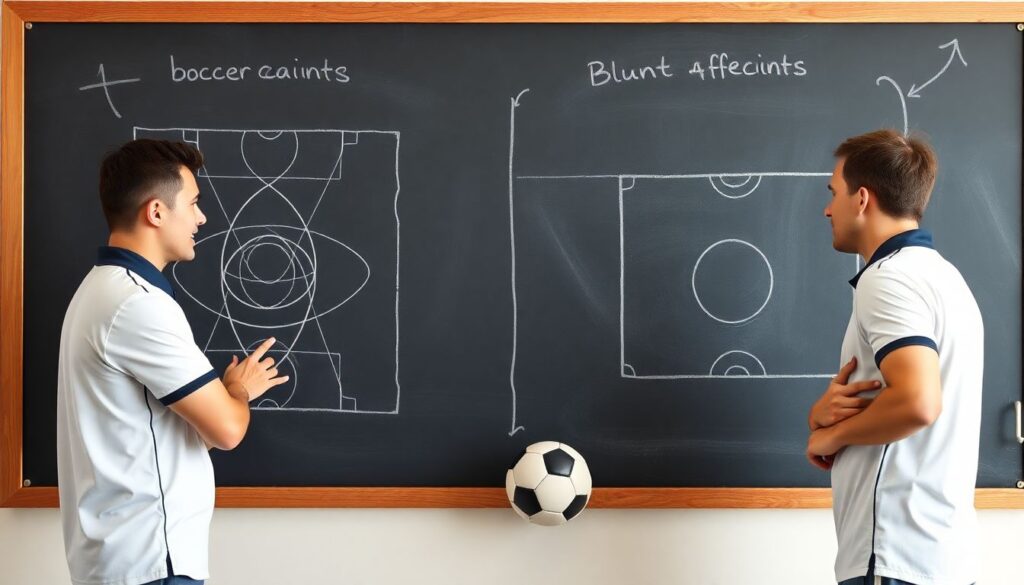
Use highlights to illustrate specific criteria (timing, spacing, economy of touches), not just to entertain. Pause, draw, and ask players to explain why a move is beautiful according to the checklist, not only because commentators shout.
Can defensive players be evaluated with the same aesthetic algorithm?
Yes, with small adjustments. Coherence, economy, timing, spatial impact and creativity also apply to tackles, interceptions and pressing actions. A defender who anticipates and cleans situations with minimal effort is aesthetically impressive.
Is there any value in talking about «objective beauty» at all?
There is value if we understand «objective» as «arguable and shareable». The term pushes us to justify our judgments with reasons and criteria, instead of relying only on taste or club loyalty.