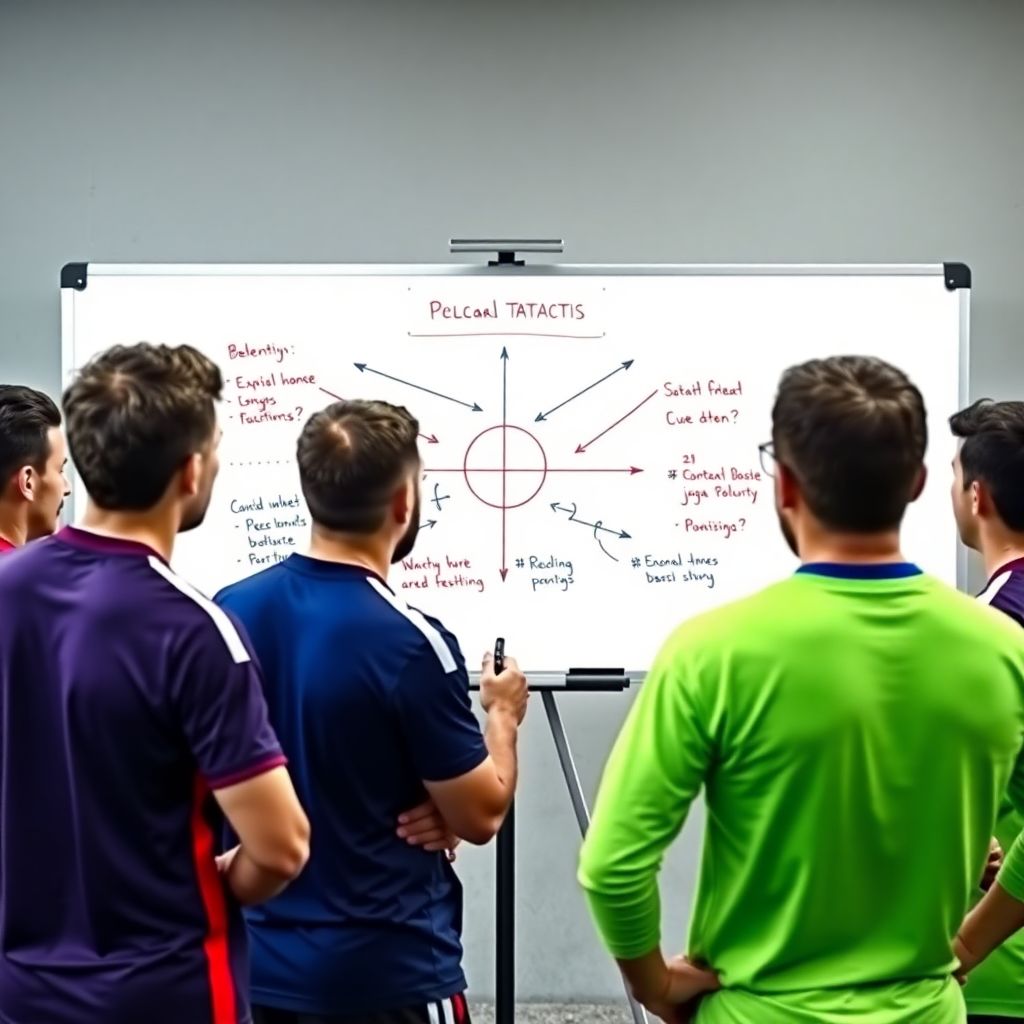
There is no single correct way to play football; there are coherent ways for specific players, contexts, and goals. Jogo bonito is one powerful aesthetic, not a universal rule. The main mistakes are copying styles blindly, confusing beauty with inefficiency, and ignoring constraints. Prevent them by defining identity, context, and clear tactical principles first.
Concise conceptual snapshot
- Jogo bonito is an aesthetic ideal (fluid, creative, attacking), not a compulsory tactical model for every team.
- Different contexts in Spain (base fútbol, amateur, professional) demand different balances of risk, control, and creativity.
- Styles must adapt to player profiles, culture, and resources; copying elite models literally is a frequent and avoidable error.
- Beauty and effectiveness can coexist, but in coaching decisions, clarity and stability of game principles come first.
- For coaches, the key question is not «What is the most beautiful style?» but «What identity best fits my team here and now?».
- Quick prevention of most style-related mistakes: define game principles, role profiles, and training priorities before choosing aesthetics.
Debunking myths: Is there a single ‘correct’ way to play
In tactical discourse, especially in Spain, a hidden assumption often appears: there is one superior, almost moral, way to play. Usually it is associated with possession, short passing, and jogo bonito. This is a myth. Football allows many valid styles, each with trade-offs, risks, and learning demands.
From a definition perspective, style of play is a coherent set of decisions about how the team behaves in the main moments of the game: with the ball, without the ball, and in transitions. A style becomes functional when these decisions are aligned with player profiles, competitive level, and training process.
Common misconceptions that hurt coaches and players:
- «Beautiful equals correct»: assuming that if a style looks attractive (many passes, dribbles, or combinations), it is automatically superior. In reality, the only universal «correctness» is internal coherence and suitability to the context.
- «Elite models are directly copyable»: trying to imitate a top club or national team without considering differences in training time, physical level, or tactical background. This is where many cursos de táctica futbolística online are misused: people copy tools instead of principles.
- «Children must always play like mini-professionals»: in youth football, obsessing over a sophisticated positional game may suffocate creativity. For a mejor escuela de fútbol para niños estilo juego bonito, the priority should be enjoyable learning of fundamentals, not rigid structures.
- «One system solves everything»: confusing formation (4-3-3, 4-4-2…) with identity. Jogo bonito can coexist with many shapes; the essence is in behaviours (support, angles, rotations), not just the drawing.
To avoid falling into these myths, start every season with three written statements: your football identity (how you want to play), your constraints (level, time, pitch, roster), and your non‑negotiables (principles that will not change). Only then decide how «beautiful» your game can realistically be.
Origins and evolution of the ‘jogo bonito’ ideal
Jogo bonito is not a scientific term; it is a narrative about football as art and joy, linked especially to Brazil but also influential in Spain and across Europe. Its evolution can be understood in several stages and mechanisms:
- Street and informal football: in many countries, free play on the street or in small pitches created natural learning of dribbling, feints, and improvisation. This environment fed the idea of expressive, creative football as the «purest» form of the game.
- National team icons: generations of technically brilliant players (Brazil, some Spanish and South American teams) made fluid, attacking football a global reference. Their performances turned jogo bonito into a brand: short combinations, movement, and individual genius in the last third.
- Media and commercialisation: advertising campaigns, documentaries, and highlight videos simplified reality, equating jogo bonito with constant tricks and spectacular goals. This visual bias still shapes what many parents and young players expect from «good» football.
- Coaching reinterpretation: modern coaches in Spain and elsewhere absorbed the aesthetic but translated it into structured positional play, pressing schemes, and strict training tasks. The spontaneous beauty of the street was partially replaced by rehearsed automatisms.
- Digital learning and remote content: nowadays, libros sobre táctica y estilos de juego en el fútbol and online analysis support more nuanced views: jogo bonito as one possible expression of principles like creating superiority, exploiting spaces, and synchronising movements.
Understanding this history helps avoid caricatures. Jogo bonito is best seen as a spectrum of creative, attacking styles rather than a rigid tactical dogma.
Tactical building blocks: possession, pressing, and counterplay
Aesthetic discussions become productive when grounded in concrete game moments. The main building blocks where «beautiful» styles differ from more pragmatic approaches are possession, pressing, and transitions.
- Structured possession with patience
Teams inspired by jogo bonito often prioritise ball circulation and support play to create superiority. They use short and mid-range passes, third‑man runs, and positional rotations. The risk is sterile possession; prevention comes from clear rules for when and how to accelerate. - High pressing as proactive defence
Attacking aesthetics do not stop when the team loses the ball. Many «beautiful» models use aggressive, coordinated pressing to recover quickly, keeping play in the opponent’s half. This demands physical conditioning and synchronised triggers; poorly trained pressing rapidly becomes chaotic and vulnerable. - Counterattacks with controlled risk
Direct, vertical attacks can also be aesthetically pleasing when well-timed. A style focused on fast counters may look less like traditional jogo bonito but can be very effective and attractive for fans if runs, passes, and finishing are synchronised. - Defensive compactness and rest with the ball
Even the most offensive approach needs stability. Periods of calmer possession work as «rest defence»: the team positions itself to be protected if the ball is lost. Coaches who neglect this in pursuit of constant spectacle usually concede avoidable transitions. - Set pieces integrated in identity
Corners and free kicks are often disconnected from style discussions, but they strongly affect the overall impression of a team. A coherent game model uses set pieces to reinforce identity: short, creative routines or powerful direct deliveries, depending on squad strengths.
When evaluating or designing jogo bonito, ask how your team behaves in each of these moments. Without solid answers, aesthetics will remain superficial.
How culture, resources, and institutions shape playing aesthetics
No style exists in a vacuum. Cultural habits, economic resources, and institutional structures in Spain and elsewhere strongly influence which aesthetics are attainable, especially outside top professional football.
- Cultural factors
- Local football traditions (for example, emphasis on possession in some Spanish regions) shape how players and parents define «good play».
- Attitudes toward risk and error: environments that punish mistakes harshly tend to discourage daring, jogo bonito actions.
- Social perception of football: is it more a result-driven competition or a space for expression and learning?
- Resource-related aspects
- Training time, pitch quality, and staff size limit how complex a style can realistically be installed.
- Access to tools such as videoanálisis táctico de fútbol profesional precio conditions how deeply you can analyse and refine tactical details.
- Continuous education options like cursos de táctica futbolística online influence the sophistication of local coaching.
These structural elements create advantages and constraints when trying to implement jogo bonito or any other aesthetic. Some frequent limitations:
- Time constraints at amateur level: with only a few training sessions per week, building a complex positional game with detailed automatisms can be unrealistic; simpler, clear principles work better.
- Mismatch between expectations and level: in youth categories, parents may demand spectacular dribbling or constant wins, while the club’s realistic objective should be learning and long-term development.
- Institutional inconsistency: clubs that change head coaches and philosophies every season rarely manage to consolidate any recognizable style, beautiful or not.
The practical takeaway: design your aesthetic ambition around your culture and resources, not around idealised visions from elite football.
Objective measures and subjective taste: evaluating ‘beautiful’ football
Beauty in football is partly subjective, but that does not mean «everything goes». It is useful to distinguish between measurable behaviours and personal taste to avoid typical evaluation errors.
- Confusing outcome with process
Winning with a defensive style does not automatically make that style superior, just as losing with an attacking style does not make it wrong. The relevant question is whether processes (training, decisions, behaviours) are consistent, not only the final score. - Using isolated highlights as proof
One spectacular combination or solo run is often shared as evidence of jogo bonito success. In reality, the benchmark should be frequency: how often does the team generate high‑quality actions based on its principles? - Ignoring player experience
A style that looks beautiful from the stands but confuses or frustrates players may be counterproductive. Evaluating aesthetics should include player understanding, enjoyment, and confidence, not only external judgement. - Overvaluing possession percentage
High possession is sometimes considered synonymous with good football. Without context (where the ball is, chance creation, control of transitions), possession alone is a poor indicator of true dominance or beauty. - Neglecting defensive artistry
Well-timed pressing, intelligent sliding, and collective compactness can be as aesthetically pleasing as a great attacking move. Restricting jogo bonito to offensive actions is a conceptual mistake. - Forgetting age-appropriate criteria
In early stages, beauty may be visible in courage to receive under pressure, scanning before passes, or coordinated support. Demanding mature tactical patterns too early often kills precisely the creativity associated with jogo bonito.
For a balanced view, combine simple objective data (where you recover the ball, quality of chances, pressing efficiency) with qualitative evaluation (coherence, player expression, enjoyment).
Coaching for identity: methods to develop style without dogma
Developing a recognisable, potentially «beautiful» style means building a clear identity while staying flexible. It is less about copying a famous model and more about articulating principles and transforming them into training content.
Key methods to prevent typical style-related mistakes:
- Define three core principles per phase
For each moment (with ball, without ball, transitions), choose up to three simple, observable principles. Example: with ball – «create width», «offer diagonal support», «attack depth after third pass». Use these as constant reference in feedback. - Use constraints, not long speeches
Instead of explaining jogo bonito for ten minutes, design exercises that reward desired behaviours and penalise unwanted ones: touch limits, bonus points for third‑man runs, or rules that encourage switching play. - Train creativity with clear frames
Within a basic structure, allow freedom: zones where players can improvise, 1v1 duels, and small‑sided games with specific objectives. This mirrors what good clínicas y campus de fútbol técnico estilo juego bonito do: blend repetition of technical patterns with playful exploration. - Align club, team, and individual plans
Ensure that the club’s philosophy, the team’s game model, and each player’s development goals are compatible. This alignment is what makes some projects look like the mejor escuela de fútbol para niños estilo juego bonito: coherence from top to bottom. - Review identity through regular micro‑audits
Every few weeks, perform a quick review: «Do we still look like the team we want to be?» Use match clips, simple stats, and player feedback. Even with limited budget, basic recording and low‑cost analysis tools can substitute high‑end videoanálisis táctico de fútbol profesional precio solutions.
Mini-case: A youth coach in Spain wants attacking, associative football but has fast, direct forwards and little training time. Instead of insisting on complex positional play, the coach defines a hybrid identity: structured buildup in first phase, then fast vertical attacks. Training focuses on simple patterns to exit the press and automatic runs in transitions. The team maintains an attractive style for spectators while respecting its real context.
Short answers to common practical doubts
Is jogo bonito suitable for every grassroots team?
Not in its idealised form. Elements of jogo bonito (creativity, combination play) are useful everywhere, but the intensity and complexity must match player level, training time, and club context.
How can I encourage creativity without losing structure?
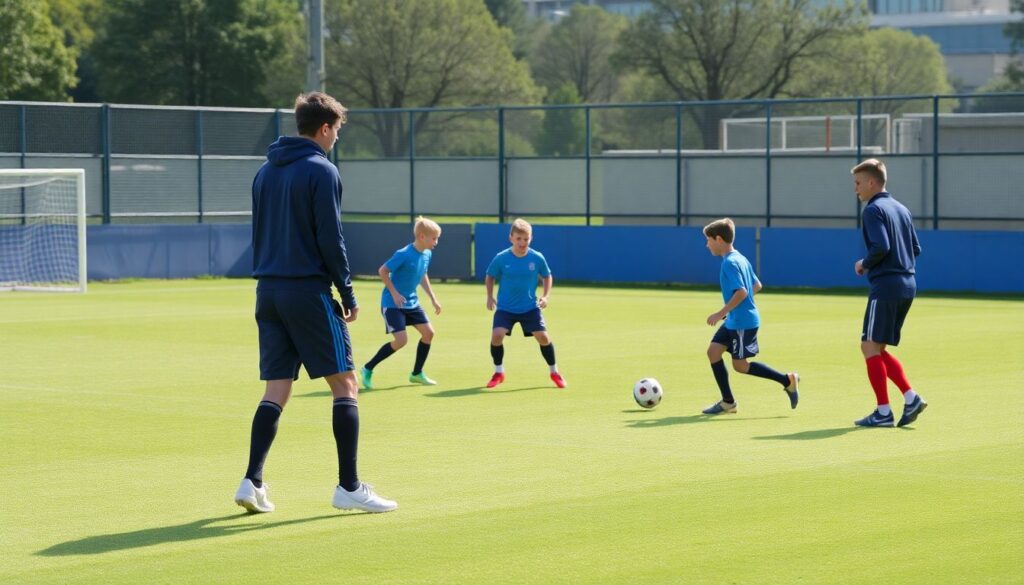
Define a simple positional framework and a few clear rules, then leave freedom inside those frames. Use small‑sided games with specific constraints to guide decisions instead of constant verbal correction.
Are direct, counterattacking styles less «educational» for young players?
They are not inherently less educational. If taught with good principles (timing, support, decision-making), a direct style can develop perception and execution just as well as a possession-focused approach.
What is the fastest way to correct sterile possession?
Introduce simple triggers for acceleration (for example, after a switch of play or a pass into the pocket) and reward forward runs and deep movements. Reduce safe, horizontal passes with targeted constraints in training.
How many tactical principles should I teach to an intermediate team?
Prioritise a small number per phase (around three) and repeat them consistently. Too many principles create confusion and slow decisions; clarity and repetition are more valuable than theoretical completeness.
Can a defensive team still be considered «beautiful»?
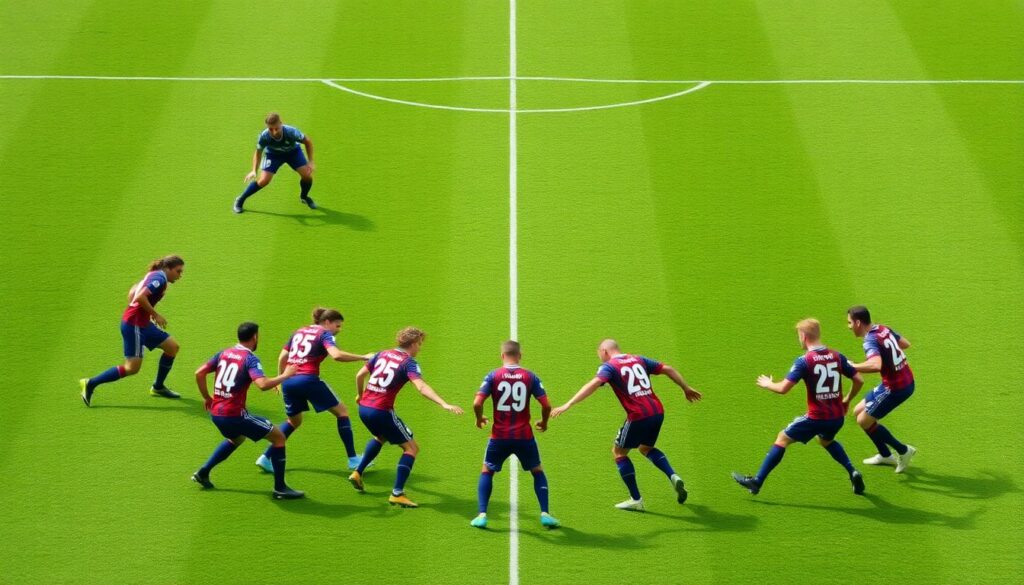
Yes, if its defensive behaviours are coordinated, intelligent, and proactive. Compact blocks, synchronised pressing, and clean transitions can be as aesthetically impressive as elaborate attacking combinations.
Where should I start if my club lacks a defined playing identity?

Begin with a shared discussion among coaches about core values (risk level, development vs. results, pressing height). From there, agree on a few club-wide principles that each team adapts to its own context.