
The surge of women’s football is a global shift that challenges gender stereotypes and resignifies the game as a space of equality, community, and cultural expression. Practically, it changes how clubs invest, how media and sponsors work, how families choose escuelas y academias de fútbol femenino para niñas, and how fans consume live and digital football.
Core propositions on the women’s football surge
- Women’s football is not a niche spin-off but a transforming pillar of the broader football ecosystem.
- On-pitch excellence and off-pitch activism jointly dismantle entrenched gender stereotypes.
- Media visibility and framing decide whether the boom consolidates or remains fragile.
- Governance reforms, investment strategies, and fair policies are now central competitive advantages.
- Sustainable growth requires coherent sponsorship models and long-term marketing commitments.
- Grassroots projects and fan communities anchor the cultural meaning of the women’s game.
Historical inflection points that propelled the modern women’s game
Historical inflection points are key events that changed the trajectory of women’s football from marginal and often prohibited activity into a recognised professional and cultural phenomenon. They combine symbolic moments, regulatory shifts, and market decisions that together legitimised the game in the public eye.
Illustrative examples include national associations finally lifting old bans on women playing in major stadiums, the establishment of fully professional leagues such as Liga F in Spain, and record-breaking tournaments like recent Women’s World Cups that filled arenas and drove huge demand for fútbol femenino entradas partidos. Each event expanded the sense of what was possible for women in football.
In Spain, milestones such as landmark stadium matches for women’s club teams, the consolidation of youth competitions, and the global visibility of Spanish players in European clubs have reshaped how families evaluate escuelas y academias de fútbol femenino para niñas. The game is now seen not only as a hobby but also as a realistic career path.
Practical implication: when planning strategies for clubs, media projects, or municipal programmes, anchoring your narrative in these inflection points (for example, linking campaigns to major tournaments or local historic matches) strengthens legitimacy and makes it easier to mobilise fans, sponsors, and public institutions around women’s football.
How the sport dismantles gender stereotypes on and off the pitch
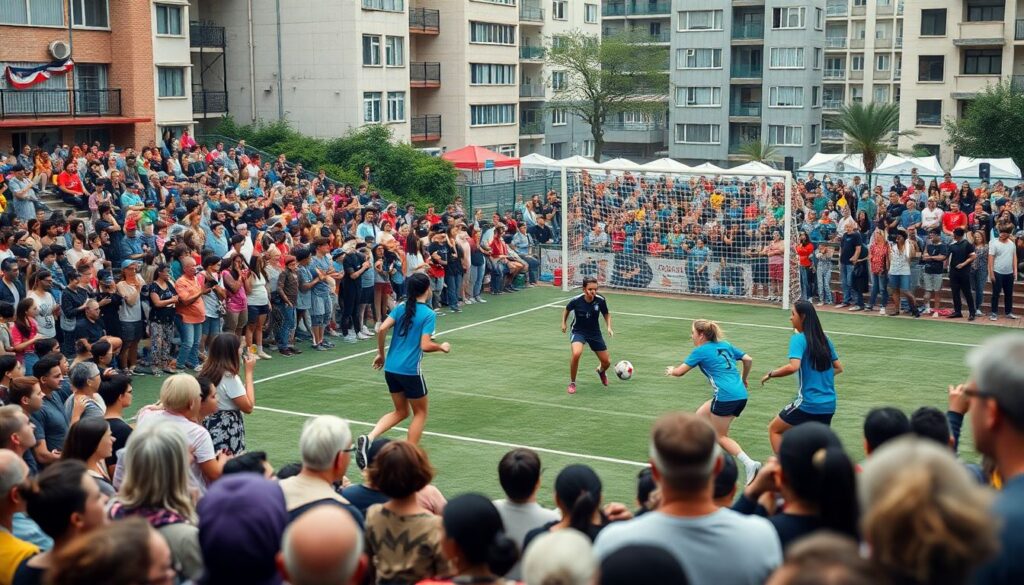
The sport dismantles gender stereotypes by confronting, in real time and in public spaces, long-held beliefs about who can be strong, competitive, technically skilled, and influential in football culture. This transformation happens through repeated, visible performances and interactions around the game.
- Role-modelling elite performance: Seeing women compete at the highest level, win trophies, and manage pressure undercuts the stereotype that men are naturally more suited to football. Example: girls copying the celebrations and free-kicks of their favourite female players. Practical implication: clubs and schools should organise meet-and-greet sessions where players explicitly talk about training, tactics, and resilience.
- Normalising mixed-gender spaces: Training sessions, fan zones, and coaching staffs that integrate women and men reduce the idea that football spaces are «for men only». Example: mixed grassroots tournaments where girls captain teams that include boys. Practical implication: local federations can revise regulations to encourage mixed competitions at younger age brackets.
- Challenging beauty and body norms: Women players performing intense physical tasks publicly question narrow aesthetic expectations. Example: campaigns that show players in full match intensity rather than only in styled photoshoots. Practical implication: brands should prioritise performance-focused imagery in patrocinios y marketing deportivo en fútbol femenino rather than stereotyped portrayals.
- Redefining leadership models: Women coaches, referees, and executives display alternative leadership styles that challenge the stereotype of the «authoritarian male coach». Example: female head coaches in top leagues taking tactical centre stage on TV. Practical implication: clubs can set targets for women in visible technical and decision-making roles.
- Reworking fan identity: Fans of women’s teams often articulate values like respect, inclusion, and family presence at matches, offering a different template of what it means to be a «real fan». Example: family sectors at stadiums with strong female supporter groups. Practical implication: ticketing and stadium policies can explicitly promote inclusive fan cultures when selling fútbol femenino entradas partidos.
Media narratives: visibility, framing, and unequal coverage
Media narratives are the stories, angles, and visual choices through which women’s football reaches the public. They determine whether the sport is seen as marginal, secondary, or central to football culture, and how audiences understand its value.
- Event-driven spikes in attention: Coverage often concentrates around big tournaments or controversies. Example: national media in Spain focusing heavily on the national team during international competitions but barely covering the league during the season. Practical implication: clubs and leagues should plan year-round content calendars so interest does not collapse between events.
- Streaming-first consumption patterns: For many fans, the main answer to dónde ver fútbol femenino en vivo streaming is not traditional TV but OTT platforms, league apps, and social media streams. Example: matches broadcast free-to-air online, building international micro-audiences. Practical implication: rights holders must optimise production quality and commentary specifically for digital audiences, not as a downgraded copy of men’s broadcasts.
- Human-interest vs tactical analysis: Coverage can overemphasise personal stories (family, sacrifices) while underplaying tactics and performance. Example: profiles centred on motherhood or appearance but with minimal discussion of pressing or build-up patterns. Practical implication: media outlets should deliberately assign analysts and columnists who treat women’s football with the same tactical seriousness as men’s competitions.
- Language and subtle bias: Diminutive terms or constant comparisons with the men’s game frame women’s football as secondary. Example: headlines that highlight «surprise» when women’s matches draw large crowds. Practical implication: editorial guidelines can list biased phrases to avoid and propose neutral, performance-based alternatives.
- Platform algorithms and discoverability: If clips of women’s football are poorly tagged or rarely promoted, even interested users struggle to find them. Practical implication: clubs should treat titles, descriptions, and tags as strategic assets so highlight videos surface when users search for football, not only for women-specific terms.
Practical implication overall: proactive media strategies-training players for interviews, supplying data-rich press kits, and negotiating clear visibility clauses in broadcast deals-are now core to consolidating the boom of women’s football rather than optional extras.
Institutional change: governance, investment, and policy levers
Institutional change refers to how federations, leagues, clubs, unions, and public authorities adjust their rules, investments, and decision-making structures to integrate and promote women’s football on equal and sustainable terms. It turns symbolic support into enforceable practices.
- Key advantages of strong institutional reform
- Clear governance frameworks for professional leagues, including labour standards and transparent competition formats.
- Dedicated investment lines for youth development, infrastructure, and coaching in women’s football.
- Integrated long-term strategies that align national teams, domestic competitions, and grassroots programmes.
- Stronger bargaining position when negotiating broadcast, sponsorship, and stadium-use agreements.
- Increased credibility with parents when they evaluate escuelas y academias de fútbol femenino para niñas linked to official clubs.
- Typical limitations and friction points
- Legacy governance structures dominated by men with limited understanding of the women’s game’s specific needs.
- Short-term, symbolic investments that depend on one political cycle or a single sponsor.
- Policy gaps around maternity, dual careers (study and sport), and safe reporting of abuse or harassment.
- Fragmented calendars that create conflicts between club and national team commitments.
- Unequal facility access, where women’s teams get poorer training slots and pitch conditions.
Practical implication: stakeholders in Spain-federations, Liga F, municipal governments, and clubs-should view institutional reform as competitive positioning; the organisations that first solve governance, investment, and policy frictions will attract better talent, more stable sponsors, and stronger fan loyalty.
Economic ecosystem: professionalization, sponsorship, and market dynamics
The economic ecosystem of women’s football is the network of salaries, transfer markets, matchday income, media rights, and commercial deals that sustain the sport. Professionalization means turning ad-hoc or semi-amateur structures into stable professions with predictable income and legal protection.
- Myth: «There is no real demand»: Reality shows consistent interest in fútbol femenino entradas partidos when prices are accessible, scheduling is family-friendly, and marketing is serious. Practical implication: instead of assuming low demand, clubs should test pricing, kick-off times, and local outreach, then iterate based on data.
- Myth: «Sponsorships are charity»: Many executives still frame patrocinios y marketing deportivo en fútbol femenino as corporate social responsibility rather than business. In reality, women’s football offers distinct audiences and brand values. Practical implication: sales teams should prepare commercial decks with audience profiles, digital engagement, and case studies, not just emotional arguments.
- Myth: «Merchandising does not sell»: Fans increasingly look for camisetas oficiales fútbol femenino comprar online, name-and-number printing for women players, and gender-neutral sizing. Poor sales often stem from limited stock and weak design. Practical implication: clubs must align kit launches for women’s teams with men’s teams, invest in e-commerce UX, and ensure top players’ shirts are available from day one.
- Error: Overreliance on one revenue stream: Building the entire women’s project on a single sponsor or a parent men’s club subsidy is fragile. Practical implication: diversify with matchday experiences, digital content subscriptions, academies, and community partnerships.
- Error: Copy-pasting the men’s model: Simply shrinking men’s football budgets and structures to fit women’s teams ignores different audience behaviours (for example, higher family attendance, different peak viewing times). Practical implication: conduct specific market research for women’s football before designing ticketing, hospitality, and content packages.
Practical implication: treating women’s football as a distinct but integrated business line-rather than a cost centre-helps clubs and leagues in Spain design realistic multi-year investment plans, aligned with audience growth and commercial potential.
Community and identity: grassroots movements, fandom, and cultural resonance
Community and identity in women’s football describe how local clubs, fan groups, schools, and digital communities use the sport to express values such as equality, diversity, and local pride. These social meanings often emerge first at grassroots level and then influence professional structures.
Consider a local Spanish club that creates a women’s team, links it to public schools, and cooperates with neighbourhood associations. They coordinate after-school training, organise buses to attend women’s league matches, and run social media profiles where players share both football content and everyday life. Families discover dónde ver fútbol femenino en vivo streaming together, buy team scarves, and follow players on platforms where they interact directly.
As the project grows, the club upgrades facilities, formalises its women’s pathway, and attracts new sponsors whose identity aligns with inclusion. Older players start coaching the youngest age groups, effectively turning the programme into one of the most attractive escuelas y academias de fútbol femenino para niñas in the area. The community now sees women’s football not just as «sport» but as a symbol of the neighbourhood’s values and aspirations.
Practical implication: any institution-club, municipality, or brand-that wants authentic presence in women’s football in Spain should embed itself in local communities through clinics, open training sessions, co-created fan content, and visible support for youth and grassroots programmes, not only through top-tier sponsorship deals.
- Applied checklist for practice and strategy
- Map your local and national historical milestones in women’s football and use them consciously in campaigns, education, and partner pitches.
- Audit your spaces (stadiums, media output, staffing) for persistent gender stereotypes and design at least one concrete initiative per season to counter them.
- Define a specific media and streaming strategy for women’s football, including clear answers to dónde ver fútbol femenino en vivo streaming for your competitions.
- Revisit sponsorship and merchandising plans to treat women’s football as a growth market: review patrocinios y marketing deportivo en fútbol femenino offerings and optimise how fans can find camisetas oficiales fútbol femenino comprar online.
- Prioritise long-term investment in escuelas и academias de fútbol femenino para niñas and community clubs as the primary engine for sustainable talent and fan-base growth.
Clarifying terminology and typical practical doubts
What exactly is meant by the «surge» of women’s football?
It refers to the rapid expansion in visibility, professional structures, fan engagement, and institutional support for the women’s game. This includes more professional leagues, improved working conditions, higher attendances, and constant media presence compared with past decades.
How can families in Spain choose good escuelas y academias de fútbol femenino para niñas?
Look for qualified coaching staff, safe facilities, mixed-gender or girls-only options depending on your child’s needs, and clear pathways into local clubs or federated teams. Asking about training philosophy, medical support, and anti-harassment policies is as important as checking results.
Where can fans usually find dónde ver fútbol femenino en vivo streaming?
Depending on the competition, matches may be available on league platforms, club channels, broadcaster apps, or free-to-air social media streams. Many organisers publish updated streaming information each matchday, so it is useful to follow official league and club accounts.
Are patrocinios y marketing deportivo en fútbol femenino mainly social responsibility actions?
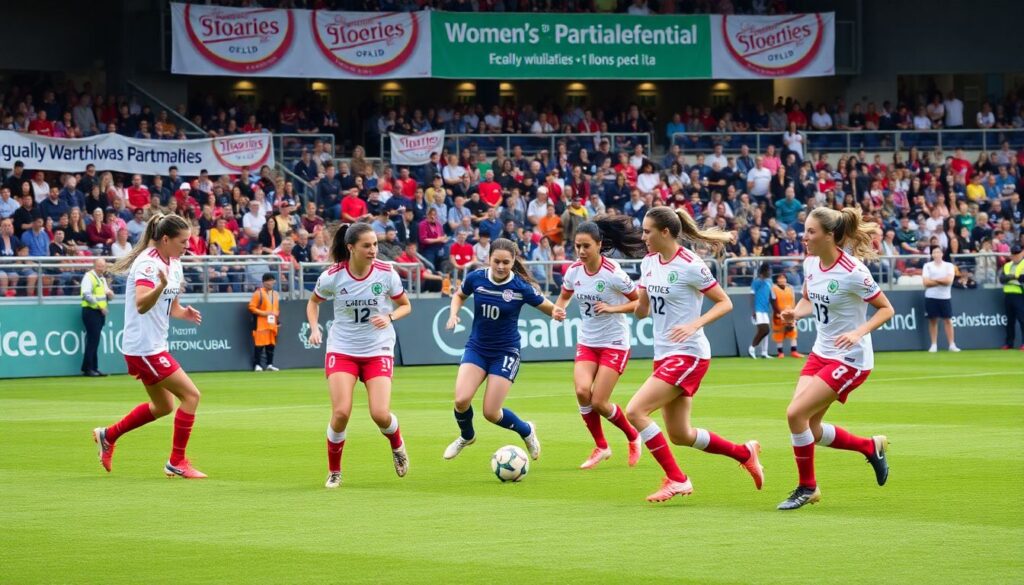
No, they can be strategically profitable. Brands reach new audiences, benefit from positive value associations (equality, authenticity), and often enjoy less saturated spaces than in men’s football. The key is to design campaigns that integrate women’s teams, players, and fans over several seasons.
Do camisetas oficiales fútbol femenino comprar online differ from men’s shirts?
They usually share the same core design but may offer different fits, size ranges, and player-name options. The main difference is availability: dedicated online sections and timely stock for women’s teams remain essential so fans can easily buy the shirts they want.
How can clubs grow attendance without huge budgets?
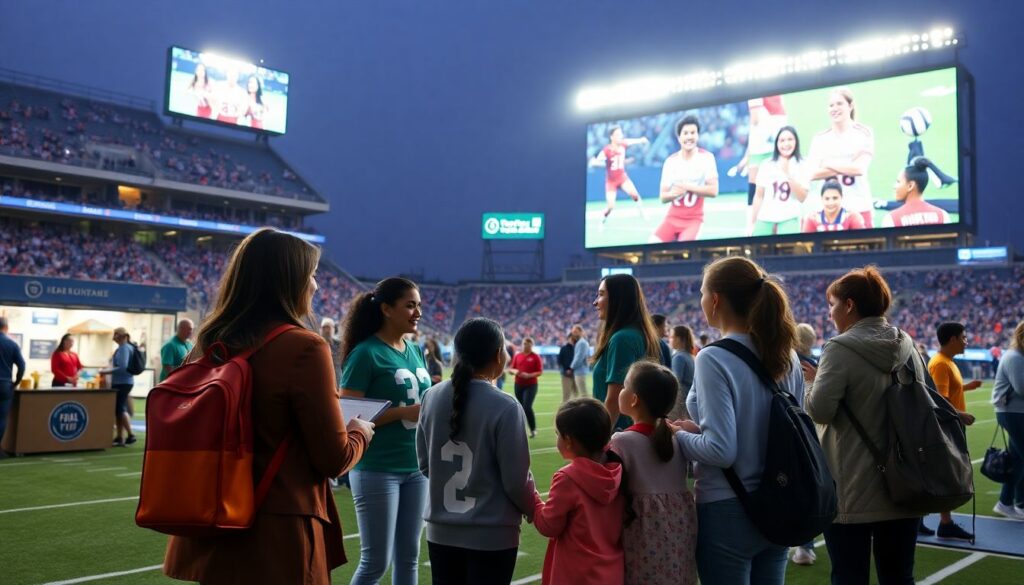
Clubs can focus on local outreach (schools, community groups), family-oriented matchday experiences, smart scheduling, and digital storytelling around players. Targeted campaigns for fútbol femenino entradas partidos, even with modest advertising, often work better than generic promotions.
Is it realistic for girls in Spain to build a professional career in women’s football?
Yes, the professional pathway is increasingly structured through academies, federated youth leagues, and professional clubs. However, it is still wise to combine football with education or vocational training, as the labour market continues to evolve and not every player will reach top-tier contracts.