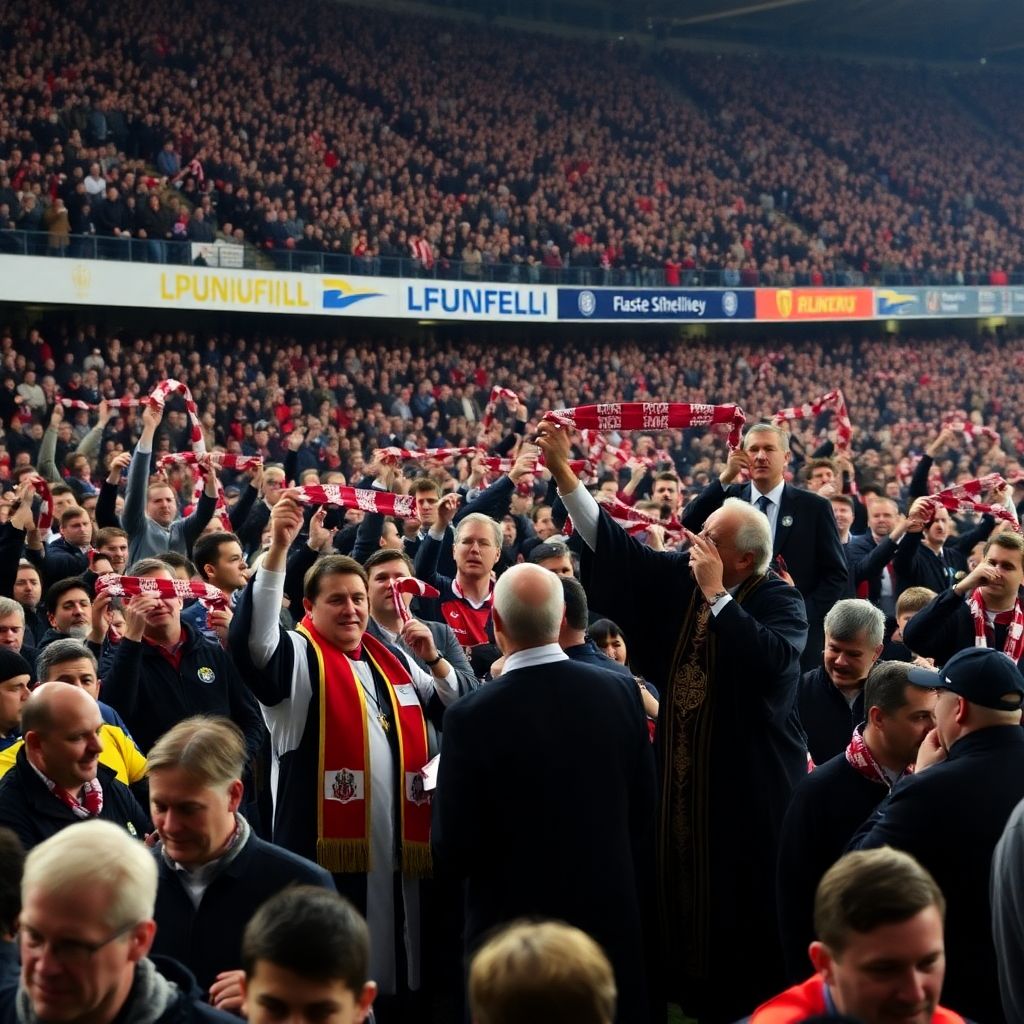
Football and religion intersect through myths, rituals and «secular saints» that give the game meaning beyond sport. The key is to recognise symbolic value without confusing it with actual faith, to enjoy shared rites safely, and to set limits when devotion to a club clashes with wellbeing, law or religious convictions.
Essentials: concise orientation on football and belief
- Football generates myths, rituals and figures treated like saints, but this does not automatically make it a religion.
- Safe practice means enjoying symbolic gestures while keeping critical distance and respect for formal faiths.
- Common elements include pilgrimage-like travel, sacred-style chants and strong group identity.
- Risks appear when fanaticism justifies violence, exclusion or pressure on believers and non‑believers.
- Clubs, players and fans can manage this tension with clear rules, inclusive language and education on symbolism.
Persistent myths and popular legends surrounding the game
Talk about fútbol y religión usually starts from striking myths: miracle comebacks, cursed shirts, or fans convinced that a shrine in the stadium decides results. These narratives shape how many supporters live the sport in Spain, Latin America and elsewhere, especially when transmitted through family or local culture.
In academic writing, such as any ensayo futbol como religion moderna, scholars often compare fan devotion to religious structures: mythic origin stories of clubs, heroic sacrifices of players, or images like «god of the stadium». This comparison works as a metaphor, not as a strict theological definition. It helps to analyse social behaviour, not to redefine religion.
Boundaries matter. Religion involves organised doctrines, moral codes and explicit reference to the transcendent. Football involves institutions and values too, but its «belief» is usually symbolic and optional. Even when we speak of futbolistas considerados santos laicos, the «sanctity» is metaphorical: admiration for talent, loyalty or perceived purity, not canonisation.
Safe interpretation therefore treats these myths as cultural stories. A good rituales y mitos del futbol analisis will ask who tells the story, whose interests it serves, and how it affects behaviour. When legends justify generosity, solidarity or fair play, they enrich the game. When they excuse hate or fatalism, they need to be questioned.
Rituals on and off the pitch: routine practices of players and teams
- Pre‑match routines of players
Crossing oneself, stepping onto the pitch with a specific foot, or touching the grass in a fixed way are common. They provide psychological security rather than guaranteed divine intervention. - Collective locker room gestures
Shared prayers, shouts or circles before kick‑off help create unity. Coaches in Spain often frame these as motivational rather than explicitly religious to include all beliefs in the group. - Entrance and anthem rituals
Holding hands, lining up in a precise order or facing a specific stand turn the start of the match into a mini‑ceremony. The repetition makes it feel «right» and calms anxiety. - Goal celebrations as mini‑rites
Pointing to the sky, kissing tattoos, or forming shapes on the pitch link personal faith, family memories and team identity. From a safety perspective, issues arise only when messages exclude or provoke others. - Fan routines before and after games
Meeting at the same bar, walking the same street to the stadium or always wearing the same scarf work like secular pilgrimages. They build community but can also normalise heavy drinking or aggressive chanting if not questioned. - Media narratives reinforcing ritual
Commentators and authors of any futbol y religion libro tend to repeat expressions like «sacred turf» or «cathedral of football». This poetic language shapes expectations and can push devotion toward uncritical fanaticism if listeners forget its metaphorical nature.
Secular saints: how players become talismanic figures
- Local heroes turned moral references
Players who stay loyal to one club, reject lucrative transfers or support community projects often become símbolos of integrity. Fans may describe them as santos laicos, projecting hopes for honesty onto the pitch. - Icons linked to national or regional identity
Footballers who embody a region’s style or language can be treated like protectors of cultural identity. In Spain, this often intersects with strong regional histories, flags and songs displayed in stadiums. - Tragic or sacrificial figures
Careers cut short by injury, illness or political conflict are retold almost as passion stories. Murals, songs and anniversaries keep the memory alive, giving grief a ritual structure similar to religious remembrance. - Charismatic stars with strong personal faith
Some players openly pray on the pitch or thank God in every interview. For some fans this adds authenticity; for others it feels intrusive. Clubs must navigate this diversity to avoid privileging one religion in a multi‑faith squad. - Retired legends kept as protective symbols
Pictures in club museums, names on stands and references in chants make past players feel «present». Symbolic protection is fine as long as fans distinguish between admiration and magical thinking about results.
Stadiums, chants and pilgrimage: sacred spaces of fandom
Some elements of stadium culture resemble religious spaces: fixed meeting points, ritualised entry, and powerful soundscapes. Supporters often speak of «going home» to the ground, or of away trips as pilgrimages to hostile temples. This strengthens belonging but also concentrates emotions that can overflow.
For many in Spain, season tickets structure the calendar like religious festivals once did. Chants act as shared liturgy; tifos and banners serve as icons. This symbolism can be beautiful and inclusive, but it can also create «us vs them» dynamics that justify hostility to rival fans or minorities.
Community benefits and positive potentials
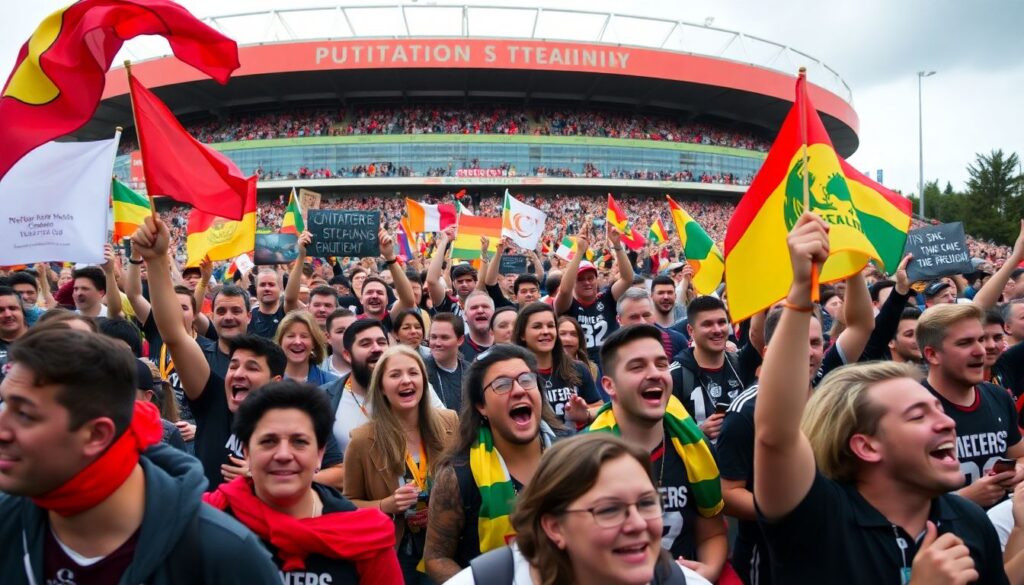
- Strong sense of collective identity that can reduce loneliness and social isolation.
- Regular «pilgrimage» to the stadium provides routine, exercise and emotional release.
- Chants and coordinated displays offer creative expression for local stories and values.
- Club foundations can redirect this energy into charitable work and civic projects.
- Shared «sacred» space can bridge generations, connecting grandparents, parents and children.
Risks, exclusions and practical limits
- Hyper‑sacralising the stadium may normalise violence as «defending our temple».
- Religious symbols in choreographies can alienate fans of other faiths or none.
- Intense emotional pressure may harm mental health when results define self‑worth.
- Expensive «pilgrimages» to away games can create economic strain and family conflict.
- Neighbourhoods around stadiums may suffer from noise, alcohol abuse and unsafe behaviour.
Material culture of superstition: amulets, kits and symbolic acts
From lucky boots to family medals, the material culture around football mixes superstition, fashion and, at times, formal faith. Analysing this without ridicule helps explain how people manage uncertainty in a sport where so much is beyond individual control.
In studies and in any careful simbologia religiosa en el futbol essay, these objects are seen as carriers of meaning rather than magical tools. Safe practice means recognising their psychological function while avoiding dependency or pressure on others to share specific beliefs.
- Myth: A specific shirt or scarf can change the score
Reality: Clothing can boost confidence and identity, but results depend on play, tactics and chance. Confusing symbols with causality may feed irrational blame or guilt. - Myth: Refusing a shared ritual means «betraying» the team
Reality: Players and fans have diverse beliefs. Respecting someone who does not cross themselves, sing a certain line or touch an amulet is essential for inclusion. - Myth: Religious tattoos or goal gestures are automatically propaganda
Reality: Often they express personal stories of loss, gratitude or hope. Problems start when they are used to attack or exclude others, not when they are quietly lived. - Myth: Superstitions are harmless by definition
Reality: They are usually minor, but can become harmful when they justify risky behaviour, like dangerous travel because «the saint will protect us» or heavy gambling based on «signs». - Myth: Only naive fans use amulets
Reality: Coaches, elite players and highly educated supporters all use small rituals to feel in control. The issue is degree, not intelligence.
Conflicts and consequences when religious faith and fandom intersect
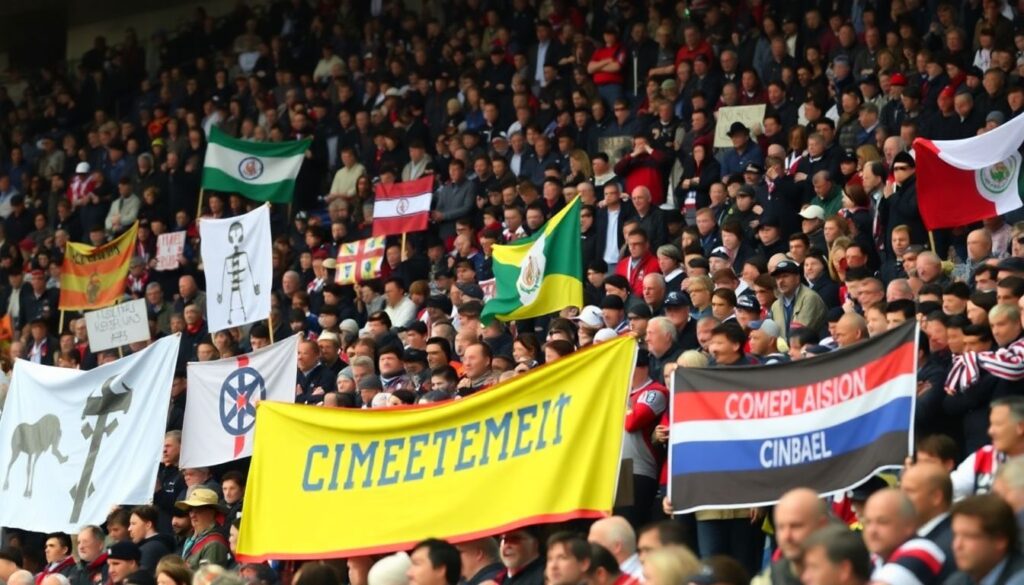
When football devotion and religious faith collide, the problem is rarely theology and more often power, identity and limits. Clubs in Spain and beyond must manage schedules, symbols and communications so that no faith feels imposed and no fan is mocked for belief or non‑belief.
Authors writing a rituales y mitos del futbol analisis or a detailed futbol y religion libro often highlight moments when football is treated like a modern religion and clashes arise: prayer times conflicting with match schedules, offensive chants about religious figures, or pressure on players to participate in public rites.
Consider a simplified case that illustrates safe steps and limits:
Club scenario:
1. A new signing is a practising believer who does not want to join pre‑match group prayers.
2. Some teammates read this as lack of commitment to the team.
3. Fan forums accuse the player of being "cold".

Practical response:
- The coach reframes the prayer as an optional motivational moment, not a test of loyalty.
- A team meeting clarifies that commitment is shown in training and behaviour, not in religious gestures.
- Club media highlight diverse personal routines of several players, normalising choice.
- Security stewards brief fan groups that abusive religious chants will lead to sanctions.
This kind of measured approach respects individual conscience, protects vulnerable players and fans, and keeps the passion of football within healthy boundaries. It accepts that football can feel like a modern religion while firmly insisting that human dignity and safety always come first.
Practical questions fans, scholars and clubs commonly raise
Is football really a form of religion?
Football shares ritual, myth and community with religion, which is why many essays call it a modern religion. However, it usually lacks formal doctrine and structured worship of a transcendent being, so it is more accurate to speak of religious‑like practices or symbolic religion rather than a full religion.
Are player prayers on the pitch appropriate?
Personal prayer is usually acceptable if it does not provoke, insult or pressure others. Problems emerge when clubs or federations institutionalise specific religious acts at official events, which can exclude people of other faiths or none. Clear guidelines on voluntary participation help.
How can fans enjoy rituals without becoming fanatics?
Useful limits include: keeping work, study and family above the club; never justifying violence; and avoiding debt or risky behaviour for tickets or bets. Reflecting on why a ritual matters and talking about it critically with friends keeps devotion in perspective.
Should clubs ban religious symbols in stadiums?
Blanket bans often create more tension than they solve. A more balanced strategy allows personal symbols while restricting large, confrontational displays or banners that attack other faiths. Transparent, published regulations make it easier for stewards and fans to understand the limits.
Why do some players become «secular saints» for supporters?

Fans project ideals like loyalty, sacrifice and purity onto certain footballers. This symbolic sainthood can inspire positive behaviour, such as solidarity and fair play. Risk appears when players are placed beyond criticism or used to justify hostility to rivals.
What can researchers focus on when writing about football and religion?
Researchers can analyse chants, stadium architecture, fan travel, and biographies of icons as if they were religious texts and rites, while remaining clear about differences with institutional religion. Mixing case studies with theory, and avoiding sensationalism, makes their work more useful for clubs and communities.
How should parents handle children’s «religious» passion for a club?
Parents can validate the emotions while teaching boundaries: football is important but not more valuable than friends, health or school. Encouraging parallel interests and talking openly about defeats helps children separate self‑worth from results and avoid harmful fanaticism.